Wide Reads
Literature MattersLife IndexEducators
Sign in
Where to Begin
A Tale of Two Cities - Inside the Courtroom of Death

Charles Dickens

A Tale of Two Cities

Inside the Courtroom of Death

Home›Books›A Tale of Two Cities›Chapter 8
Previous
8 of 45
Next

Summary

Inside the Courtroom of Death

A Tale of Two Cities by Charles Dickens

0:000:00
Listen to Next Chapter

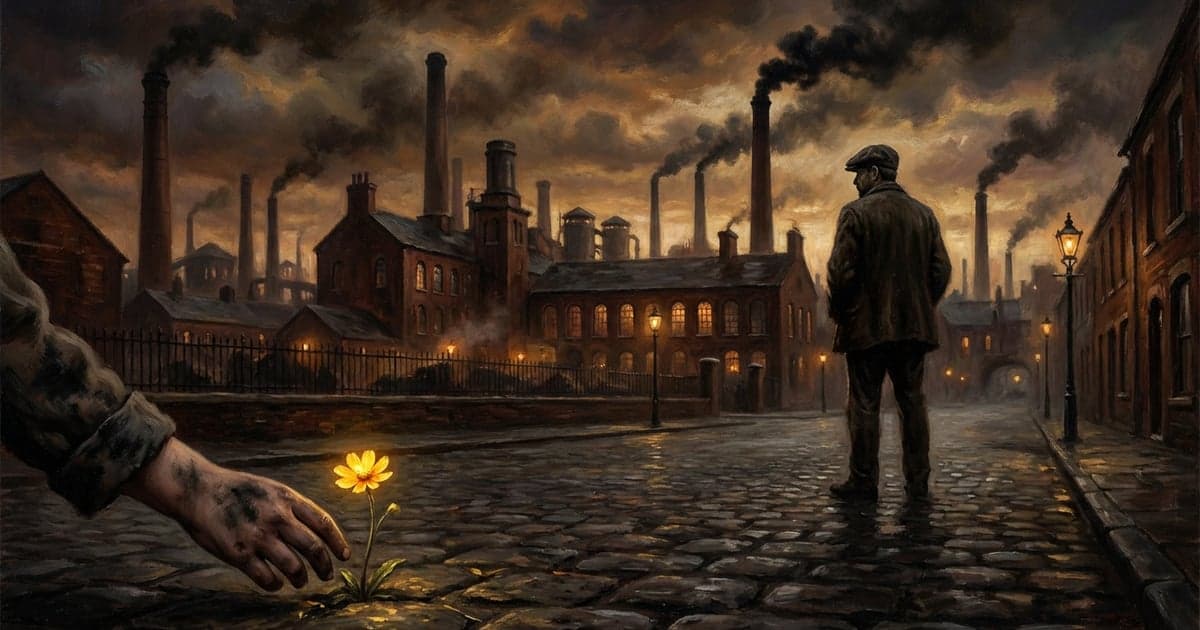
Jerry Cruncher receives orders to deliver a message to Mr. Lorry at the Old Bailey courthouse, where a treason trial is about to begin. Dickens paints a horrifying picture of 18th-century justice: the Old Bailey is described as a 'deadly inn-yard' where public executions serve as entertainment, complete with paid admission to watch trials like theater performances. The courthouse reeks of disease and corruption, both literal and moral. When Jerry enters the packed courtroom, he witnesses the bloodthirsty crowd eagerly anticipating the gruesome details of the defendant's potential execution—drawing, quartering, and dismemberment while still alive. The prisoner, Charles Darnay, is a composed young gentleman accused of treason for allegedly passing British military secrets to France. Despite facing the most savage punishment imaginable, Darnay maintains remarkable dignity and self-control. The crowd's fascination with his potential suffering reveals something disturbing about human nature—their interest is 'Ogreish,' feeding on the prospect of witnessing extreme violence. Two mysterious figures in the courtroom catch Darnay's attention: an elderly man with striking white hair and his young daughter, both watching with obvious compassion rather than bloodlust. Jerry learns they are witnesses—but surprisingly, they're testifying against the prisoner, not for him. This chapter exposes how systems designed for justice can become theaters of cruelty, and how individual character is revealed under extreme pressure.

Coming Up in Chapter 9

The trial begins in earnest as the prosecution presents its case against Charles Darnay. But not everything will go according to plan—unexpected developments await that could change everything.

Share it with friends

Previous ChapterNext Chapter
GO ADS FREE — JOIN US
Original text
complete·2,383 words
A

Sight

“You know the Old Bailey well, no doubt?” said one of the oldest of clerks to Jerry the messenger.

“Ye-es, sir,” returned Jerry, in something of a dogged manner. “I do know the Bailey.”

“Just so. And you know Mr. Lorry.”

“I know Mr. Lorry, sir, much better than I know the Bailey. Much better,” said Jerry, not unlike a reluctant witness at the establishment in question, “than I, as a honest tradesman, wish to know the Bailey.”

“Very well. Find the door where the witnesses go in, and show the door-keeper this note for Mr. Lorry. He will then let you in.”

“Into the court, sir?”

“Into the court.”

Mr. Cruncher’s eyes seemed to get a little closer to one another, and to interchange the inquiry, “What do you think of this?”

“Am I to wait in the court, sir?” he asked, as the result of that conference.

“I am going to tell you. The door-keeper will pass the note to Mr. Lorry, and do you make any gesture that will attract Mr. Lorry’s attention, and show him where you stand. Then what you have to do, is, to remain there until he wants you.”

1 / 16

Master this chapter. Complete your experience

Purchase the complete book to access all chapters and support classic literature

Read Free on GutenbergBuy at Powell'sBuy on Amazon

As an Amazon Associate, we earn a small commission from qualifying purchases at no additional cost to you.

Available in paperback, hardcover, and e-book formats

GO ADS FREE — JOIN US

Why This Matters

Connect literature to life

Skill: Recognizing When Systems Become Spectacles

This chapter teaches how to identify when institutions designed to help have transformed into entertainment venues that feed on human suffering.

Practice This Today

This week, notice when you're consuming someone else's crisis as entertainment—workplace gossip, social media pile-ons, news coverage that focuses on drama over facts—and ask yourself whether you're there to help or just to watch.

GO ADS FREE — JOIN US

Now let's explore the literary elements.

Key Quotes & Analysis

"Much better than I, as a honest tradesman, wish to know the Bailey."

— Jerry Cruncher

Context: Jerry reluctantly admits he knows the Old Bailey when asked by the clerk.

This reveals Jerry's discomfort with the courthouse and suggests he's had unpleasant experiences there. His emphasis on being 'honest' hints he may not always have been.

In Today's Words:

Yeah, I know that place better than I'd like to as someone trying to stay out of trouble.

"The form that was to be doomed to be so shamefully mangled, was the sight; the immortal creature that was to be so butchered and torn asunder, yielded the sensation."

— Narrator

Context: Describing how the crowd views Charles Darnay as entertainment.

Dickens contrasts Darnay's humanity ('immortal creature') with the crowd's dehumanizing view of him as spectacle. This shows how justice systems can strip away human dignity.

In Today's Words:

They weren't seeing a human being - they were looking at tonight's entertainment, someone to watch suffer.

"The sort of interest with which this man was stared and breathed at, was not a sort that elevated humanity."

— Narrator

Context: Describing the crowd's fascination with Darnay's potential execution.

Dickens criticizes how public executions bring out the worst in people rather than serving justice. The crowd's interest is degrading to everyone involved.

In Today's Words:

The way people were gawking at him didn't make anyone better - it brought out the worst in everybody.

Thematic Threads

Class

In This Chapter

The wealthy pay admission to watch working-class suffering as entertainment, treating justice like theater with premium seating

Development

Expanded from earlier hints about privilege to show how class determines who watches versus who suffers

In Your Life:

You might see this when wealthy people treat others' struggles as entertainment or learning experiences rather than real hardship

Human Nature

In This Chapter

The crowd's 'Ogreish' fascination with potential torture reveals how ordinary people can become bloodthirsty spectators

Development

Introduced here as a dark examination of what people become when suffering is normalized

In Your Life:

You might catch yourself drawn to others' drama or downfall, feeling entertained by what should concern you

Identity

In This Chapter

Darnay maintains dignity and composure despite facing the most savage punishment, showing character under extreme pressure

Development

Builds on themes of who we are versus what others expect, now tested under life-or-death stakes

In Your Life:

You might face moments where maintaining your values matters more than pleasing the crowd or avoiding conflict

Corruption

In This Chapter

The justice system itself has become corrupted into a profit-making entertainment venue rather than seeking truth

Development

Introduced here as institutional rather than personal corruption

In Your Life:

You might work in systems that have lost their original purpose and now serve other interests instead

Compassion

In This Chapter

Two figures watch with obvious sympathy rather than bloodlust, showing humanity can survive even in cruel environments

Development

Introduced as a counterpoint to the crowd's cruelty

In Your Life:

You might be the person who chooses empathy when everyone else is choosing entertainment or judgment

GO ADS FREE — JOIN US

You now have the context. Time to form your own thoughts.

Discussion Questions

  1. 1

    Why does Dickens describe the Old Bailey courthouse as a 'deadly inn-yard' and what does this tell us about how justice was delivered in 18th-century England?

    analysis • surface
  2. 2

    What does the crowd's behavior reveal about human nature when people gather to witness someone else's potential suffering?

    analysis • medium
  3. 3

    Where do you see this same pattern today—systems designed to help that become entertainment for spectators?

    application • medium
  4. 4

    How does Charles Darnay maintain his dignity despite facing a bloodthirsty crowd, and what can we learn from his approach when we face hostile audiences?

    application • deep
  5. 5

    What's the difference between the crowd's 'Ogreish' interest and the compassionate attention of the elderly man and young woman, and how do you choose which kind of witness to be?

    reflection • deep

Critical Thinking Exercise

10 minutes

Spot the Spectacle

Think of a recent news story, social media controversy, or workplace drama where people gathered to watch someone else's crisis unfold. Write down what the crowd was really there for versus what they claimed to care about. Then identify who, if anyone, showed genuine compassion instead of just consuming the drama.

Consider:

  • •Notice the difference between people seeking information versus entertainment
  • •Pay attention to who profits when personal struggles become public spectacle
  • •Consider how you can be the compassionate witness rather than part of the bloodthirsty crowd

Journaling Prompt

Write about a time when you felt like you were on trial—facing judgment from people who seemed more interested in your downfall than in fairness. How did you maintain your dignity, and what did you learn about choosing your real audience?

GO ADS FREE — JOIN US

Coming Up Next...

Chapter 9: Justice on Trial

The trial begins in earnest as the prosecution presents its case against Charles Darnay. But not everything will go according to plan—unexpected developments await that could change everything.

Continue to Chapter 9
Previous
The Honest Tradesman's Secret
Contents
Next
Justice on Trial

Continue Exploring

A Tale of Two Cities Study GuideTeaching ResourcesEssential Life IndexBrowse by ThemeAll Books
Moral Dilemmas & EthicsSocial Class & StatusPower & Corruption

You Might Also Like

Great Expectations cover

Great Expectations

Charles Dickens

Also by Charles Dickens

Jane Eyre cover

Jane Eyre

Charlotte Brontë

Explores personal growth

The Strange Case of Dr Jekyll and Mr Hyde cover

The Strange Case of Dr Jekyll and Mr Hyde

Robert Louis Stevenson

Explores personal growth

Don Quixote cover

Don Quixote

Miguel de Cervantes Saavedra

Explores personal growth

Browse all 47+ books
GO ADS FREE — JOIN US

Share This Chapter

Know someone who'd enjoy this? Spread the wisdom!

TwitterFacebookLinkedInEmail

Read ad-free with Prestige

Get rid of ads, unlock study guides and downloads, and support free access for everyone.

Subscribe to PrestigeCreate free account
Intelligence Amplifier
Intelligence Amplifier™Powering Wide Reads

Exploring human-AI collaboration through books, essays, and philosophical dialogues. Classic literature transformed into navigational maps for modern life.

2025 Books

→ The Amplified Human Spirit→ The Alarming Rise of Stupidity Amplified→ San Francisco: The AI Capital of the World
Visit intelligenceamplifier.org
hello@widereads.com

WideReads Originals

→ You Are Not Lost→ The Last Chapter First→ The Lit of Love→ Wealth and Poverty→ 10 Paradoxes in the Classics · coming soon
Arvintech
arvintechAmplify your Mind
Visit at arvintech.com

Navigate

  • Home
  • Library
  • Essential Life Index
  • How It Works
  • Subscribe
  • Account
  • About
  • Contact
  • Authors
  • Suggest a Book
  • Landings

Made For You

  • Students
  • Educators
  • Families
  • Readers
  • Literary Analysis
  • Finding Purpose
  • Letting Go
  • Recovering from a Breakup
  • Corruption
  • Gaslighting in the Classics

Newsletter

Weekly insights from the classics. Amplify Your Mind.

Legal

  • Privacy Policy
  • Terms of Service
  • Cookie Policy
  • Accessibility

Why Public Domain?

We focus on public domain classics because these timeless works belong to everyone. No paywalls, no restrictions—just wisdom that has stood the test of centuries, freely accessible to all readers.

Public domain books have shaped humanity's understanding of love, justice, ambition, and the human condition. By amplifying these works, we help preserve and share literature that truly belongs to the world.

A Pilgrimage

Powell's City of Books

Portland, Oregon

If you ever find yourself in Portland, walk to the corner of Burnside and 10th. The building takes up an entire city block. Inside is over a million books, new and used on the same shelf, organized by color-coded rooms with names like the Rose Room and the Pearl Room. You can lose an afternoon. You can lose a weekend. You will find a book you have been looking for your whole life, and three you did not know existed.

It is a pilgrimage. We cannot find a bookstore like it anywhere on earth. If you read the classics, and you ever get the chance, go. It belongs on every reader's bucket list.

Visit powells.com

We are not in any way affiliated with Powell's. We are just a very big fan.

© 2026 Wide Reads™. All Rights Reserved.

Intelligence Amplifier™ and Wide Reads™ are proprietary trademarks of Arvin Lioanag.

Copyright Protection: All original content, analyses, discussion questions, pedagogical frameworks, and methodology are protected by U.S. and international copyright law. Unauthorized reproduction, distribution, web scraping, or use for AI training is strictly prohibited. See our Copyright Notice for details.

Disclaimer: The information provided on this website is for general informational and educational purposes only and does not constitute professional, legal, financial, or technical advice. While we strive to ensure accuracy and relevance, we make no warranties regarding completeness, reliability, or suitability. Any reliance on such information is at your own risk. We are not liable for any losses or damages arising from use of this site. By using this site, you agree to these terms.