Chapter 02
The Dover Mail
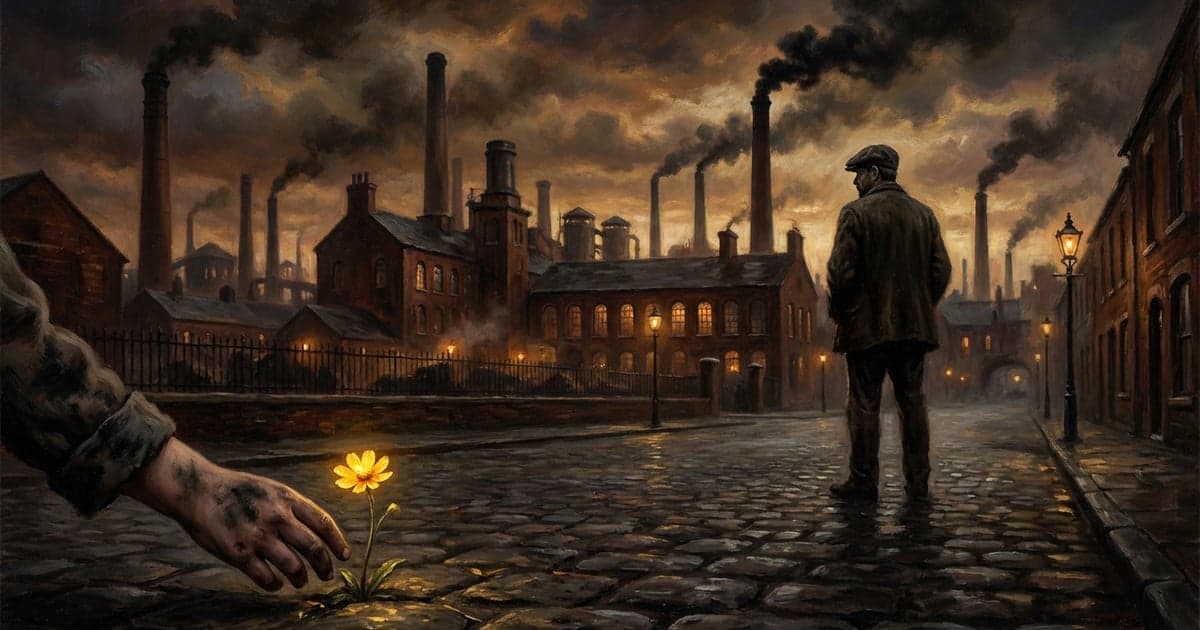
The Mail It was the Dover road that lay, on a Friday night late in November, before the first of the persons with whom this history has business. The Dover road lay, as to him, beyond the Dover mail, as it lumbered up Shooter’s Hill. He walked up hill in the mire by the side of the mail, as the rest of the passengers did; not because they had the least relish for walking exercise, under the circumstances, but because the hill, and the harness, and the mud, and the mail, were all so heavy, that the horses had three…
Public-domain chapter text, formatted for reading.
Master this chapter. Complete your experience
Purchase the complete book to access all chapters and support classic literature
Available in paperback, hardcover, and e-book formats
Now let's explore the literary elements.
Key Quotes & Analysis
"Our booked passenger showed in a moment that it was his name."
Context: A key line from the middle of the chapter
Lorry's immediate identification reveals how people respond when their name is called unexpectedly in tense situations. His quick acknowledgment shows both honesty and the instinctive human need to claim our identity even when it might be dangerous.
In Today's Words:
The passenger immediately confirmed it was his name when asked. Like someone responding to their name being called in a crowded airport, even when they're not sure who's asking or why. You see the same squeeze when a manager passes blame down and the person with no exit absorbs the cost.
"Much of that wouldn’t do for you, Jerry!"
Context: A key line from the closing third of the chapter
Jerry's dark humor about his profession reveals how people use jokes to cope with uncomfortable truths about their work. His comment suggests he makes his living from death, making resurrection literally bad for business.
In Today's Words:
That kind of thing wouldn't be good for your line of work, Jerry! Like a funeral director joking that medical advances are hurting his business prospects. That is how it feels when institutions treat your survival as someone else's paperwork problem. That is how it feels when institutions treat your survival as someone else's paperwork.
"Gentleman of the name of Lorry answer straight."
Context: A key line from the middle of the chapter
The guard's formal command shows how authority figures use official language to maintain control in uncertain situations. His demand for a straight answer reflects the human need for clear communication when trust is scarce.
In Today's Words:
The gentleman named Lorry needs to answer directly. Like a security officer demanding clear identification from someone at a checkpoint, no games or evasions allowed. Ground it in the scene: who holds power, who absorbs risk, and what changes if you. The pattern repeats whenever rank decides who must stay calm while everyone else panics.
"A despatch sent after you from over yonder."
Context: A key line from the middle of the chapter
Jerry's explanation reveals how messengers deliver information without fully understanding its significance. His simple statement masks the urgency that drove him to gallop through dangerous conditions at night.
In Today's Words:
A message was sent after you from back there. Like a delivery driver explaining they have an urgent package, not knowing the contents could change someone's entire life. You see the same squeeze when a manager passes blame down and the person with no exit absorbs the cost.
Thematic Threads
Trust
In This Chapter
Complete breakdown of social trust—passengers won't speak, guard trusts no one, everyone assumes danger
Development
Introduced here
In Your Life:
You might recognize this when you find yourself unable to relax around new people after being betrayed or hurt.
Class
In This Chapter
The banker Lorry travels with armed protection while common people face the same dangers with less security
Development
Introduced here
In Your Life:
You see this when wealthy patients get private rooms and personal attention while you wait hours in the ER.
Communication
In This Chapter
Cryptic messages ('RECALLED TO LIFE') that hide meaning from potential eavesdroppers
Development
Introduced here
In Your Life:
You might use coded language when discussing sensitive family issues in public places.
Identity
In This Chapter
People conceal their identities behind cloaks and silence to protect themselves
Development
Introduced here
In Your Life:
You might downplay your education or income in certain neighborhoods to avoid standing out as a target.
Uncertainty
In This Chapter
Fog and darkness create an atmosphere where no one can see clearly what's coming
Development
Introduced here
In Your Life:
You feel this when major life changes are happening and you can't predict what comes next.
You now have the context. Time to form your own thoughts.
Discussion Questions
This is not a test. Five prompts guide you through the chapter, from how it opens to how it closes, so you notice context and rhythm rather than facts to memorize. Sit with each question in your own words. When you see "One way to read it," treat it as a starting point, not the only answer.
- 1
Why do you think Dickens emphasizes the physical difficulty of the journey up Shooter's Hill rather than simply having characters arrive at their destination?
analysis • mediumOne way to read it
The physical struggle mirrors the emotional and social struggles the characters will face, establishing that nothing in this story will come easily.
- 2
What does the mutual suspicion between passengers, guard, and coachman reveal about the social conditions of 1775?
analysis • deepOne way to read it
It shows a society where trust has broken down due to widespread crime and economic desperation, foreshadowing the larger social breakdown that will lead to revolution.
- 3
How might Jerry's reaction to 'RECALLED TO LIFE' hint at his character and profession?
analysis • mediumOne way to read it
His comment that it would be 'blazing bad' for him suggests he profits from death, likely as a grave robber or resurrection man.
- 4
In what ways do modern travelers still experience the kind of wariness and suspicion shown in this chapter?
application • surfaceOne way to read it
Airport security, ride-sharing with strangers, and traveling alone at night still trigger similar defensive behaviors and mutual distrust.
- 5
What does Lorry's willingness to vouch for Jerry despite the dangerous circumstances suggest about his character?
reflection • mediumOne way to read it
It reveals his inherent decency and suggests he values human relationships over personal safety, traits that will be crucial to the story's development.
Critical Thinking Exercise
Map Your Trust Calibration
Think about three different environments you navigate regularly - work, home, and one public space. For each location, identify what level of caution you use and why. Consider whether your protective behaviors match the actual risk level in each environment, or if you're carrying old habits into new situations.
Consider:
- •Notice when you automatically become more guarded versus more open
- •Consider whether past experiences in dangerous situations affect how you act in safe ones
- •Think about the cost of being too trusting versus too suspicious in each environment
Journaling Prompt
Write about a time when you had to decide whether to trust someone in an uncertain situation. What information did you use to make that decision, and how did it turn out?
Coming Up Next...
Chapter 3: The Mystery of Hidden Lives
As the coach rolls on through the night, we'll discover what shadows move in the darkness of men's minds, and learn more about the mysterious Mr. Lorry and his strange mission to Paris.