Chapter 08
The Real Story of Your Paycheck
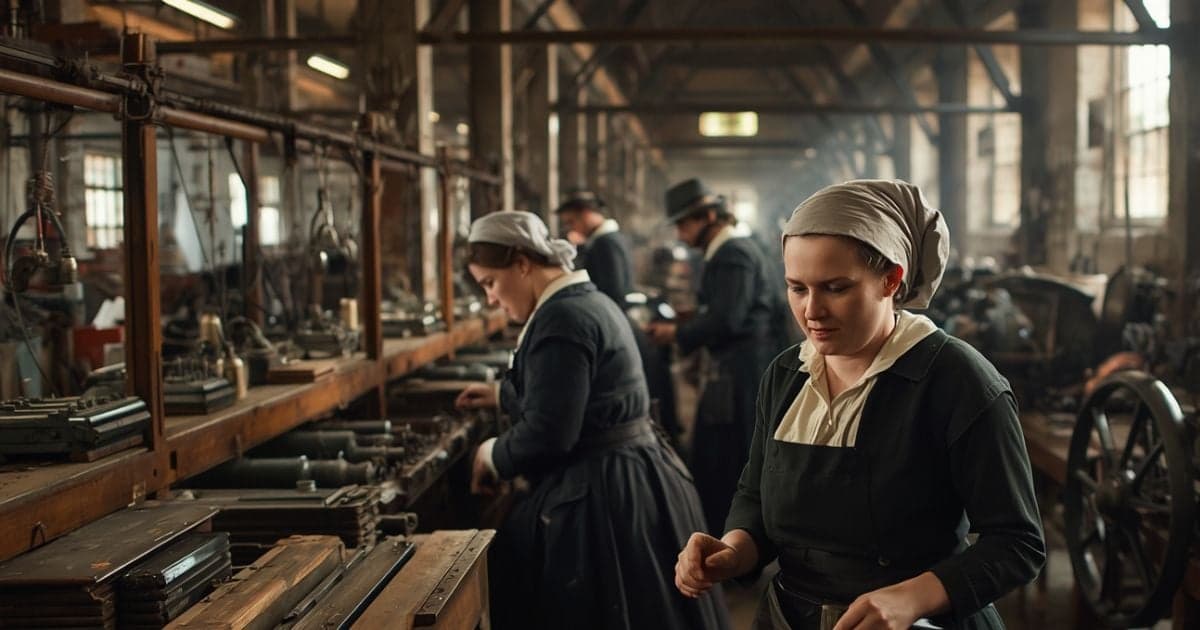
OF THE WAGES OF LABOUR. The produce of labour constitutes the natural recompence or wages of labour. In that original state of things which precedes both the appropriation of land and the accumulation of stock, the whole produce of labour belongs to the labourer. He has neither landlord nor master to share with him. Had this state continued, the wages of labour would have augmented with all those improvements in its productive powers, to which the division of labour gives occasion. All things would gradually have become cheaper. They would have been produced by a smaller quantity of labour; and…
Public-domain chapter text, formatted for reading.
Master this chapter. Complete your experience
Purchase the complete book to access all chapters and support classic literature
Available in paperback, hardcover, and e-book formats
Now let's explore the literary elements.
Key Quotes & Analysis
"The produce of labour constitutes the natural recompence or wages of labour."
Context: Opening definition of wages
In principle wages are what labour produces before deductions.
In Today's Words:
In a fair starting point, pay would equal what your work creates before anyone else takes a cut. Smith uses that baseline to show how rent and profit later chip away from the worker's natural reward before wages are ever discussed in public. That pattern
"Masters are always and everywhere in a sort of tacit, but constant and uniform, combination, not to raise the wages of labour above their actual rate."
Context: Employer bargaining power
Employer coordination is normal even when worker unions are condemned.
In Today's Words:
Bosses do not need a formal cartel to hold wages down; they routinely act as if they agreed not to pay more than the going rate. Worker combinations, by contrast, are often illegal and loudly punished when they try the same tactics in open view.
"It is not the actual greatness of national wealth, but its continual increase, which occasions a rise in the wages of labour."
Context: North America versus England
Growth rate, not GDP level, drives wage competition for workers.
In Today's Words:
A country can be rich yet pay poorly if it is stagnant, while a poorer but fast-growing economy bids up wages because employers desperately need more hands each year and compete openly to hire them before rivals do. That pattern still shows up in ordinary
"No society can surely be flourishing and happy, of which the far greater part of the members are poor and miserable."
Context: Moral and economic case for rising wages
Smith ties social health to material conditions of the majority.
In Today's Words:
A nation cannot call itself successful when most people lack decent food, clothing, and shelter. Widespread poverty is not a side issue; it signals a sick economy and an unjust distribution of the fruits that ordinary labour produces every day. That pattern still shows up
Thematic Threads
Class
In This Chapter
Smith reveals how property ownership creates permanent class divisions - those who own land and capital versus those who must sell their labor
Development
Introduced here as economic foundation
In Your Life:
Your financial class determines your negotiating power in every major life decision
Power
In This Chapter
Employers hold structural power because they can survive without workers longer than workers can survive without wages
Development
Introduced here as systemic imbalance
In Your Life:
Recognizing power imbalances helps you understand why certain negotiations feel impossible
Growth
In This Chapter
Growing economies pay higher wages because expanding businesses desperately need workers, creating seller's markets for labor
Development
Introduced here as economic opportunity
In Your Life:
Your earning potential depends more on your industry's growth rate than your individual skills
Identity
In This Chapter
Smith challenges the identity myth that better-paid workers become lazy, showing prosperity actually increases productivity
Development
Introduced here as economic psychology
In Your Life:
Don't internalize narratives that justify keeping you underpaid - prosperity motivates rather than corrupts
Relationships
In This Chapter
The employer-worker relationship is fundamentally unequal due to different survival timelines and financial reserves
Development
Introduced here as structural dynamic
In Your Life:
Understanding relationship power dynamics helps you navigate everything from work to romance more strategically
You now have the context. Time to form your own thoughts.
Discussion Questions
This is not a test. Five prompts guide you through the chapter, from how it opens to how it closes, so you notice context and rhythm rather than facts to memorize. Sit with each question in your own words. When you see "One way to read it," treat it as a starting point, not the only answer.
- 1
Why does Smith say masters generally have the advantage in wage disputes?
analysis • surfaceOne way to read it
Masters are fewer, combine more easily, face weaker legal limits, and can live on prior stock far longer than workers can live without wages.
- 2
How does North America's experience challenge the idea that richer countries always pay higher wages?
analysis • mediumOne way to read it
England was wealthier but slower growing; rapid colonial expansion created labour scarcity and bidding wars that pushed American wages above English ones.
- 3
Where have you seen wages rise because demand for workers outran supply?
application • mediumOne way to read it
Boom towns, new industries, post-disaster rebuilds, or credential shortages often force employers to raise pay without any change in individual worker skill.
- 4
What does Smith mean when he says cheap years can raise wages while dear years can lower them?
analysis • deepOne way to read it
Cheap provisions expand funds to hire servants and farmers hire extra hands, increasing labour demand; scarce years shrink those funds and flood the market with people seeking any job.
- 5
Does Smith think higher wages hurt society, or help it?
reflection • deepOne way to read it
He treats rising real wages as a sign of advancing wealth and a moral good, because workers who feed society should share enough to live tolerably well.
Critical Thinking Exercise
Map Your Leverage Position
Draw a simple chart of your current work situation. On one side, list what you bring (skills, experience, reliability). On the other side, list what your employer brings (steady paycheck, benefits, job security). Then honestly assess: who needs whom more right now? Who could survive longer without the other?
Consider:
- •Consider both immediate needs (next month's rent) and long-term options (other job prospects)
- •Think about what would happen if you didn't show up for a week versus if they stopped paying you for a week
- •Look for areas where you could build more leverage over time
Journaling Prompt
Write about a time when you felt powerless in a negotiation (job, apartment, major purchase). What would you do differently now, knowing about the leverage imbalance pattern?
Coming Up Next...
Chapter 9: The Profit Game: How Money Makes Money
Wages are only one slice of the pie. Smith next turns to profits: how capital competes, how interest tracks return, and why merchants complain when prosperity lowers margins Profits move with the same forces as wages but in the opposite direction. As stock accumulates across an economy, more merchants enter each trade and bid profits down; more capital in all trades does the same everywhere...