
The Prince
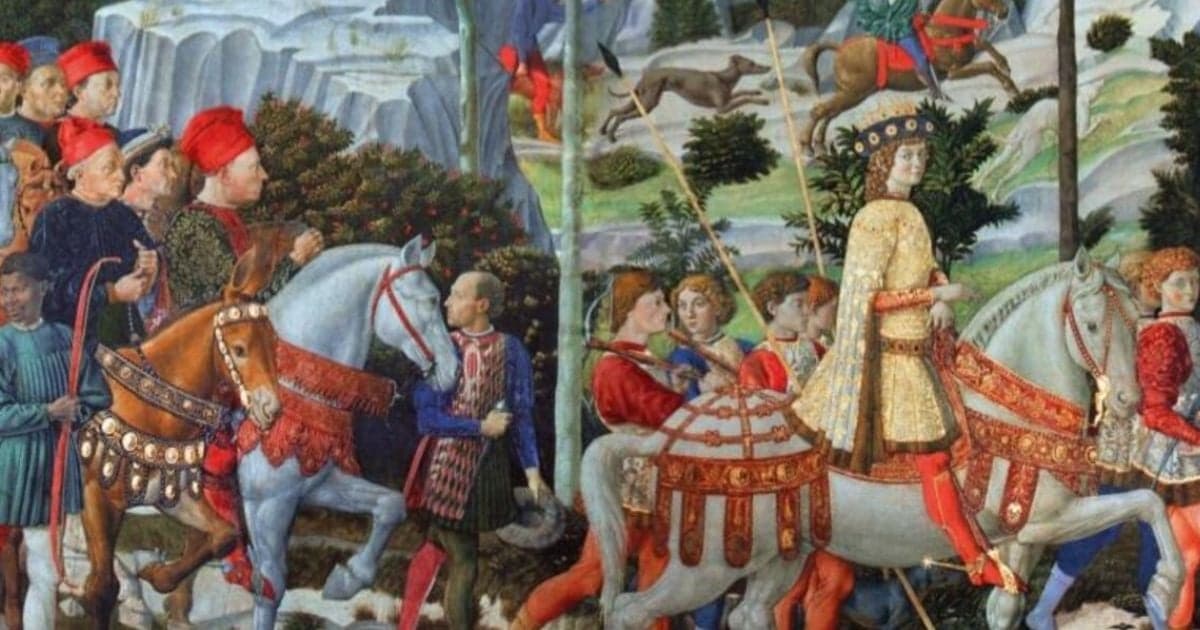
Niccolò Machiavelli
Every state is a republic or a principality. Every principality is hereditary or new. That is the first cut. How the seat was taken decides how it is lost. Machiavelli writes from a farm outside Florence after the Medici have returned, dismissed him from the chancery, imprisoned him, and dropped him on the strappado. He wants a post. He also wants to show that power has a method priests and humanists will not name. The Prince, finished in 1513 and printed only after his death, keeps spending the cost of a new throne.
Machiavelli is the unemployed secretary who has watched Italy carved by France, Spain, and the Church. Lorenzo de' Medici is the addressee: a young man who may read a job letter as a gift and never hire the giver. Francesco Sforza is the armed prophet who climbs by ability and keeps Milan. Cesare Borgia, Duke Valentino, is raised by his father's fortune and French arms. Ramiro d'Orco is the minister who pacifies the Romagna and is found in the piazza at Cesena beside a block and a bloody knife. Julius II inherits the papal chair Borgia had injured. The people of a free city remember liberty longer than a new flag. The pressure among them is not a debate about virtue. It is who still holds the seat when fortune changes its mind.
Chapter 1 draws the two lists. Hereditary power holds if you do not change the customs. New states do not. Live there, or plant colonies, or spend the reign putting out fires. A kingdom run by one man and his servants stays once you take the center. A kingdom of barons is easier to enter and harder to hold. Free cities that remember liberty must be ruined, occupied, or left with their laws and a tribute. Chapter 6 prefers the self-made prince because he is an armed prophet. Chapter 7 is the hinge. Borgia restores order through Ramiro, then kills the instrument in public so the cruelty has a name that is not his. He does almost everything the book recommends and still falls when Alexander dies. Chapters 12 through 14 refuse hired and borrowed arms: mercenaries fail you, auxiliaries own you if they win, and war is the study that cannot be leased. Chapter 15 names the gap between how a prince ought to live and how he must. Liberality for applause empties the treasury. It is safer to be feared than loved if you cannot be both, provided you avoid hatred. Appear merciful, faithful, humane, upright, and religious. Be ready to drop each mask. Fortresses do not save a prince the people hate. Chapter 25 is a violent river that wrecks the plains. You cannot stop the water. You can still build dikes in a dry year. Chapter 26 raises a banner over a beaten Italy and asks one house to drive the foreigners out.
He is not writing a sermon against cruelty, and he is not writing a manual for monsters. He is writing a field report to a house that may give him work, from a man who has watched republics die and popes bargain. The ending does not crown a prince. It asks a family to arm a country. The cases did not wait for the print shop of 1532.
The first pressure is already in that opening cut: a seat whose origin you have not named will surprise you when it slips. Reading Power Dynamics in Any Situation is the taxonomy itself, hereditary or new, and the Romagna that looks pacified until the man who pacified it is dead. The cost of treating virtue as a method arrives in chapter 15. Understanding Strategic vs. Moral Thinking is the claim that consistent goodness ruins you among people who are not good. Distinguishing Performance from Reality is the fox: the five qualities you must seem to have, and the hour you drop them. Recognizing Manipulation Tactics is the block and the bloody knife, a cruelty staged so the people thank the duke. Building Power vs. Maintaining Power is Sforza keeping Milan by ability, then Borgia losing everything his father rented. Timing: When to Act and When to Wait is the river you cannot stop and the dikes you can still raise before the next flood.
The dedication page names Lorenzo. The last chapter names a banner. Wide Reads puts summaries, quotes, and audio on all twenty-six chapters, and the object that will not leave the case is a knife left in a piazza so the people would know whom to thank.
Face the Essential Truths through The Prince
Theme-by-theme chapter breakdowns of the essential skills in this classic work.
Explore all theme breakdowns
Face the Essential Truths through The Prince
Theme-by-theme chapter breakdowns of the essential skills in this classic work.
Explore all theme breakdownsReading Power Dynamics in Any Situation
How you got the seat decides how you lose it. Across twelve chapters from the opening taxonomy to the river of fortune, Machiavelli traces hereditary, conquered, borrowed, popular, and ecclesiastical power, and shows why a kingdom of barons is easier to enter than to hold.
Distinguishing Performance from Reality
Appear merciful, faithful, humane, upright, and religious. Be ready to drop each mask. Ten chapters follow the fox through liberality, fear, and flattery, until the only reliable test is what a prince does when necessity requires the costume to come off.
Understanding Strategic vs. Moral Thinking
8 chapters on the claim that consistent goodness ruins you among people who are not good.
Recognizing Manipulation Tactics
8 chapters on Borgia's piazza, the bloody knife, and the promise you never meant to keep.
Building Power vs. Maintaining Power
8 chapters from Sforza climbing by ability to Borgia falling when his father's fortune dies.
Timing: When to Act and When to Wait
8 chapters on the river: dikes in the calm years, boldness when the water turns.
Table of Contents
The Two Ways to Take Power—And Why How You Got There Determines Everything
Every organization runs on one of two structures: many voices or one decisive leader. Machiavelli st...
Why Inherited Power Is Easier to Keep (And More Fragile Than It Looks)
Machiavelli sets republics aside and moves straight to how princes keep what they already have. Here...
The Hidden Costs of Expansion: Why Growing Too Fast Destroys New Leaders
Expanding a new domain looks like victory, but Machiavelli calls mixed principalities the trap that ...
Why Some Conquered Territories Stay Loyal—And Others Always Revolt
Alexander conquered Asia in a few years and died before it settled, yet his successors kept the empi...
Three Ways to Rule a Free People: Only One of Them Actually Works
Taking over a place that used to govern itself is one of the hardest jobs in power. Machiavelli offe...
How Self-Made Leaders Succeed Where Lucky Ones Fail
Self-made power is the hardest path to start and the easiest to keep, but only if you understand wha...
The Trap of Borrowed Power: What Happens When Fortune Turns Against You
Rising by luck or another person's power is easy. Keeping the summit is not. Machiavelli compares pr...
When Cruelty Works—And the Precise Conditions Under Which It Destroys You
Machiavelli turns to princes who seize power through wickedness, a path that depends neither on fort...
How to Win Power Through the People Without Becoming Enslaved to Them
Machiavelli completes the pair of paths from private station with the civil principality: a leading ...
Can You Stand Alone? How to Measure Whether Your Power Is Real
Machiavelli asks how to measure a principality's strength: can the prince, in need, support himself ...
Why Religious Institutions Are the Most Secure Power Structures in Existence
Machiavelli closes his survey of principality types with ecclesiastical states. They are hard to acq...
Why Mercenaries Will Betray You at the Worst Possible Moment
Machiavelli turns from how principalities are acquired and held to how they are defended. Good laws ...
The Danger of Borrowed Armies—And Why You Must Build Your Own
Machiavelli turns from mercenaries to auxiliaries, the allied troops a prince calls in for aid. They...
Why War Is the Only Job a Leader Can Never Outsource
Machiavelli says a prince should have no aim or study but war and its rules, the sole art of the rul...
The Gap Between How Leaders Are Supposed to Act and How They Must Act
Machiavelli turns from arms to conduct, warning that he will depart from other writers because he fo...
Why Generosity Ruins Leaders—And What to Do Instead
Machiavelli takes up liberality first among the praised and blamed qualities. It would be well to be...
Better Feared Than Loved: Machiavelli's Most Famous Argument, Fully Explained
Machiavelli takes up cruelty and clemency before the famous fear-versus-love question. Every prince ...
Why Promises Are Political Weapons—And When Breaking Them Is the Smart Move
Machiavelli asks how princes should keep faith. Everyone praises a ruler who lives with integrity, y...
The One Thing That Destroys Every Leader: How to Never Be Hated or Despised
Machiavelli gathers the remaining qualities under one rule: avoid what makes a prince hated or despi...
Why Fortresses Are Usually a Trap—And Where Real Security Actually Comes From
Machiavelli lists the tricks princes use to hold a state: disarm subjects, keep towns split by facti...
How to Build a Reputation That Makes Enemies Recalculate Before Acting
Esteem comes from great enterprises and a fine example, not from cautious invisibility. Ferdinand of...
How to Choose Advisors Who Will Tell You the Truth Instead of What You Want to Hear
A prince is judged by the people around him. The first opinion others form of his understanding come...
Why Flattery Is the Most Dangerous Threat Any Leader Will Ever Face
Flatterers fill every court because men are self-complimented and easily deceived about their own af...
Why Italian Leaders Lost Everything: The Exact Mistakes That Destroyed Them
Machiavelli opens by tying this chapter to everything before it. A new prince is watched more closel...
Fortune Favors the Bold: How to Beat Bad Luck Before It Beats You
Many men say fortune and God govern the world so completely that wisdom cannot direct affairs and la...
Machiavelli's Call to Action: Why Italy Needed One Leader to Save It
Machiavelli drops analytical distance for a direct appeal. After weighing whether the present age fa...
Common Questions About The Prince
Trending search questions mapped to the essential truths in this treatise—what readers actually ask Google about half of fortune is yours, seem, then drop the mask, name the origin first, virtue among the unvirtuous, and give cruelty another name.
What is The Prince about?
Every state is a republic or a principality. Every principality is hereditary or new. That is the first cut. How the seat was taken decides how it is lost. Machiavelli writes from a farm outside Florence after the Medici have returned, dismissed him from the chancery, imprisoned him, and dropped him on the strappado. He wants a post. He also wants to show that power has a method priests and humanists will not name. The Prince, finished in 1513 and printed only after his death, keeps spending the cost of a new throne.
How does The Prince teach half of fortune is yours?
Walk chapter 25's river: dikes in the calm years, boldness when the water turns.
Explore Half of Fortune Is YoursWhat does The Prince show about seem, then drop the mask?
Watch chapter 18 name five virtues a prince must seem to have, then the hour necessity drops the mask.
Explore Seem, Then Drop the MaskWhy is name the origin first important in The Prince?
Open at chapter 1's two lists, then the Romagna, and see how a seat is won before you decide how it is lost.
Explore Name the Origin FirstHow does The Prince teach virtue among the unvirtuous?
Sit with chapter 15: a man who lives as he ought, among people who do not, ruins himself.
Explore Virtue Among the UnvirtuousWhat life lessons does The Prince teach?
6 essential truths run through this treatise: half of fortune is yours; seem, then drop the mask; name the origin first; virtue among the unvirtuous; give cruelty another name; and owned roots vs rented rise. Those skills—not plot summary alone—are why The Prince still answers modern searches.
About Niccolò Machiavelli
Published 1532
Niccolò Machiavelli (1469-1527) was an Italian diplomat, philosopher, and writer whose work fundamentally reshaped political thought. Born in Florence during the Renaissance, he served as a senior official in the Florentine Republic for fourteen years, conducting diplomatic missions and studying how Italian city-states actually gained, held, and lost power. His career gave him direct observation of leaders rising and falling, the role of military force, and the interplay of fortune and skill.
When the Medici returned to power in 1512, Machiavelli was dismissed, briefly imprisoned, and tortured. He withdrew to his farm outside Florence, where he wrote The Prince in 1513 as a calculated attempt to win favor with the new regime by demonstrating his expertise in statecraft. It was not published until 1532, five years after his death, but its impact was immediate and explosive. The Catholic Church condemned it. Political philosophers attacked it as immoral. The term "Machiavellian" became an insult. Yet rulers across Europe secretly studied it, and the book became the hidden curriculum of power.
Modern scholarship recognizes Machiavelli as one of the founders of political science, the first to separate political analysis from moral philosophy and study what actually happens rather than what should happen. His other works, including Discourses on Livy and The Art of War, show a more complex thinker than The Prince alone suggests. He was a republican who believed in civic virtue and citizen militias. The Prince, written in desperate circumstances, is only one facet of his thought, but it is the facet that most clearly reveals how power operates.
Why This Author Matters Today
Reading Niccolò Machiavelli is an act of self-discovery — one that tends to be more unsettling, and more rewarding, than you expect. Their work doesn't offer easy answers. It offers something rarer: the right questions. Questions about what we owe each other, what we owe ourselves, and what kind of person we are quietly becoming through the choices we make every day.
What makes Niccolò Machiavelli indispensable isn't just their insight into human nature — it's their honesty about its contradictions. They understood that people are capable of extraordinary courage and ordinary cowardice, often in the same breath. That we can hold convictions firmly and abandon them the moment they cost us something. That the gap between who we think we are and who we actually are is where most of life's real drama lives.
In an age of noise, distraction, and the constant pressure to perform certainty we don't feel,Niccolò Machiavelli is a corrective. Their pages slow you down and ask you to look more carefully — at the world, yes, but especially at yourself. Few writers have done more to show us that thinking well is not an academic exercise but a survival skill, and that the examined life is not a luxury but the only honest way to live.
Wide Reads is different.
not a sparknotes, nor a cliffnotes
Two ways in
Read & listen to the summary
Walk with the characters. Hear the story told completely — chapter by chapter, with audio. Feel what they feel. The meaning arrives because you experienced it, not because someone listed bullet points. Every chapter has a summary that speaks.
Start with this.
Read the original text
The manuscript. The actual words the author wrote. Every book on Wide Reads includes the original text alongside the summary — so you can read Austen as Austen wrote her, Dostoevsky as he wrote his. Use the summary as a guide, then step into the source.
Then step into the source.
Either way, the door opens inward.
As you enter the realm — each chapter goes deeper
— and most of all, Why does this matter?
Get the Full Book
Purchase the complete book to access all chapters and support classic literature

Available in paperback, hardcover, and e-book formats
You Might Also Like



Free to read • No account required