Free study guide · no paywall

Prestige · $2.99/month
Chapter audio, theme analysis, and downloads
Free study guide · no paywall
by F. Scott Fitzgerald (1925)
A green light, a yellow car, and a funeral almost nobody attends, mapped across 9 chapters and six lessons.
Start here
9 chapter summaries · 8 key figures · discussion questions · quotes · free
Nick Carraway rents a shack next to Jay Gatsby's mansion and watches a man reach toward a green light on Daisy Buchanan's dock. The parties, the Oxford photograph, and the tea at Nick's cottage are all built to recover 1917. Tom names the bootlegging at the Plaza. Daisy hits Myrtle with Gatsby's car. Wilson shoots Gatsby in the pool. Almost nobody comes to the funeral. Inherited money leaves town clean.
What readers search for
Nick Carraway watches Jay Gatsby reach toward a green light on Daisy Buchanan's dock, then learns the mansion and the parties were built to recover a girl who already married Tom. The reunion at Nick's cottage almost works. A drive home from the Plaza ends with Myrtle dead in the road, Gatsby shot in his pool, and a funeral almost nobody attends.
The Cost of WatchingIt sits on Daisy's dock across the water from Gatsby's lawn, and he stretches toward it as if a colour could be a person. After the tea at Nick's cottage, Nick notices the light looks ordinary once Daisy is in the room. The book closes with boats beating against the current, still reaching for a light that will not come closer.
You Cannot Repeat the PastNick tells him you cannot. Gatsby answers of course you can, because five years of money, a house next door, and a staged tea are his proof. The defunct mantel clock almost falls during that tea. He catches it. Catching a clock is not the same as resetting 1917, and Daisy cannot stay the girl from Louisville once Tom names the bootlegging at the Plaza.
You Cannot Repeat the PastDaisy hits Myrtle with Gatsby's yellow car and keeps going. Gatsby waits all night under Daisy's window, ready to take the blame. Tom tells George Wilson the car was Gatsby's. Wilson walks to West Egg and shoots Gatsby in the pool, then himself. Almost nobody comes to the funeral.
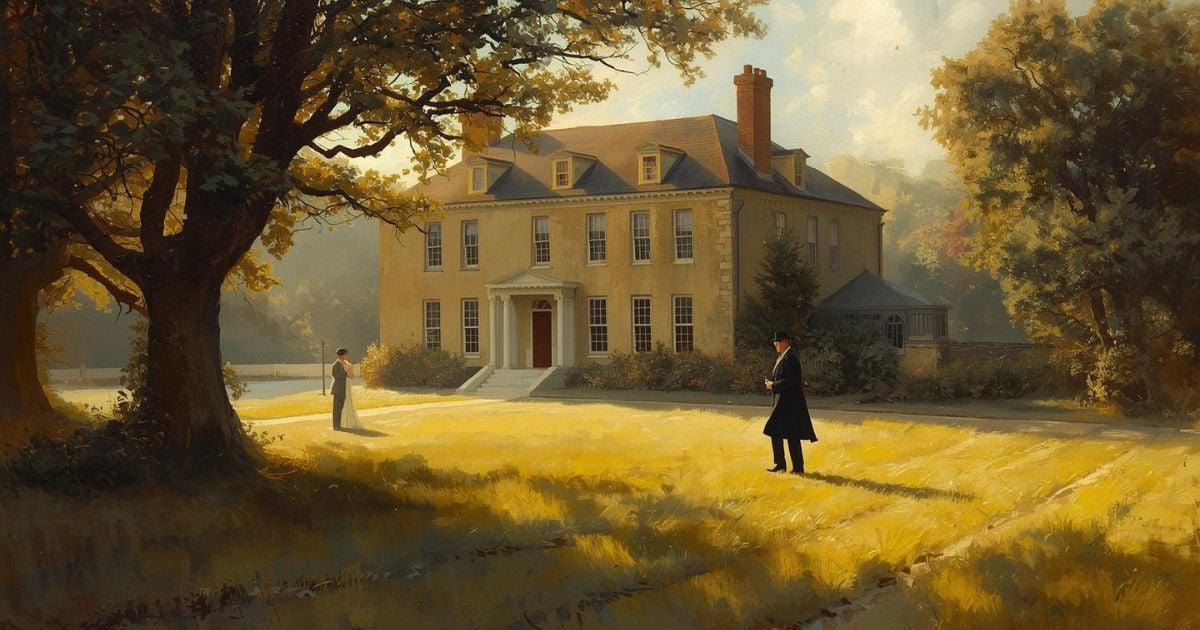
Corruption Beneath GlamourNick's cousin, Tom's wife, the girl Gatsby loved in Louisville in 1917. Her voice is full of money, and Gatsby treats that sound as a promise that a person can still be a dream. At the Plaza she admits she loved Tom too. After the crash she stays inside the house while Gatsby watches the window, then she and Tom leave town.
Confusing the Dream with the PersonFast track
You do not have to read all 9 chapters in one sprint. These 6 beats hold the book's argument together.
Full coverage
The same surfaces readers expect from a traditional study guide — plot, characters, themes, quotes, and homework help — grouped across 3 parts, with audio and the source text on every chapter. Free, no paywall.
Plot overview
Summary, context, and why the book still matters
9 chapter summaries
Every chapter with audio narration
8 key figures
Who drives the plot and what each one does
6 lessons
Themes traced to scenes, not generic labels
15+ important quotes
Verified lines with chapter links and analysis
Discussion questions
Five per chapter, with suggested answers for class and essays
Original text
Author's words beside every summary
This is not a plot cheat sheet. Wide Reads walks all nine chapters as Fitzgerald's pressure study of a dream hung on a person who has already chosen someone else. Follow the six lesson deep dives when a chapter hits close to home, then open individual chapters for summaries, quotes, and audio.
For plot and theme questions about The Great Gatsby, see Common Questions on the book page.
How to use this guide
Chapters 1 through 3 hold the green light, Tom's trip to the valley of ashes, Myrtle's broken nose, and the first party where Owl Eyes discovers the books are real.
Chapters 4 through 6 carry Wolfshiem's molars, the Louisville story, the tea where a mantel clock nearly falls, and Gatsby's claim that of course you can repeat the past.
Chapters 7 through 9 move from the Plaza suite to the yellow car, the night under Daisy's window, the pool, and the empty funeral. When a chapter raises a question you cannot shake, jump to the matching lesson page, then return to the chapter list.
Plot & context
Nick Carraway watches a man on a West Egg lawn reach toward a single green light across the water. The man is Jay Gatsby. The light sits on Daisy Buchanan's dock. Fitzgerald published the novel in 1925. The fortune, the mansion, and the parties were all built to recover a girl who had already chosen someone else.
Nick is a Yale man from a Midwest hardware family who comes East in the spring of 1922 to sell bonds and rents a shack squeezed between two estates. Jay Gatsby is James Gatz of North Dakota, a poor kid who renamed himself at seventeen when Dan Cody's yacht anchored in Lake Superior, made his money through bootlegging, and bought the Norman mansion next door so Daisy might walk into one of his parties. Daisy Buchanan is Nick's cousin: her voice is full of money, and she married Tom. Tom Buchanan is a former football star with a polo-pony fortune and a mistress named Myrtle Wilson at a garage in the valley of ashes. Jordan Baker is the golfer who floats through rooms and tells Nick the 1917 story. George Wilson believes what Tom feeds him. Meyer Wolfshiem fixed the 1919 World Series and wears human molars as cufflinks. Owl Eyes, drunk in the library, is shocked that the books are real.
Tom drags Nick off the train at Wilson's garage and upstairs to Myrtle's apartment, where a broken nose ends the party. Nick finally meets Gatsby among uninvited guests and uncut books. Gatsby drives him into the city, produces an Oxford photograph, and introduces Wolfshiem. Nick brokers tea at his cottage; a mantel clock nearly falls; Daisy weeps into shirts; the green light on her dock goes ordinary. Tom arrives on horseback and will not stay for dinner. In a Plaza Hotel suite Tom names the bootlegging and forces Daisy to admit she loved him too. Driving home, Daisy hits Myrtle with Gatsby's car and keeps going. Gatsby waits all night under her window. Wilson, told the yellow car was Gatsby's, walks to West Egg and shoots him in the pool. Almost nobody comes to the funeral.
Fitzgerald never treats the green light as decoration, or the parties as Jazz Age scenery. He wrote the book after living on Long Island next to a mansion he could see and not enter, after marrying a woman who would not have him until he could pay. The novel is short because he cut it to the bone. What remains is not a hymn to ambition. It is a picture of what happens when you build an entire identity to win back a version of a person who no longer exists, and when inherited money walks away clean while the people climbing pay the bill.
Read the full summary on the book page →
People still open this novel when they have built a life to recover a version of someone who has already moved on, or when inherited comfort walks away from a wreck it helped cause. Fitzgerald does not offer a policy victory. This guide keeps that pressure tied to the green light in chapter 1, the tea in chapter 5, and the funeral in chapter 9.
F. Scott Fitzgerald (1896 to 1940) was born in St. Paul, Minnesota, named after his distant cousin Francis Scott Key, and grew up watching his family slide down the social ladder while wealthier classmates set the pace at school. He attended Princeton, dropped out to join the army during World War I, and was stationed in Alabama, where he met Zelda Sayre. She would not marry him until he could afford her, so he rewrote a failed novel into This Side of Paradise (1920). It sold, they married, and the couple became famous overnight as the glamorous face of the new decade. The Great Gatsby (1925) sold poorly in his lifetime. He pulled it from his own life on Long Island: the rented house next to a mansion, the parties he could see from across the bay, the gap between old money and new, and the pursuit of a woman who agreed only once he could pay. He died in 1940 at forty-four, broke and convinced he had failed. Within twenty years the book was a fixture on school reading lists worldwide.
Themes with proof
Six pressures repeat across the nine chapters: you cannot repeat the past by rebuilding the set; a dream is not the person you hung it on; wealth signals belonging more than virtue; watching is not acting; reinvention has a bill; and glamour can hide a hit-and-run. Each spoke ties named chapters to the pattern.
Deep dives
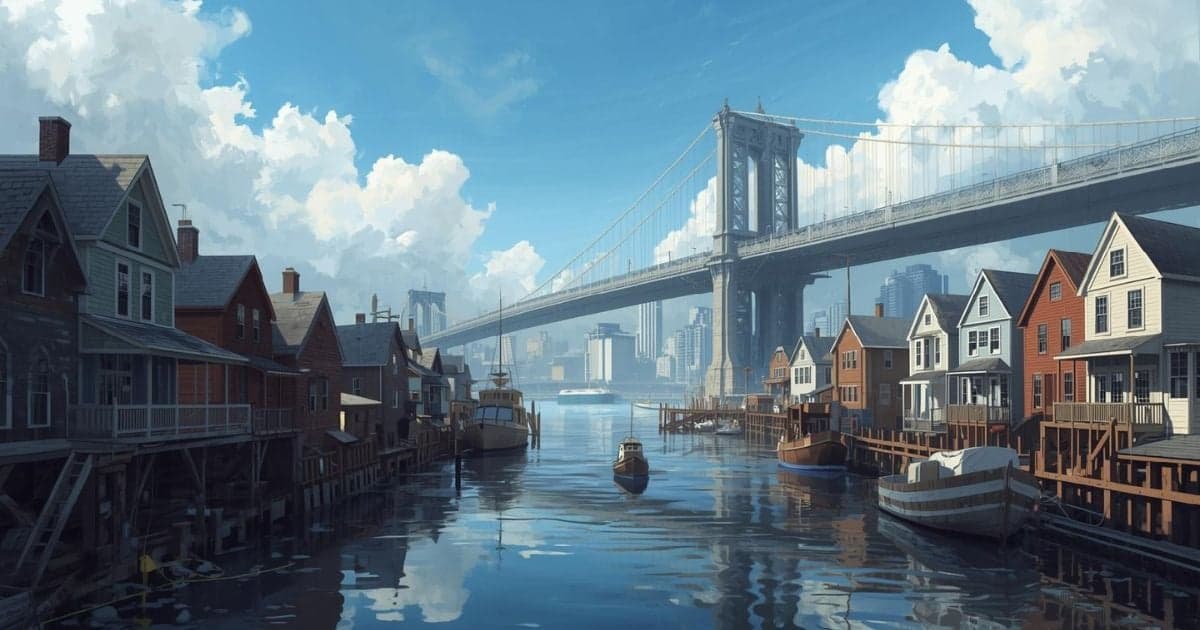
Read East Egg against West Egg, then the valley of ashes, and watch millions fail at the one boundary that matters.
Whenever you feel like criticizing anyone, just remember that all the people in this world haven't had the advantages that you've had.
Character guide
Who drives the plot, what each one wants, and why they matter to the argument of the book.
The Midwest bond salesman who rents the shack, brokers the tea, watches the hit-and-run, and is left arranging a funeral almost nobody attends.
James Gatz of North Dakota, who renamed himself at seventeen, bought the mansion for a view of Daisy's dock, and dies in the pool waiting for a phone that does not ring.
Nick's cousin, whose voice is full of money, who weeps into shirts at the tea, hits Myrtle, and stays inside while Gatsby watches the window.
The polo-pony husband who keeps Myrtle in the valley of ashes, names the bootlegging at the Plaza, and points Wilson toward West Egg.
The golfer who tells Nick the 1917 story and floats through rooms without ever paying the bill Gatsby pays.
Tom's mistress at the garage, whose broken nose ends one party and whose body in the road ends another.
The garage owner who believes what Tom feeds him, then walks to West Egg with a gun.
The man who fixed the 1919 World Series, wears human molars as cufflinks, and does not come to the funeral.
Memorable lines
Verified passages with chapter links — the lines teachers and essays keep returning to.
“Whenever you feel like criticizing anyone, just remember that all the people in this world haven't had the advantages that you've had.”
“Only Gatsby, the man who gives his name to this book, was exempt from my reaction—Gatsby, who represented everything for which I have an unaffected scorn.”
“This is a valley of ashes—a fantastic farm where ashes grow like wheat into ridges and hills and grotesque gardens”
“We're getting off. I want you to meet my girl.”
“In his blue gardens men and girls came and went like moths among the whisperings and the champagne and the stars.”
“People were not invited—they went there.”
“He's a bootlegger, said the young ladies, moving somewhere between his cocktails and his flowers.”
“Look here, old sport, what's your opinion of me, anyhow?”
“Don't be silly; it's just two minutes to four.”
“You always have a green light that burns all night at the end of your dock.”
“Anything to say about what?”
“Jay Gatsby of West Egg, Long Island, sprang from his Platonic conception of himself. He was a son of God—a phrase which, if it means anything, means just that.”
“You always look so cool”
“Her voice is full of money”
“I waited, and about four o’clock she came to the window and stood there for a minute and then turned out the light.”
Class & essay prep
Sample prompts drawn from the chapter guides — each with suggested answers for seminars and written work.
What does Nick mean when he says he reserves judgment, and where does that habit fail him at Tom and Daisy's dinner?
From Chapter 1How does the divide between East Egg and West Egg shape what Nick walks into?
From Chapter 1What is the valley of ashes, and how does it sit between the wealth of the Eggs and New York?
From Chapter 2What do Doctor T. J. Eckleburg's eyes suggest in a chapter about hidden cost?
From Chapter 2Why do most guests come to Gatsby's parties without being invited?
From Chapter 3What does Owl Eyes discover about Gatsby's library books?
From Chapter 3What proof does Gatsby offer Nick about his Oxford background and war service?
From Chapter 4Who is Meyer Wolfshiem, and what does his connection to Gatsby suggest?
From Chapter 4Why is Gatsby so restless the night before the tea, with his house blazing but silent?
From Chapter 5What happens when the mantel clock tilts during Gatsby and Daisy's reunion?
From Chapter 5How did James Gatz become Jay Gatsby at seventeen?
From Chapter 6Why does Tom's riding party leave Gatsby standing when he goes inside to change for dinner?
From Chapter 6Why has Gatsby dismissed his servants and replaced them before the Buchanan lunch?
From Chapter 7How does Pammy's brief entrance change Gatsby's picture of Daisy?
From Chapter 7What does Gatsby tell Nick he saw at four o'clock at Daisy's window?
From Chapter 8Chapter by chapter
Grouped by 3 sections — the same structure as the book hub.
Chapters 1–3 · The green light, the valley of ashes, and the first party
Nick opens by admitting his father's advice made him reserve judgment, which draws confessions he sometimes fakes sleep to avoid. He also admits that ...
Halfway between West Egg and Manhattan the road cuts through the valley of ashes: grey dust, ash-heaps, and the faded eyes of Doctor T. J. Eckleburg b...
Gatsby's parties run like a private amusement park: crates of oranges fed into a juicing machine, an orchestra in the garden, cars parked five deep, a...
Chapters 4–6 · Wolfshiem, the tea, and the claim that 1917 can return
On a Sunday morning the party crowd returns while church bells ring alongshore, and Nick reads back the guest list he once copied from a timetable dat...
The night before the meeting, Gatsby's house blazes from tower to cellar while the lawn stays silent. He meets Nick on the grass restless enough to su...
A reporter turns up at Gatsby's door hunting for a statement about rumors he barely understands, and Nick says the instinct is right: by now the party...
Chapters 7–9 · The Plaza, the yellow car, and the empty funeral
Heat turns the whole day into a pressure cooker, and Gatsby's parties have already gone dark. Nick notices cars turning into the drive and leaving a m...
Nick cannot sleep after the accident. At dawn he crosses to Gatsby's open house and finds him slumped in the hall. Nothing happened, Gatsby says: he w...
Two years later Nick still remembers the hours after Gatsby's death as police, photographers, and reporters marching through the house. The papers tur...
Using this guide
How to use Wide Reads for class, essays, and revision — and how this guide compares to traditional study sites.
Traditional study guides summarise The Great Gatsby as a Jazz Age plot about the American dream. This guide keeps every idea tied to the chapter that makes it: all 9 chapters, 8 key figures, and discussion questions with suggested answers. Wide Reads adds You Cannot Repeat the Past and The Cost of Watching traced through named scenes like the green light, the tea, and the empty funeral. Summaries include audio. Free, no paywall.
The Great Gatsby is rated intermediate difficulty. Our chapter-by-chapter analysis breaks down complex passages, explains historical context, and highlights key themes to make the text more accessible. Each chapter includes summaries, character analysis, and discussion questions to deepen your understanding.
Yes — use this reading guide alongside The Great Gatsby, not instead of it. Wide Reads exists to show you why the book still matters: lessons, chapter summaries with audio, and life skills you can carry into real life. That context can sharpen essays on themes, characters, and quotes. Always read F. Scott Fitzgerald's original text, though. We are the guide at the trailhead; the classic is still the point.
Chapter 1 opens with Nick watching a man on a lawn reach toward a single light across the water. Each chapter adds summaries, quotes, audio, and the dream-versus-person thread that turns a 1925 novel into a working test for anyone still trying to rewind a life.
Plot, characters, and themes — plus audio, source text, and patterns you can use after class
Two ways in
Chapter by chapter, with audio. The meaning arrives because you experienced it — not because someone listed bullet points.
Start with this.
The actual words the author wrote, alongside every summary. Use the guide, then step into the source.
Then step into the source.
Either way, the door opens inward.
— and most of all, Why does this matter?
Guides, life skills, and the full library.More ways to read The Great Gatsby: guides, life skills, and the wider library.

Weekly insights from the classics. Amplify Your Mind.
We focus on public domain classics because these timeless works belong to everyone. No paywalls, no restrictions—just wisdom that has stood the test of centuries, freely accessible to all readers.
Public domain books have shaped humanity's understanding of love, justice, ambition, and the human condition. By amplifying these works, we help preserve and share literature that truly belongs to the world.
© 2026 Wide Reads™. All Rights Reserved.
Intelligence Amplifier™ and Wide Reads™ are proprietary trademarks of Arvin Lioanag.
Copyright Protection: All original content, analyses, discussion questions, pedagogical frameworks, and methodology are protected by U.S. and international copyright law. Unauthorized reproduction, distribution, web scraping, or use for AI training is strictly prohibited. See our Copyright Notice for details.
Disclaimer: The information provided on this website is for general informational and educational purposes only and does not constitute professional, legal, financial, or technical advice. While we strive to ensure accuracy and relevance, we make no warranties regarding completeness, reliability, or suitability. Any reliance on such information is at your own risk. We are not liable for any losses or damages arising from use of this site. By using this site, you agree to these terms.
Follow Nick from reserved judgment to an empty funeral and see what witness costs when it never becomes action.
I'm one of the few honest people that I have ever known.