Wide Reads
Literature MattersLife IndexEducators
Sign in
Where to Begin
The Brothers Karamazov - When Conscience Becomes a Tormentor

Fyodor Dostoevsky

The Brothers Karamazov

When Conscience Becomes a Tormentor

Home›Books›The Brothers Karamazov›Chapter 79
Previous
79 of 96
Next

Summary

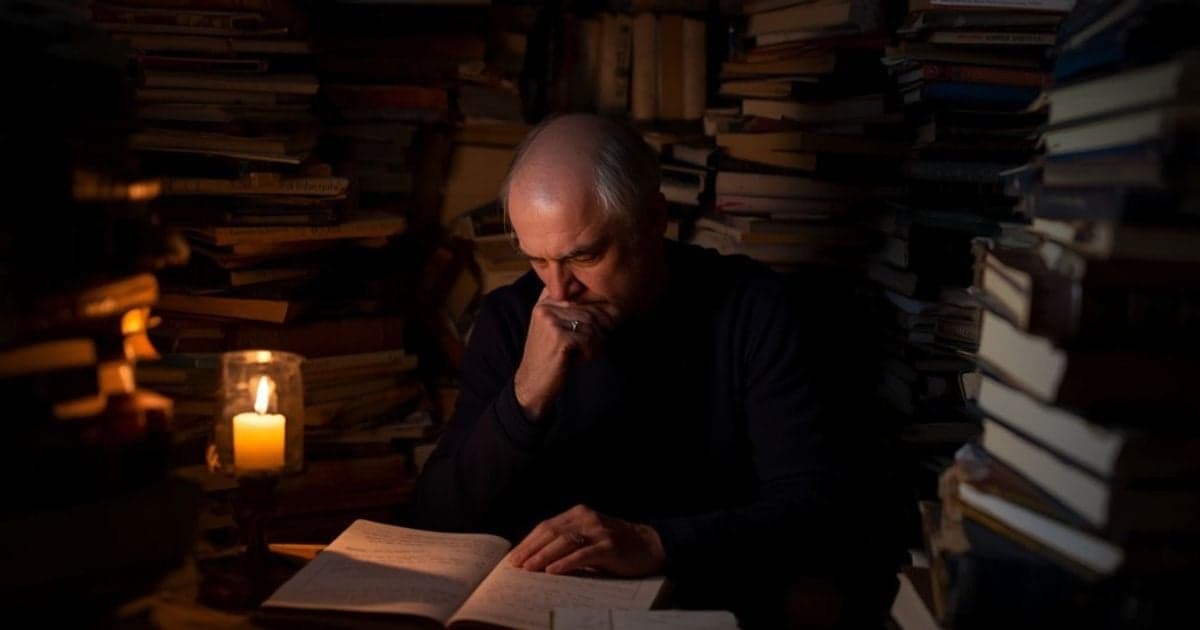
Alyosha arrives with devastating news: Smerdyakov has hanged himself, leaving a suicide note claiming full responsibility. But Ivan already knew—he claims 'he' told him, referring to a devil who has been visiting him. Ivan is clearly having a mental breakdown, talking to hallucinations while struggling with whether to confess his role in his father's murder. The devil he sees represents all his worst thoughts and impulses, taunting him about his motives for wanting to confess. Is Ivan planning to testify out of genuine conscience, or just to look heroic? The devil cruelly suggests Ivan is a coward who wants praise for his 'noble' sacrifice, even though no one will believe him now that Smerdyakov is dead. Ivan rages against these accusations because they feel true. He's caught between his pride and his conscience, his desire to do right and his need to be seen as righteous. Alyosha tends to his delirious brother with compassion, recognizing that Ivan's illness stems from his internal war between belief and disbelief, conscience and pride. As Ivan collapses into unconsciousness, Alyosha understands this is a spiritual crisis: Ivan's heart is being conquered by the God he claims not to believe in, and he'll either surrender to truth or destroy himself fighting it.

Coming Up in Chapter 80

The trial begins, and all of Russia watches as the Karamazov family drama reaches its climactic moment in court. Will Ivan's testimony save or doom his brother Dmitri?

Share it with friends

Previous ChapterNext Chapter
GO ADS FREE — JOIN US
Original text
complete·2,261 words
I

“t Was He Who Said That”

Alyosha coming in told Ivan that a little over an hour ago Marya Kondratyevna had run to his rooms and informed him Smerdyakov had taken his own life. “I went in to clear away the samovar and he was hanging on a nail in the wall.” On Alyosha’s inquiring whether she had informed the police, she answered that she had told no one, “but I flew straight to you, I’ve run all the way.” She seemed perfectly crazy, Alyosha reported, and was shaking like a leaf. When Alyosha ran with her to the cottage, he found Smerdyakov still hanging. On the table lay a note: “I destroy my life of my own will and desire, so as to throw no blame on any one.” Alyosha left the note on the table and went straight to the police captain and told him all about it. “And from him I’ve come straight to you,” said Alyosha, in conclusion, looking intently into Ivan’s face. He had not taken his eyes off him while he told his story, as though struck by something in his expression.

1 / 13

Master this chapter. Complete your experience

Purchase the complete book to access all chapters and support classic literature

Read Free on GutenbergBuy at Powell'sBuy on Amazon

As an Amazon Associate, we earn a small commission from qualifying purchases at no additional cost to you.

Available in paperback, hardcover, and e-book formats

GO ADS FREE — JOIN US

Why This Matters

Connect literature to life

Skill: Detecting Self-Sabotage Patterns

This chapter teaches how to recognize when you're choosing destruction over admission of error.

Practice This Today

This week, notice when you start questioning your own motives for doing the right thing—that's usually pride trying to protect your image instead of your actual worth.

GO ADS FREE — JOIN US

Now let's explore the literary elements.

Key Quotes & Analysis

"I destroy my life of my own will and desire, so as to throw no blame on any one."

— Smerdyakov (in his suicide note)

Context: Left on the table after he hanged himself

Smerdyakov tries to take full responsibility for the murder in death, perhaps out of guilt or to protect Ivan. His final act is both confession and protection.

In Today's Words:

I'm doing this by choice so nobody else gets blamed for what happened.

"I knew he had hanged himself."

— Ivan

Context: When Alyosha tells him about Smerdyakov's suicide

Ivan's claim that he already knew reveals how deep his psychological break has become. Reality and hallucination are blending together for him.

In Today's Words:

I already knew this was going to happen.

"Brother, you must be terribly ill. You look and don't seem to understand what I tell you."

— Alyosha

Context: Observing Ivan's strange reaction to the news

Alyosha recognizes that Ivan is having a mental health crisis, not just being callous. His compassionate response shows he understands this is illness, not indifference.

In Today's Words:

Something's really wrong with you right now - you're not processing what I'm saying.

Thematic Threads

Pride

In This Chapter

Ivan's pride prevents him from confessing cleanly—he tortures himself questioning whether his motives are pure enough

Development

Evolved from Ivan's intellectual arrogance to this complete mental breakdown over moral action

In Your Life:

You might recognize this when you can't apologize because you're too focused on how it makes you look.

Conscience

In This Chapter

Ivan's conscience demands confession, but his pride corrupts even this good impulse by questioning its purity

Development

His conscience has grown stronger throughout the book, now powerful enough to break his mind

In Your Life:

You might feel this when you know what's right but keep finding reasons why you can't do it yet.

Identity

In This Chapter

Ivan's entire sense of self crumbles when he can't be both right and righteous simultaneously

Development

His intellectual identity has been under attack since meeting Zosima and now completely fractures

In Your Life:

You might experience this when admitting fault feels like admitting you're a bad person entirely.

Truth

In This Chapter

Truth becomes a weapon Ivan uses against himself—the devil represents his fear that even his honesty is dishonest

Development

Truth has moved from intellectual concept to lived reality that demands response

In Your Life:

You might struggle with this when you question whether you're being honest or just performing honesty.

Mental Health

In This Chapter

Ivan's breakdown shows how unresolved moral conflicts can literally fracture the mind

Development

His mental state has deteriorated as his moral crisis intensified

In Your Life:

You might notice this when stress about doing right makes you feel like you're losing your grip on reality.

GO ADS FREE — JOIN US

You now have the context. Time to form your own thoughts.

Discussion Questions

  1. 1

    What does Ivan's 'devil' represent, and why does he appear when Ivan is deciding whether to confess?

    analysis • surface
  2. 2

    Why does Ivan's mind create a voice that questions his motives for wanting to confess - suggesting he just wants to look heroic?

    analysis • medium
  3. 3

    Where do you see this pattern in modern life - people choosing chaos or breakdown rather than admitting they were wrong?

    application • medium
  4. 4

    How could Ivan have handled his guilt and responsibility without having a mental breakdown?

    application • deep
  5. 5

    What does Ivan's crisis teach us about the relationship between pride and conscience in moral decision-making?

    reflection • deep

Critical Thinking Exercise

10 minutes

Track Your Pride-Conscience Conflicts

Think of a recent situation where you knew you should apologize, admit a mistake, or take responsibility for something, but you resisted. Write down what happened, then identify what your 'inner devil' was telling you - what fears or justifications kept you from doing the right thing. Finally, rewrite how you could have handled it differently.

Consider:

  • •Notice how your mind creates reasons why apologizing would be 'weak' or 'unfair'
  • •Pay attention to how you question your own motives when considering doing the right thing
  • •Observe how the fear of looking foolish can be stronger than the desire to do right

Journaling Prompt

Write about a time when your pride prevented you from taking responsibility. What would have happened if you had chosen humility over self-protection? How might that have changed the outcome?

GO ADS FREE — JOIN US

Coming Up Next...

Chapter 80: The Trial Begins

The trial begins, and all of Russia watches as the Karamazov family drama reaches its climactic moment in court. Will Ivan's testimony save or doom his brother Dmitri?

Continue to Chapter 80
Previous
The Devil in the Details
Contents
Next
The Trial Begins

Continue Exploring

The Brothers Karamazov Study GuideTeaching ResourcesEssential Life IndexBrowse by ThemeAll Books
Moral Dilemmas & EthicsIdentity & Self-DiscoveryLove & Relationships

You Might Also Like

Crime and Punishment cover

Crime and Punishment

Fyodor Dostoevsky

Also by Fyodor Dostoevsky

The Idiot cover

The Idiot

Fyodor Dostoevsky

Also by Fyodor Dostoevsky

Thus Spoke Zarathustra cover

Thus Spoke Zarathustra

Friedrich Nietzsche

Explores morality & ethics

Hamlet cover

Hamlet

William Shakespeare

Explores morality & ethics

Browse all 47+ books

Share This Chapter

Know someone who'd enjoy this? Spread the wisdom!

TwitterFacebookLinkedInEmail

Read ad-free with Prestige

Get rid of ads, unlock study guides and downloads, and support free access for everyone.

Subscribe to PrestigeCreate free account
Intelligence Amplifier
Intelligence Amplifier™Powering Wide Reads

Exploring human-AI collaboration through books, essays, and philosophical dialogues. Classic literature transformed into navigational maps for modern life.

2025 Books

→ The Amplified Human Spirit→ The Alarming Rise of Stupidity Amplified→ San Francisco: The AI Capital of the World
Visit intelligenceamplifier.org
hello@widereads.com

WideReads Originals

→ You Are Not Lost→ The Last Chapter First→ The Lit of Love→ Wealth and Poverty→ 10 Paradoxes in the Classics · coming soon
Arvintech
arvintechAmplify your Mind
Visit at arvintech.com

Navigate

  • Home
  • Library
  • Essential Life Index
  • How It Works
  • Subscribe
  • Account
  • About
  • Contact
  • Authors
  • Suggest a Book
  • Landings

Made For You

  • Students
  • Educators
  • Families
  • Readers
  • Literary Analysis
  • Finding Purpose
  • Letting Go
  • Recovering from a Breakup
  • Corruption
  • Gaslighting in the Classics

Newsletter

Weekly insights from the classics. Amplify Your Mind.

Legal

  • Privacy Policy
  • Terms of Service
  • Cookie Policy
  • Accessibility

Why Public Domain?

We focus on public domain classics because these timeless works belong to everyone. No paywalls, no restrictions—just wisdom that has stood the test of centuries, freely accessible to all readers.

Public domain books have shaped humanity's understanding of love, justice, ambition, and the human condition. By amplifying these works, we help preserve and share literature that truly belongs to the world.

A Pilgrimage

Powell's City of Books

Portland, Oregon

If you ever find yourself in Portland, walk to the corner of Burnside and 10th. The building takes up an entire city block. Inside is over a million books, new and used on the same shelf, organized by color-coded rooms with names like the Rose Room and the Pearl Room. You can lose an afternoon. You can lose a weekend. You will find a book you have been looking for your whole life, and three you did not know existed.

It is a pilgrimage. We cannot find a bookstore like it anywhere on earth. If you read the classics, and you ever get the chance, go. It belongs on every reader's bucket list.

Visit powells.com

We are not in any way affiliated with Powell's. We are just a very big fan.

© 2026 Wide Reads™. All Rights Reserved.

Intelligence Amplifier™ and Wide Reads™ are proprietary trademarks of Arvin Lioanag.

Copyright Protection: All original content, analyses, discussion questions, pedagogical frameworks, and methodology are protected by U.S. and international copyright law. Unauthorized reproduction, distribution, web scraping, or use for AI training is strictly prohibited. See our Copyright Notice for details.

Disclaimer: The information provided on this website is for general informational and educational purposes only and does not constitute professional, legal, financial, or technical advice. While we strive to ensure accuracy and relevance, we make no warranties regarding completeness, reliability, or suitability. Any reliance on such information is at your own risk. We are not liable for any losses or damages arising from use of this site. By using this site, you agree to these terms.