
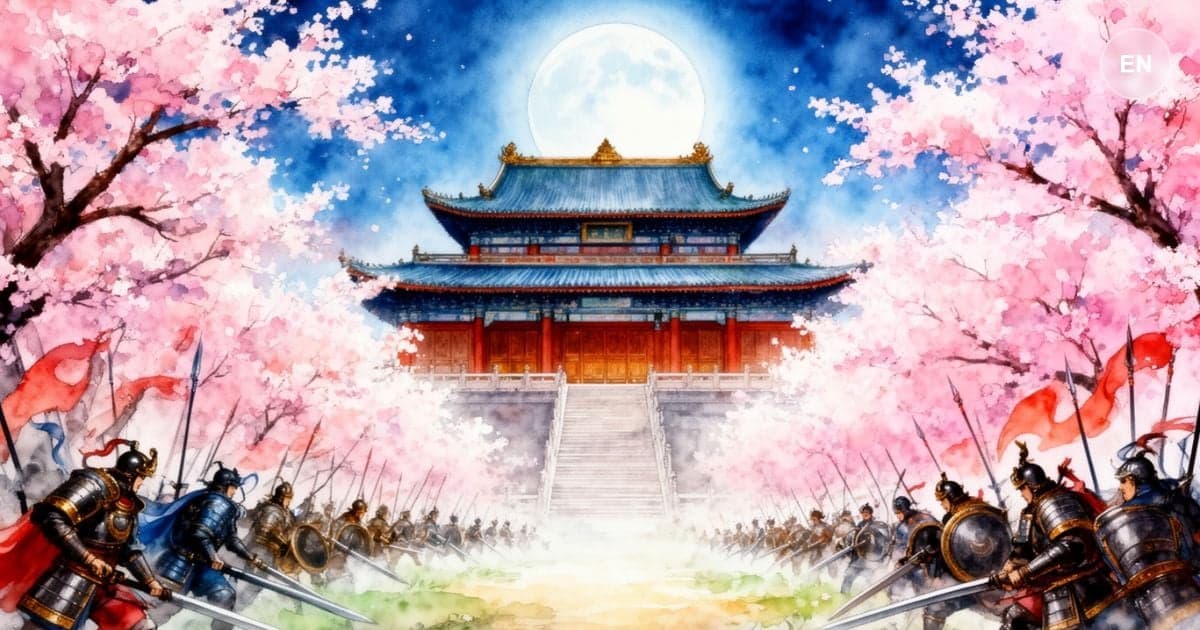
Sun Tzu refuses the idea of a universal method. Some ground must not be contested. Some orders from the sovereign must not be obeyed. Then he names five dangerous faults that turn a general into a target: recklessness, cowardice, a hasty temper, a delicacy of honour, and over-solicitude for the men. Each fault is not a flaw to feel bad about. It is a lever an opponent can pull on schedule.
Direct and indirect approaches are supposed to combine, so the same army can look orthodox and then arrive from a side no one was watching. Water runs from high places and hastens downward without being told to. The skilled commander imposes a shape on the fight instead of accepting the one the opponent prefers, and refuses to let yesterday's winning method calcify into today's habit.
Rigidity is not discipline. It is a signal. The general who always attacks the same way, or always protects the same weakness, has already told the enemy how to win. Varying tactics under pressure is not indecision. It is refusing to hand the other side your pattern for free.
The Central Lesson
Rigidity is not discipline, it is a signal. The general who always attacks the same way, refuses the same order, or protects the same flaw has already told the enemy how to beat him. Sun Tzu's five faults are not a list of character defects to feel bad about. They are the specific levers an opponent will pull first, because a predictable strength is easier to exploit than a hidden weakness. Varying tactics under pressure is not indecision. It is refusing to hand the other side your pattern for free.
Prestige deep dive
A Psychological Reading of The Art of War
The Art of War is the psychology of a commander who must know the other side, remain unknown himself, and refuse to spend lives on anger, rigidity, or a campaign that has forgotten its object.
Read the full psychological readingApplying This to Your Life
Name Your Tell
Which of the five faults is yours when pressure arrives: speed, retreat, temper, honour, or over-care? Write the last time someone used that habit against you. That is the variation you need first.
Refuse the Locked Order
Some commands must not be obeyed if they force you onto ground you already know is wrong. Change the method in the room you are actually in, not the room the last success happened in.
Other lessons in this book
More life-skill deep dives from the same classic.
Concentrated Force and Timing
Watch chapter 5's falcon, then the point of impact, and mass strength where it lands instead of everywhere.
3 chapters·Explore AnalysisReading Terrain and Situation
Walk chapters 9, 10, and 11 through dust, six terrains, and the nine situations, and let the ground revise the plan.
4 chapters·Explore AnalysisCalculating Before You Commit
Score the five factors in chapter 1, then become undefeatable in chapter 4, and treat the temple as the real battlefield.
3 chapters·Explore AnalysisThe Cost of Prolonged War
Hear chapter 2's drain, chapter 7's exhausted march, and chapter 12's rule: move only when there is something to gain.
3 chapters·Explore AnalysisWinning Without Fighting
Sit with chapter 3's ranking of attacks, then chapter 6's water, and break resistance before you spend a siege.
3 chapters·Explore Analysis
Continue exploring
Explore this theme
The same lessons in other books
See how other books teach the same life skills.
The Aeneid
Carrying Grief While You LeadTell Troy while it still hurts, watch Dido's smoke, walk the underworld, and bury Pallas without putting the command down.
The Analects
Cultivating the JunziStart in Book I's family obligations, then Books IX, XIV, and XVI, and treat exemplary character as compound interest, not a costume.
Richard III
Recognizing Sociopathic CharmWatch the funeral ring and the prayer book between two bishops: charm that arrives too fast and never has a self underneath.
Where the lesson lives in the book
Five Faults, One Gift
Variation in Tactics refuses the idea of a universal method. Some ground must not be contested. Some orders from the sovereign must not be obeyed. Then Sun Tzu names five dangerous faults: recklessness, cowardice, a hasty temper, a delicacy of honour, and over-solicitude for the men. Each one makes a commander readable.
Key Insight:
Your predictable virtue is an attack surface. The person who always charges, always soothes, or always waits for permission has already told the other side how to set the trap.
“There are five dangerous faults which may affect a general:”
Direct and Indirect
Energy teaches that force is not a pile of numbers. Direct (zheng) and indirect (qi) approaches combine so the same army can look orthodox and then arrive from a side no one was watching. The falcon's swoop works because the strike and the moment are one decision.
Key Insight:
Variation is not novelty for its own sake. It is the ability to change the angle of the same strength so the other side cannot pre-load a defence.
“The quality of decision is like the well-timed swoop of a falcon which enables it to strike and destroy its victim.”
Water Finds the Gap
Weak Points and Strong compares tactics to water, which runs from high places and hastens downward. The skilled commander imposes a will on the situation instead of accepting the form the opponent prefers. Be formless enough that yesterday's successful method is not tomorrow's habit.
Key Insight:
Repeating last quarter's winning move is how a strength becomes a tell. Ask where the other side is not defending, then move there, even if the last success happened somewhere else.
“Military tactics are like unto water; for water in its natural course runs away from high places and hastens downwards.”