Chapter 03
Fighting Shadows and Old Lies
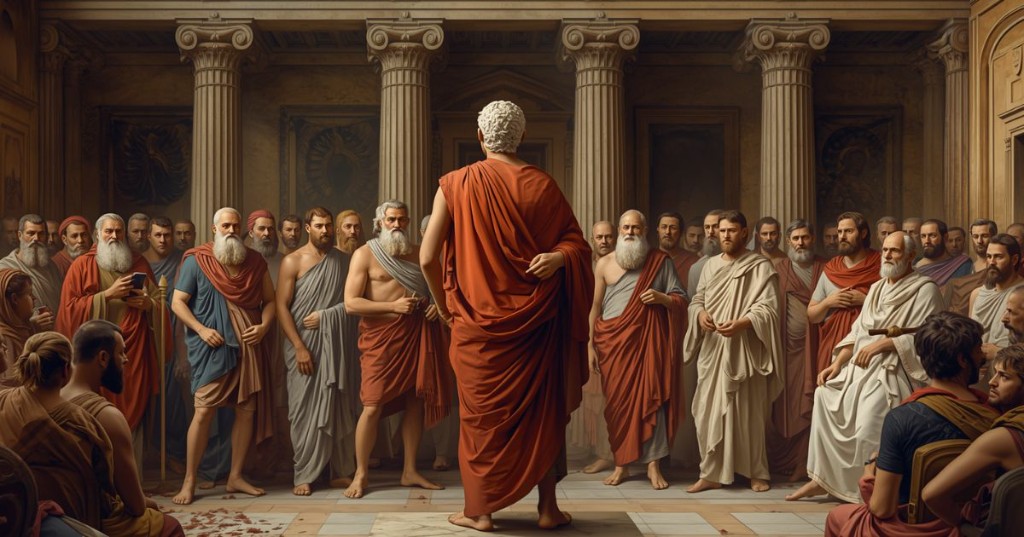
And first, I have to reply to the older charges and to my first accusers, and then I will go on to the later ones. For of old I have had many accusers, who have accused me falsely to you during many years; and I am more afraid of them than of Anytus and his associates, who are dangerous, too, in their own way. But far more dangerous are the others, who began when you were children, and took possession of your minds with their falsehoods, telling of one Socrates, a wise man, who speculated about the heaven above, and…
Public-domain chapter text, formatted for reading.
Master this chapter. Complete your experience
Purchase the complete book to access all chapters and support classic literature
Available in paperback, hardcover, and e-book formats
Now let's explore the literary elements.
Key Quotes & Analysis
"I am more afraid of them than of Anytus and his associates, who are dangerous, too, in their own way."
Context: Explaining why old anonymous accusers are more threatening than named ones
Formal accusers can be cross-examined; childhood rumors cannot be summoned to the stand.
In Today's Words:
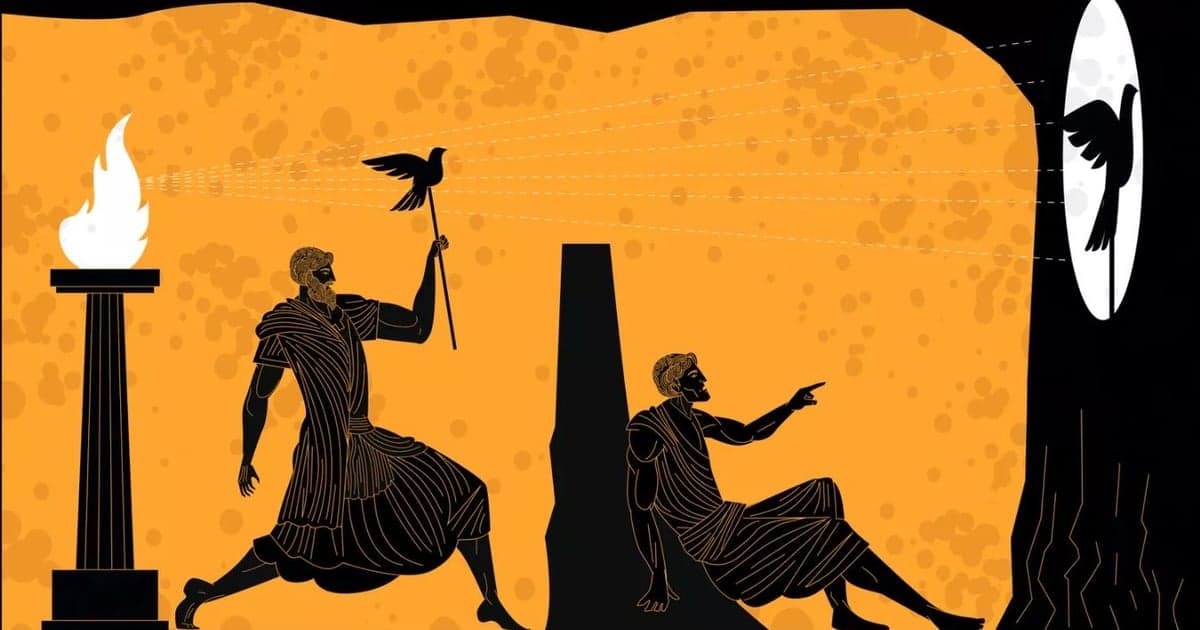
The men suing Socrates can be answered in court, but decades of gossip planted in childhood cannot be cross-examined. He says those anonymous accusers are far more dangerous than Anytus because their story became common knowledge without a trial. When people say everyone knows you are difficult, ask who actually witnessed what.
"I must simply fight with shadows in my own defence, and argue when there is no one who answers."
Context: Explaining why decades-old rumors cannot be cross-examined
You cannot refute gossip or summon whisperers to the stand; you argue against accumulated prejudice.
In Today's Words:
Socrates says he must fight shadows because he cannot bring anonymous whisperers into court to answer him. The real accusers are everywhere and nowhere at once, which is why reputation damage over years is harder to undo than a formal charge. Document specific incidents when informal stories start hardening into fact.
"But the simple truth is, O Athenians, that I have nothing to do with physical speculations."
Context: Rejecting the Clouds caricature of a natural philosopher
He invites witnesses to confirm he never lectured on heaven and earth, then asks the jury to infer the rest.
In Today's Words:
Socrates says plainly he has nothing to do with physical speculations and asks anyone who has heard otherwise to speak up. The silence becomes evidence that the old affidavit copied comedy rather than his life. When a label does not match your record, ask for one witness and one date instead of defending every rumor.
"Happy is Evenus, I said to myself, if he really has this wisdom, and teaches at such a moderate charge. Had I the same, I should have been very proud and conceited; but the truth is that I have no knowledge of the kind."
Context: Closing by contrasting real paid sophists with his own lack of teachable expertise
The irony does the work: he does not deny wisdom can be sold honorably, only that he possesses it.
In Today's Words:
Good for Evenus if he actually knows what he sells for five minae; Socrates says he has no such knowledge to charge for. The joke separates him from both the comic philosopher and the professional teacher the rumors describe. When someone is accused of being a paid expert, ask whether they ever took the fee.
Thematic Threads
Class
In This Chapter
Socrates is stereotyped as a typical paid sophist despite never charging fees, showing how class assumptions stick regardless of individual reality
Development
Building from earlier chapters where his humble origins contrast with his philosophical reputation
In Your Life:
You might face assumptions about your capabilities or character based on your job, neighborhood, or background rather than your actual performance.
Identity
In This Chapter
Socrates must defend not just his actions but his entire public persona, shaped by comedy and cultural narrative rather than truth
Development
Deepening from previous chapters where he established his unique philosophical mission
In Your Life:
Your reputation at work or in your community might be shaped more by gossip and first impressions than by your consistent daily actions.
Social Expectations
In This Chapter
The court expects him to fit the mold of either a natural philosopher or a paid teacher, categories that don't capture who he actually is
Development
Expanding on earlier themes of how society pressures individuals into predetermined boxes
In Your Life:
People might expect you to behave a certain way based on your role or background, making it hard to be seen as an individual.
Power Dynamics
In This Chapter
Anonymous accusers wield more influence than named ones because they shaped public opinion when people were young and impressionable
Development
Introduced here as a new dimension of how power operates through cultural narrative
In Your Life:
The people who really control your opportunities might not be the ones making official decisions, but those who influence the decision-makers through informal networks.
You now have the context. Time to form your own thoughts.
Discussion Questions
This is not a test. Five prompts guide you through the chapter, from how it opens to how it closes, so you notice context and rhythm rather than facts to memorize. Sit with each question in your own words. When you see "One way to read it," treat it as a starting point, not the only answer.
- 1
Why does Socrates say his anonymous accusers are more dangerous than Anytus and Meletus?
analysis • surfaceOne way to read it
They planted false stories when jurors were children, went unanswered for years, and cannot be cross-examined like named prosecutors.
- 2
How did Aristophanes' Clouds shape the old charges against Socrates?
analysis • mediumOne way to read it
The comedy showed a man called Socrates walking on air and talking nonsense about nature, which matched the affidavit about probing heaven and earth.
- 3
How would you test a workplace caricature that everyone repeats but no one can source?
application • mediumOne way to read it
Socrates names the stereotype, then asks who has actually seen the behavior; you can ask for one incident, one date, and one witness.
- 4
Why does Socrates mention Evenus and other paid sophists near the end of this segment?
application • deepOne way to read it
Real teachers earn fees honestly; he denies possessing the wisdom he is accused of selling, which undercuts both the comic and sophist caricatures.
- 5
What does shadow boxing teach you about defending yourself against old reputation damage?
reflection • deepOne way to read it
You cannot refute every whisper at once; force specific tests on the claims that matter and build a record witnesses can confirm.
Critical Thinking Exercise
Track Your Own Reputation Trail
Think about how others might describe you in three different settings: at work, in your family, and in your community. Write down what you think people say about you versus what you know to be true about yourself. Look for gaps between reputation and reality, then identify who or what shaped those perceptions.
Consider:
- •Consider both positive and negative aspects of your reputation
- •Think about when and how certain impressions of you might have formed
- •Notice which reputation elements you can control versus those you cannot
Journaling Prompt
Write about a time when you discovered someone had a completely wrong impression of you. How did that false impression form, and what did you learn about managing your reputation going forward?
Coming Up Next...
Chapter 4: The Oracle's Riddle Revealed
Having addressed the old rumors, Socrates now faces a direct challenge from the jury: if he's not doing anything strange, why do these accusations exist at all? He prepares to reveal the true source of his troubles and the mission that has made him so many enemies.