Free study guide · no paywall

Prestige · $2.99/month
Chapter audio, theme analysis, and downloads
Free study guide · no paywall
by Daniel Defoe (1719)
A shipwrecked trader rebuilds an entire life from salvage across twenty-eight years, mapped across 19 chapters and six lessons.
Start here
19 chapter summaries · 7 key figures · discussion questions · quotes · free
Crusoe ignores his father's warning, is enslaved by a Sallee rover, and escapes with a boy named Xury before a Portuguese captain sets him up in Brazil. A slaving voyage wrecks him off South America; he spends thirteen days rafting tools ashore and years learning to survive alone. Fifteen years in, a footprint ends the fiction that the island is empty. He later rescues a man he calls Friday, helps an English captain put down a mutiny, and leaves the island after twenty-eight years to find his Brazilian plantation has made him rich without him.
What readers search for
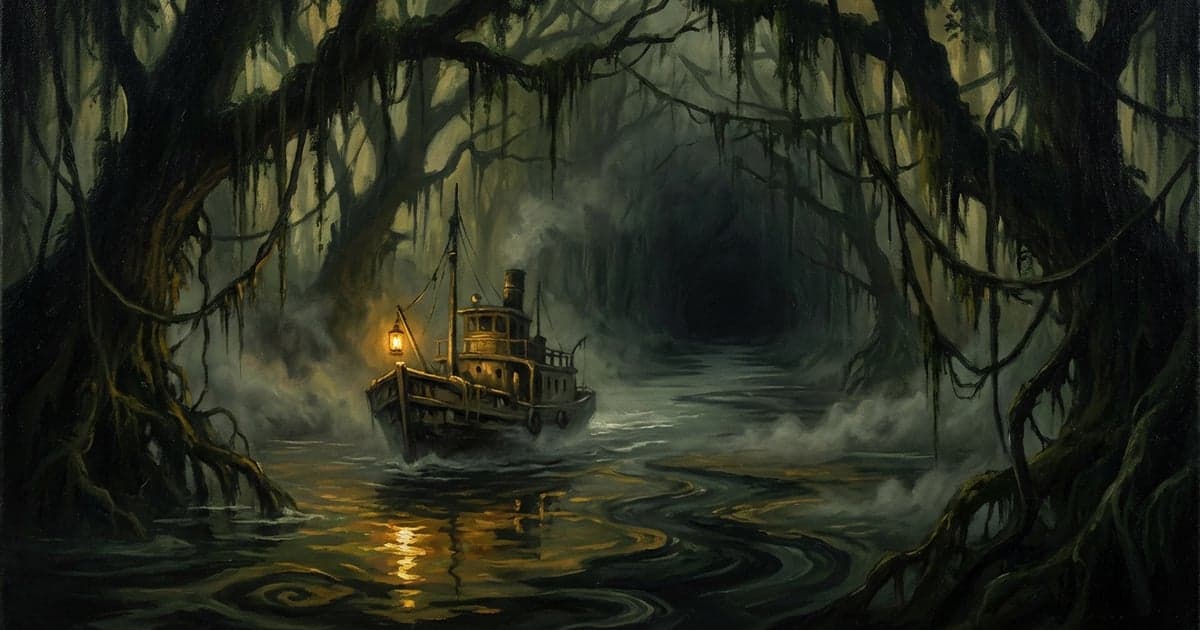
He spends thirteen days rafting tools, gunpowder, and food off the dying ship before the next tide can take them. Once ashore he notches a calendar into a post, builds a fortress into a hillside, and fails at pottery for weeks until a piece finally hardens after falling in the fire. Survival in Robinson Crusoe is not one clever trick. It is a run of small, ugly failures that each become the next tool.
Building from NothingFifteen years into his solitude, Crusoe finds a single footprint on the shore, and it ends the fiction that the island has only ever held him. He does not run toward it or away from it that day. He watches, arms himself, and rebuilds his defences before he ever acts on what he has seen. The footprint is the moment patience becomes a plan instead of a panic.
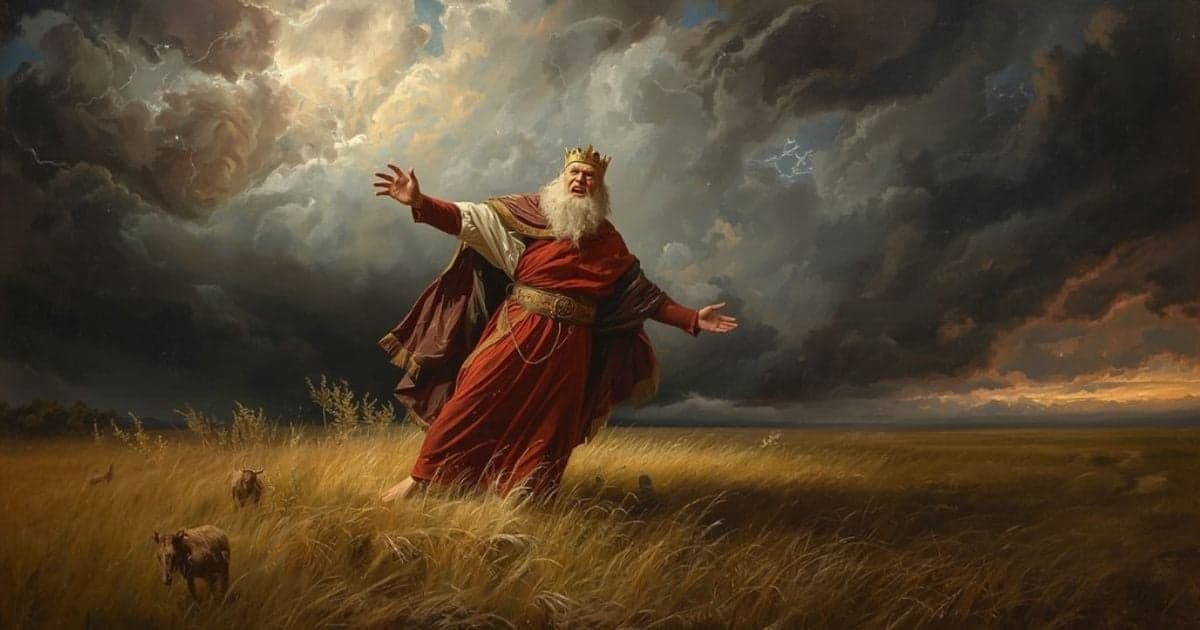
Strategic Patience Under AdversityCrusoe rescues a man from cannibals, then immediately names him Friday, teaches him English, converts him, and treats the whole arrangement as gratitude rather than command. Defoe never flags the hierarchy as a problem. Crusoe claims the island the way a European trader of 1719 claims any land: by arriving, naming, and assuming the welcome. Robinson Crusoe does not resolve that tension for the reader. It hands it over, which is exactly why the book still gets argued about.
Interrogating Colonial AssumptionsHe cuts a notch into a post every day, keeps a running journal once ink and paper survive the wreck, and later teaches a parrot named Poll to say his own name back to him. None of these habits change his situation. They stop twenty-eight years from collapsing into one indistinguishable stretch of dread, which is a different kind of survival than the fortress or the goats.
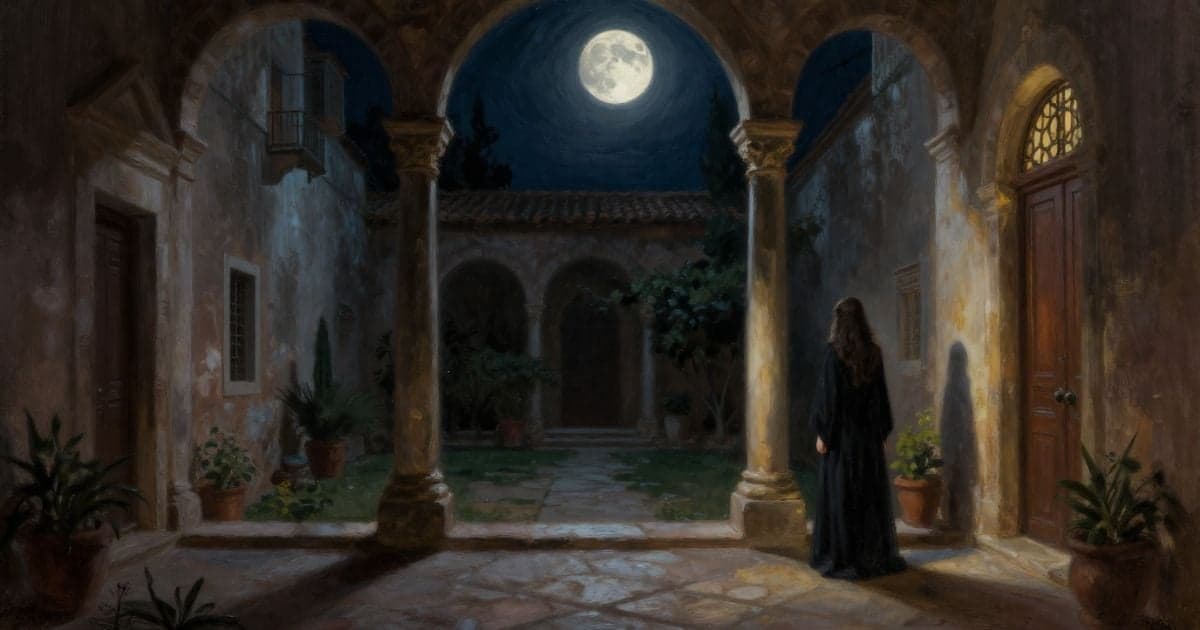
Managing Sustained IsolationA fever puts him on the ground in his first year alone, and a line from a salvaged Bible does the rest: Call on Me in the day of trouble, and I will deliver thee. He starts reading the wreck itself, the storms, and the good harvests as correction rather than accident. Defoe is not staging a quick conversion scene. He is showing a man's account of disaster slowly rewriting itself into providence.
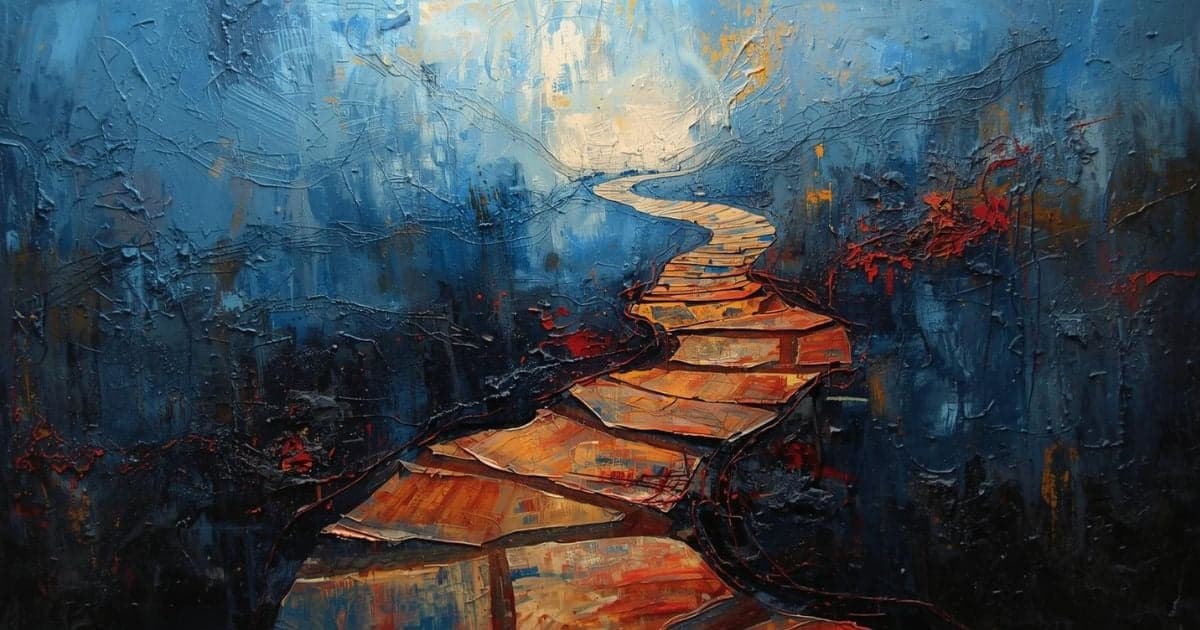
Adapting Faith to CatastropheFast track
You do not have to read all 19 chapters in one sprint. These 8 beats hold the book's argument together.
Chapter 1
The father's warning ignored
Chapter 2
The wreck and the rafts
Chapter 4
The fortress and the first tools
Chapter 5
The fever and the verse
Chapter 10
The footprint in the sand
Chapter 15
Rescuing Friday from the cannibals
Chapter 17
The mutiny and the ship recovered
Chapter 19
Leaving the island after twenty-eight years
Full coverage
The same surfaces readers expect from a traditional study guide — plot, characters, themes, quotes, and homework help — plus audio and the source text on every chapter. Free, no paywall.
Plot overview
Summary, context, and why the book still matters
19 chapter summaries
Every chapter with audio narration
7 key figures
Who drives the plot and what each one does
6 lessons
Themes traced to scenes, not generic labels
15+ important quotes
Verified lines with chapter links and analysis
Discussion questions
Five per chapter, with suggested answers for class and essays
Original text
Author's words beside every summary
This is not a plot cheat sheet. Wide Reads walks Robinson Crusoe as Defoe published it in 1719, as if it were a true memoir: a restless trader who ignores every warning, then spends twenty-eight years proving what a person can rebuild from wreckage, and what that same competence starts to claim once another man's life is in his hands. Use the chapter-by-chapter path below, follow the six lesson deep dives when a scene hooks you, and open individual chapters for summaries, quotes, and audio.
For plot and theme questions about Robinson Crusoe, see Common Questions on the book page.
How to use this guide
Chapters 1–4 cover the father's warning Crusoe will not hear, two years enslaved by a Sallee rover, the Portuguese captain who sets him up in Brazil, and the shipwreck that leaves him rafting tools ashore for thirteen days. You need the pattern of ignored warnings before the island can test what he does alone.
Chapters 5–9 build the fortress, the failed pottery, the goats, and the fever that turns into a religious turning point. This is the stretch where the island stops being an adventure and becomes a set of small, unglamorous systems: a calendar notch, a journal, a routine.
Chapters 10–19 open with the footprint that ends fifteen years of solitude, move through the rescue of Friday and other prisoners from cannibals, the mutiny Crusoe helps put down, and the return to England to find the Brazilian estate has made him wealthy without him.
Plot & context
Crusoe comes to on the beach and finds the sea has taken every other man on the ship. He is twenty-seven. He will not see another human face for twenty-eight years. The wreck is still there, and the first work is getting tools off it before the next tide. Defoe published the book in 1719 as if it were a memoir. The man who spent his youth running from a settled life will spend his prime building one from wreckage.
Robinson Crusoe is a restless younger son from York: clever enough to make a fortune and so sure the middle station is a cage that he cannot hear his father warning him what restlessness costs. His father is the voice of settled England, offering comfort, safety, and a life Crusoe treats as death. Xury is the boy who helps him flee Sallee and whom he later sells. The Portuguese captain pulls him from the African coast and sets him up in Brazil. Friday is the man Crusoe rescues from cannibals after two decades alone, then names, converts, and commands. The Sallee rover owned him. The cannibals' footprint ends the fantasy of an empty island. The English captain is marooned by his own crew. Poll the parrot learns to say Crusoe's name when no one else can. The only opponent who never leaves the page is the scale of the disaster.
In York the father names the middle station and Crusoe boards a ship anyway. Off Africa a Turkish rover takes the vessel and Crusoe spends two years as a slave, studying the boat, then tossing Ismael overboard and steering south with Xury. A Portuguese captain buys his freedom and helps him plant in Brazil; Crusoe sells Xury and then throws the plantation away for a slaving voyage that wrecks him off South America. He spends thirteen days rafting tools from the dying ship. He notches a calendar, builds a fortress, fails at pottery until a shard falls in the fire, and tames goats. Fever puts him on the ground and a verse does the rest: Call on Me in the day of trouble. Fifteen years in, a single footprint in the sand ends the fiction that he is alone. He watches, waits, then runs at the cannibals and takes the man he will call Friday. Years later an English ship appears carrying mutineers; Crusoe splits them, restores the captain, and leaves the island after twenty-eight years to find the Brazilian estate has made him rich without him.
Defoe never treats the island as a children's adventure, or the salvage as cute ingenuity, or Friday as a sidekick who happens to arrive. He was a merchant and a journalist before he was a novelist, and he understood that survival is a sequence of small problems, each solution creating the next. He also understood empire. Crusoe claims the island the way a European of 1719 claims land: by arriving, naming, and assuming the hierarchy is gratitude. The book rewards readers who sit with that tension rather than resolving it. What remains is not a hymn to toughness. It is a picture of how a person rebuilds capacity after catastrophic loss, and of how easily competence starts speaking in the language of ownership.
Read the full summary on the book page →
People still arrive here after a layoff, a diagnosis, or any loss that leaves them with an inventory instead of a plan, because Crusoe's method, salvage what floats, notch the calendar, treat the next small success as the only argument worth making, still works. Defoe does not let the competence stay innocent, though. The same habits that keep Crusoe alive let him claim an island and a rescued man as if gratitude and ownership were the same word. This guide keeps the raft, the footprint, and Friday's naming tied to a life you can still recognise, not a desert-island cartoon.
Daniel Defoe (1660-1731) was born into a London dissenting merchant family and lived through plague, fire, revolution, and the kind of debt that ends in the pillory. Before he wrote a novel he had been a trader, a pamphleteer, a government spy, a bankrupt, and a prisoner. He was nearly sixty when Robinson Crusoe appeared in 1719. He claimed the book was a memoir. The first edition announced itself as The Life and Strange Surprising Adventures of Robinson Crusoe, of York, Mariner: Written by Himself. Readers believed it. Defoe drew on the real marooning of Alexander Selkirk, then invented the twenty-eight years, the conversion, and the island civilization that made the story endure. It sold out at once and was reprinted four times that year. Defoe's gift was making a man's reasoning feel as dramatic as a wreck. He followed Crusoe with Moll Flanders, A Journal of the Plague Year, and Roxana, published under dozens of names, and died in 1731 still hiding from creditors. The English novel and the castaway genre both start here, because he understood that interior revision, the slow correction of a life you thought you were choosing, can hold a reader as tightly as any storm.
Themes with proof
Six lesson deep dives — themes with chapter proof, not theme labels alone. Start with the two featured lessons, then explore the full set.
Watch the wreck, the rafts, and the broken pot that falls in the fire: start with what is salvageable and treat each small success as the next tool.
I had neither food, house, clothes, weapon, nor place to fly to;
Sit through two years in Sallee, then the seasons and the footprint, and use a powerless stretch as reconnaissance instead of collapse.
I meditated nothing but my escape, and what method I might take to effect it, but found no way that had the…
Deep dives
Follow Crusoe from the rover's slave to the man who names Friday and splits a mutiny: map who actually controls food, boats, and the story.
Official status is not the hierarchy. Usefulness, the boat, and who holds the gun are. Survive first by mapping that chart, then…
Character guide
Who drives the plot, what each one wants, and why they matter to the argument of the book.
Restless younger son from York who ignores his father's warning, then spends twenty-eight years turning a wreck into a working life.
Voice of settled England, offering the middle station as safety, which Crusoe treats as a kind of death.
The boy who helps Crusoe escape the Sallee rover, and whom Crusoe later sells in Brazil.
Buys Crusoe's freedom off the African coast and helps him establish a plantation in Brazil.
The man Crusoe rescues from cannibals after two decades alone, then names, converts, and commands.
Marooned by his own mutinous crew; Crusoe helps him retake the ship and leave the island.
Wide Reads modern thread: an IT consultant rebuilding a life after a layoff and sudden isolation.
Memorable lines
Verified passages with chapter links — the lines teachers and essays keep returning to.
“I meditated nothing but my escape, and what method I might take to effect it, but found no way that had the least probability in it;”
“I could have been content to have taken this Moor with me, and have drowned the boy, but there was no venturing to trust him.”
“After this stop, we made on to the southward continually for ten or twelve days, living very sparingly on our provisions, which began to abate very much, and going no oftener to the shore than we were obliged to for fresh water.”
“My design in this was to make the river Gambia or Senegal, that is to say anywhere about the Cape de Verde, where I was in hopes to meet with some European ship;”
“I had great reason to consider it as a determination of Heaven, that in this desolate place, and in this desolate manner, I should end my life.”
“I now began to consider that I might yet get a great many things out of the ship which would be useful to me,”
“I had neither food, house, clothes, weapon, nor place to fly to;”
“I, poor miserable Robinson Crusoe, being shipwrecked during a dreadful storm in the offing, came on shore on this dismal, unfortunate island, which I called "The Island of Despair";”
“Call on Me in the day of trouble, and I will deliver thee, and thou shalt glorify Me.”
“which lay before buried in sand, was heaved up at least six feet, and the stern, which was broke in pieces and parted from the rest by the force of the sea, soon after I had left rummaging her, was tossed as it were up, and cast on one side;”
“I had now been in this unhappy island above ten months.”
“I found a great deal of tobacco, green, and growing to a great and very strong stalk.”
“I acquiesced in the dispositions of Providence, which I began now to own and to believe ordered everything for the best;”
“I had been in a worse condition than I was now;”
“I quickly taught him to know his own name, and at last to speak it out pretty loud, "Poll," which was the first word I ever heard spoken in the island by any mouth but my own.”
Class & essay prep
Sample prompts drawn from the chapter guides — each with suggested answers for seminars and written work.
Crusoe spends two years as a slave in Sallee without making any overt attempt to escape. What specific evidence in the chapter shows that these years were not simply passive endurance?
From Chapter 1When the patron's guests cancel and he is sent fishing with only Ismael and Xury, Crusoe writes that his 'former notions of deliverance darted into my thoughts.' What does the word 'darted' suggest about how he had been using his mind during captivity?
From Chapter 1The chapter opens with Crusoe already free from slavery and thriving in Brazil. What specific evidence does Defoe provide that Crusoe has achieved exactly what his father advised him to seek?
From Chapter 2Crusoe describes joining the slaving expedition as 'the most preposterous thing' a man in his position could do, then agrees to it in the same breath. What does this self-awareness without self-control reveal about how he operates?
From Chapter 2When Crusoe finds the ship has drifted closer to shore after the night's storm, what is his first priority, and what does the speed and method of his response reveal about his mental state?
From Chapter 3Crusoe creates a written list of his situation's goods and evils side by side, working through it like a ledger. What does the act of writing down both sides accomplish that simply thinking about them could not?
From Chapter 3Crusoe's journal entries in this chapter catalogue a long list of things he tried and could not make: casks, candles, and other tools. What does this catalogue of failures reveal about his approach to rebuilding his life on the island?
From Chapter 4Crusoe initially believes the barley and rice are miraculous; then realizes he shook the seeds from an old bag months earlier and concludes this is 'Providence working through natural means.' Why does this distinction matter to how he responds?
From Chapter 4What is the physical illness that strikes Crusoe in this chapter, and what are his initial practical responses to it before he finds the Bible?
From Chapter 5Crusoe has a fever dream in which a fiery figure threatens him for failing to repent. What does the content of this dream reveal about what he has been suppressing beneath the daily practical work of survival?
From Chapter 5When Crusoe discovers the lush valley on the far side of the island, full of grapes, citrus, and fresh water, he considers moving there permanently. What factors lead him to ultimately stay at his original camp?
From Chapter 6Crusoe tracks seasonal patterns precisely enough to know when to plant, when the rains will come, and when to harvest. What does the accumulation of this knowledge reveal about how his relationship to the island has changed over the course of the chapter?
From Chapter 6When Crusoe explores the greener, more abundant side of the island, he briefly considers moving his camp there. What specific reasoning leads him to return to his original location?
From Chapter 7Crusoe notes that it took him forty-two days to make a single shelf board that two workers with proper tools could have made in half a day. What is the significance of Defoe's inclusion of this precise arithmetic?
From Chapter 7Crusoe describes a long series of failed attempts at pottery before arriving at a workable method. What specific approach does he take to these failures, and how does it differ from how most people respond when a repeated effort keeps not working?
From Chapter 8Chapter by chapter
Chapter-by-chapter summaries, quotes, and audio.
Robinson Crusoe's reckless pursuit of fortune leads him into slavery when Turkish pirates capture his trading ship off the African coast. For two year...
Robinson's life takes a dramatic turn as he escapes slavery and finds unexpected prosperity in Brazil, only to throw it all away for one more adventur...
Robinson awakens to find his ship closer to shore, giving him a chance to salvage supplies before it's destroyed. Over thirteen days, he makes multipl...
Crusoe begins the methodical work of survival, establishing routines that will keep him sane and alive. He salvages what he can from the ship before i...
Crusoe continues salvaging materials from his wrecked ship, methodically collecting timber, iron, and supplies over several weeks. His routine is shat...
Crusoe embarks on his first major exploration of the island, discovering a lush valley filled with fruit trees, grapes, and fresh water. The abundance...
Crusoe embarks on his first major exploration of the island, discovering that he's been living on the worst side all along. The other shore teems with...
Crusoe becomes a one-man industrial revolution, learning pottery, bread-making, and tool crafting through pure trial and error. His pottery attempts a...
Crusoe spends five years developing his island life, learning crucial lessons about planning and persistence. He builds two boats; the first is a disa...
Crusoe has settled into a comfortable routine on his island, living like a king with his animal companions and two well-established homes. He's built ...
Crusoe's discovery of cannibals on his island transforms him from a cautious survivor into a paranoid fortress-dweller. The horrifying sight of human ...
After twenty-three years on the island, Crusoe has built a comfortable life with his animal companions; parrots, goats, and cats. But his peace shatte...
After years of isolation, Crusoe becomes consumed with escape plans, his mind churning with desperate schemes to reach the mainland. His restlessness ...
Crusoe begins Friday's education, starting with practical matters like cooking meat and making bread. Friday's terror at the gun's power reveals how t...
Crusoe and Friday prepare to escape the island by building a large canoe, but their plans are interrupted when cannibals arrive with prisoners. Friday...
Crusoe faces a complex moral and strategic dilemma when an English ship arrives at his island. What initially seems like salvation becomes complicated...
Crusoe and the captain face their biggest challenge yet when ten more mutineers arrive from the ship in a second boat. What seems like overwhelming od...
After twenty-eight years on the island, Crusoe finally returns to England, only to discover he's a stranger in his own homeland. His family is mostly ...
Friday steals the show in this action-packed chapter that reveals his playful genius and unshakeable courage. When the group encounters a massive bear...
Using this guide
How to use Wide Reads for class, essays, and revision — and how this guide compares to traditional study sites.
Traditional study guides summarise what happens to Crusoe chapter by chapter. This guide gives you that coverage: all 19 chapters, seven key figures, and discussion questions with suggested answers, chapter by chapter. Wide Reads adds Building from Nothing and Interrogating Colonial Assumptions traced through named scenes like the thirteen days rafting tools and the naming of Friday. Summaries include audio; the original text sits beside every chapter. Free, no paywall.
Robinson Crusoe is rated intermediate difficulty. Our chapter-by-chapter analysis breaks down complex passages, explains historical context, and highlights key themes to make the text more accessible. Each chapter includes summaries, character analysis, and discussion questions to deepen your understanding.
Yes — use this reading guide alongside Robinson Crusoe, not instead of it. Wide Reads exists to show you why the book still matters: lessons, chapter summaries with audio, and life skills you can carry into real life. That context can sharpen essays on themes, characters, and quotes. Always read Daniel Defoe's original text, though. We are the guide at the trailhead; the classic is still the point.
Chapter 2 opens with Crusoe alone on the beach, the sea having taken every other man on the ship. Each chapter adds summaries, quotes, audio, and the life-skill thread that turns a castaway story into a method you can still use.
Plot, characters, and themes — plus audio, source text, and patterns you can use after class
Two ways in
Chapter by chapter, with audio. The meaning arrives because you experienced it — not because someone listed bullet points.
Start with this.
The actual words the author wrote, alongside every summary. Use the guide, then step into the source.
Then step into the source.
Either way, the door opens inward.
— and most of all, Why does this matter?
Guides, life skills, and the full library.More ways to read Robinson Crusoe: guides, life skills, and the wider library.

Weekly insights from the classics. Amplify Your Mind.
We focus on public domain classics because these timeless works belong to everyone. No paywalls, no restrictions—just wisdom that has stood the test of centuries, freely accessible to all readers.
Public domain books have shaped humanity's understanding of love, justice, ambition, and the human condition. By amplifying these works, we help preserve and share literature that truly belongs to the world.
© 2026 Wide Reads™. All Rights Reserved.
Intelligence Amplifier™ and Wide Reads™ are proprietary trademarks of Arvin Lioanag.
Copyright Protection: All original content, analyses, discussion questions, pedagogical frameworks, and methodology are protected by U.S. and international copyright law. Unauthorized reproduction, distribution, web scraping, or use for AI training is strictly prohibited. See our Copyright Notice for details.
Disclaimer: The information provided on this website is for general informational and educational purposes only and does not constitute professional, legal, financial, or technical advice. While we strive to ensure accuracy and relevance, we make no warranties regarding completeness, reliability, or suitability. Any reliance on such information is at your own risk. We are not liable for any losses or damages arising from use of this site. By using this site, you agree to these terms.
Keep the journal, the calendar notch, Poll, and the two houses: structure time so twenty-eight years do not become one long panic.
Isolation becomes fatal when it stays one undivided emergency. You have to invent days before you can invent bread. A self needs…
Watch the rescue that immediately becomes a naming, a conversion, and a hierarchy Crusoe treats as natural generosity.
The pattern is older than the wreck. Watch the hour when help becomes inventory. If your own freedom is the only freedom…