Master this chapter. Complete your experience
Purchase the complete book to access all chapters and support classic literature
As an Amazon Associate, we earn a small commission from qualifying purchases at no additional cost to you.
Available in paperback, hardcover, and e-book formats
Why This Matters
Connect literature to life
This chapter teaches how to identify when our safe spaces have shifted from protection to prison, limiting our ability to handle normal life changes.
Practice This Today
This week, notice when you avoid situations you used to handle easily - then ask yourself if you're protecting something real or just protecting your comfort.
Now let's explore the literary elements.
Key Quotes & Analysis
"It would have made a Stoic smile to have seen me and my little family sit down to dinner."
Context: Crusoe describes his daily routine before discovering the footprint
This shows how Crusoe has convinced himself he's content with his isolated life, creating a mock-royal court with animals. The reference to Stoics (philosophers who believed in emotional detachment) is ironic since Crusoe is about to lose all emotional control.
In Today's Words:
Anyone would have laughed to see me playing house with my pets like they were real family.
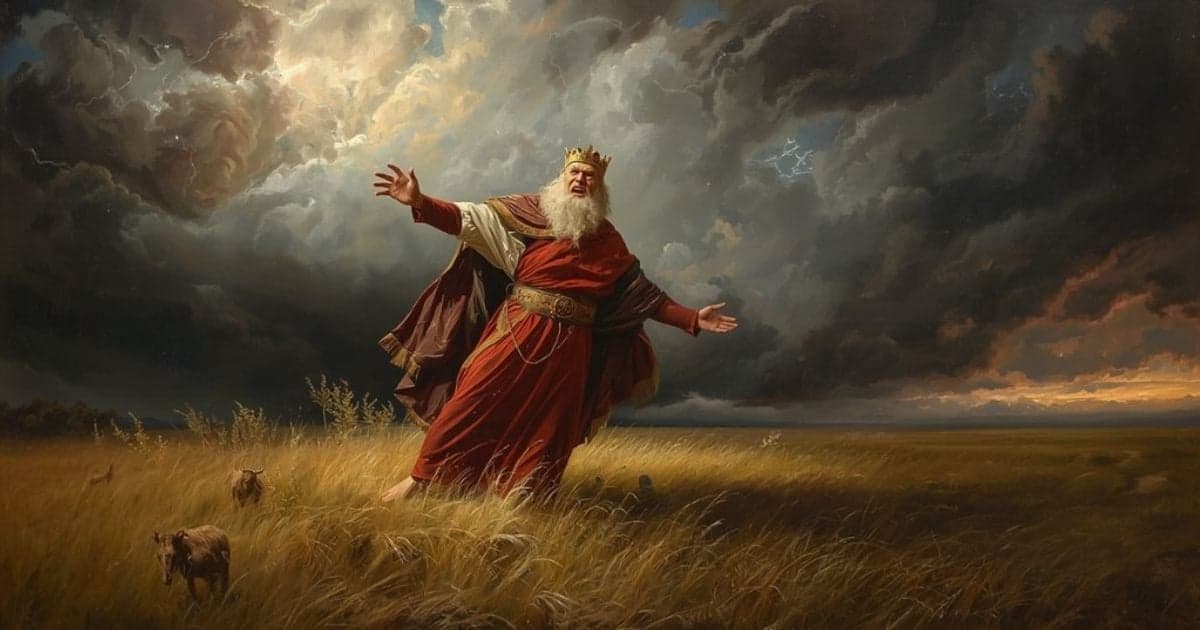
"I had the lives of all my subjects at my absolute command; I could hang, draw, give liberty, and take it away, and no rebels among all my subjects."
Context: Crusoe fantasizes about his power over his animal companions
Reveals how isolation has inflated Crusoe's ego and need for control. He's created a fantasy where he has absolute power because in reality, he's completely powerless against the larger world. This sets up the irony of how terrified he becomes at evidence of one other human.
In Today's Words:
I was the boss of everything in my little world, and nobody could challenge me or cause me problems.
"It happened one day, about noon, going towards my boat, I was exceedingly surprised with the print of a man's naked foot on the shore."
Context: The moment Crusoe discovers the footprint that changes everything
This simple, understated sentence marks the end of Crusoe's peaceful isolation. The word 'exceedingly surprised' doesn't capture the terror that follows. It shows how small discoveries can completely upend our sense of security.
In Today's Words:
I was walking to my boat when I saw a footprint in the sand, and it completely freaked me out.
Thematic Threads
Security
In This Chapter
Crusoe's elaborate fortifications reveal how fear transforms reasonable caution into obsessive control
Development
Evolved from basic survival needs to psychological fortress-building against human contact
In Your Life:
You might recognize this in how you've built routines that feel safe but leave you unprepared for necessary changes
Identity
In This Chapter
The footprint threatens not just Crusoe's safety but his entire sense of self as island king
Development
His identity has shifted from shipwreck victim to self-made ruler who fears losing control
In Your Life:
You might see this when changes at work or home threaten the role you've built your identity around
Human Connection
In This Chapter
The possibility of human contact now terrifies the man who once desperately craved company
Development
Complete reversal from earlier chapters where loneliness was his greatest suffering
In Your Life:
You might notice this in how isolation during difficult times makes re-engaging with people feel overwhelming
Class
In This Chapter
Crusoe's fear reveals his assumption that any other humans must be 'savages' or threats to his civilized order
Development
His class assumptions have hardened during isolation, making him see others as inherently dangerous
In Your Life:
You might catch yourself making similar assumptions about people from different backgrounds or circumstances
Control
In This Chapter
Two years of obsessive fortification show how the illusion of control can become a consuming compulsion
Development
Escalated from practical survival measures to elaborate defensive systems against imagined threats
In Your Life:
You might see this in how you over-prepare or over-plan to avoid dealing with uncertainty in relationships or work
You now have the context. Time to form your own thoughts.
Discussion Questions
- 1
Why does Crusoe react with terror instead of joy when he discovers the footprint?
analysis • surface - 2
How has living alone for years changed Crusoe's relationship with human contact?
analysis • medium - 3
Where do you see this pattern in modern life - people who've become so comfortable in isolation that connection feels threatening?
application • medium - 4
What's the difference between healthy caution and fear-based isolation, and how would you help someone recognize when they've crossed that line?
application • deep - 5
What does Crusoe's reaction teach us about the hidden costs of too much safety and control?
reflection • deep
Critical Thinking Exercise
Map Your Comfort Zones
Draw three circles representing areas of your life where you feel most in control and comfortable - work routines, social patterns, daily habits. For each circle, identify one small way you could introduce healthy uncertainty without creating chaos. The goal isn't to blow up your life, but to keep your adaptation muscles strong.
Consider:
- •Start with the smallest possible changes - different lunch spots, new conversation topics, alternate routes
- •Notice your emotional reaction to even thinking about these small changes
- •Consider what you might be protecting yourself from and whether that protection still serves you
Journaling Prompt
Write about a time when you avoided something you actually wanted because it felt too uncertain or risky. What would you tell that version of yourself now?
Coming Up Next...
Chapter 11: Fear Changes Everything
Crusoe's paranoia drives him to create an even more secret hideaway. But his elaborate preparations may soon be put to the ultimate test as the island's mysterious visitors prove to be more dangerous than he ever imagined.