Chapter 23
Act V, Scene 3 (cont.): Conscience Is a Word Cowards Use
Nor. A good direction warlike Soueraigne, This found I on my Tent this Morning. Iockey of Norfolke, be not so bold, For Dickon thy maister is bought and sold King. A thing deuised by the Enemy. Go Gentlemen, euery man to his Charge, Let not our babling Dreames affright our soules: For Conscience is a word that Cowards vse, Deuis'd at first to keepe the strong in awe, Our strong armes be our Conscience, Swords our Law. March on, ioyne brauely, let vs too't pell mell, If not to heauen, then hand in hand to Hell. What shall I say…
Public-domain chapter text, formatted for reading.
Master this chapter. Complete your experience
Purchase the complete book to access all chapters and support classic literature

Available in paperback, hardcover, and e-book formats
Now let's explore the literary elements.
Key Quotes & Analysis
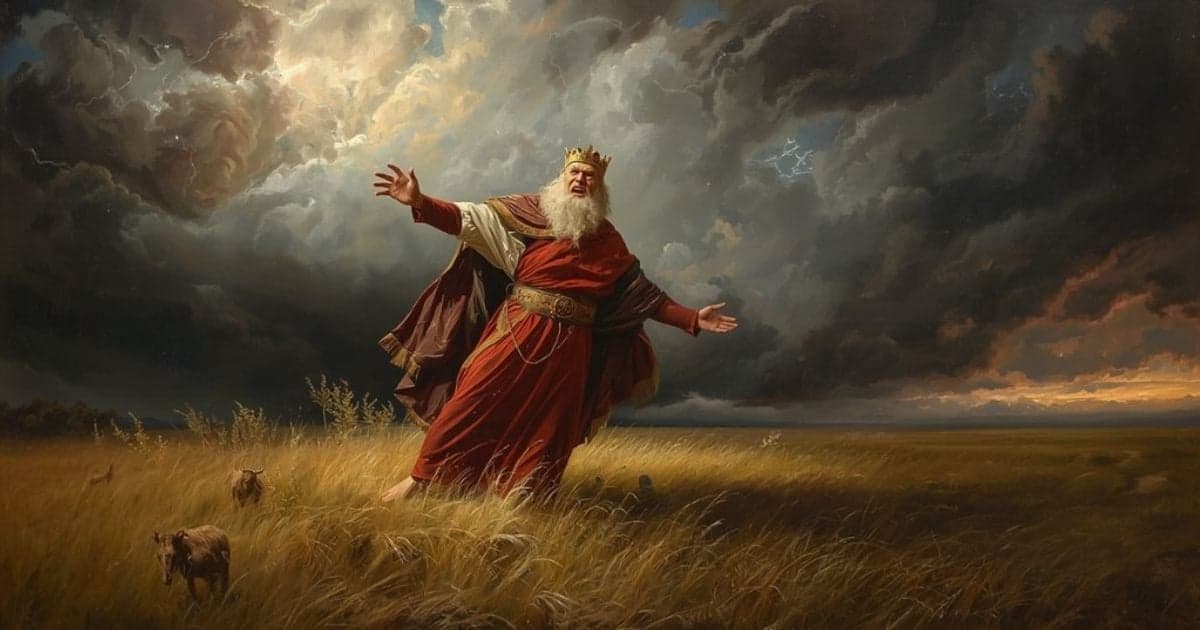
"For Conscience is a word that Cowards vse, Deuis'd at first to keepe the strong in awe, Our strong armes be our Conscience, Swords our Law. March on, ioyne brauely, let vs too't pell mell, If not to heauen, then hand in hand to Hell."
Context: Richard after Norfolk's note, before the troop oration
Richard names his philosophy at the last gate: reject conscience, choose force, accept hell.
In Today's Words:
Richard says conscience is for cowards, strong arms are conscience, swords are law, and they march hand in hand to hell if not to heaven. That is open denial before the charge. When a leader says guilt is cowardice and force is law, expect hostage orders and a solo hunt next.
"Iockey of Norfolke, be not so bold, For Dickon thy maister is bought and sold"
Context: Norfolk answering Richard's what think'st thou with the tent note
The note names betrayal before battle. Richard dismisses it as enemy device rather than reading the room.
In Today's Words:
Norfolk reads a note warning Iockey of Norfolk not to be bold because Dickon his master is bought and sold. Richard calls it enemy invention and moves to conscience denial instead. When a lieutenant brings a betrayal warning on the morning of the fight, dismissing it as propaganda is its own tell.
"My Lord, he doth deny to come King. Off with his sonne Georges head"
Context: Stanley's refusal and Richard's immediate hostage order
Stanley's denial triggers George again. Norfolk tries to defer; Richard leads with the blade.
In Today's Words:
The messenger says Lord Stanley refuses to come, and Richard immediately orders George's head off. Norfolk will ask to wait until after battle, but the lever is already pulled. When a wavering ally stays half a mile away, the predator's first answer is the hostage, not persuasion.
"The King enacts more wonders then a man, Daring an opposite to euery danger: His horse is slaine, and all on foot he fights, Seeking for Richmond in the throat of death:"
Context: Catesby calling rescue for Norfolk as battle turns
Richard fights like a wonder and a target at once, on foot hunting Richmond while lines break.
In Today's Words:
Catesby says the king performs more wonders than a man, daring every danger, but his horse is slain and he fights on foot seeking Richmond in the throat of death. Rescue Norfolk or the day is lost. When reports say the boss is heroic and alone in the kill zone, the formation is already failing.
Thematic Threads
Conscience Denial
In This Chapter
Richard calls conscience cowards' word and chooses hand in hand to hell
Development
Moral language is replaced by swords as law before the charge
In Your Life:
When someone says guilt is for cowards and force is the only law left, assume they already know the room is lost.
Hostage on the Charge
In This Chapter
Stanley denies; Richard orders George's head; Norfolk asks to defer until after battle
Development
The George lever fires again at the moment formations must hold
In Your Life:
If a key ally refuses and the first response is a family member's head, the alliance was already theater.
You now have the context. Time to form your own thoughts.
Discussion Questions
This is not a test. Five prompts guide you through the chapter, from how it opens to how it closes, so you notice context and rhythm rather than facts to memorize. Sit with each question in your own words. When you see "One way to read it," treat it as a starting point, not the only answer.
- 1
Why does Richard call the bought-and-sold note an enemy device instead of pausing?
analysis • surfaceOne way to read it
The note says Dickon thy master is bought and sold. Richard dismisses it as enemy device rather than evidence of betrayal, choosing momentum over the warning Norfolk delivers.
- 2
What does hand in hand to hell add to Richard's conscience denial speech?
analysis • mediumOne way to read it
Richard calls conscience a coward's word and says strong arms be conscience and swords law. If not to heaven, then hand in hand to hell—he chooses force and damnation over pause or repentance.
- 3
How do Stanley's refusal and George's head order repeat the hostage pattern from earlier chapters?
application • mediumOne way to read it
Stanley's messenger says he doth deny to come; Richard orders off with George's head. The same lever used on Derby now fires at the last hour when an ally refuses to join the field.
- 4
Why does Norfolk ask to let George die after the battle while Richard orders his head now?
application • deepOne way to read it
Norfolk wants tactical patience; Richard wants immediate punishment to terrify wavering allies. Control matters more than victory timing when Stanley's refusal threatens the center.
- 5
What does Catesby's throat-of-death report set up before Enter Richard?
reflection • deepOne way to read it
Richard's horse is slain, he fights on foot in the throat of death seeking Richmond. The report sets up the famous kingdom-for-a-horse desperation: mobility lost, crown worthless in the moment.
Critical Thinking Exercise
The Hell March Analysis
Richard dismisses a betrayal note, rejects conscience, reuses a hostage, and fights on foot seeking the rival. Think of a time when a leader chose force and hell over warnings before a final confrontation.
Consider:
- •How does bought and sold differ from conscience denial?
- •Why order a hostage when an ally refuses at the last hour?
- •What does on foot in the throat of death reveal about formation?
- •Why end on Enter Richard rather than the famous horse line?
Journaling Prompt
Write about a hell march you witnessed. Which came first: note dismissal, guilt denial, or hostage order?
Coming Up Next...
Chapter 24: Act V, Scene 4: A Horse, My Kingdom for a Horse
Richard cries a horse, my kingdom for a horse, fights Richmond, is slain, and Derby brings the crown while Richmond asks if young George Stanley lives.