Wide Reads
Literature MattersLife IndexEducators
Sign in
Where to Begin
Pride and Prejudice - Chapter 20

Jane Austen

Pride and Prejudice

Chapter 20

Home›Books›Pride and Prejudice›Chapter 20
Previous
20 of 61
Next

Summary

Chapter 20

Pride and Prejudice by Jane Austen

0:000:00
Listen to Next Chapter

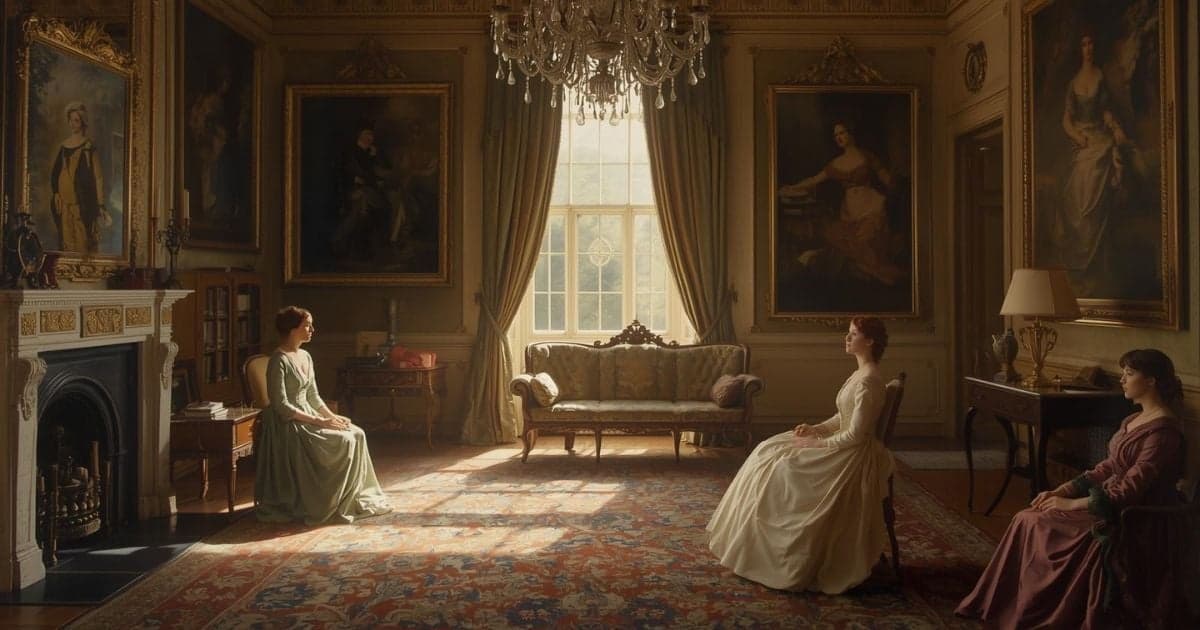
The aftermath of Elizabeth's refusal becomes a family crisis as Mr. Collins completely misinterprets her rejection. He's convinced that Elizabeth's 'no' is just feminine modesty and bashfulness, the kind of coy refusal that young ladies are expected to make before accepting. He congratulates Mrs. Bennet on the upcoming marriage, believing everything is settled. When Mrs. Bennet realizes Elizabeth genuinely refused him, she's horrified and frantically tries to force her daughter to accept. She drags Mr. Bennet into the situation, confident he'll make Elizabeth see reason and accept this financially advantageous match. But Mr. Bennet surprises everyone by firmly supporting Elizabeth's choice, telling his wife that Elizabeth will never speak to him again if she's forced to marry Collins, and he'll never speak to Elizabeth again if she does marry him. This rare moment of parental solidarity shows Mr. Bennet taking his daughter's side in something that actually matters. Mr. Collins, faced with this definitive rejection, quickly pivots from wounded suitor to self-important moralist. His pride is hurt, but he manages to frame the rejection as Elizabeth's loss rather than his. Mrs. Bennet is devastated, seeing a golden opportunity for financial security slipping away. The chapter reveals the different ways people handle rejection and disappointment: Collins with delusion and defensiveness, Mrs. Bennet with desperation and anger, Elizabeth with relief, and Mr. Bennet with dry humor masking genuine support for his daughter's autonomy. This moment matters because it shows that marriage refusals have consequences rippling through entire families. Elizabeth's choice to reject financial security for personal happiness is brave in a world where women have so few options. Charlotte Lucas arrives at the end to witness the family chaos, setting the stage for surprising developments.

Coming Up in Chapter 21

Mr. Collins won't stay rejected for long - his wounded pride will push him toward an unexpected solution that will shock the Bennet family.

Share it with friends

Previous ChapterNext Chapter
GO ADS FREE — JOIN US
Original text
complete·1,652 words
I

[llustration]

Mr. Collins was not left long to the silent contemplation of his successful love; for Mrs. Bennet, having dawdled about in the vestibule to watch for the end of the conference, no sooner saw Elizabeth open the door and with quick step pass her towards the staircase, than she entered the breakfast-room, and congratulated both him and herself in warm terms on the happy prospect of their nearer connection. Mr. Collins received and returned these felicitations with equal pleasure, and then proceeded to relate the particulars of their interview, with the result of which he trusted he had every reason to be satisfied, since the refusal which his cousin had steadfastly given him would naturally flow from her bashful modesty and the genuine delicacy of her character.

This information, however, startled Mrs. Bennet: she would have been glad to be equally satisfied that her daughter had meant to encourage him by protesting against his proposals, but she dared not believe it, and could not help saying so.

1 / 10

Master this chapter. Complete your experience

Purchase the complete book to access all chapters and support classic literature

Read Free on GutenbergBuy at Powell'sBuy on Amazon

As an Amazon Associate, we earn a small commission from qualifying purchases at no additional cost to you.

Available in paperback, hardcover, and e-book formats

GO ADS FREE — JOIN US

Why This Matters

Connect literature to life

Skill: Reading Hidden Character

This chapter teaches how to identify people's true nature by observing what they do when nobody's watching, not just how they present themselves.

GO ADS FREE — JOIN US

Now let's explore the literary elements.

Key Quotes & Analysis

"When I consider how little you could have known of either when you first danced at Meryton, I think it shows great strength of mind."

— Mr. Collins

Context: Collins is commenting on Elizabeth's past interactions with Wickham and Darcy

This quote highlights how first impressions can be completely wrong. Elizabeth is learning that her initial judgments about both men were based on incomplete information and surface appearances.

"He meant to provide for her future, as well as her present comfort."

— Narrator

Context: Describing Darcy's financial arrangements for Lydia's marriage

This reveals Darcy's thoughtful generosity - he's not just solving the immediate crisis but ensuring Lydia's long-term security. It shows his character goes beyond duty to genuine care.

"Her astonishment was beyond expression."

— Narrator

Context: Elizabeth's reaction to learning about Darcy's intervention

This captures the magnitude of Elizabeth's shock at discovering Darcy's true character. Everything she thought she knew has been turned upside down by this revelation.

Thematic Threads

Prejudice

In This Chapter

Elizabeth's complete reversal of judgment about Darcy's character based on new information

Development

Evolved from initial dislike through gradual questioning to full recognition of misjudgment

In Your Life:

When have you completely changed your mind about someone after learning new information, and what does this reveal about the assumptions you make about people?

Class

In This Chapter

Darcy uses his wealth and connections to solve problems that would destroy a lower-class family

Development

Shifted from barrier between people to tool for protecting others

In Your Life:

How do you use whatever privileges or advantages you have—whether financial, social, or professional—to help others who might not have the same resources?

Pride

In This Chapter

Darcy's true pride is revealed as quiet dignity—he helps without seeking credit or thanks

Development

Transformed from apparent arrogance to genuine self-respect and service to others

In Your Life:

Do you seek recognition for your good deeds, or are you comfortable doing the right thing even when no one will know or thank you for it?

Marriage

In This Chapter

Lydia's marriage is saved from scandal through Darcy's intervention, preserving family reputation

Development

Continues theme of marriage as social and economic necessity, not just romance

In Your Life:

How much do practical considerations like financial stability, family approval, or social compatibility influence your relationship decisions versus pure romantic feelings?

Personal Growth

In This Chapter

Elizabeth faces the full extent of her misjudgment and must completely reassess her worldview

Development

Accelerated from gradual doubt to dramatic revelation requiring fundamental change

In Your Life:

What belief about yourself or someone else have you had to completely abandon when faced with undeniable evidence, and how did you handle that mental shift?

GO ADS FREE — JOIN US

You now have the context. Time to form your own thoughts.

Discussion Questions

  1. 1

    What does Elizabeth learn about Darcy's role in resolving Lydia's situation, and how does this change her understanding of his character?

  2. 2

    Why didn't Darcy publicize his good deeds, and what does this reveal about the difference between solving problems and getting credit for solving them?

  3. 3

    Think about your workplace or community - who are the people doing important work that goes unnoticed, and who gets attention for more visible but less valuable contributions?

  4. 4

    When you need to evaluate someone's character or trustworthiness, what specific actions and patterns would you look for beyond their public persona?

  5. 5

    What does this chapter suggest about why we often misjudge people, and how can recognizing this pattern help us make better decisions about relationships and partnerships?

Critical Thinking Exercise

Map the Invisible Contributors

Think about a group you're part of - your workplace, family, friend group, or community organization. Identify one person who consistently handles problems behind the scenes without seeking recognition. Write down three specific examples of what they do that others might not notice or appreciate. Then consider: what would happen if this person stopped doing these things?

Consider:

  • •Look for people who prevent problems rather than just solve dramatic crises
  • •Notice who gets called when something needs to be handled quietly or delicately
  • •Consider whether you've been overlooking someone's contributions because they don't promote themselves

Coming Up Next...

Chapter 21

Mr. Collins won't stay rejected for long - his wounded pride will push him toward an unexpected solution that will shock the Bennet family.

Continue to Chapter 21
Previous
Chapter 19
Contents
Next
Chapter 21

Continue Exploring

Pride and Prejudice Study GuideTeaching ResourcesEssential Life IndexBrowse by ThemeAll Books
Social Class & StatusLove & RelationshipsIdentity & Self-Discovery

You Might Also Like

Great Expectations cover

Great Expectations

Charles Dickens

Explores personal growth

Anna Karenina cover

Anna Karenina

Leo Tolstoy

Explores society & class

The Great Gatsby cover

The Great Gatsby

F. Scott Fitzgerald

Explores personal growth

Jane Eyre cover

Jane Eyre

Charlotte Brontë

Explores personal growth

Browse all 47+ books

Share This Chapter

Know someone who'd enjoy this? Spread the wisdom!

TwitterFacebookLinkedInEmail

Read ad-free with Prestige

Get rid of ads, unlock study guides and downloads, and support free access for everyone.

Subscribe to PrestigeCreate free account
Intelligence Amplifier
Intelligence Amplifier™Powering Wide Reads

Exploring human-AI collaboration through books, essays, and philosophical dialogues. Classic literature transformed into navigational maps for modern life.

2025 Books

→ The Amplified Human Spirit→ The Alarming Rise of Stupidity Amplified→ San Francisco: The AI Capital of the World
Visit intelligenceamplifier.org
hello@widereads.com

WideReads Originals

→ You Are Not Lost→ The Last Chapter First→ The Lit of Love→ Wealth and Poverty→ 10 Paradoxes in the Classics · coming soon
Arvintech
arvintechAmplify your Mind
Visit at arvintech.com

Navigate

  • Home
  • Library
  • Essential Life Index
  • How It Works
  • Subscribe
  • Account
  • About
  • Contact
  • Authors
  • Suggest a Book
  • Landings

Made For You

  • Students
  • Educators
  • Families
  • Readers
  • Literary Analysis
  • Finding Purpose
  • Letting Go
  • Recovering from a Breakup
  • Corruption
  • Gaslighting in the Classics

Newsletter

Weekly insights from the classics. Amplify Your Mind.

Legal

  • Privacy Policy
  • Terms of Service
  • Cookie Policy
  • Accessibility

Why Public Domain?

We focus on public domain classics because these timeless works belong to everyone. No paywalls, no restrictions—just wisdom that has stood the test of centuries, freely accessible to all readers.

Public domain books have shaped humanity's understanding of love, justice, ambition, and the human condition. By amplifying these works, we help preserve and share literature that truly belongs to the world.

A Pilgrimage

Powell's City of Books

Portland, Oregon

If you ever find yourself in Portland, walk to the corner of Burnside and 10th. The building takes up an entire city block. Inside is over a million books, new and used on the same shelf, organized by color-coded rooms with names like the Rose Room and the Pearl Room. You can lose an afternoon. You can lose a weekend. You will find a book you have been looking for your whole life, and three you did not know existed.

It is a pilgrimage. We cannot find a bookstore like it anywhere on earth. If you read the classics, and you ever get the chance, go. It belongs on every reader's bucket list.

Visit powells.com

We are not in any way affiliated with Powell's. We are just a very big fan.

© 2026 Wide Reads™. All Rights Reserved.

Intelligence Amplifier™ and Wide Reads™ are proprietary trademarks of Arvin Lioanag.

Copyright Protection: All original content, analyses, discussion questions, pedagogical frameworks, and methodology are protected by U.S. and international copyright law. Unauthorized reproduction, distribution, web scraping, or use for AI training is strictly prohibited. See our Copyright Notice for details.

Disclaimer: The information provided on this website is for general informational and educational purposes only and does not constitute professional, legal, financial, or technical advice. While we strive to ensure accuracy and relevance, we make no warranties regarding completeness, reliability, or suitability. Any reliance on such information is at your own risk. We are not liable for any losses or damages arising from use of this site. By using this site, you agree to these terms.