Wide Reads
Literature MattersLife IndexEducators
Sign in
Where to Begin

The Rebellion Against Logic — Notes from Underground

Notes from Underground - The Rebellion Against Logic

Fyodor Dostoevsky

Notes from Underground

The Rebellion Against Logic

Home›Books›Notes from Underground›Chapter 7: The Rebellion Against Logic
Previous
7 of 21
Next

Analysis by the Wide Reads editorial team·Reviewed against the source text·Updated September 1, 2024

Summary

The Rebellion Against Logic

Notes from Underground by Fyodor Dostoevsky

0:000:00
Listen to Next Chapter

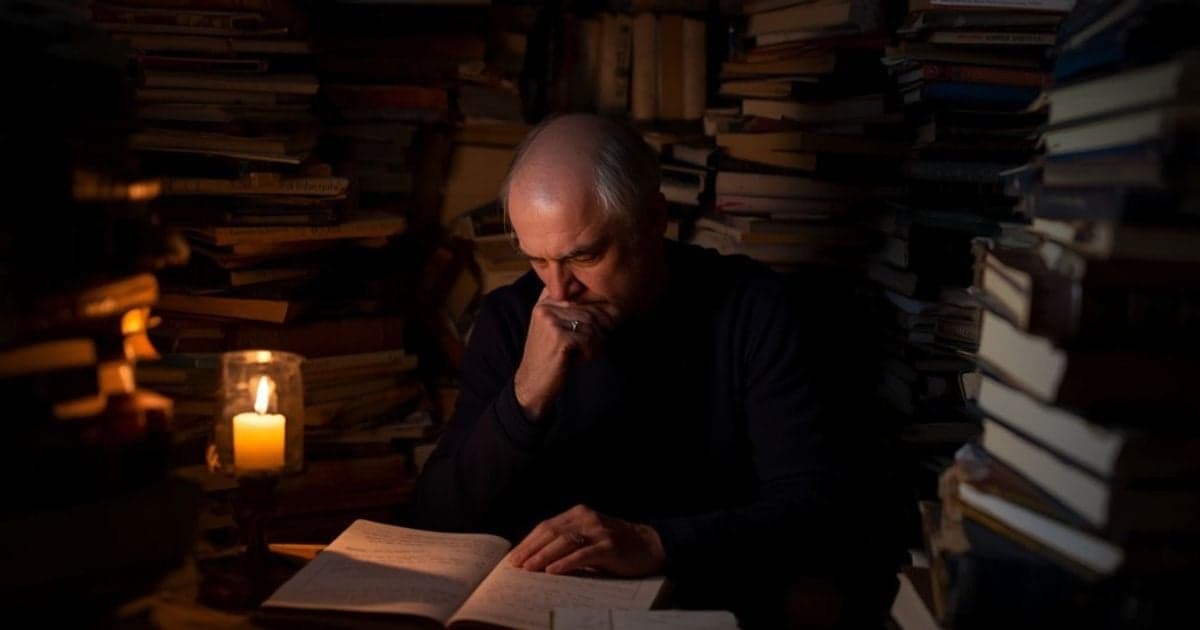
The Underground Man dismisses his sluggard fantasy as "golden dreams" and pivots to his most sustained philosophical attack. The target: the rationalist premise that man does nasty things only because he doesn't understand his own interests, that once enlightened, he would inevitably choose good. "Oh, the babe! Oh, the pure, innocent child!" he scoffs. History offers millions of facts to the contrary: men who fully understood their real interests and deliberately acted against them, rushing headlong into danger simply because they disliked the beaten track.

He introduces a friend. Everyone has one. This gentleman explains, with elegance and passion, exactly how reason and truth demand he must act, and then, within a quarter of an hour, without any outside provocation, acts in direct opposition to everything he just said, driven by "something inside him which is stronger than all his interests." The friend is a compound personality, so it is difficult to blame him as an individual. But the pattern is universal.

The rationalists have assembled a list of human advantages, prosperity, wealth, freedom, peace, and built their entire case on it. But they have left one advantage off the list entirely: independent choice. The caprice, the whim, the wild fancy worked up at times to frenzy. This advantage cannot be classified. It shatters every system built for mankind's benefit, because sometimes a man will act against reason, honour, and peace combined, simply to exercise it. And sometimes, the Underground Man insists, one positively ought to choose contrary to one's own interests.

He pivots to civilisation. Buckle argued that it makes men softer and less bloodthirsty. The Underground Man points to the nineteenth century and disagrees: the most civilised gentlemen have been the subtlest slaughterers, compared to whom Attila and Stenka Razin could not hold a candle. Civilisation's only real gain has been a greater capacity for variety of sensations, which includes finding enjoyment in bloodshed. In old days, men exterminated with a clear conscience. Now we know it's abominable and do it anyway, with more energy than ever.

Then comes the piano-key argument. Science, the rationalists predict, will eventually tabulate all human actions mathematically, prove that man has no real will, that he is "something of the nature of a piano-key," acting not by choice but by the laws of nature. Everything will be calculated, entered in indexes, explained in encyclopaedic lexicons. The Palace of Crystal will be built. There will be no more incidents or adventures in the world. And it will be, the Underground Man notes, frightfully dull, though boredom, he adds, may lead you to anything.

His prediction: in the midst of this general rational prosperity, a gentleman with an ignoble, reactionary, ironical countenance will arise and say: "Hadn't we better kick over the whole show and scatter rationalism to the winds, simply to send these logarithms to the devil?" And he will find followers. Because what man wants is not a rational choice or a virtuous choice. What man wants is simply independent choice, "whatever that independence may cost and wherever it may lead. And choice, of course, the devil only knows what choice."

In this chapter: Terms Characters Key Quotes Themes Modern Story

Why This Matters

Connect literature to life

Skill: Recognizing Autonomy Threats

The most stubborn thing about people is not ignorance but the need to prove they authored whatever happened to them. The Underground Man tears apart the rationalist dream that education will make people good, pointing to history's millions of facts showing that people knew what was right and did the opposite anyway, not from confusion but from the irreducible need to have chosen. The next time you are trying to persuade someone by proving you are right, consider whether you are also telling them they have no choice, and whether that is making them dig in.

Coming Up in Chapter 8

Having torn apart the rationalists' dream of human perfectibility, the Underground Man will reveal what he believes is the true driving force behind human behavior - and it's far more unsettling than simple self-interest.

Share it with friends

PreviousPrevious ChapterNextNext Chapter
Original text
2,081 wordscomplete

Chapter 07

The Rebellion Against Logic

PART I — Underground Chapter VII But these are all golden dreams. Oh, tell me, who was it first announced, who was it first proclaimed, that man only does nasty things because he does not know his own interests; and that if he were enlightened, if his eyes were opened to his real normal interests, man would at once cease to do nasty things, would at once become good and noble because, being enlightened and understanding his real advantage, he would see his own advantage in the good and nothing else, and we all know that not one man can,…

Public-domain chapter text, formatted for reading.

Master this chapter. Complete your experience

Purchase the complete book to access all chapters and support classic literature

Buy at Powell's

Available in paperback, hardcover, and e-book formats

Now let's explore the literary elements.

Key Quotes & Analysis

"Oh, the babe! Oh, the pure, innocent child! Why, in the first place, when in all these thousands of years has there been a time when man has acted only from his own interest?"

— Narrator

Context: Attacking the rationalist premise that men do wrong only from ignorance of their own interests

The mock tenderness of 'Oh, the babe' is precise rhetoric. He's not just disagreeing with the rationalists — he finds their premise almost touchingly naive, contradicted by the whole of recorded history. The question that follows is genuinely unanswerable.

In Today's Words:

The optimists believe that enlightenment leads to virtue, that once people know their true interests they will choose correctly. History has not cooperated with this theory at all. For thousands of years, civilizations with full access to the information that cruelty and war were destructive chose them anyway. The naivety required to keep believing otherwise is a choice, not an oversight.

"Within a quarter of an hour, without any sudden outside provocation, but simply through something inside him which is stronger than all his interests, he will go off on quite a different tack."

— Narrator

Context: Describing the 'friend' who argues rationally then immediately acts against everything he just said

The 'friend' is everyone, which is why the Underground Man says he is your friend too. The passage diagnoses something precise: rational self-understanding does not produce rational behaviour. Something inside reliably overrides it — and that something is the chapter's whole subject.

In Today's Words:

No one talked him into changing course. No new information arrived. He simply did the opposite of what he had just announced, compelled by something he could not identify or explain before it happened. This is not hypocrisy or weakness. It is Dostoevsky's central evidence: that will is not a function of understanding, and has never been.

"What man wants is simply independent choice, whatever that independence may cost and wherever it may lead. And choice, of course, the devil only knows what choice."
— Narrator

Context: The chapter's closing definition of the one advantage rationalists always omit from their lists

The final clause — 'the devil only knows what choice' — is the honest end of his argument. He is not claiming free will leads to good outcomes or even knowable ones. He is claiming it is what humans actually want, above happiness, above prosperity, above rational benefit. The irrationality is the point.

In Today's Words:

The goal is not the good outcome. The goal is the authorship of the outcome. People will choose badly and knowingly rather than have someone choose correctly for them, because the correctly chosen outcome still belongs to whoever made the choice, and that person is not them. This is not stupidity. It is the most human thing in this book.

"One may choose what is contrary to one's own interests, and sometimes one positively ought to."

— Narrator

Context: The chapter's most radical claim — that irrational choice can be not just permissible but obligatory

This is where the argument tips from description into prescription. He is not merely noting that people act irrationally. He is arguing there are circumstances in which irrational defiance is the correct response — specifically, when the alternative is submission to a system that denies your capacity to choose at all.

In Today's Words:

There are moments when going along with what is clearly optimal would require surrendering something that matters more than the optimal outcome. Choosing against your interest at that moment is not self-destruction; it is an assertion of authorship. The right answer imposed on you is less valuable than the wrong answer you actually chose.

Thematic Threads

Free Will

In This Chapter

The Underground Man argues that choice itself is more valuable than happiness or rational outcomes

Development

Introduced here as the core of his philosophy

In Your Life:

You might find yourself resisting good advice simply because someone else is pushing it on you

Social Control

In This Chapter

He attacks utopian thinking that would eliminate human choice in favor of perfect systems

Development

Builds on earlier criticism of rational egoism

In Your Life:

You see this when workplace policies feel controlling even when they're meant to help

Human Nature

In This Chapter

Argues that humans are fundamentally irrational and will choose suffering to preserve agency

Development

Deepens his earlier claims about the complexity of human desires

In Your Life:

You recognize this when you or others make choices that seem self-destructive but feel necessary

Progress

In This Chapter

Mocks the idea that civilization makes humans more peaceful, citing modern warfare

Development

Extends his skepticism of Enlightenment optimism

In Your Life:

You see this when technological solutions create new problems instead of solving old ones

Identity

In This Chapter

Suggests that being able to choose badly is essential to being human

Development

Builds on his earlier defense of consciousness and suffering

In Your Life:

You experience this when conforming to expectations feels like losing yourself

You now have the context. Time to form your own thoughts.

Discussion Questions

This is not a test. Five prompts guide you through the chapter, from how it opens to how it closes, so you notice context and rhythm rather than facts to memorize. Sit with each question in your own words. When you see "One way to read it," treat it as a starting point, not the only answer.

  1. 1

    What is the rationalist premise the Underground Man attacks in this chapter, and what historical evidence does he offer against it?

    ▶One way to read it

    The premise is that people do nasty things only because they misunderstand their true interests, and that once enlightened they will inevitably choose good. His evidence is history itself: thousands of years of civilizations knowing better and choosing cruelty and self-destruction anyway.

    analysis • surface
  2. 2

    How does the Underground Man use the example of the man who gives a speech about his virtuous future and then does the opposite within fifteen minutes?

    ▶One way to read it

    It is his proof case that insight and behavior are not causally linked. The man knows what he intends, states it persuasively, and then does the opposite through some internal motion he cannot name. This is not hypocrisy; it is evidence that will is not a function of understanding.

    analysis • medium
  3. 3

    The Underground Man argues people will always choose independence over benefit even at enormous cost. Where have you seen this in someone's actual behavior, including possibly your own?

    ▶One way to read it

    The pattern is visible anywhere someone refuses a clearly better option because accepting it would mean conceding that someone else knew better than they did. The resistance is not to the content of the offer but to the loss of authorship over the choice.

    application • medium
  4. 4

    Any system designed to improve people must account for the part that will resist being improved. How would you actually design something, a process, a relationship, a policy, with that resistance built in?

    ▶One way to read it

    The Underground Man would say you cannot fully design around it because resistance will always find a new angle. But the practical answer the chapter implies is to preserve genuine choice within the system so the person feels they arrived rather than were delivered to the outcome.

    application • deep
  5. 5

    The chapter ends with man wanting simply independent choice, whatever that independence may cost. Is this a description of freedom or of self-destruction?

    ▶One way to read it

    The chapter suggests they are not fully separate. A freedom that guarantees only good outcomes is not freedom; it is management with pleasant branding. Whether the right to self-destruction is worth the cost is the question Dostoevsky deliberately leaves open.

    reflection • deep

Critical Thinking Exercise

10 minutes

Reframe the Resistance

Think of a situation where someone in your life consistently resists advice or changes that would clearly benefit them. Write down the situation, then rewrite it from their perspective, focusing on what autonomy or control they might be trying to protect. Finally, brainstorm how you could present the same beneficial change as a choice rather than a directive.

Consider:

  • •What control or freedom might they feel is being threatened?
  • •How could you involve them in discovering the solution themselves?
  • •What would honoring their autonomy look like in practical terms?

Journaling Prompt

Write about a time when you resisted good advice simply because you felt controlled. What were you really protecting, and how did it turn out?

Coming Up Next...

Chapter 8: The Problem with Being Predictable

Having torn apart the rationalists' dream of human perfectibility, the Underground Man will reveal what he believes is the true driving force behind human behavior - and it's far more unsettling than simple self-interest.

Continue to Chapter 8
Previous
The Beautiful Delusion of Being Something
Contents
Next
The Problem with Being Predictable
Keep exploring

Continue Exploring

Study guides, teaching tools, themes, and the full library.More ways to read Notes from Underground: study guides, teaching tools, and the wider library.

  • Notes from Underground Study Guide
  • Teaching Resources
  • Essential Life Index
  • Browse by Theme
  • All Books

You Might Also Like

Crime and Punishment cover

Crime and Punishment

Fyodor Dostoevsky

Also by Fyodor Dostoevsky

The Brothers Karamazov cover

The Brothers Karamazov

Fyodor Dostoevsky

Also by Fyodor Dostoevsky

The Gambler cover

The Gambler

Fyodor Dostoevsky

Also by Fyodor Dostoevsky

The Idiot cover

The Idiot

Fyodor Dostoevsky

Also by Fyodor Dostoevsky

Browse all 106+ books

Share This Chapter

Know someone who'd enjoy this? Spread the wisdom!

TwitterFacebookLinkedInEmail

Go further with Prestige

Unlock study guides and downloads, early access, and exclusive content — and support free access for everyone.

Subscribe to PrestigeCreate free account
Intelligence Amplifier
Intelligence Amplifier™Powering Wide Reads

Exploring human-AI collaboration through books, essays, and philosophical dialogues. Classic literature transformed into navigational maps for modern life.

2025 Books

→ The Amplified Human Spirit→ The Alarming Rise of Stupidity Amplified→ San Francisco: The AI Capital of the World
Visit intelligenceamplifier.org
hello@widereads.com

WideReads Originals

→ You Are Not Lost→ The Last Chapter First→ The Lit of Love→ Wealth and Poverty→ Wisdom for the Wounded
Arvintech
arvintechAmplify your Mind
Visit at arvintech.com

Navigate

  • Home
  • Library
  • Essential Life Index
  • How It Works
  • Subscribe
  • Account
  • About
  • Contact
  • Authors
  • Suggest a Book
  • Landings

Made For You

  • Trending
  • Students
  • Educators
  • Families
  • Readers
  • Literary Analysis
  • Finding Purpose
  • Letting Go
  • Recovering from a Breakup
  • Corruption
  • Gaslighting in the Classics

Newsletter

Weekly insights from the classics. Amplify Your Mind.

Legal

  • Privacy Policy
  • Terms of Service
  • Editorial Standards
  • Cookie Policy
  • Accessibility

Why Public Domain?

We focus on public domain classics because these timeless works belong to everyone. No paywalls, no restrictions—just wisdom that has stood the test of centuries, freely accessible to all readers.

Public domain books have shaped humanity's understanding of love, justice, ambition, and the human condition. By amplifying these works, we help preserve and share literature that truly belongs to the world.

A Pilgrimage

Powell's City of Books

Portland, Oregon

If you ever find yourself in Portland, walk to the corner of Burnside and 10th. The building takes up an entire city block. Inside is over a million books, new and used on the same shelf, organized by color-coded rooms with names like the Rose Room and the Pearl Room. You can lose an afternoon. You can lose a weekend. You will find a book you have been looking for your whole life, and three you did not know existed.

It is a pilgrimage. We cannot find a bookstore like it anywhere on earth. If you read the classics, and you ever get the chance, go. It belongs on every reader's bucket list.

Visit powells.com

We are not in any way affiliated with Powell's. We are just a very big fan.

© 2026 Wide Reads™. All Rights Reserved.

Intelligence Amplifier™ and Wide Reads™ are proprietary trademarks of Arvin Lioanag.

Copyright Protection: All original content, analyses, discussion questions, pedagogical frameworks, and methodology are protected by U.S. and international copyright law. Unauthorized reproduction, distribution, web scraping, or use for AI training is strictly prohibited. See our Copyright Notice for details.

Disclaimer: The information provided on this website is for general informational and educational purposes only and does not constitute professional, legal, financial, or technical advice. While we strive to ensure accuracy and relevance, we make no warranties regarding completeness, reliability, or suitability. Any reliance on such information is at your own risk. We are not liable for any losses or damages arising from use of this site. By using this site, you agree to these terms.