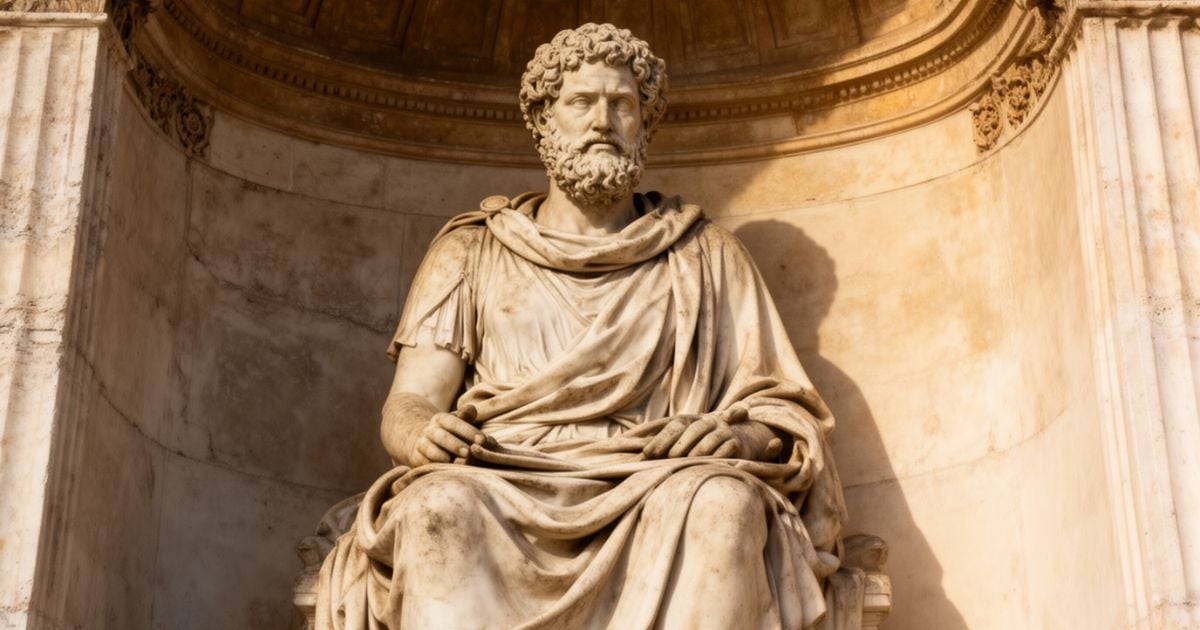
Chapter 06
The Art of Inner Control
THE SIXTH BOOK I. The matter itself, of which the universe doth consist, is of itself very tractable and pliable. That rational essence that doth govern it, hath in itself no cause to do evil. It hath no evil in itself; neither can it do anything that is evil: neither can anything be hurt by it. And all things are done and determined according to its will and prescript. II. Be it all one unto thee, whether half frozen or well warm; whether only slumbering, or after a full sleep; whether discommended or commended thou do thy duty: or whether…
Public-domain chapter text, formatted for reading.
Master this chapter. Complete your experience
Purchase the complete book to access all chapters and support classic literature
Available in paperback, hardcover, and e-book formats
Now let's explore the literary elements.
Key Quotes & Analysis
"The best kind of revenge is, not to become like unto them."
Context: Section V on responding to wrongdoers
Marcus refuses the reflex to mirror injury; integrity is preserved by not adopting the wrongdoer's character.
In Today's Words:
Marcus says the best revenge is not payback, publicity, or matching their cruelty. It is refusing to let injury rewrite your character. When someone cheats or belittles you, the real win is staying honest, steady, and unlike the person who wronged you in the end.
"This is the carcass of a fish; this of a bird; and this of a hog."
Context: Section XI on objective representation of luxury
Marcus strips social glamour from food until only plain fact remains, so status cannot hijack judgment.
In Today's Words:
When glamour surrounds a meal or banquet, Marcus names what is actually there: the carcass of a fish, a bird, a hog. The drill is not disgust but clarity. Strip ceremony until you see plain stuff underneath, so status cannot hijack your judgment when stakes feel highest.
"Well, thou art wounded. Yet thou dost not exclaim; thou art not offended with him. Thou dost not suspect him for it afterwards, as one that watcheth to do thee a mischief."
Context: Section XIX on the palestra opponent
Conflict can be handled with defense but without converting injury into permanent enmity.
In Today's Words:
You take a hit in the ring and still do not treat the other fighter as your permanent enemy. Marcus says defend yourself, decline the blow without suspicious rage, and move on without hunting revenge afterward. Conflict stays bounded, not converted into lifelong hatred at all.
"No man can hinder thee to live as thy nature doth require."
Context: Section LIII closing affirmation of inner freedom
Marcus ends by locating agency in character and conduct even when externals resist you.
In Today's Words:
Marcus ends by locating freedom in conduct, not circumstance. Nothing can stop you from living as your nature requires if you keep jurisdiction clear: sincere action, rational response, and care for the common good even when votes, rivals, or weather refuse to cooperate with you.
Thematic Threads
Personal Agency
In This Chapter
Marcus emphasizes that true power comes from controlling your responses, not external circumstances
Development
Builds on earlier themes of self-discipline by focusing specifically on the control distinction
In Your Life:
You might recognize this when you're more upset about someone's reaction to your work than focused on improving the work itself
Perception Management
In This Chapter
The emperor practices seeing luxury items as basic materials to prevent external things from controlling his peace
Development
Extends previous discussions of rational thinking into practical mental exercises
In Your Life:
You might notice this when brand names or status symbols make you feel inadequate about your perfectly functional possessions
Conflict Navigation
In This Chapter
Marcus suggests treating difficult people like sparring partners—defend without hatred, learn without escalating
Development
Introduces new framework for handling interpersonal challenges with virtue intact
In Your Life:
You might apply this when dealing with a coworker who consistently undermines you but you need to maintain professionalism
Impermanence Awareness
In This Chapter
Reflects on how Alexander the Great and his mule driver ended up equally dead, making status distinctions meaningless
Development
Deepens earlier mortality reflections by connecting them to social hierarchy
In Your Life:
You might find comfort in this when feeling intimidated by someone's wealth or position, remembering we all face the same ultimate limitations
Rational Response
In This Chapter
Emphasizes that everyone acts according to what they believe is good for them, calling for education rather than anger
Development
Builds on Stoic rationality by applying it specifically to understanding others' motivations
In Your Life:
You might use this when someone's behavior seems inexplicably harmful, looking for the logic behind their actions instead of taking it personally
You now have the context. Time to form your own thoughts.
Discussion Questions
This is not a test. Five prompts guide you through the chapter, from how it opens to how it closes, so you notice context and rhythm rather than facts to memorize. Sit with each question in your own words. When you see "One way to read it," treat it as a starting point, not the only answer.
- 1
Marcus says do your duty whether you are praised or blamed, warm or cold, waking or dying, since death itself is one of life's actions. Why include death in the same list as ordinary daily tasks?
analysis • surfaceOne way to read it
Death is not an alien interruption but part of the same natural course as every other action. Treating it that way removes panic and keeps attention on performing each role, including the last one, with the same steadiness.
- 2
Marcus strips luxury food, wine, and purple robes down to carcass, grape juice, and dyed wool so glamour cannot rule him. Where do you see status objects acquire false weight in your own environment?
analysis • mediumOne way to read it
Titles, branding, ceremony, and expense often pretend to be substance. Marcus's drill is triage: see the plain thing underneath before grave appearance makes you choose badly or feel diminished without it.
- 3
Marcus says the best revenge is not to become like those who wrong you. How would that rule change your response to a rival who plays dirty or a colleague who takes credit?
application • mediumOne way to read it
Winning by mirroring their methods means they have altered your character. Marcus prefers defense without hatred, truth without dissembling, and steady duty over the satisfaction of becoming what you despise.
- 4
At the palestra Marcus says you may be wounded yet not treat the opponent as a permanent enemy, defending yourself with friendly declination rather than suspicious rage. Where could you apply that distinction this week?
application • deepOne way to read it
Conflict at work, home, or online often invites permanent enmity after one injury. Marcus allows protection and correction without converting the person into an enemy to be hunted afterward.
- 5
Marcus warns that if you mark externals as good or evil you will complain against the gods and hate men, and he pairs Alexander of Macedon with his mule driver as meeting the same end. What freedom opens when only your will is truly yours?
reflection • deepOne way to read it
You stop treating votes, praise, rivals, and losses as verdicts on your worth. Outcomes and other people's choices leave your character untouched if you keep jurisdiction clear: sincere action, charitable conduct, and living as nature requires.
Critical Thinking Exercise
Map Your Control Territory
Think of your most stressful ongoing situation right now. Draw two columns: 'I Can Control' and 'I Cannot Control.' Be brutally honest about where each aspect of the situation belongs. Then look at how you've been spending your mental energy - are you focused on the left column or the right one?
Consider:
- •Your feelings and reactions always belong in the 'Can Control' column, even when the situation doesn't
- •Other people's choices, opinions, and behaviors always belong in the 'Cannot Control' column
- •Notice how much lighter you feel when you stop carrying responsibility for the right column
Journaling Prompt
Write about a time when you wasted energy trying to control something impossible. What would you do differently now, and what would you focus on instead?
Coming Up Next...
Chapter 7: The Universal Patterns of Human Experience
Book Seven opens on repetition: wickedness is nothing you have not already seen, and towns are full of the same old stories. Marcus steadies dogmata that die in you unless you keep fresh the thoughts that revive them..