Chapter 19
The Awkward Exit
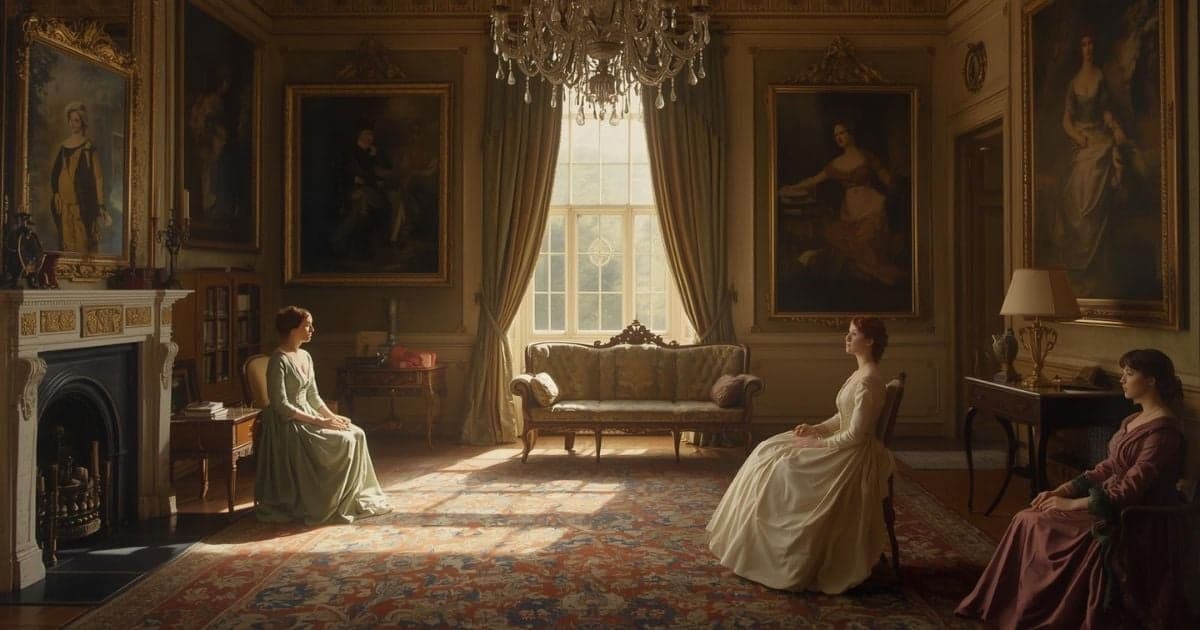
In spite of her self-command, in spite of her superiority to convention, Madame Odintsov could not but feel a little uncomfortable when she entered the dining-room for the evening meal. Nevertheless the meal passed off without incident, and after it Porphyri Platonitch came in, and related various anecdotes on the strength of a recent visit to the neighbouring town--among other things, a story to the effect that Governor "Bardeloue" had commanded his whole staff of officials to wear spurs, in order that, if need be, he could dispatch them on their errands on horseback! Meanwhile, Arkady talked in an undertone…
Public-domain chapter text, formatted for reading.
Master this chapter. Complete your experience
Purchase the complete book to access all chapters and support classic literature
Available in paperback, hardcover, and e-book formats
Now let's explore the literary elements.
Key Quotes & Analysis
"No, not angry so much as grieved"
Context: When Bazarov asks if she's angry about his confession
Shows Anna's emotional complexity - she's not mad at Bazarov for being honest about his feelings, but she's sad about the situation and how it's changed their relationship. Her response reveals genuine care beneath her rejection.
In Today's Words:
When love makes you perform instead of connect, Shows Anna's emotional complexity - she's not mad at Bazarov for being honest about his feelings, but she's sad about the situation and how it's changed their relationship. Her response reveals genuine care beneath her rejection. Real connection rarely arrives without naming what changed between you.
"No, no! Again, no!"
Context: While observing Bazarov's stern, forbidding expression during dinner
Anna's internal dialogue reveals she's still processing her rejection of Bazarov and perhaps questioning her decision. The repetition suggests ongoing internal conflict about her feelings.
In Today's Words:
In a family or team split by ideology, when someone you love comes home changed, Anna's internal dialogue reveals she's still processing her rejection of Bazarov and perhaps questioning her decision. The repetition suggests ongoing internal conflict about her feelings. The scene is small, but the relational stakes are not.
"In spite of her self-command, in spite of her superiority to convention, Madame Odintsov could not but feel a little uncomfortable when she entered the dining-room for the evening meal"
Context: From The Awkward Exit
In The Awkward Exit, Turgenev uses this line to anchor the chapter's argument: "In spite of her self-command, in spite of her superiority to convention, Madame Odintsov..."
In Today's Words:
At work or at the dinner table, when a younger voice treats your experience as obsolete, In The Awkward Exit, Turgenev uses this line to anchor the chapter's argument: "In spite of her self-command, in spite of her superiority to convention, Madame Odintsov...". Borrowed certainty travels fast; you can refuse to let it replace honest.
"Nevertheless the meal passed off without incident, and after it Porphyri Platonitch came in, and related various anecdotes on the strength of a recent visit to the neighbouring town--among other things, a story to the effect that Governor "Bardeloue" had commanded his whole staff of officials to wear spurs, in order that, if need be, he could dispatch them on their errands on horseback"
Context: From The Awkward Exit
In The Awkward Exit, Turgenev uses this line to anchor the chapter's argument: "Nevertheless the meal passed off without incident, and after it Porphyri Platonitch came in,..."
In Today's Words:
When you believe you are right and still cannot reach the person across from you, In The Awkward Exit, Turgenev uses this line to anchor the chapter's argument: "Nevertheless the meal passed off without incident, and after it Porphyri Platonitch came in,...". That is the pressure Turgenev tracks in Fathers and Sons.
Thematic Threads
Pride
In This Chapter
Bazarov's wounded pride forces him to leave immediately after rejection, unable to tolerate the vulnerability of staying
Development
Evolved from his intellectual arrogance to personal emotional defensiveness
In Your Life:
You might recognize this when you quit something after criticism instead of learning from it
Emotional Maturity
In This Chapter
Both young men flee emotional complexity they're unprepared to handle, choosing escape over growth
Development
Building from earlier chapters where their philosophies couldn't handle real human connection
In Your Life:
You see this when you avoid difficult conversations that might actually strengthen relationships
Social Masks
In This Chapter
Bazarov's cynical philosophizing about women masks his wounded feelings and genuine confusion
Development
His nihilistic theories are increasingly revealed as protective armor rather than genuine beliefs
In Your Life:
You might use cynicism or detachment to protect yourself after being hurt
Class Expectations
In This Chapter
The tension between Bazarov's common background and his presence in aristocratic circles adds pressure to his departure
Development
Continued exploration of how class differences create additional layers of social awkwardness
In Your Life:
You feel this when you don't quite fit in somewhere and one mistake feels like confirmation you don't belong
Friendship Loyalty
In This Chapter
Arkady chooses to leave with Bazarov despite his own conflicted feelings, prioritizing loyalty over personal desire
Development
Shows how their friendship dynamic is shifting as both face individual emotional challenges
In Your Life:
You face this when supporting a friend means sacrificing your own opportunities or happiness
You now have the context. Time to form your own thoughts.
Discussion Questions
This is not a test. Five prompts guide you through the chapter, from how it opens to how it closes, so you notice context and rhythm rather than facts to memorize. Sit with each question in your own words. When you see "One way to read it," treat it as a starting point, not the only answer.
- 1
Why does Bazarov announce he is leaving Nikolskoe the morning after Anna rejects his embrace?
analysis • surfaceOne way to read it
His pride will not let him remain where he has been exposed and refused. Apology and departure together let him retreat before the household has to witness more of his wound.
- 2
How does Sitnikov's uninvited arrival change the suffocating mood of the evening?
analysis • mediumOne way to read it
The ridiculous guest breaks the spell of strained silence by forcing everyone back into ordinary social performance. Turgenev uses the buffoon to shrink a drama that pride has inflated beyond endurance.
- 3
Why does Arkady choose to leave with Bazarov even though his feelings for Anna and Katia pull him in different directions?
application • mediumOne way to read it
Loyalty to his friend mixes with his own inability to handle emotional complexity at Nikolskoe. Leaving looks like solidarity, but it is also flight from a triangle he cannot yet navigate honestly.
- 4
When does leaving a place immediately after rejection protect dignity and when does it foreclose repair?
application • deepOne way to read it
Bazarov preserves self-respect by going, yet he also ensures no second conversation can soften the rupture. The answer should weigh pride's relief against the cost of abandoning a connection before either party understands it.
- 5
What does Bazarov's cynical talk about women after the confession reveal about wounded pride?
reflection • deepOne way to read it
General contempt lets him pretend the scene with Anna was an error in theory rather than a personal humiliation. Arkady begins to see that the nihilist mask may guard a sensitivity Bazarov refuses to name.
Critical Thinking Exercise
Map Your Exit Patterns
Think of three times you left a situation after feeling rejected, criticized, or embarrassed. For each situation, write down what you told yourself about why you left versus what you were actually feeling. Look for patterns in how you justify exits when your ego gets bruised.
Consider:
- •Notice the difference between the story you told others and what you felt inside
- •Identify any recurring phrases you use to justify leaving ('they don't appreciate me', 'it wasn't worth it', 'I deserve better')
- •Consider whether staying longer might have led to growth or better outcomes
Journaling Prompt
Write about a time when you almost left a difficult situation but chose to stay instead. What did you learn from pushing through the discomfort rather than retreating?
Coming Up Next...
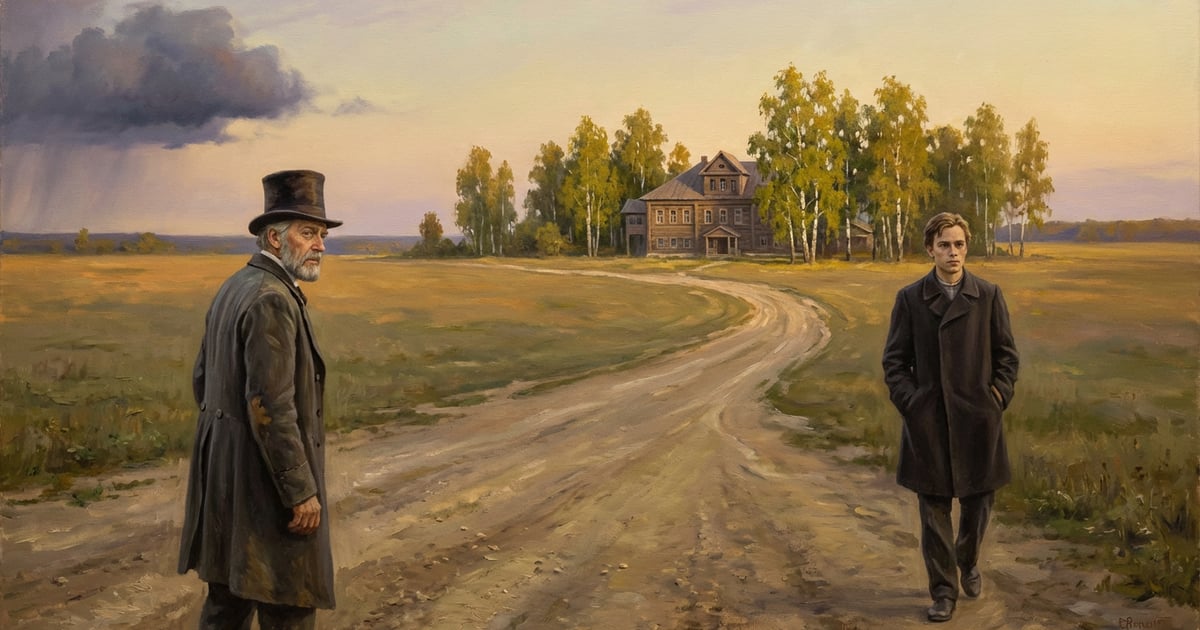
Chapter 20: A Son Returns Home
Bazarov returns to his childhood home, where his aging parents wait with the kind of overwhelming love that makes grown children squirm. The reunion will test whether his nihilistic philosophy can withstand the simple, uncomplicated devotion of family..