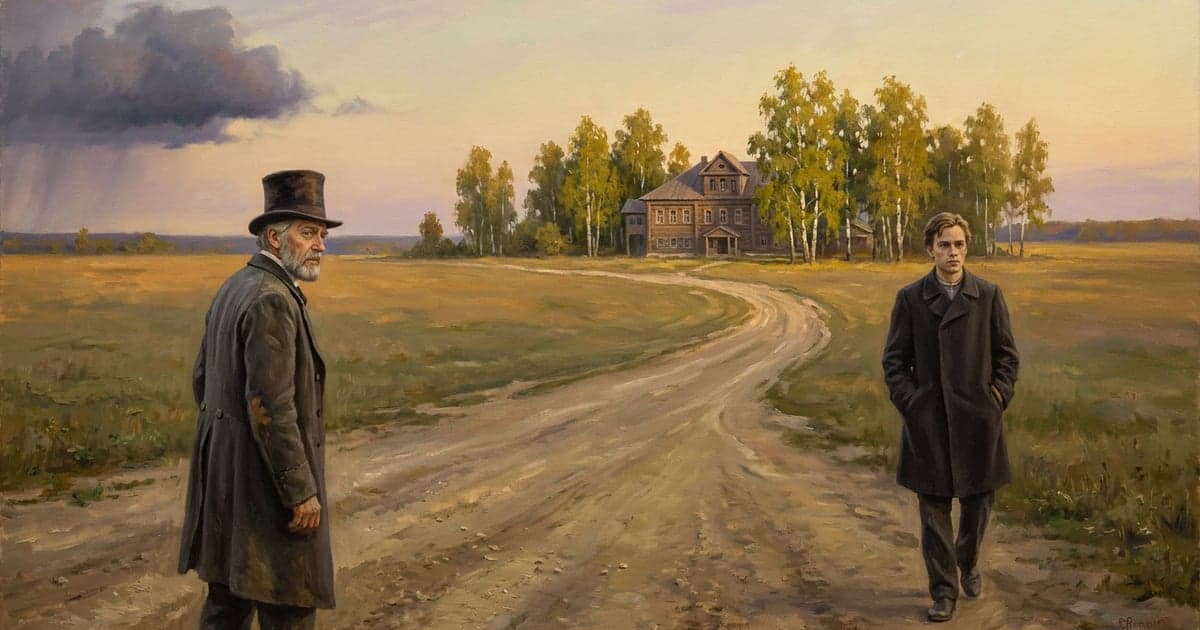
Wuthering Heights
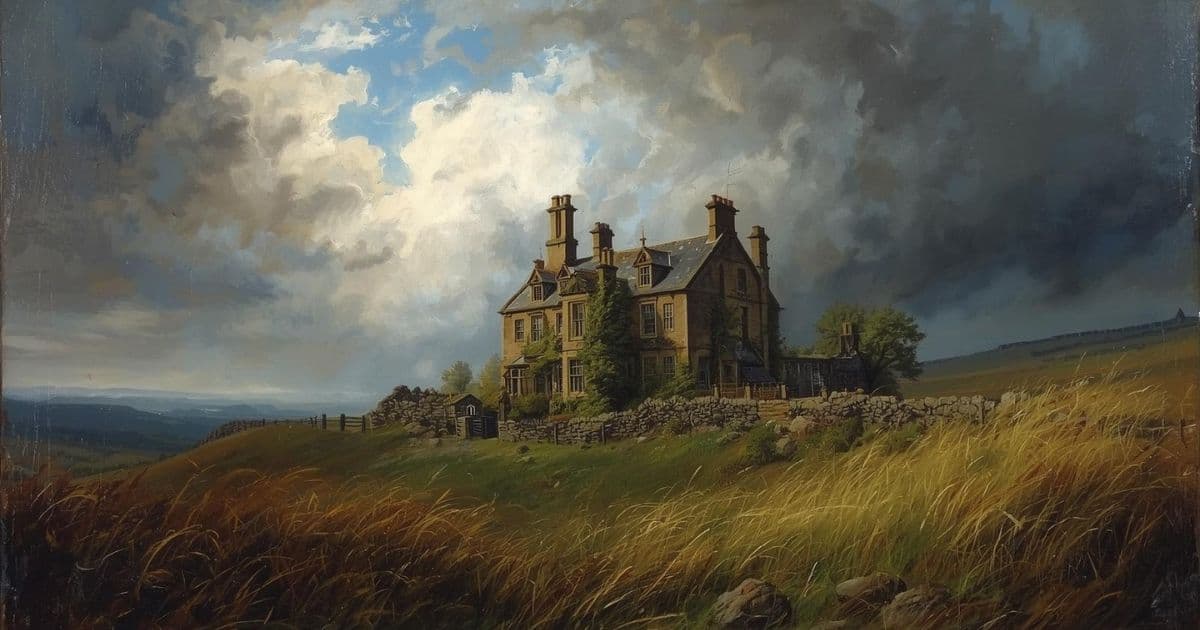
Emily Brontë
0:000:00
0:00 / 0:00

Prestige · $2.99/month
Chapter audio, theme analysis, and downloads
Emily Brontë
0:00 / 0:00
A fir branch taps the boarded window of a chamber Heathcliff keeps shut. Mr. Lockwood has rented Thrushcross Grange in 1801 and ridden over the moors to meet his landlord. The house is stone, carved with 1500 and Hareton Earnshaw. Dogs attack. Joseph curses. Hospitality arrives with closed teeth. Lockwood sleeps where the ledge is cut with Catherine Earnshaw, Catherine Heathcliff, and Catherine Linton. He breaks the glass and catches an ice-cold child's hand. Let me in, the voice sobs. Catherine Linton, lost on the moor twenty years. He grinds the wrist on the broken pane until blood soaks the bedclothes. Emily Brontë published Wuthering Heights in 1847 under the name Ellis Bell. The wound the book will not close is that a guest who wanted a bed is made to hold the dead, and the living have refused to let each other go.
Nelly Dean is the housekeeper who was in every room and now tells Lockwood how it got that way. An old farmer walks to Liverpool one harvest morning and comes back with a dirty, ragged child he names Heathcliff and favours over his own son. Hindley, once the heir, drives the foundling to outdoor labour, strips the lessons, and flogs him when he and Catherine skip church. Catherine Earnshaw runs the moors with Heathcliff, then comes home from Thrushcross Grange refined and laughing at his clothes. Edgar Linton proposes with a gentleness that can be lived in. His sister will later take a marriage for a romance and learn it is open war. A new generation inherits both houses and the contempt stored in them. The pressure among them is not who loves hardest. It is who gets to stay human after love has already named itself as identity, property, and revenge.
One Sunday they spy through the Grange window. A dog bites Catherine. She stays five weeks and comes home a lady. Edgar proposes. Behind the settle she tells Nelly she has accepted, then says it would degrade her to marry Heathcliff now. That sentence is the hinge. Heathcliff is listening. He leaves on it and does not hear what follows: that her love for Edgar is foliage, that her love for Heathcliff is rock, that she is Heathcliff. She waits at the gate through thunder until midnight. Three years later Edgar leads her to Gimmerton Chapel. Heathcliff returns in September, transformed and rich, wins Hindley's money at cards, and lodges at the Heights. He persuades Edgar's sister to elope, then she flees across the snow after a thrown dinner-knife. Catherine fasts behind a barred door, tears the pillow, and calls across the moor. He comes on a Sunday while Edgar is at church. They clutch until his grip leaves four blue marks. About midnight she bears a seven-months daughter and dies two hours later without waking. Heathcliff, drenched among the trees, prays she haunt him, dashes his head against a trunk, and howls. Years later he opens the coffin. He takes the Heights when Hindley drinks himself to death, degrades the next heir as Hindley once degraded him, and forces his own dying son into a marriage that blocks Edgar's will.
Brontë is not writing a courtship that needs a better proposal. She is writing what a class wound and an overheard word do when nobody will grieve them. Reviewers called the book violent and strange. She nested the story inside Lockwood's visit and Nelly's memory so a stranger arrives as a trespasser and has to sit through two generations before the house will explain itself. The ending is earned because the second generation does not inherit the howl. Cathy, who mocked Hareton's ignorance, offers to teach him to read. They study by firelight. Heathcliff stops eating, stares at something invisible, and dies before dawn in the panelled bed, the window open to the rain, his face fixed in an exulting sneer. They bury him without a minister. Lockwood visits the three headstones and wonders how anyone could imagine unquiet slumbers in that quiet earth. Country tales still say a man and a woman walk the moor.
A childhood on the moors looks like companionship until the Grange window and the degrade line teach Catherine that intensity is not a life two people can share. Recognizing Destructive Love vs. Healthy Passion is that gap: I am Heathcliff, said after she has already accepted Edgar, a bond that refuses a separate self. Navigating Class Barriers and Social Mobility rides the same sentence, then the gentleman who returns rich with the injury still open. Once he is back, Understanding How Revenge Destroys the Avenger takes the cards, the forced marriage of young Cathy to dying Linton, and the open window: both houses arrive and the winner will not eat. Recognizing When Passion Has Become Possession is already in Lockwood's bed, then in the four blue marks and the opened coffin. Dealing with Unresolved Grief is the howl among the trees and the night walks that never end. Breaking Cycles of Intergenerational Trauma is the only release the book will grant: Cathy teaching Hareton to read by firelight instead of inheriting contempt.
Three names stay cut in a window-ledge. A fir branch still finds the pane. Wide Reads records summaries, quotes, and audio across all thirty-four chapters, from a child's wrist on broken glass to three headstones in a churchyard that Lockwood wants to call quiet.
Published 1847
Emily Brontë (1818-1848) was an English novelist and poet who lived most of her brief life at the isolated parsonage in Haworth on the Yorkshire moors. The fifth of six children, she was intensely private, rarely leaving home, and found her truest companions in the wild moors and in the imaginary world of Gondal she built with her sister Anne.
Wuthering Heights, published in 1847 under the pseudonym Ellis Bell, was her only novel, published alongside Anne's Agnes Grey one year after their sister Charlotte's Jane Eyre. While Jane Eyre succeeded immediately, Wuthering Heights baffled and horrified reviewers, who found it too violent and too morally ambiguous, and assumed its unknown author simply did not understand proper literary conventions.
Emily died of tuberculosis in December 1848, one year after the novel was published, at only thirty. She refused medical help and kept to her daily routine until the end, finally collapsing while feeding her dogs. Charlotte later tried to soften the novel's harshness in a preface to the 1850 edition, suggesting Emily had not fully understood what she was writing. Charlotte was wrong: Wuthering Heights is now recognised as one of the great, uncompromising novels in English, unflinching about the human capacity for both love and cruelty.
Emily Brontë speaks to the moment when love and self-destruction start to look identical: the person who tells you their love is not a choice but an identity, the family that turns a wound into inheritance and hands it to the next child, the grief that refuses to end because ending it would mean letting go. Wuthering Heights treats intensity as a warning, not a compliment, and asks what a person owes to the people around them once wanting has curdled into possession.
Plot, characters, and themes — plus audio, source text, and patterns you can use after class
Two ways in
Chapter by chapter, with audio. The meaning arrives because you experienced it — not because someone listed bullet points.
Start with this.
The actual words the author wrote, alongside every summary. Use the guide, then step into the source.
Then step into the source.
Either way, the door opens inward.
— and most of all, Why does this matter?
Purchase the complete book to access all chapters and support classic literature
Available in paperback, hardcover, and e-book formats
Free to read • No account required

Weekly insights from the classics. Amplify Your Mind.
We focus on public domain classics because these timeless works belong to everyone. No paywalls, no restrictions—just wisdom that has stood the test of centuries, freely accessible to all readers.
Public domain books have shaped humanity's understanding of love, justice, ambition, and the human condition. By amplifying these works, we help preserve and share literature that truly belongs to the world.
© 2026 Wide Reads™. All Rights Reserved.
Intelligence Amplifier™ and Wide Reads™ are proprietary trademarks of Arvin Lioanag.
Copyright Protection: All original content, analyses, discussion questions, pedagogical frameworks, and methodology are protected by U.S. and international copyright law. Unauthorized reproduction, distribution, web scraping, or use for AI training is strictly prohibited. See our Copyright Notice for details.
Disclaimer: The information provided on this website is for general informational and educational purposes only and does not constitute professional, legal, financial, or technical advice. While we strive to ensure accuracy and relevance, we make no warranties regarding completeness, reliability, or suitability. Any reliance on such information is at your own risk. We are not liable for any losses or damages arising from use of this site. By using this site, you agree to these terms.
Watch the cards take Hindley's money, then the forced marriage and the open window: both estates arrive and the winner starves.
Revenge almost always starts with real injustice. Heathcliff isn't making up his grievances—Hindley really does abuse him viciously. Understanding this is crucial:…
Deep dives
See Cathy teach Hareton to read by firelight after she first mocked his books, and watch a cycle fail to inherit the howl.
Intergenerational trauma doesn't happen by accident—it's deliberately transmitted. Heathcliff consciously recreates his own degradation in Hareton. Pattern: Recognition—see that you're living inherited…
Hear it would degrade her to marry him, then meet the gentleman who comes back rich with the same injury still open.
Class anxiety starts as a household sorting rule, not as a theory. Heathcliff is loved by the father and treated as a…
Hold the ice-cold hand at the boarded window, the four blue marks, and the opened coffin.
Let me in—let me in!
Stay with the howl among the trees and the night walks that never end, then the grave that still cannot satisfy the loss.
Unresolved grief turns a locked room into a shrine. Heathcliff does not want the chamber used because it is still a place…
Trending search questions mapped to the lessons in this novel—what readers actually ask Google about love, revenge, class, grief, and breaking cycles.
Yes, and that is the novel's caution, not its romance. Their childhood bond on the moors is mutual and alive; after the Grange window and Catherine's "it would degrade me" speech, intensity becomes identity collapse ("I am Heathcliff"). Healthy passion wants the other person's flourishing. Destructive love refuses a separate self.
Explore Destructive Love vs. Healthy PassionShe loves Heathcliff "like the rocks beneath" and still chooses Edgar for looks, money, and respectability she can live inside. The tragedy is not that she never loved Heathcliff; it is that she mistakes intensity for a shared life, then speaks the degrade line where he can hear the rejection and not the rock. Class anxiety writes the marriage; passion writes the wreckage after.
Explore Navigating Class Barriers and Social MobilityAdaptations often sell romance; the text stages control. He torments Catherine, marries Isabella as leverage, forces young Cathy's marriage, and treats grief as a right to haunt and hold. Intensity without care is not romance; it is possession wearing devotion's language. Brontë leaves the moral fog; she does not leave the bruises ambiguous.
Explore When Passion Has Become PossessionClass is the hinge. Catherine stays five weeks at Thrushcross Grange, returns a lady, and says marrying Heathcliff would degrade her, then accepts Edgar's gentleness and rank. Heathcliff leaves on that sentence and returns rich, but wealth cannot close a class wound that was never grieved.
Explore Navigating Class Barriers and Social MobilityCompletely. Heathcliff wins Hindley's money, degrades Hareton, forces young Cathy into a dying marriage, and takes both houses, then cannot eat, stares at something invisible, and dies before dawn with the window open to the rain. The wound was real; the campaign still hollows the avenger.
Explore How Revenge Destroys the AvengerSix lessons run through the novel: tell destructive love from healthy passion; see how revenge destroys the avenger; break intergenerational trauma instead of inheriting it; name class barriers without letting them write your life; recognise when passion has become possession; and face unresolved grief before it becomes a house's weather. Those skills, not a tidy love story, are why the book still answers modern searches.
What makes her indispensable is how completely she disappeared into one book and then into death. Wuthering Heights was her only novel, published in 1847 under the male pseudonym Ellis Bell. She died of tuberculosis just over a year later, at thirty, having refused medical treatment and kept to her daily routine until she collapsed feeding her dogs. She never lived to see the book reconsidered. Early reviewers called it violent and morally repellent, and even her own sister Charlotte tried to soften it for readers in a preface added after Emily's death, suggesting she had not fully understood what she had written.
Charlotte was wrong, and the book has outlasted her apology for it. Brontë refused to give her characters a redemptive love story, a villain readers could safely hate, or an ending that resolves the damage rather than passing it to the next generation. The only real mercy in the novel is Cathy teaching Hareton to read by firelight, breaking a cycle rather than curing it, which is closer to how change actually happens than anything a gentler novel could have offered.