
Anna Karenina
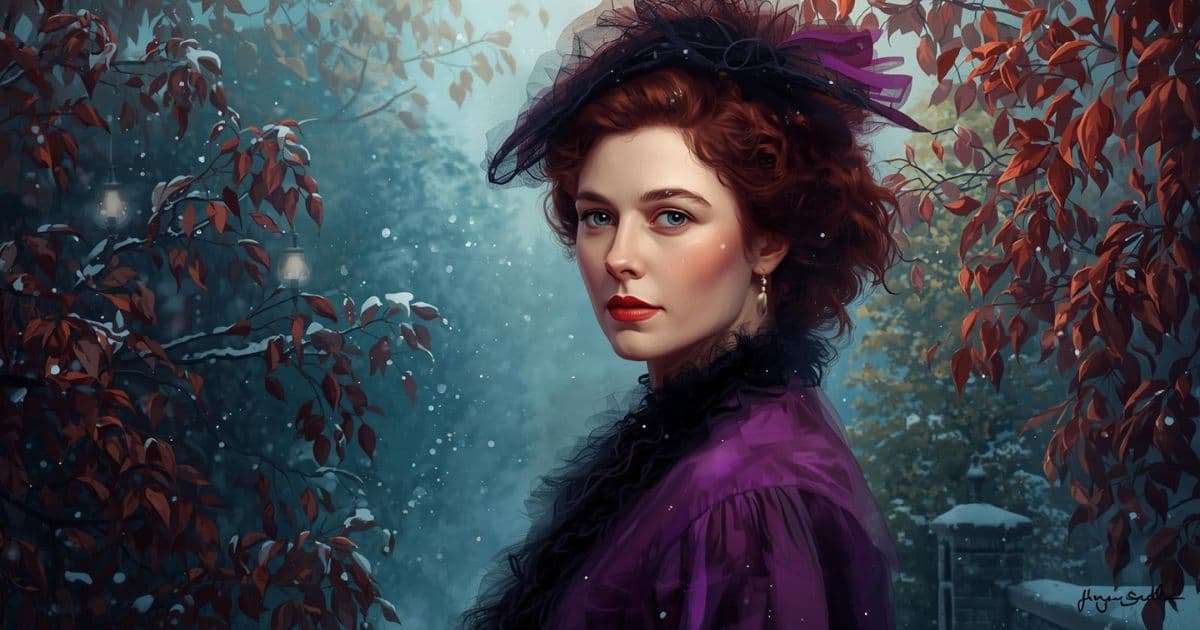
Anna Karenina
A Brief Description
Anna Karenina tells the story of a Russian aristocrat who sacrifices everything for a forbidden passion—and pays a price that reveals exactly how society decides which transgressions it will punish and which it will forgive.
Set against the glittering backdrop of 1870s St. Petersburg and Moscow, Tolstoy weaves two parallel lives. Anna Karenina, beautiful and vivid, abandons her respectable marriage for Count Vronsky, a man who embodies everything her cold husband is not. What begins as liberation hardens into exile: cut off from her son, shunned by the society that once adored her, Anna watches the love that freed her slowly devour her from within. Jealousy replaces passion. Obsession replaces intimacy. And the woman who dared to want more finds herself wanting nothing but relief from wanting.
Running alongside Anna's unraveling is Konstantin Levin, an idealistic landowner who stumbles through his own search for meaning. Levin doesn't burn—he fumbles. He fails at philosophy, politics, and romantic love before finding something steadier: meaning built through honest work, family, and hard-won spiritual acceptance. Where Anna flames and shatters, Levin quietly endures.
The contrast is Tolstoy's real argument. He isn't condemning passion or praising duty. He's dissecting the architecture of the self—showing how different inner structures, one dependent on external validation, one rooted in something quieter and more durable, can lead to radically different fates.
Tolstoy traces how passion becomes obsession, how society punishes women for the same acts it overlooks in men, how jealousy destroys the very love it tries to protect, and how the desperate search for transcendent meaning can lead to both profound wisdom and devastating ruin.
This is Tolstoy at his most psychologically penetrating—a novel that doesn't warn us against love, but against losing yourself completely in the pursuit of it, until the life you chose becomes the one thing you can no longer bear.
Life-Skill Deep Dives
Theme-by-theme chapter breakdowns of the essential life skills in this classic novel.
Recognizing Consuming Passion
7 chapters tracking how Anna's love transforms into all-consuming obsession—revealing when passion stops expanding your life and starts devouring it.
Understanding Social Double Standards
7 chapters exposing how society destroys Anna for choices that barely inconvenience Vronsky—revealing brutal double standards based on gender and status.
Managing Jealousy
7 chapters documenting Anna's descent from love to paranoid torment—showing how jealousy creates the very betrayal it fears.
Finding Authentic Meaning
7 chapters following Levin's journey from rejection to contentment—discovering purpose through honest work, imperfect love, and spiritual searching rather than consuming passion.
Table of Contents
One affair turns an aristocratic Moscow household into a place no o...
Someone can be honest with himself and still dodge the work of repair
Stiva finishes dressing, scents himself, and walks into breakfast f...
Dolly stands at an open bureau in a wrecked bedroom, hair pinned th...
Stiva Oblonsky holds a Moscow board presidency he barely earned at ...
Stiva asks why Levin is in Moscow, and Levin blushes because the ho...
Levin arrives at his half-brother Sergey Koznishev's Moscow rooms r...
When the professor finally leaves, Sergey turns to Levin with polit...
At four o'clock Levin steps out of a sledge at the Zoological Garde...
Levin follows Stiva into the England restaurant and notices the res...
Over wine at Gurin's, Stiva finally names the rival Levin did not w...
Kitty is eighteen and this winter's success; Levin courted her open...
Kitty waits for the evening like a soldier before battle
The princess walks in on Levin and Kitty's wrecked faces and thinks...
Kitty tells her mother about Levin's offer
About Leo Tolstoy
Published 1877
Leo Tolstoy (1828–1910) was a Russian novelist widely regarded as one of the greatest writers of all time. Born into Russian nobility, he fought in the Crimean War before devoting himself to literature, philosophy, and social reform. His two great novels—War and Peace and Anna Karenina—stand as monuments of realistic fiction and psychological observation.
Tolstoy was unusual among great writers in that his late life matched his ethics: he renounced his aristocratic privileges, gave away his copyrights, championed the poor, and embraced a radical Christian anarchism that put him at odds with both the Russian Orthodox Church and the Tsarist state. He was excommunicated in 1901.
Anna Karenina (1877) was written at the peak of his powers, and Tolstoy considered it his first true novel. Where War and Peace is panoramic and epic, Anna Karenina is intimate and psychological—a precise dissection of what happens when human desire collides with the rigid architecture of society. Tolstoy said the book's theme was the contrast between two inner structures: Anna's dependence on external validation versus Levin's gradual construction of meaning from within.
Why This Author Matters Today
Reading Leo Tolstoy is an act of self-discovery — one that tends to be more unsettling, and more rewarding, than you expect. Their work doesn't offer easy answers. It offers something rarer: the right questions. Questions about what we owe each other, what we owe ourselves, and what kind of person we are quietly becoming through the choices we make every day.
What makes Leo Tolstoy indispensable isn't just their insight into human nature — it's their honesty about its contradictions. They understood that people are capable of extraordinary courage and ordinary cowardice, often in the same breath. That we can hold convictions firmly and abandon them the moment they cost us something. That the gap between who we think we are and who we actually are is where most of life's real drama lives.
In an age of noise, distraction, and the constant pressure to perform certainty we don't feel,Leo Tolstoy is a corrective. Their pages slow you down and ask you to look more carefully — at the world, yes, but especially at yourself. Few writers have done more to show us that thinking well is not an academic exercise but a survival skill, and that the examined life is not a luxury but the only honest way to live.
More by Leo Tolstoy in Our Library
Wide Reads is different.
not a sparknotes, nor a cliffnotes
Two ways in
Read & listen to the summary
Walk with the characters. Hear the story told completely — chapter by chapter, with audio. Feel what they feel. The meaning arrives because you experienced it, not because someone listed bullet points. Every chapter has a summary that speaks.
Start with this.
Read the original text
The manuscript. The actual words the author wrote. Every book on Wide Reads includes the original text alongside the summary — so you can read Austen as Austen wrote her, Dostoevsky as he wrote his. Use the summary as a guide, then step into the source.
Then step into the source.
Either way, the door opens inward.
As you enter the realm — each chapter goes deeper
— and most of all, Why does this matter?
Get the Full Book
Purchase the complete book to access all chapters and support classic literature
Available in paperback, hardcover, and e-book formats
You Might Also Like
Free to read • No account required