Chapter 06
Overhearing Fate
Later on Raskolnikov happened to find out why the huckster and his wife had invited Lizaveta. It was a very ordinary matter and there was nothing exceptional about it. A family who had come to the town and been reduced to poverty were selling their household goods and clothes, all women’s things. As the things would have fetched little in the market, they were looking for a dealer. This was Lizaveta’s business. She undertook such jobs and was frequently employed, as she was very honest and always fixed a fair price and stuck to it. She spoke as a rule…
Public-domain chapter text, formatted for reading.
Master this chapter. Complete your experience
Purchase the complete book to access all chapters and support classic literature
Available in paperback, hardcover, and e-book formats
Now let's explore the literary elements.
Key Quotes & Analysis
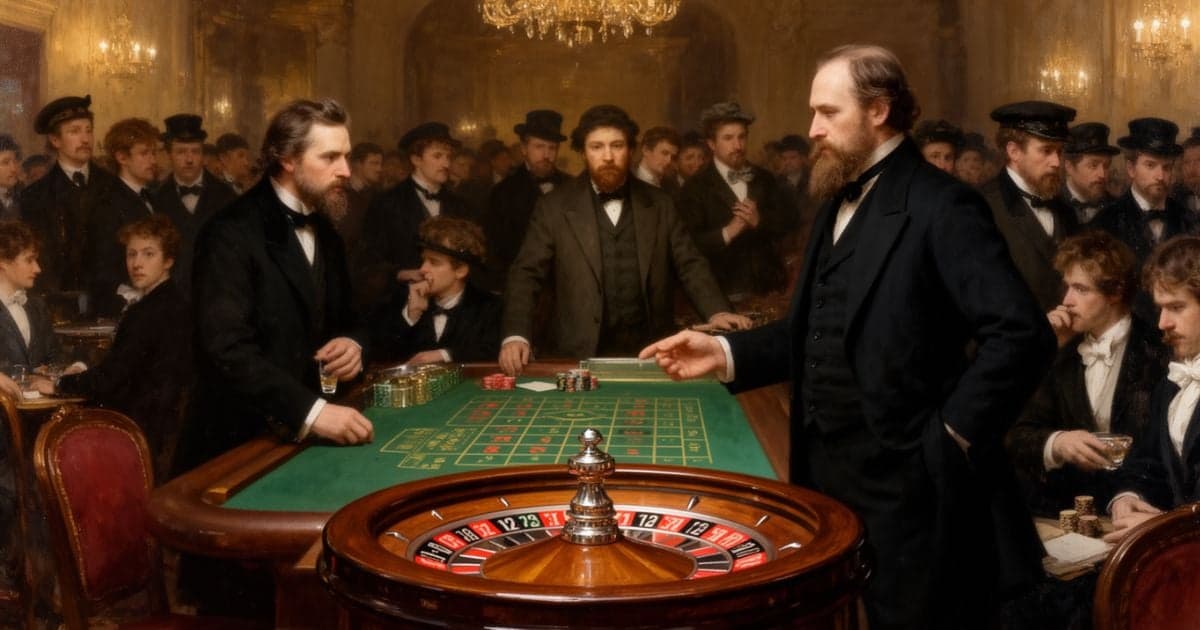
"I could kill that damned old woman and make off with her money, I assure you, without the faintest conscience-prick,"
Context: Overheard in the tavern after Raskolnikov pawned his ring
The student states Raskolnikov's secret thought in public before Raskolnikov has fully admitted it. Hearing it aloud makes the idea feel confirmed rather than invented.
In Today's Words:
A stranger at the next table says he could kill the old pawnbroker and take her cash without losing a minute of sleep. That is the nightmare of bad ideas in public: someone else voices exactly what you have been hiding, and suddenly it feels less like a private shame and more like a shared truth. You did not invent the thought in that moment, but you may treat the coincidence as permission.
"would you kill the old woman _yourself_?"
Context: After the student's utilitarian speech in the tavern
The officer separates abstract justice from personal willingness. The student's refusal exposes how easily murder can be defended in theory and rejected in practice.
In Today's Words:
The officer cuts through the speech with one practical question: would you actually do it with your own hands? That is the gap between hot takes and real action. People defend extreme choices in debate all the time, then back away the second they must own the consequences personally. The question Raskolnikov overhears is the one his whole novel will keep asking.
"When reason fails, the devil helps!"
Context: After he steals the axe from the porter's room
Blocked from his planned theft, Raskolnikov reframes chance as supernatural aid. The line shows how he converts luck into destiny to keep moving forward.
In Today's Words:
His careful plan collapses when the kitchen axe is unavailable, then an axe appears under the porter's bench exactly when he needs it. He reads that luck as dark assistance rather than random chance. Anyone who has ever pushed through a bad decision knows that feeling: when logic says stop, the mind hunts for a sign that says keep going.
"the more final they were, the more hideous and the more absurd they at once became in his eyes."
Context: As Raskolnikov sews the axe noose and prepares the fake pledge
Preparation does not calm Raskolnikov; it makes the crime harder to believe. Dostoevsky shows decision and revulsion happening at once.
In Today's Words:
Every practical step, the hidden noose, the fake package, the rehearsed route, makes the plan feel more real and more grotesque at the same time. That is how obsession behaves when conscience is still alive: your hands keep working while your mind insists the whole thing is impossible. You pack the bag for a choice you tell yourself you will never actually make.
Thematic Threads
Fate
In This Chapter
The tavern coincidence and the porter's axe read as preordained help
Development
Deepened from Hay Market overhearing to full superstitious architecture
Theory vs. action
In This Chapter
The student argues murder's justice but refuses to commit it
Development
Introduced here as the gap Raskolnikov is about to cross
Preparation
In This Chapter
Noose, fake pledge, stolen axe, timed walk to the pawnbroker's
Development
Escalated from abstract plan to physical rehearsal
Dissociation
In This Chapter
Mind wanders to fountains while the body carries the axe upstairs
Development
Introduced here as the psyche splits under pressure
Self-deception
In This Chapter
He insists he will never go through with it while completing every step
Development
Continuing from irrevocably decided toward the act itself
You now have the context. Time to form your own thoughts.
Discussion Questions
This is not a test. Five prompts guide you through the chapter, from how it opens to how it closes, so you notice context and rhythm rather than facts to memorize. Sit with each question in your own words. When you see "One way to read it," treat it as a starting point, not the only answer.
- 1
What utilitarian case does the tavern student make about killing the pawnbroker, and why does it matter that he will not do it himself?
analysis • surfaceOne way to read it
He calls her useless and cruel, then jokes that one death could save thousands, simple arithmetic. Refusing to act himself turns the speech into pure theory, which lets Raskolnikov hear his own idea echoed without another man's blood on the student's hands.
- 2
Why does Raskolnikov treat overhearing that conversation as something preordained rather than accidental?
analysis • mediumOne way to read it
The argument mirrors what he has already been thinking, so coincidence feels like confirmation. Naming it fate spares him from admitting he sought justification and found it in a stranger's drunk philosophy.
- 3
How do the coat noose for the axe and the wrapped fake pledge show the plan has become craftsmanship?
application • mediumOne way to read it
He is sewing tools and props, not debating abstracts. The hidden axe and decoy package mean he expects seconds of distraction in Alyona's room, which is operational thinking, not fantasy.
- 4
His preparations seem hideous and absurd to him, yet his hands keep working. What split does that create between judgment and action?
analysis • deepOne way to read it
Moral revulsion no longer controls motor will. He sees the scheme as grotesque even while he perfects it, which foreshadows the mechanical murder and the later horror when reflection returns.
- 5
Why does he compare himself to a man led to execution who clutches at every object on the way?
reflection • deepOne way to read it
He feels swept by a force he cannot stop, grabbing small tasks to delay the inevitable. Dissociation on the walk shows agency shrinking to ritual while the mind already lives on the other side of the act.
Critical Thinking Exercise
Trace a Too-Perfect Setup
Think of a time when circumstances lined up almost perfectly for a choice you already wanted to make: overheard information, a lucky break, or a sudden opening. Write down what you wanted before the setup appeared, what practical steps you took next, and whether you called it fate, luck, or choice. Then identify one moment when revulsion or doubt surfaced during preparation.
Consider:
- •Separate arguments you would make in public from actions you would take alone
- •Notice when preparation continues while you tell yourself the final step will not happen
- •Ask whether a lucky break removed the burden of owning the decision
Coming Up Next...
Chapter 7: The Deed
The door opens on Alyona Ivanovna's suspicious eyes. Raskolnikov's rehearsed pledge, hidden axe, and philosophical certainty meet the old woman's mistrust, and theory becomes blood in an instant The door opens a crack, and Alyona Ivanovna's suspicious eyes stare out. Raskolnikov forces his way in with the fake pledge, waits until her back is turned, and brings the axe down almost mechanically on her skull..