Wide Reads
Literature MattersLife IndexEducators
Sign in
Where to Begin
Crime and Punishment - Sonia Follows

Fyodor Dostoevsky

Crime and Punishment

Sonia Follows

Home›Books›Crime and Punishment›Chapter 40
Previous
40 of 41
Next

Summary

Sonia Follows

Crime and Punishment by Fyodor Dostoevsky

0:000:00
Listen to Next Chapter

The novel's conclusion is surprisingly hopeful. The protagonist and Sonia's relationship deepens into genuine love and partnership. He begins to see his prison sentence not as mere punishment but as an opportunity for spiritual rebirth. The other prisoners gradually accept him as he sheds his pride and intellectual superiority. He starts reading the Bible that Sonia gave him - the same one she read to him from before his confession. The book represents faith, hope, and the possibility of redemption through suffering. The chapter shows that transformation is ongoing - he hasn't suddenly become a saint, but he's on the path. He has seven more years of prison ahead, but now he faces them with hope rather than despair. Sonia will wait for him, and they'll build a life together afterward. The ending suggests that love and faith can redeem even the worst sins, but only through genuine repentance and acceptance of suffering. It's not a fairy tale ending - the consequences of his crime remain real and harsh. But it's an ending that offers hope: that people can change, that redemption is possible, that love can survive even the darkest circumstances.

Coming Up in Chapter 41

The final chapter reveals what happens to Raskolnikov and Sonya as they begin their new life together, showing how love can truly conquer even the darkest chapters of our past.

Share it with friends

Previous ChapterNext Chapter
GO ADS FREE — JOIN US
Original text
complete·3,031 words

EPILOGUE

I

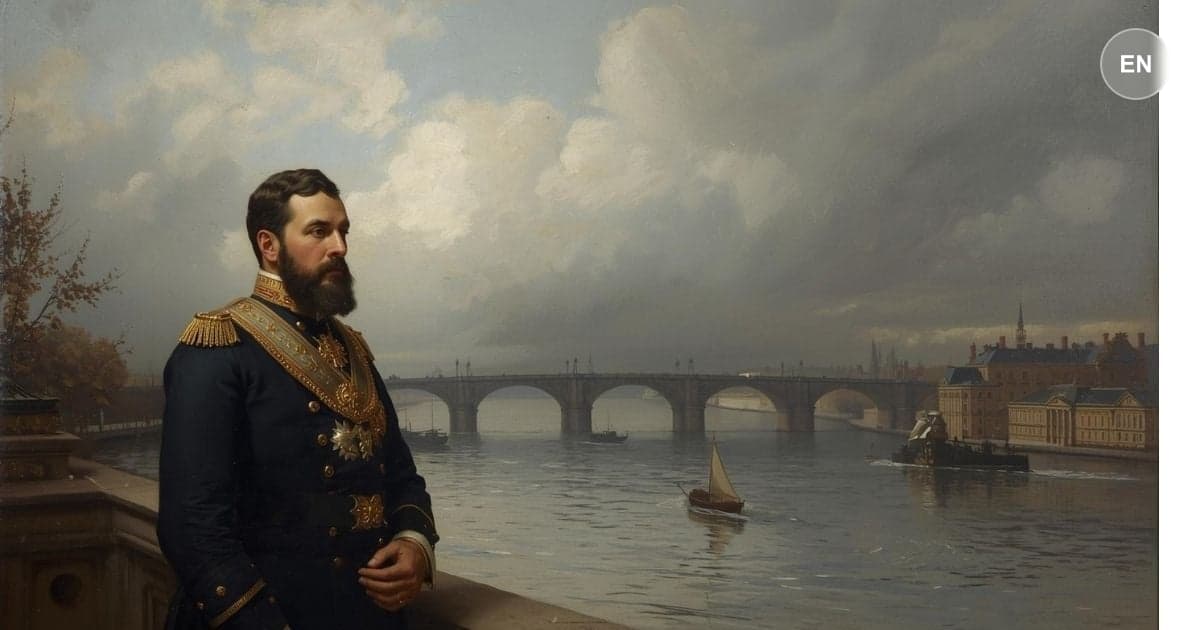
Siberia. On the banks of a broad solitary river stands a town, one of the administrative centres of Russia; in the town there is a fortress, in the fortress there is a prison. In the prison the second-class convict Rodion Raskolnikov has been confined for nine months. Almost a year and a half has passed since his crime.

1 / 17

Master this chapter. Complete your experience

Purchase the complete book to access all chapters and support classic literature

Read Free on GutenbergBuy at Powell'sBuy on Amazon

As an Amazon Associate, we earn a small commission from qualifying purchases at no additional cost to you.

Available in paperback, hardcover, and e-book formats

GO ADS FREE — JOIN US

Why This Matters

Connect literature to life

Skill: Recognizing True Redemption

This chapter teaches how to distinguish between surface-level remorse and genuine transformation that comes through accepting your place in the human community.

GO ADS FREE — JOIN US

Now let's explore the literary elements.

Key Quotes & Analysis

"They were both resurrected by love; the heart of each held infinite sources of life for the heart of the other."

— Narrator

Context: Describing the moment when Raskolnikov and Sonya realize their mutual love

This quote captures the central theme of the entire novel - that love has the power to bring people back to life spiritually. Both characters have been transformed through their connection to each other.

"He had been resurrected and he knew it and felt it in all his being, while she - she only lived in his life."

— Narrator

Context: Explaining Raskolnikov's complete spiritual transformation

Shows how genuine change feels - not just intellectual understanding, but a complete renewal of your entire being. Raskolnikov has become a fundamentally different person through the power of love.

"But that is the beginning of a new story - the story of the gradual renewal of a man, the story of his gradual regeneration."

— Narrator

Context: The novel's final lines, looking toward Raskolnikov's future

Suggests that true redemption is not a single moment but an ongoing process. The real work of becoming fully human again is just beginning, but now Raskolnikov has the foundation of love to build on.

Thematic Threads

Pride

In This Chapter

Raskolnikov finally abandons his belief in his own superiority and accepts his need for human connection

Development

Evolved from intellectual arrogance justifying murder to complete surrender of ego

Redemption

In This Chapter

True spiritual renewal comes through love and vulnerability, not just punishment or guilt

Development

Culmination of the novel's exploration of what genuine change requires

Love

In This Chapter

Sonya's unconditional love finally penetrates Raskolnikov's defenses and transforms him completely

Development

Evolved from Raskolnikov's inability to connect to full spiritual and emotional awakening

Identity

In This Chapter

Raskolnikov becomes a fundamentally different person, recognized even by fellow prisoners

Development

Complete transformation from the isolated, superior individual to connected human being

Human Connection

In This Chapter

Acceptance back into human community after months of spiritual isolation

Development

Resolution of the novel's central tension between individual will and collective humanity

GO ADS FREE — JOIN US

You now have the context. Time to form your own thoughts.

Discussion Questions

  1. 1

    What finally breaks through to Raskolnikov and changes him completely in this chapter?

  2. 2

    Why do you think it took love rather than punishment or arguments to transform him?

  3. 3

    Where have you seen someone's pride or sense of being 'different' cut them off from help they actually needed?

  4. 4

    When you catch yourself thinking 'they just don't understand me,' what's one concrete step you could take to choose connection over being right?

  5. 5

    What does Raskolnikov's transformation suggest about what it really takes for people to change at the deepest level?

Critical Thinking Exercise

Map Your Pride Patterns

Think of a relationship where you've been stuck in conflict or distance. Write down three specific moments when you chose being right over being connected. For each moment, identify what you were trying to protect (your expertise, your image, your feelings) and what it cost you in terms of relationship. Then rewrite one of those moments showing how you could have chosen vulnerability instead.

Consider:

  • •Notice how pride often disguises itself as principles or being helpful
  • •Consider what you were afraid would happen if you admitted you were wrong or needed help
  • •Look for patterns - do you pull away in similar situations or with certain types of people?
GO ADS FREE — JOIN US

Coming Up Next...

Chapter 41: Resurrection

The final chapter reveals what happens to Raskolnikov and Sonya as they begin their new life together, showing how love can truly conquer even the darkest chapters of our past.

Continue to Chapter 41
Previous
Siberian Exile
Contents
Next
Resurrection

Continue Exploring

Crime and Punishment Study GuideTeaching ResourcesEssential Life IndexBrowse by ThemeAll Books
Moral Dilemmas & EthicsIdentity & Self-Discovery

You Might Also Like

The Idiot cover

The Idiot

Fyodor Dostoevsky

Also by Fyodor Dostoevsky

The Brothers Karamazov cover

The Brothers Karamazov

Fyodor Dostoevsky

Also by Fyodor Dostoevsky

The Book of Job cover

The Book of Job

Anonymous

Explores morality & ethics

Thus Spoke Zarathustra cover

Thus Spoke Zarathustra

Friedrich Nietzsche

Explores morality & ethics

Browse all 47+ books
GO ADS FREE — JOIN US

Share This Chapter

Know someone who'd enjoy this? Spread the wisdom!

TwitterFacebookLinkedInEmail

Read ad-free with Prestige

Get rid of ads, unlock study guides and downloads, and support free access for everyone.

Subscribe to PrestigeCreate free account
Intelligence Amplifier
Intelligence Amplifier™Powering Wide Reads

Exploring human-AI collaboration through books, essays, and philosophical dialogues. Classic literature transformed into navigational maps for modern life.

2025 Books

→ The Amplified Human Spirit→ The Alarming Rise of Stupidity Amplified→ San Francisco: The AI Capital of the World
Visit intelligenceamplifier.org
hello@widereads.com

WideReads Originals

→ You Are Not Lost→ The Last Chapter First→ The Lit of Love→ Wealth and Poverty→ 10 Paradoxes in the Classics · coming soon
Arvintech
arvintechAmplify your Mind
Visit at arvintech.com

Navigate

  • Home
  • Library
  • Essential Life Index
  • How It Works
  • Subscribe
  • Account
  • About
  • Contact
  • Authors
  • Suggest a Book
  • Landings

Made For You

  • Students
  • Educators
  • Families
  • Readers
  • Literary Analysis
  • Finding Purpose
  • Letting Go
  • Recovering from a Breakup
  • Corruption
  • Gaslighting in the Classics

Newsletter

Weekly insights from the classics. Amplify Your Mind.

Legal

  • Privacy Policy
  • Terms of Service
  • Cookie Policy
  • Accessibility

Why Public Domain?

We focus on public domain classics because these timeless works belong to everyone. No paywalls, no restrictions—just wisdom that has stood the test of centuries, freely accessible to all readers.

Public domain books have shaped humanity's understanding of love, justice, ambition, and the human condition. By amplifying these works, we help preserve and share literature that truly belongs to the world.

A Pilgrimage

Powell's City of Books

Portland, Oregon

If you ever find yourself in Portland, walk to the corner of Burnside and 10th. The building takes up an entire city block. Inside is over a million books, new and used on the same shelf, organized by color-coded rooms with names like the Rose Room and the Pearl Room. You can lose an afternoon. You can lose a weekend. You will find a book you have been looking for your whole life, and three you did not know existed.

It is a pilgrimage. We cannot find a bookstore like it anywhere on earth. If you read the classics, and you ever get the chance, go. It belongs on every reader's bucket list.

Visit powells.com

We are not in any way affiliated with Powell's. We are just a very big fan.

© 2026 Wide Reads™. All Rights Reserved.

Intelligence Amplifier™ and Wide Reads™ are proprietary trademarks of Arvin Lioanag.

Copyright Protection: All original content, analyses, discussion questions, pedagogical frameworks, and methodology are protected by U.S. and international copyright law. Unauthorized reproduction, distribution, web scraping, or use for AI training is strictly prohibited. See our Copyright Notice for details.

Disclaimer: The information provided on this website is for general informational and educational purposes only and does not constitute professional, legal, financial, or technical advice. While we strive to ensure accuracy and relevance, we make no warranties regarding completeness, reliability, or suitability. Any reliance on such information is at your own risk. We are not liable for any losses or damages arising from use of this site. By using this site, you agree to these terms.