
Class Anxiety in Small-Town Life
A Town That Already Knows Your Address
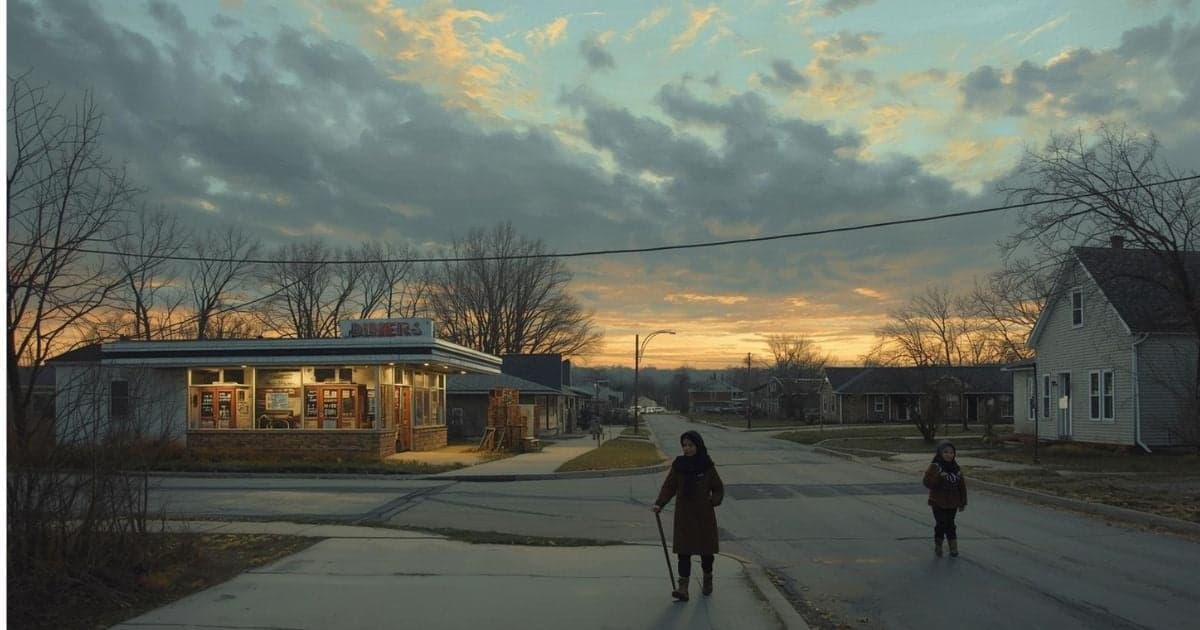
Alice Adams walks downtown with a stick she hopes will read as fashion and treats every nod as a grade. Children call out the cane. Mildred Palmer holds the guest list she cannot quite enter. Booth Tarkington published the novel in 1921, in a Midwestern city that trades old names for new money, and he never treats the central crisis as a comedy of manners. The town already knows the house. The walk is a performance review.
At the Palmer dance the tin-foil violets fail next to Mildred's florist bouquet. The rented Ford has to be left at the curb so the porte-cochere will not tell on them. Alice saves a chair and taps her foot as if her partners are only late. Walter is found shooting dice in the cloak-room. Later the Palmers name her a pushing sort of girl, and Russell learns the glue story from people who enjoy telling it. A guest list, a walking stick, and who nods on the street have already done the work of a verdict.
Tarkington's America in this book officially has no class and practically has nothing else. Being on the wrong porch is treated as a character flaw. Alice absorbs that judgment until the dinner heat and Lamb's numbered mercy leave her no costume. The skill is to see the grades for what they are, and to stop letting a nod on the street decide whether you may take the next block.
The Central Lesson
Class anxiety, in Alice Adams, is a Malacca stick on a public sidewalk, tin-foil violets next to a florist bouquet, and a town that can finish a girl with two words: pushing sort. Tarkington does not free Alice by promoting her. He shows that the grades were always local, always watching, and never as holy as they felt. The lesson is to read the guest list as weather, not as a verdict on whether you may exist in the next room.
Applying This to Your Life
Notice When an Errand Is a Review
Alice cannot walk downtown without scoring the stick, the nods, and the whispers. If a commute, a party, or a comment thread has become a ranking, name it. The first skill is seeing the grade so you can decide whether to sit the exam.
Do Not Let Ease Pass for Virtue
Mildred ruins Alice by looking finished. Perfect ease is often unpaid background: a florist, a name, a car that does not need a breakdown story. Compare labour, not glow.
Separate Worth From the Guest List
The town treats Alice's address as a moral fact. Lamb later prices a different ending. When a room has already decided you, ask whether you need that room or a door that does not run on nods.
Other lessons in this book
More life-skill deep dives from the same classic.
Choosing Work Over the Fantasy
Walk with her up Frincke's stairs in a plain dark suit, past the convent ending she imagined, toward work that does not need the town to believe a story.
6 chapters·Explore AnalysisFamily Shapes and Traps Ambition
See Mrs. Adams push a sick man out of Lamb and Company, then spend the house on a dinner meant to catch Arthur Russell.
6 chapters·Explore AnalysisRecovering After Public Humiliation
Stay with Alice after the wilted roses and Gertrude's tray, when she tells Russell he is leaving for good and has to walk back into the house that staged the collapse.
6 chapters·Explore AnalysisThe Work of Social Climbing
Follow the tin-foil violets, the rented Ford, and the saved chair at the Palmer dance, and count what the performance costs before anyone asks her to dance.
6 chapters·Explore AnalysisWhen Pretending Becomes Believing
Watch Alice invent a social calendar and a richer house, then see how the story hardens until the dinner leaves her nothing to hide behind.
6 chapters·Explore Analysis
Continue exploring
Explore this theme
The same lessons in other books
See how other books teach the same life skills.
The Jungle
Reading Graft as Everyday GovernmentStay with Duane's cell and chapter 25: votes, inspectors, and a city that prices justice.
The Idiot
Maintaining Goodness Without NaivetySit with Myshkin on the train in chapter 1: honesty with no angle, and a city that can only call it idiocy.
Jude the Obscure
When Desire Becomes a TrapTrack the pig, the dimple, the false pregnancy, and the second marriage arranged over gin.
Where the lesson lives in the book
Lady Got Cane
Alice tucks an ivory-topped Malacca stick under her arm and walks downtown. She hopes the cane will read as fashion. Children on the street announce it: Lady got cane. She hears the hint in the tone. Later she catches herself murmuring that she is waiting, just waiting, for a man who has not yet appeared. The stick is already a grade.
Key Insight:
Class anxiety turns an errand into a review. Alice cannot walk a block without keeping score of who notices the prop.
“Lady got cane! Jeez'!”
She Hasn't Got Any Background
Alice gathers three hundred violets with an aching back so the Palmer dance will look effortless. Walter refuses the Palmer crowd until their mother names the real deficit: Alice has no background and cannot arrive alone. The flowers cost labour. The escort costs pleading. Seventy-five cents still has to be found.
Key Insight:
Background is the town's word for a house, a name, and a car that do not need explaining. Alice is asked to invent all three before the door opens.
“she hasn't got any background.”
The Kind of Man She Would Marry
Frank Dowling tramples her through a dance. Across the room she sees Arthur Russell with Mildred Palmer and hears a sentence from inside herself: that is exactly the kind of looking man she would like to marry. She tells Frank that Mildred is her most intimate friend. The lie is a bid for rank she does not hold.
Key Insight:
In a small town the dance is a ranking tournament. Alice's inner verdict on Russell is also a verdict on her own address.
“There! That's exactly the kind of looking man I'd like to marry!”
Perfect Creatures Ruin the Rest
Mildred Palmer's ease does the damage Alice's effort cannot undo. Tarkington names the mechanism without kindness: perfect creatures have the most perfect way of ruining the imperfect ones. Alice cannot simply be in a room. She has to manage what the room will decide about her father's job and her brother's crowd.
Key Insight:
Class anxiety colonizes attention. A compliment is evidence. A snub is a ranking. Presence becomes impossible when every nod is a grade.
“Perfect creatures have the most perfect way of ruining the imperfect ones.”
A Pushing Sort of Girl
The Palmers finish Alice for Russell. She is a pushing sort of girl. Virgil walked off with the old gentleman's glue secret. The town that already knew her address now has a plot to attach to it. Russell's silence is read as a verdict she cannot appeal.
Key Insight:
Small-town class is not a mystery. It is gossip with a street number. Once the story circulates, Alice cannot ration the facts on a walk home.
“A pushing sort of girl”
Mercy With a Figure
J. A. Lamb could close the family. He offers ninety-three hundred fifty dollars and a sentence about forgiveness. The hierarchy Alice has spent the book trying to climb is not as automatic as her fear made it. One man at the top chooses a price instead of a ruin.
Key Insight:
Class anxiety projects a closed door onto every higher room. Lamb's offer does not abolish the town's grades. It proves they are not the only law.
“ninety-three hundred and fifty”