
The Recognition · No. 7
Manifestation named the believer. Cervantes named the mill.
Most readers arrive calling Don Quixote a mascot for manifestation: believe hard enough and the world rearranges, because reality is an illusion. That is the cliché. It is not who Cervantes put on the page.
Sancho names mills while his master names giants. Aldonza Lorenzo never asked to be Dulcinea. Galley slaves, freed in the name of liberty, stone the man who cut their chains.
The recognition is not that Quixote failed to believe. He believed with a completeness the later seminars would sell as a method. The recognition is that we named the believer and forgot who had to inhabit the overlay.
Who the summary names
“Believe hard enough and the world rearranges. Reality is an illusion. The believer is the only name the popular summary keeps.”
The believer · the overlay · the dream
Who the novel names
A mill that still grinds grain. A farm girl who never signed. Prisoners hurt by a script about liberty. A squire who keeps two names for the same field.
Don Quixote · Cervantes · 1605 / 1615
The popular summary names the dreamer. The novel names the mill, the girl who never signed, and the bruise that would not become scenery.
The mill keeps its name
Manifestation, as the popular summary sells it, is a private power: feel it as done, and the field will comply. Cervantes already gave you that method. In chapter 1, a gentleman bordering on fifty reads until the books of chivalry cannot be allowed to be wrong. He names himself Don Quixote. He names a skinny horse Rocinante. He names a farm girl Dulcinea without asking her. The overlay is complete before the first mile.
Then chapter 8 puts two names on the same objects. Quixote sees thirty or forty windmills and announces monstrous giants with arms nearly two leagues long. Sancho names them plainly: mills, sails, millstones. Quixote charges. The lance shatters. The bruise is not accepted as a mill. It is recast as sabotage by an enchanter who stole the glory. That is the master class the later seminars trimmed. The method is on the page. So is the second name, the one that still grinds grain.
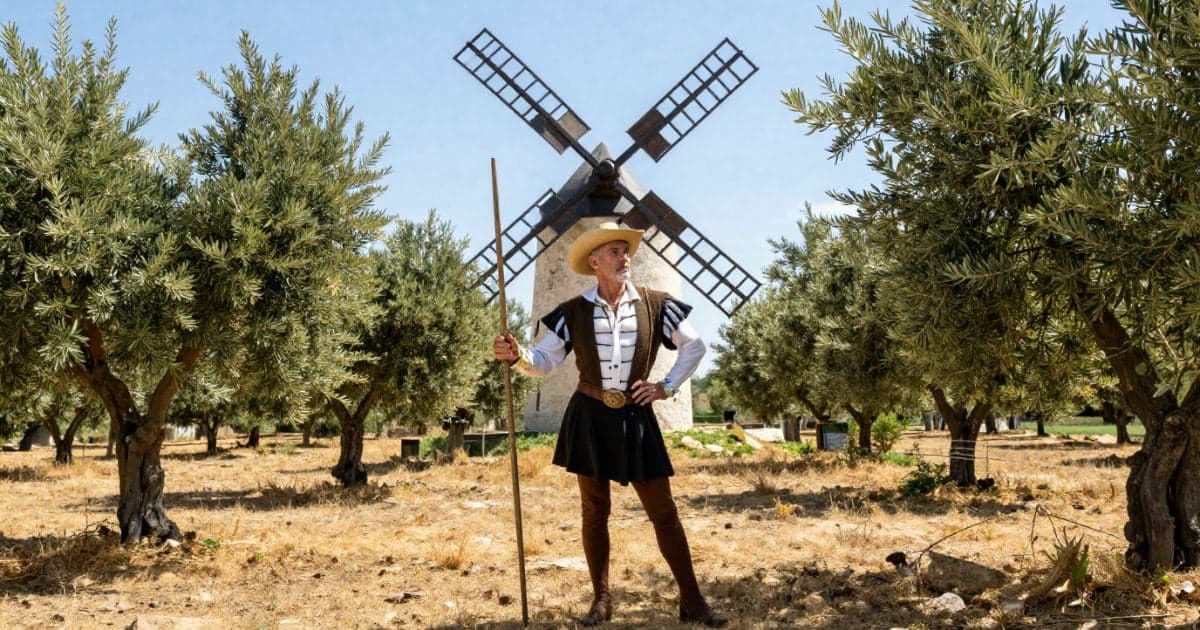 Read who named the mill
The guide · Chapter 8, Don Quixote
One man sees a righteous war. The other sees machines that grind grain. Both are looking at the same field.
Wide Reads chapter guide. Cervantes's novel stays in the book.The lady who never signed
If reality is an illusion, the easiest person to rewrite is someone who is not in the room. Dulcinea is manifestation's favourite object: a life upgraded by naming. Cervantes will not let the upgrade stay private. The girl has a name already. Aldonza Lorenzo. She never asked. In chapter 61, midnight El Toboso makes the missing lady a logistical problem. Quixote asks Sancho to lead him to her palace. Sancho cannot produce what was never there, so a church becomes a palace rather than admit the lady is not available for inspection.
That is the second lesson of the class. An overlay that needs a princess will hire a building, a peasant girl, or an enchanter before it will accept an ordinary name. The popular summary treats this as romance. The novel treats it as a person being used as scenery. Recognition is noticing that Dulcinea is credited as an ideal and never as a voter.
Other people inhabit the overlay
In chapter 22, Quixote frees a chain of galley slaves in the name of liberty. The script is noble. The people in it are not extras. They stone him and steal the basin he has already renamed a helmet. When noble intentions miss the people in front of them, the overlay still needs to be right, so the beating becomes another proof that the world is enchanted against him. The prisoners remain prisoners of a plot they did not write.
Part Two then offers the cruelest graduation. In chapter 82, the Duke and Duchess have already read the first book. They will produce the reality he asked for: enchantments, a wooden horse, a fake island. The world finally rearranges. It rearranges because an audience is staging it as house entertainment. If you have ever watched a seminar deliver the life someone asked for, as a show, you already know this room.
In chapter 126, a fever finishes what the Knight of the White Moon started on a Barcelona beach. Sancho begs him to live and take the fields as shepherds. Quixote answers that in last year's nests there are no birds this year. He dies as Alonso Quixano the Good. The overlay is returned. The name that manifestation wanted to keep is the one the book will not let him keep.
That is the recognition. Same 126 chapters, same knight. Different ledger. Cervantes is not asking you to stop believing anything. He is asking you to see who the popular summary of illusion leaves off the page: the mill, the girl, the prisoners, the squire, and the Christian name waiting underneath the title.
Bring this to the table
The popular summary ends on the believer. If the mill kept its name, and the girl never signed, who did the overlay actually credit?
Common Questions
Search questions this recognition answers: who gets named, whether Don Quixote is a manifestation manual, and who had to live inside the overlay.
Who does Don Quixote want named?
Not only the knight. Sancho Panza names mills, hunger, and a farm girl while his master names giants, glory, and Dulcinea. Aldonza Lorenzo never asked for the title. The galley slaves in chapter 22 are actual prisoners, not extras in a rescue scene, and they stone the man who cut their chains. At the end the fever names Alonso Quixano the Good, and the knight's name has to be given back.
Why does recognition matter in Don Quixote?
Because the novel distinguishes the overlay from the people who have to inhabit it. Quixote can rename a mill, a basin, an inn, and a girl. The bruise still happens. Sancho still has a body that gets hungry. The Duke and Duchess can stage the adventures he asked for, and the staging is still a joke at his expense. Recognition arrives when you see that manifestation culture named the believer, and Cervantes named everyone who did not get a vote.
Is Don Quixote a master class on manifestation?
It is the class the later seminars trimmed. Cervantes lets a man read until the books cannot be wrong, then he keeps the receipts: a mill that still grinds grain, a lady who was never consulted, a chain of prisoners hurt by a script about liberty, and a court that will produce the reality you asked for because it has already read the book. The method is on the page. So is the invoice.
Why do people treat Don Quixote as a mascot for dreaming?
Windmills compress faster than 126 chapters. A charming madman is easier to lift out than a squire who stays, a farm girl who never signed, and a deathbed that returns a Christian name. The popular summary wants reality to be an illusion the believer can rewrite. Cervantes wrote the overlay and then refused to let the mill, the bruise, or the other people become scenery.
Read who Cervantes actually named.
Don Quixote is 126 chapters on a mill that kept its name, a girl who never signed, and a squire who stayed. We guide it chapter by chapter in plain language. The original translation stays in the book you buy. The first chapter's audio is free. The rest is $2.99 a month, every book on the shelf.