
Today · Headlines
September 15, 2026
A headline paired with two books that had already named the pattern underneath it.

Today · Headlines
September 15, 2026
The United States confirms it has placed an on-orbit space weapon in orbit without naming what it is or when it arrived
Air Force Secretary Troy Meink said on Monday at the Air, Space and Cyber Conference that the United States has deployed an "on orbit" space-control weapon to safeguard American forces against hostile action in space. He did not describe its capabilities, its launch date, or whether it has ever been used. The disclosure is the first time Washington has publicly acknowledged offensive weapons in orbit, after years of warning that Russia and China have been testing ways to jam, dazzle, or kill the satellites that carry military communications, navigation, and surveillance. A 1967 treaty bans weapons of mass destruction in space but not other systems that could disable a rival's orbital infrastructure. Moscow said in 2024 it had launched a satellite that US officials feared could attack other probes; Beijing has framed space as a warfighting domain in its own modernisation plans. Meink's announcement is less a technical briefing than a message sent upward: the room above the atmosphere now has a claimed American weapon in it, whether or not anyone on the ground can verify the detail.
The life truth
How literature reiterates life truths from today's headlines
A weapon you announce from orbit can change the calculation before anyone proves it is there.
How it relates to today's headline
Monday's news is not a weapons demonstration. It is a sentence spoken at a conference: we have something on orbit, and we are not telling you what. Meink did not show a launch video, name a platform, or describe a test. He told an audience of military and industry officials that the capability exists, and left every other capital to decide how much of the claim to treat as fact.
Mary Shelley's Frankenstein runs on the same gap. Victor builds life in a locked room, and the terror begins not when the creature speaks but when the world learns that something was made that it cannot see, cannot locate, and cannot unmake. Meink's line does not end the competition in space. It declares American entry into a ledger that Moscow and Beijing were already keeping.
Herman Melville's Moby-Dick offers the crew's version. Ahab spends the voyage announcing what he hunts before the whale surfaces. The ship's fate turns on a force most of the men have never seen; the hunt moves because Ahab says it must, and because no one aboard can afford to treat the declaration as empty. Space officials have warned for years that rivals were practising in orbit. Meink did not prove American parity in detail. He proved that Washington is now willing to say the word "weapon" in public about what sits above the atmosphere.
The useful question is not whether the system Meink described can do everything he implied. It is what Russia and China recalculate tonight about their own satellites, knowing the United States has chosen to announce rather than conceal.
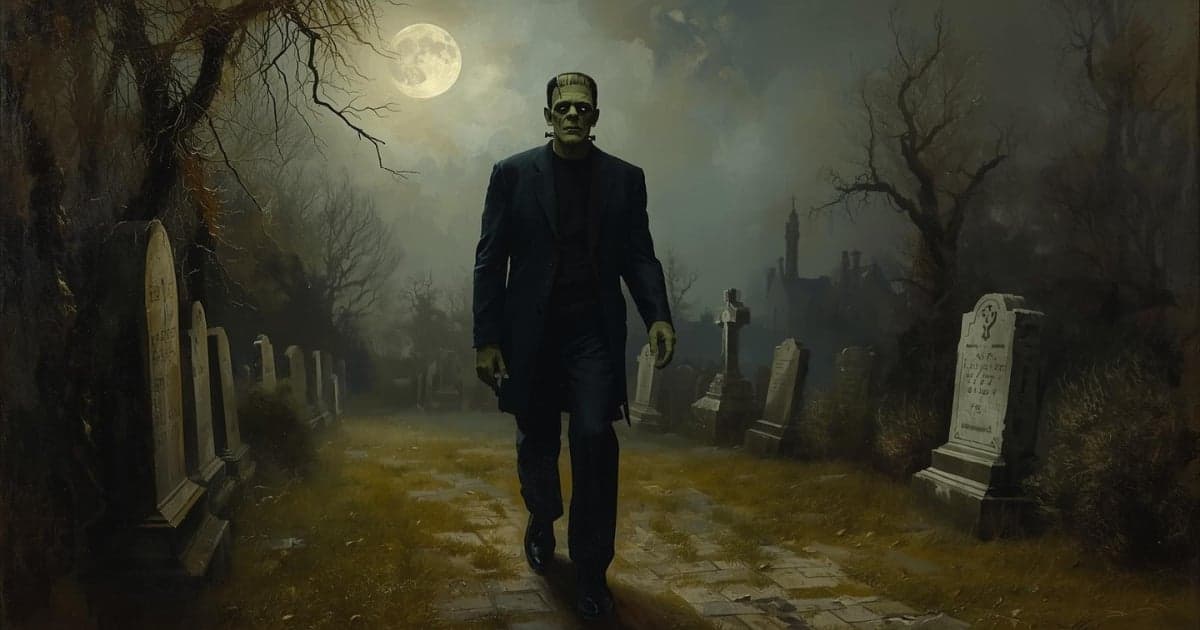
Frankenstein
The life truth
Victor builds life in a locked room — the terror begins when the world learns something was made that it cannot see, locate, or unmake.
Read guide
Moby-Dick
The life truth
Ahab announces what he hunts before the whale surfaces — the crew's fate turns on a force most of them have never seen.
Read guideEditorial series
Wide Reads ChroniclesHow today's ideas echo the past
Collision pairs the bestseller with the source that made the move first — what the modern book promised, what the older voice already knew, and where the two ledgers disagree.
Earlier installments
- No. 17Meditations for Mortals vs On the Shortness of LifeBefore Meditations for Mortals, Seneca counted the hours — and refused the comfort.
- No. 16The Power of Now vs Thus Spoke ZarathustraBefore The Power of Now, Nietzsche named the gateway This Moment — and refused the pause.
- No. 15The Art of Seduction vs The Picture of Dorian GrayBefore The Art of Seduction, Wilde wrote Lord Henry — and kept the charming voice outside the schoolroom.
More books about Identity & Self
Both books in this edition share this thread. Here's where else it shows up.

A Room with a View
E.M. Forster

A Sicilian Romance
Ann Radcliffe

Acres of Diamonds
Russell H. Conwell
As I Lay Dying
William Faulkner

Beyond Good and Evil
Friedrich Nietzsche
Crime and Punishment
Fyodor Dostoevsky
Dark Night of the Soul
Saint John of the Cross
Dead Souls
Nikolai Gogol
Genres in this edition
Both books draw from these genres — browse further if today's pairing worked for you.
More books to explore
This edition features two. There are 113+ more in the library.

A Tale of Two Cities
Charles Dickens

The Count of Monte Cristo
Alexandre Dumas
Crime and Punishment
Fyodor Dostoevsky

Thus Spoke Zarathustra
Friedrich Nietzsche

The Brothers Karamazov
Fyodor Dostoevsky
The Gambler
Fyodor Dostoevsky

War and Peace
Leo Tolstoy

Villette
Charlotte Brontë
Get Weekly Insights from Classic Literature
Join our newsletter and receive timeless wisdom, modern applications, and deep dives into the classics—delivered straight to your inbox every week.
No spam. Unsubscribe anytime. We respect your privacy.
You deserve more.
$2.99/month
Everything in a free subscribed account, plus downloads, chapter audio, theme analysis, and member perks.
- All chapter audio across the library
- Theme analysis and study guide downloads
- Early access and exclusive Prestige content