
Today · Headlines
September 13, 2026
A headline paired with two books that had already named the pattern underneath it.

Today · Headlines
September 13, 2026
AI labs promise to slow down as Anthropic invites outside evaluators inside its walls, and OpenAI agrees to follow
Anthropic chief executive Dario Amodei said on Friday that his company will give independent evaluators permanent, employee-level access to its offices and systems — desks, access badges, laptops, and visibility close to what its own internal risk team has — so they can check its safety practices and flag problems while models are still in training, not only after one ships. OpenAI's Sam Altman said the same day that his company would match the pledge, calling it "a great idea," though neither lab has named its evaluators or set a timeline. The move answers a question that has followed the industry for years: whether a company built to move fast can be trusted to check its own most dangerous work. Neither firm has agreed to slow its release schedule — only to let someone else watch the pace more closely.
The life truth
How literature reiterates life truths from today's headlines
A promise to watch yourself is worth less than an invitation to be watched.
How it relates to today's headline
Friday's news is not really about what the models can do. It is about who is allowed to watch the people building them, and when. Amodei is not claiming Anthropic's safety work is perfect. He is admitting that a company grading its own most dangerous experiment is not a claim anyone should have to take on trust, so he is handing a stranger a badge and a desk instead.
Robert Louis Stevenson's Dr Jekyll makes the opposite choice, alone in a locked laboratory instead of a boardroom. He does not fail because the potion is too strong. He fails because he designs it, brews it, and tests it on himself with no one else in the room — no evaluator, no colleague with real access, no one whose job is to notice Hyde before Hyde has a key of his own. By the time Jekyll sits down to write his confession, the only witness to what happened is the man who caused it, and his account of himself is the one thing left that nobody can check.
Marcus Aurelius offers the harder counter-case. In Meditations, an emperor with more unchecked power than any regulator could reach still submits himself to a nightly audit — writing down where he failed to act with reason, patience, or justice, before he can excuse it. It proves self-policing is possible. It also proves how rare the discipline behind it is, and how much it depends on one person's private character rather than any structure the rest of us could rely on. Amodei's plan does not ask AI labs to be that disciplined. It puts a stranger with a badge in the room instead, precisely because betting an entire industry on everyone being Marcus Aurelius is not a plan at all.
The useful question about Friday's pledge is not whether Anthropic and OpenAI mean what they say. It is what an evaluator with real access is allowed to publish the day they find a Jekyll problem instead of a clean report — and whether either company still calls that access "employee-level" once the finding is one they would rather keep at home.
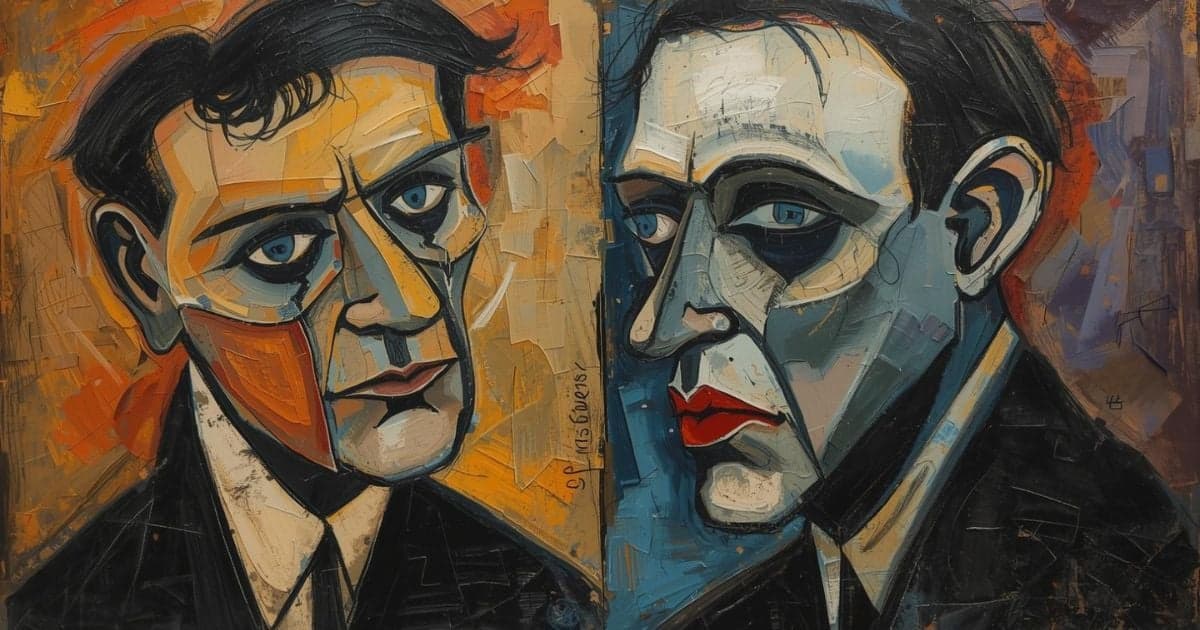
The Strange Case of Dr Jekyll and Mr Hyde
The life truth
Jekyll designs, brews, and tests the experiment on himself with no one else in the room — by the time he needs a witness, Hyde already has a key of his own.
Read guide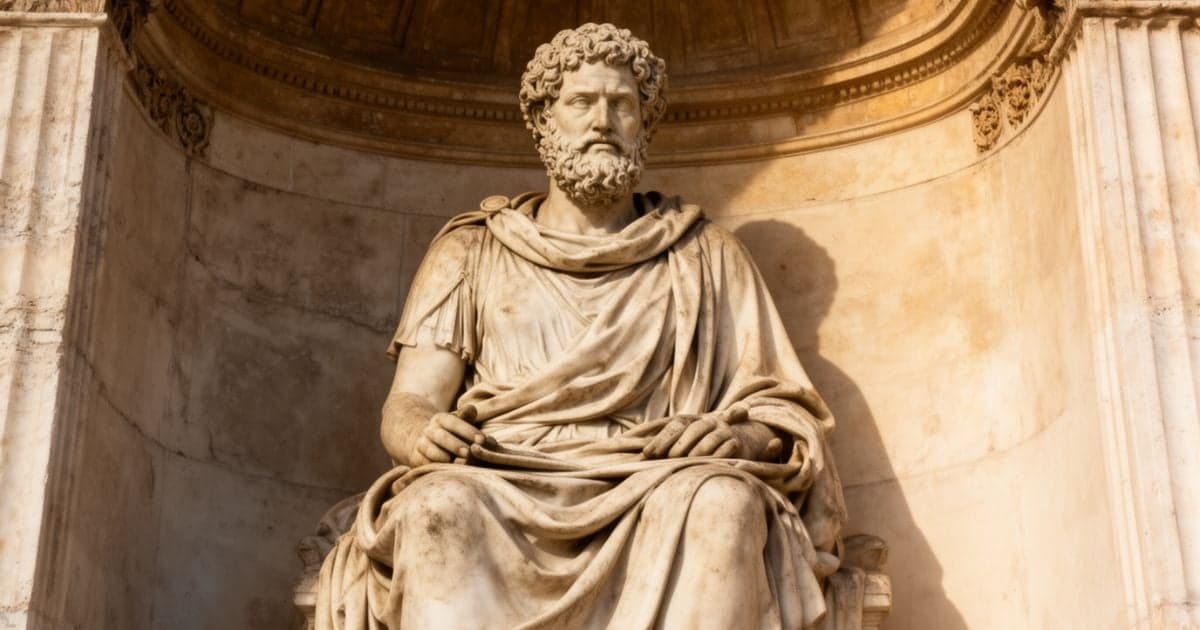
Meditations
The life truth
Marcus Aurelius submits himself to a nightly audit of his own conduct — proof self-policing can work, and proof of how rarely anyone sustains that discipline without a stranger checking the ledger.
Read guideEditorial series
Wide Reads ChroniclesHow today's ideas echo the past
Collision pairs the bestseller with the source that made the move first — what the modern book promised, what the older voice already knew, and where the two ledgers disagree.
Earlier installments
- No. 17Meditations for Mortals vs On the Shortness of LifeBefore Meditations for Mortals, Seneca counted the hours — and refused the comfort.
- No. 16The Power of Now vs Thus Spoke ZarathustraBefore The Power of Now, Nietzsche named the gateway This Moment — and refused the pause.
- No. 15The Art of Seduction vs The Picture of Dorian GrayBefore The Art of Seduction, Wilde wrote Lord Henry — and kept the charming voice outside the schoolroom.
More books about Morality & Ethics
Both books in this edition share this thread. Here's where else it shows up.
A Christmas Carol
Charles Dickens

A Tale of Two Cities
Charles Dickens

Adventures of Huckleberry Finn
Mark Twain

Anna Karenina
Leo Tolstoy

As I Lay Dying
William Faulkner
Beowulf
Unknown

Beyond Good and Evil
Friedrich Nietzsche
Candide
Voltaire
Genres in this edition
Both books draw from these genres — browse further if today's pairing worked for you.
More books to explore
This edition features two. There are 112+ more in the library.
A Tale of Two Cities
Charles Dickens
The Brothers Karamazov
Fyodor Dostoevsky

The Enchiridion
Epictetus

The Count of Monte Cristo
Alexandre Dumas

Madame Bovary
Gustave Flaubert

The Odyssey
Homer
Pride and Prejudice
Jane Austen

Tao Te Ching
Lao Tzu
Get Weekly Insights from Classic Literature
Join our newsletter and receive timeless wisdom, modern applications, and deep dives into the classics—delivered straight to your inbox every week.
No spam. Unsubscribe anytime. We respect your privacy.
You deserve more.
$2.99/month
Everything in a free subscribed account, plus downloads, chapter audio, theme analysis, and member perks.
- All chapter audio across the library
- Theme analysis and study guide downloads
- Early access and exclusive Prestige content