Chapter 13
Dorian leads Basil up the dark staircase to the locked schoolroom, ...
He passed out of the room and began the ascent, Basil Hallward following close behind. They walked softly, as men do instinctively at night. The lamp cast fantastic shadows on the wall and staircase. A rising wind made some of the windows rattle. When they reached the top landing, Dorian set the lamp down on the floor, and taking out the key, turned it in the lock. “You insist on knowing, Basil?” he asked in a low voice. “Yes.” “I am delighted,” he answered, smiling. Then he added, somewhat harshly, “You are the one man in the world who is…
Public-domain chapter text, formatted for reading.
Master this chapter. Complete your experience
Purchase the complete book to access all chapters and support classic literature
Available in paperback, hardcover, and e-book formats
Now let's explore the literary elements.
Key Quotes & Analysis
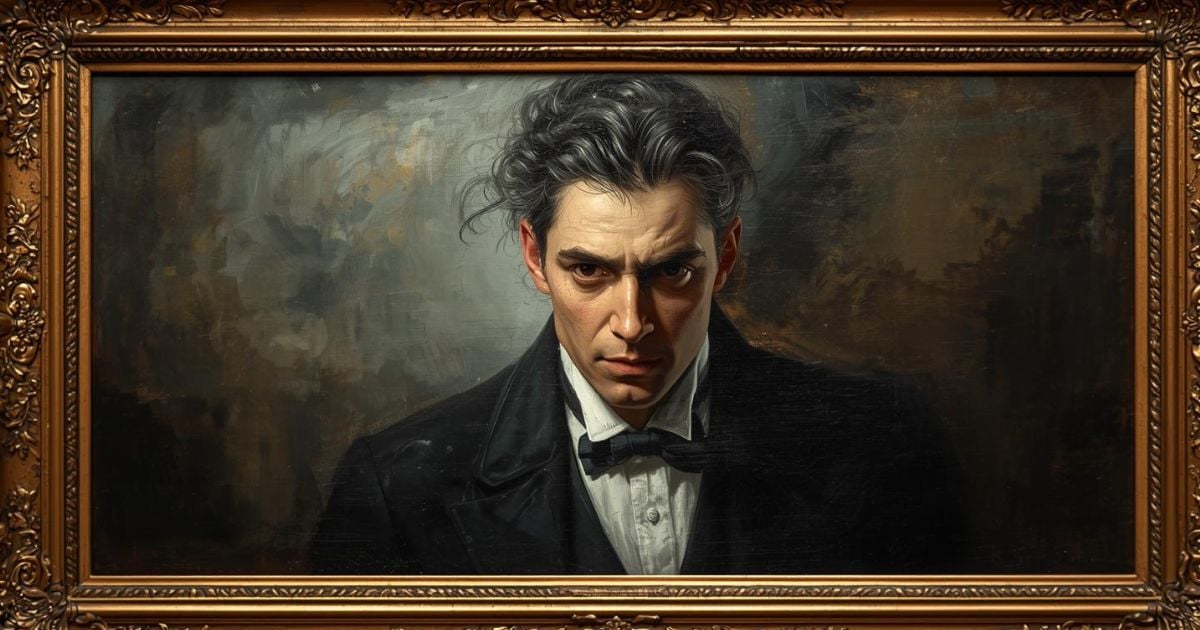
"Draw that curtain back, and you will see mine."
Context: Dorian dares Basil to look at the hidden portrait
He frames the revelation as a favor to a man who demanded to see his soul.
In Today's Words:
When someone finally offers to show the truth they have hidden, notice whether they control the room and the moment. A witness allowed to look is not the same as a witness allowed to walk away safely afterward. Before you follow them upstairs alone, ask who controls the exit.
"It is the face of my soul."
Context: Dorian answers Basil's horror at the rotted portrait
He accepts the canvas as his moral record while his living face still denies it.
In Today's Words:
Calling your worst record the real you is honest only if you intend to change. If you keep performing innocence in public while the hidden image rots, you are naming truth to avoid living it. The split between display self and moral self will not hold forever without repair.
"It has destroyed me."
Context: Dorian answers Basil's claim that he destroyed the painting
He reverses the charge: the bargain did not free him but split him into display and rot.
In Today's Words:
When a shortcut meant to spare you pain becomes the thing that owns you, admit the trade failed. The cost is not the secret itself but the life you built to keep the secret breathing. Denial becomes dependency quickly once the hidden record starts dictating your days.
"He felt that the secret of the whole thing was not to realize the situation."
Context: Dorian's mindset immediately after murdering Basil
Wilde shows survival through deliberate numbness rather than remorse.
In Today's Words:
After a line you cannot uncross, some people stay functional by refusing to feel the full shape of what they did. That numbness is not recovery. It is the next stage of corruption, and it trains you to repeat the harm while calling yourself steady.
Thematic Threads
Hidden Truth
In This Chapter
The portrait reveals what Dorian's face has concealed for years
Development
Basil demanded the soul and receives the canvas record
In Your Life:
You might recognize when a hidden ledger finally surfaces and someone must answer for it
Human Relationships
In This Chapter
Dorian destroys the friend who painted his beauty
Development
Witness love turns to violence when exposure cannot be borne
In Your Life:
You might see relationships end violently when truth arrives too late for repair
Consequences
In This Chapter
Murder forces an immediate cover-up: hide coat, lie to servant, find Campbell
Development
Each crime spawns logistics that bind Dorian tighter to hypocrisy
In Your Life:
You might notice how one wrong act immediately demands a second to manage the first
Identity
In This Chapter
Dorian calls the rotted image his soul while his body stays fair
Development
The split between display self and moral self collapses into blood
In Your Life:
You might ask which version of you would survive if both were seen at once
Personal Growth
In This Chapter
Basil offers repentance; Dorian refuses the last chance
Development
Growth was possible for one more scene and was rejected
In Your Life:
You might name a moment you could have turned back and chose performance instead
You now have the context. Time to form your own thoughts.
Discussion Questions
This is not a test. Five prompts guide you through the chapter, from how it opens to how it closes, so you notice context and rhythm rather than facts to memorize. Sit with each question in your own words. When you see "One way to read it," treat it as a starting point, not the only answer.
- 1
What does Basil see when Dorian pulls back the curtain on the portrait?
analysis • surfaceOne way to read it
His own painting altered from within—Dorian's face on canvas rotted by sin while the living man stays beautiful. The bargain is exposed.
- 2
Why does Dorian kill Basil after showing him the truth?
analysis • mediumOne way to read it
Basil is the witness and maker of the mirror. Hatred rises from the grinning image; silencing him feels like silencing conscience.
- 3
How does Dorian behave immediately after the murder?
application • mediumOne way to read it
Strangely calm—he hides Basil's coat, lies to his valet about Paris, and looks up Alan Campbell in the Blue Book.
- 4
What does Dorian mean when he says the portrait destroyed him?
application • deepOne way to read it
The wish did not free him—it split him. He kept youth while the canvas held truth until truth destroyed the one man who could still name it.
- 5
When have you seen someone destroy a witness rather than face what the witness had seen?
reflection • deepOne way to read it
Basil's murder is moral compartmentalization collapsing into violence—the portrait could not stay hidden, so the painter could not either.
Critical Thinking Exercise
Map Your Moral Warning System
Think of a recent situation where you had to make a choice that affected others. Write down the decision, then trace your emotional process. Did you feel the full weight of how your choice would impact others, or did you find ways to minimize or avoid those feelings? Identify the specific moments where you either stayed connected to consequences or started detaching from them.
Consider:
- •Notice if you used phrases like 'it's just business' or 'they'll get over it' to distance yourself from impact
- •Pay attention to whether you sought out or avoided hearing from people affected by your decision
- •Consider whether you would make the same choice if you had to personally deliver the consequences
Journaling Prompt
Write about a time when you caught yourself starting to emotionally detach from a difficult situation. What pulled you back to caring about the human impact, and how can you build those reconnection habits into your daily life?
Coming Up Next...
Chapter 14
Dorian wakes smiling in November sun while Basil's body waits upstairs in daylight, and before breakfast he will send Francis to fetch Alan Campbell, the one old friend whose science can make a corpse disappear..