Master this chapter. Complete your experience
Purchase the complete book to access all chapters and support classic literature
As an Amazon Associate, we earn a small commission from qualifying purchases at no additional cost to you.
Available in paperback, hardcover, and e-book formats
Why This Matters
Connect literature to life
This chapter teaches how desperation creates information blindness—when we need something badly, we literally cannot process warnings about it.
Practice This Today
This week, notice when you're so grateful for an opportunity that you stop asking questions—slow down and deliberately seek out the full picture.
Now let's explore the literary elements.
Key Quotes & Analysis
"He had a job! He had a job!"
Context: Jurgis runs home after getting hired at Brown's packinghouse
The repetition and exclamation points show Jurgis's pure joy at something we might take for granted. This reveals how precarious life was for immigrants - a job wasn't just income, it was survival and dignity.
In Today's Words:
I got the job! I actually got the job!
"They don't waste anything here"
Context: Explaining how every part of the animals gets used in production
Jokubas presents this as admirable efficiency, but it foreshadows how the company will also use every part of its workers until they're used up. The pride in his voice shows he's bought into the company's values.
In Today's Words:
This place is so efficient - they use absolutely everything
"Speak English? No; Lit-uanian."
Context: The job interview conversation at Brown's
This broken exchange shows how language barriers made workers vulnerable. Jurgis had to study just one word carefully, revealing how unprepared immigrants were for American industrial life.
In Today's Words:
Do you speak English? No, I speak Lithuanian.
Thematic Threads
Exploitation
In This Chapter
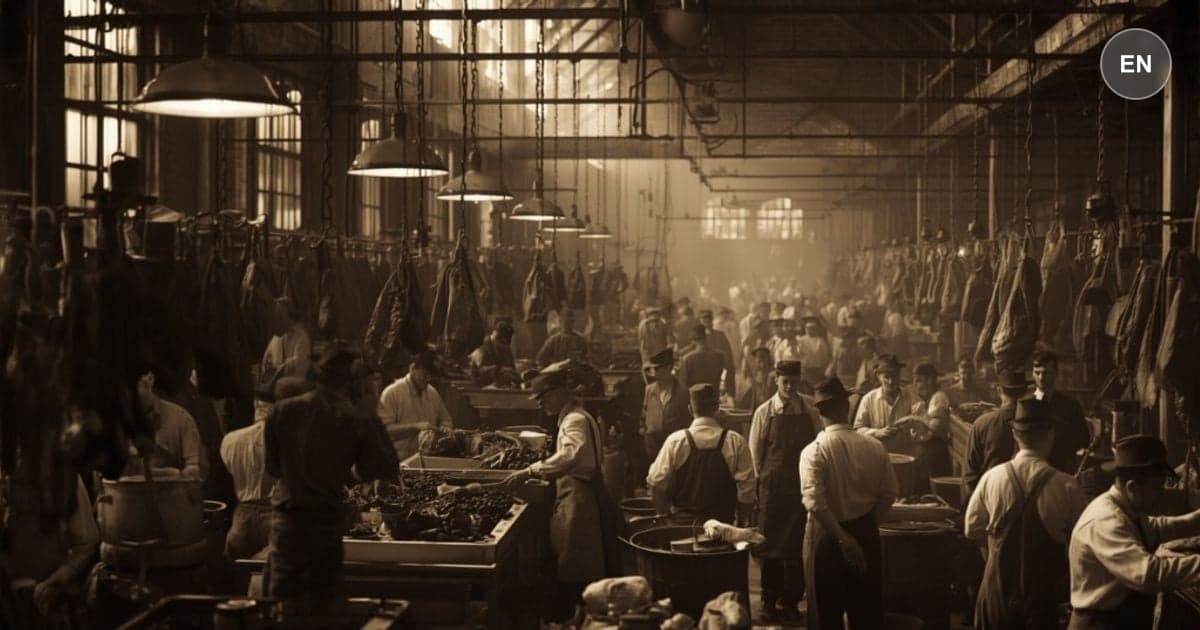
The packinghouse presents itself as an opportunity while systematically dehumanizing both animals and workers
Development
Introduced here as the core mechanism of industrial capitalism
In Your Life:
You might see this when employers frame terrible conditions as 'paying your dues' or 'being grateful for work.'
Willful Blindness
In This Chapter
Jurgis literally cannot hear Jokubas's warnings because he's too invested in his new opportunity
Development
Builds on the family's earlier refusal to see their wedding's true cost
In Your Life:
You might ignore red flags in relationships or jobs because you desperately want them to work out.
Information Control
In This Chapter
The packinghouse tour shows impressive efficiency while hiding the brutal realities of production
Development
Introduced here as how power maintains itself through selective revelation
In Your Life:
You might encounter this when companies show you their best face during interviews while hiding their toxic culture.
Class Vulnerability
In This Chapter
Jurgis's working-class desperation makes him grateful for exploitation disguised as opportunity
Development
Deepens the earlier theme of how poverty limits choices and clear thinking
In Your Life:
You might find yourself accepting unfair treatment because you can't afford to lose what little security you have.
Systemic Dehumanization
In This Chapter
The parallel between animal slaughter and worker treatment reveals how the system views all inputs as expendable
Development
Introduced here as the foundational logic that will govern Jurgis's entire experience
In Your Life:
You might recognize this when institutions treat you as a number rather than a person with individual needs and circumstances.
You now have the context. Time to form your own thoughts.
Discussion Questions
- 1
Why is Jurgis so excited about getting the job, and what does his reaction tell us about his situation?
analysis • surface - 2
What warning signs does Jokubas hint at during the tour, and why doesn't Jurgis seem to hear them?
analysis • medium - 3
Where do you see this pattern today - people being so grateful for an opportunity that they ignore red flags?
application • medium - 4
How can someone evaluate a new opportunity without letting desperation or gratitude cloud their judgment?
application • deep - 5
What does this chapter reveal about how powerful systems recruit and keep people who might otherwise question them?
reflection • deep
Critical Thinking Exercise
Create Your Red Flag Checklist
Think about a situation where you really wanted something - a job, relationship, opportunity. Create a checklist of warning signs you should watch for when you're feeling desperate or overly grateful. Include both obvious red flags and subtle ones that are easy to miss when you're emotionally invested.
Consider:
- •What questions should you ask even when you're afraid of the answers?
- •Who in your life gives you honest feedback, even when it's hard to hear?
- •How can you slow down your decision-making when you're feeling desperate?
Journaling Prompt
Write about a time when you ignored warning signs because you wanted something so badly. What would you tell your past self now?
Coming Up Next...
Chapter 4: First Day at the Killing Beds
Jurgis reports for his first day of work, but a simple misunderstanding about which door to use gives him an early taste of how little room there is for error in his new world.