Wide Reads
Literature MattersLife IndexEducators
Sign in
Where to Begin
The Jungle - The Crushing Weight of Hidden Costs

Upton Sinclair

The Jungle

The Crushing Weight of Hidden Costs

Home›Books›The Jungle›Chapter 10
Previous
10 of 31
Next

Summary

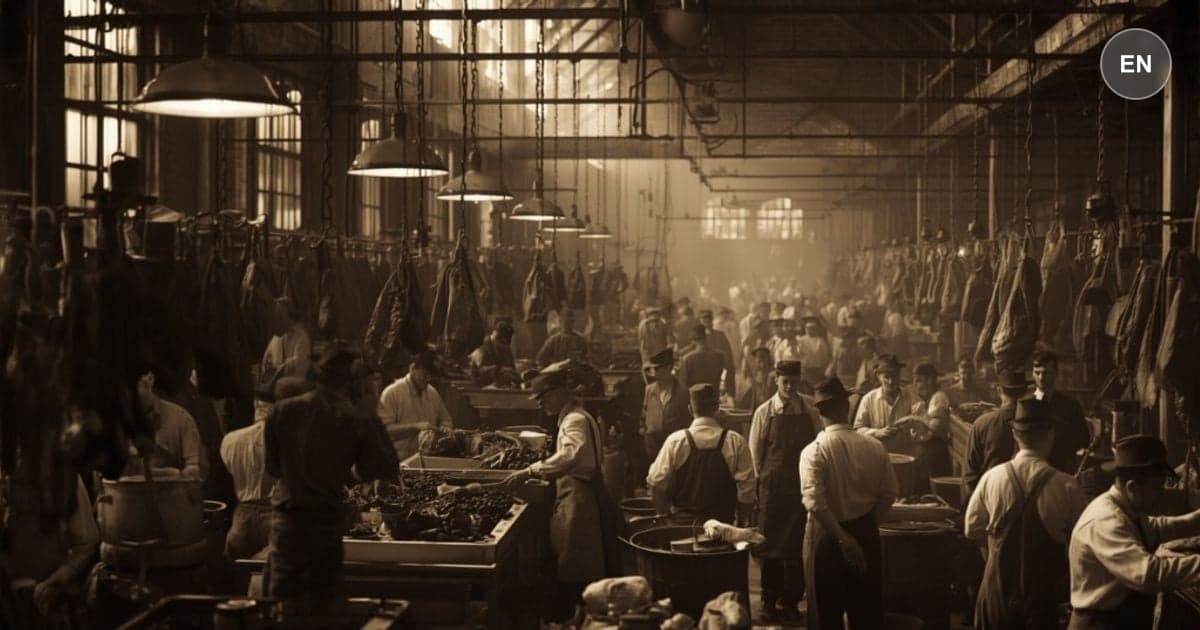
The Rudkus family discovers that surviving winter was just the beginning of their financial nightmare. When Jurgis's wages drop and unexpected expenses pile up—burst pipes, insurance requirements, taxes—they realize they've been systematically deceived about the true cost of homeownership. Every season brings new torments: spring mud, summer heat that turns the packinghouse into hell, and swarms of flies that make life unbearable. Marija loses her job at the canning factory after standing up for herself when cheated out of wages, learning the brutal lesson that workers who complain get fired. She eventually finds work as a beef-trimmer in horrific conditions, but it keeps the family afloat. Meanwhile, Ona faces sexual harassment and corruption at her workplace under a forelady who runs her department like a brothel. When Ona gives birth to baby Antanas, Jurgis feels overwhelming love and responsibility, but the family's poverty forces impossible choices. Ona returns to work just one week after giving birth, permanently damaging her health to save her job. The chapter reveals how the industrial system doesn't just exploit workers' labor—it systematically destroys their bodies, relationships, and dreams through a web of hidden costs, workplace abuse, and impossible choices that trap families in cycles of desperation.

Coming Up in Chapter 11

Summer brings new challenges as the packing houses ramp up production. Jurgis discovers the companies have developed an even more cunning system to keep wages low, while the family faces fresh struggles that will test their resolve to survive.

Share it with friends

Previous ChapterNext Chapter
GO ADS FREE — JOIN US
Original text
complete·4,300 words
D

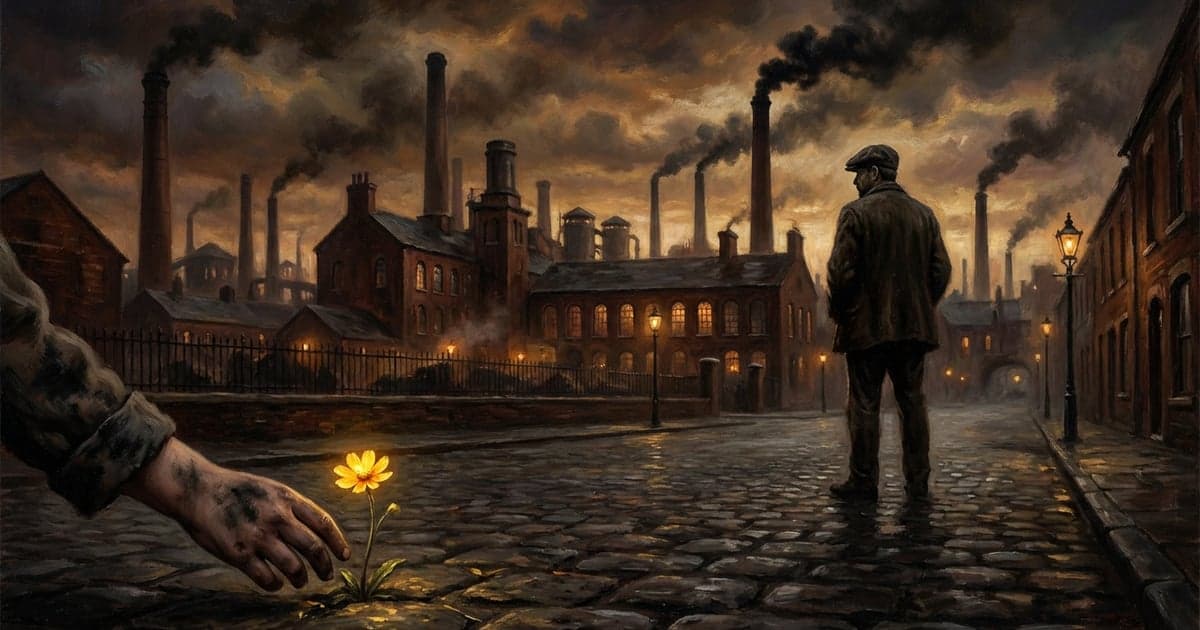
uring the early part of the winter the family had had money enough to live and a little over to pay their debts with; but when the earnings of Jurgis fell from nine or ten dollars a week to five or six, there was no longer anything to spare. The winter went, and the spring came, and found them still living thus from hand to mouth, hanging on day by day, with literally not a month’s wages between them and starvation. Marija was in despair, for there was still no word about the reopening of the canning factory, and her savings were almost entirely gone. She had had to give up all idea of marrying then; the family could not get along without her—though for that matter she was likely soon to become a burden even upon them, for when her money was all gone, they would have to pay back what they owed her in board. So Jurgis and Ona and Teta Elzbieta would hold anxious conferences until late at night, trying to figure how they could manage this too without starving.

1 / 19

Master this chapter. Complete your experience

Purchase the complete book to access all chapters and support classic literature

Read Free on GutenbergBuy at Powell'sBuy on Amazon

As an Amazon Associate, we earn a small commission from qualifying purchases at no additional cost to you.

Available in paperback, hardcover, and e-book formats

GO ADS FREE — JOIN US

Why This Matters

Connect literature to life

Skill: Detecting Hidden Cost Traps

This chapter teaches how to recognize when systems deliberately conceal the true price of participation until you're too committed to escape.

Practice This Today

This week, notice when any offer focuses heavily on benefits while being vague about ongoing costs—ask specifically what expenses will appear in months 6, 12, and 24.

GO ADS FREE — JOIN US

Now let's explore the literary elements.

Key Quotes & Analysis

"They would no sooner escape, as by a miracle, from one difficulty, than a new one would come into view."

— Narrator

Context: Describing how the family faces constant financial crises with no breathing room

This captures the exhausting reality of poverty - there's never a moment of security, never time to recover from one crisis before the next hits. It shows how the system keeps people trapped in survival mode.

In Today's Words:

Just when you think you're getting ahead, something else breaks or goes wrong

"Such were the cruel terms upon which their life was possible, that they might never have nor expect a single instant's respite from worry."

— Narrator

Context: Explaining how financial stress dominates every moment of their existence

Shows how poverty isn't just about lacking money - it's about the constant mental torture of never feeling safe. The stress itself becomes a form of suffering that affects every decision and relationship.

In Today's Words:

They could never relax because they were always one disaster away from losing everything

"It was not merely work, but it was literally a kind of war, in which the workers were pitted against each other."

— Narrator

Context: Describing the competitive, brutal nature of factory work

Reveals how the system deliberately turns workers against each other instead of uniting against unfair conditions. Competition for survival prevents solidarity and keeps wages low.

In Today's Words:

They made workers fight each other for scraps instead of demanding better treatment for everyone

Thematic Threads

Exploitation

In This Chapter

The family faces systematic deception about homeownership costs, workplace abuse, and impossible choices that trap them deeper in poverty

Development

Evolved from individual workplace dangers to systemic economic entrapment affecting every aspect of life

In Your Life:

You might recognize this when facing surprise fees, contract terms that change after signing, or finding yourself trapped by systems that seemed beneficial initially

Survival

In This Chapter

Marija endures horrific working conditions and Ona returns to work one week after childbirth because losing income means family destruction

Development

Intensified from basic food and shelter needs to sacrificing health and dignity for economic survival

In Your Life:

You see this when choosing between paying rent or medical bills, working through illness, or staying in toxic jobs because you can't afford to quit

Powerlessness

In This Chapter

Workers who complain get fired, sexual harassment must be endured, and families have no recourse against systematic deception

Development

Deepened from workplace vulnerability to complete systemic helplessness across all institutions

In Your Life:

You experience this when facing bureaucratic systems, dealing with insurance companies, or confronting workplace harassment with no effective recourse

Family

In This Chapter

Love for baby Antanas motivates sacrifice, but poverty forces choices that damage family bonds and individual health

Development

Shifted from family as motivation for immigration to family as both driving force and casualty of survival struggles

In Your Life:

You might face this when economic pressure forces you to miss family time for work, or when providing for loved ones requires sacrificing your own well-being

Identity

In This Chapter

Characters lose pieces of themselves to survive—Marija becomes hardened, Ona becomes fearful, Jurgis becomes desperate

Development

Progressed from losing cultural identity to losing core aspects of personality and values under economic pressure

In Your Life:

You see this when financial stress changes your personality, when survival mode makes you compromise values you once held firmly

GO ADS FREE — JOIN US

You now have the context. Time to form your own thoughts.

Discussion Questions

  1. 1

    What 'hidden costs' hit the Rudkus family that they never saw coming when they bought their house?

    analysis • surface
  2. 2

    Why does Marija get fired from the canning factory, and what does this teach about speaking up at work?

    analysis • medium
  3. 3

    Where do you see the 'Hidden Cost Trap' operating in today's world - situations where the real price is much higher than advertised?

    application • medium
  4. 4

    If you were advising someone considering a major purchase or commitment, what questions would you tell them to ask upfront to avoid being trapped?

    application • deep
  5. 5

    Why do you think systems are designed to hide true costs rather than be transparent - what does this reveal about power relationships?

    reflection • deep

Critical Thinking Exercise

10 minutes

Calculate the Real Cost

Think of a major purchase or commitment you're considering (or one you made recently). Create two columns: 'Advertised Cost' and 'Hidden Costs.' In the first column, list what they're telling you it will cost. In the second, brainstorm every additional expense that might come up over the first two years - maintenance, fees, upgrades, time costs, opportunity costs.

Consider:

  • •Consider seasonal changes - what costs might vary by time of year?
  • •Think about what happens if you want to quit or cancel - are there exit costs?
  • •Research independently - don't just trust what the seller tells you

Journaling Prompt

Write about a time when you got hit with unexpected costs that weren't explained upfront. What did you learn from that experience, and how do you protect yourself now?

GO ADS FREE — JOIN US

Coming Up Next...

Chapter 11: When the System Breaks You Down

Summer brings new challenges as the packing houses ramp up production. Jurgis discovers the companies have developed an even more cunning system to keep wages low, while the family faces fresh struggles that will test their resolve to survive.

Continue to Chapter 11
Previous
Democracy and Corruption Unveiled
Contents
Next
When the System Breaks You Down

Continue Exploring

The Jungle Study GuideTeaching ResourcesEssential Life IndexBrowse by ThemeAll Books

You Might Also Like

Jane Eyre cover

Jane Eyre

Charlotte Brontë

Explores personal growth

Great Expectations cover

Great Expectations

Charles Dickens

Explores personal growth

The Strange Case of Dr Jekyll and Mr Hyde cover

The Strange Case of Dr Jekyll and Mr Hyde

Robert Louis Stevenson

Explores personal growth

Don Quixote cover

Don Quixote

Miguel de Cervantes Saavedra

Explores personal growth

Browse all 47+ books
GO ADS FREE — JOIN US

Share This Chapter

Know someone who'd enjoy this? Spread the wisdom!

TwitterFacebookLinkedInEmail

Read ad-free with Prestige

Get rid of ads, unlock study guides and downloads, and support free access for everyone.

Subscribe to PrestigeCreate free account
Intelligence Amplifier
Intelligence Amplifier™Powering Wide Reads

Exploring human-AI collaboration through books, essays, and philosophical dialogues. Classic literature transformed into navigational maps for modern life.

2025 Books

→ The Amplified Human Spirit→ The Alarming Rise of Stupidity Amplified→ San Francisco: The AI Capital of the World
Visit intelligenceamplifier.org
hello@widereads.com

WideReads Originals

→ You Are Not Lost→ The Last Chapter First→ The Lit of Love→ Wealth and Poverty→ 10 Paradoxes in the Classics · coming soon
Arvintech
arvintechAmplify your Mind
Visit at arvintech.com

Navigate

  • Home
  • Library
  • Essential Life Index
  • How It Works
  • Subscribe
  • Account
  • About
  • Contact
  • Authors
  • Suggest a Book
  • Landings

Made For You

  • Students
  • Educators
  • Families
  • Readers
  • Literary Analysis
  • Finding Purpose
  • Letting Go
  • Recovering from a Breakup
  • Corruption
  • Gaslighting in the Classics

Newsletter

Weekly insights from the classics. Amplify Your Mind.

Legal

  • Privacy Policy
  • Terms of Service
  • Cookie Policy
  • Accessibility

Why Public Domain?

We focus on public domain classics because these timeless works belong to everyone. No paywalls, no restrictions—just wisdom that has stood the test of centuries, freely accessible to all readers.

Public domain books have shaped humanity's understanding of love, justice, ambition, and the human condition. By amplifying these works, we help preserve and share literature that truly belongs to the world.

A Pilgrimage

Powell's City of Books

Portland, Oregon

If you ever find yourself in Portland, walk to the corner of Burnside and 10th. The building takes up an entire city block. Inside is over a million books, new and used on the same shelf, organized by color-coded rooms with names like the Rose Room and the Pearl Room. You can lose an afternoon. You can lose a weekend. You will find a book you have been looking for your whole life, and three you did not know existed.

It is a pilgrimage. We cannot find a bookstore like it anywhere on earth. If you read the classics, and you ever get the chance, go. It belongs on every reader's bucket list.

Visit powells.com

We are not in any way affiliated with Powell's. We are just a very big fan.

© 2026 Wide Reads™. All Rights Reserved.

Intelligence Amplifier™ and Wide Reads™ are proprietary trademarks of Arvin Lioanag.

Copyright Protection: All original content, analyses, discussion questions, pedagogical frameworks, and methodology are protected by U.S. and international copyright law. Unauthorized reproduction, distribution, web scraping, or use for AI training is strictly prohibited. See our Copyright Notice for details.

Disclaimer: The information provided on this website is for general informational and educational purposes only and does not constitute professional, legal, financial, or technical advice. While we strive to ensure accuracy and relevance, we make no warranties regarding completeness, reliability, or suitability. Any reliance on such information is at your own risk. We are not liable for any losses or damages arising from use of this site. By using this site, you agree to these terms.