Wide Reads
Literature MattersLife IndexEducators
Sign in
Where to Begin

The Final Confrontation — The Idiot

The Idiot - The Final Confrontation

Fyodor Dostoevsky

The Idiot

The Final Confrontation

Home›Books›The Idiot›Chapter 49: The Final Confrontation
Previous
49 of 50
Next

Analysis by the Wide Reads editorial team·Reviewed against the source text·Updated December 20, 2025

Summary

The Final Confrontation

The Idiot by Fyodor Dostoevsky

0:000:00
Listen to Next Chapter

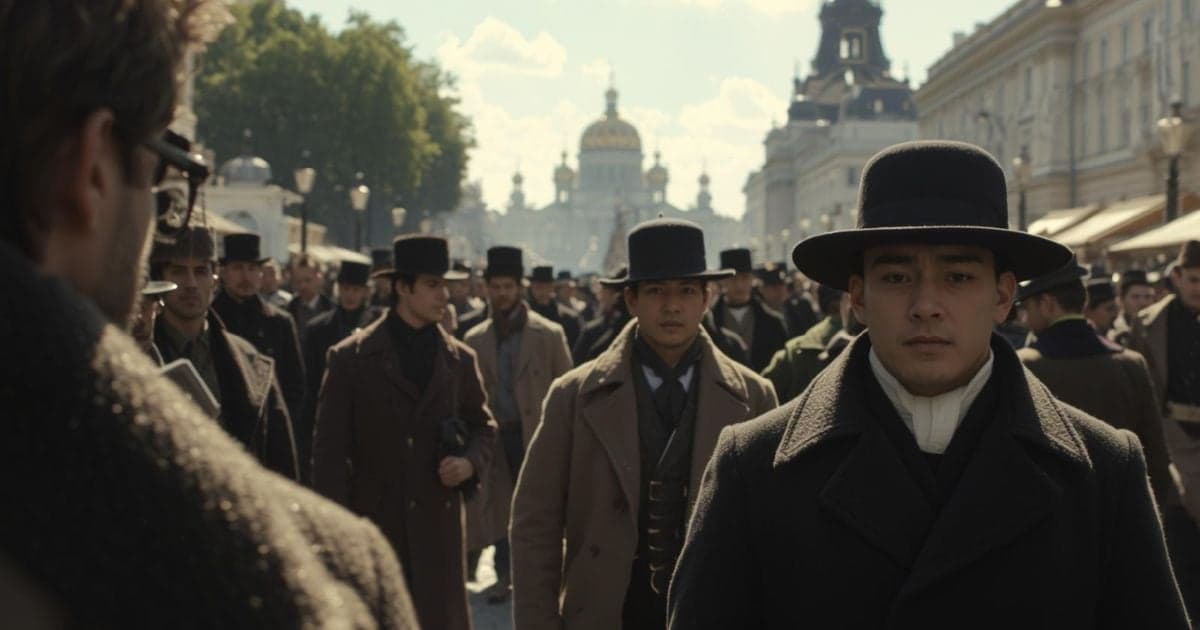
An hour after the wedding collapse Myshkin reaches Petersburg and rings Rogojin's door; servants lie that Parfen is out while the porter contradicts them. He searches Nastasia's old lodgings, meets curious pity from landladies who know yesterday was his wedding day, and chases dead ends while imagining Rogojin's face behind a lifted blind. At last Rogojin touches his shoulder on the street and leads him home by a parallel route, admitting Nastasia is there behind a curtain. In the dark alcove Myshkin finds her motionless under a sheet, wedding silk and diamonds scattered; Rogojin confesses he stabbed her hours ago with the same knife he once raised in Moscow. They sit through the night beside the body, whispering about footsteps, locking doors, and playing cards she once used with Rogojin; the prince strokes Rogojin's hair as madness and grief merge. Dawn brings police and fever: Rogojin unconscious, Myshkin unresponsive to questions, and Schneider's old verdict returning as idiot. The chapter delivers the novel's mortal consequence for obsessive possession and shows compassion surviving even beside murder, without being able to prevent it.

In this chapter: Terms Characters Key Quotes Themes Modern Story

Why This Matters

Connect literature to life

Skill: Preparing for Unbearable News

Some truths exceed solo processing; witness without support can break the witness. Rogojin leads Myshkin to Nastasia's body; they whisper through the night until dawn brings fever and Schneider's old verdict. Before you walk into a crisis you dread, name one person who can meet you afterward.

Coming Up in Chapter 50

At eleven police break Rogojin's flat with Lebedeff, the two ladies, and Parfen's brother present. Trial and Siberia follow; the prince returns to Schneider while letters track Aglaya's reckless marriage abroad.

Share it with friends

PreviousPrevious ChapterNextNext Chapter
Original text
5,559 wordscomplete

Chapter 49

The Final Confrontation

An hour later he was in St. Petersburg, and by ten o’clock he had rung the bell at Rogojin’s. He had gone to the front door, and was kept waiting a long while before anyone came. At last the door of old Mrs. Rogojin’s flat was opened, and an aged servant appeared. “Parfen Semionovitch is not at home,” she announced from the doorway. “Whom do you want?” “Parfen Semionovitch.” “He is not in.” The old woman examined the prince from head to foot with great curiosity. “At all events tell me whether he slept at home last night, and whether…

Public-domain chapter text, formatted for reading.

Master this chapter. Complete your experience

Purchase the complete book to access all chapters and support classic literature

Buy at Powell'sBuy on Amazon

Available in paperback, hardcover, and e-book formats

Now let's explore the literary elements.

Key Quotes & Analysis

"He is not at home"

— Old servant woman

Context: Repeatedly denying Rogojin is inside while the prince asks about Nastasia

Household loyalty hides catastrophe behind a formula everyone understands.

In Today's Words:

She says he is not at home twice while staring at the prince without blinking or offering detail. The porter later admits otherwise. When staff repeat a script, assume someone upstairs ordered silence and ask what cannot be named aloud before you walk away satisfied.

"She's here"

— Rogojin

Context: Answering whether Nastasia is in the house before leading him to the curtain

Two words confirm the search and begin the horror behind the silk partition.

In Today's Words:

He answers she's here in a slow whisper after crossing the street at night alone together. The prince's dread condenses into fact at last. When someone finally confirms your fear, notice whether they want witness or help before you follow them through a locked door upstairs.

"Was it you?"

— Prince Myshkin

Context: Murmuring toward the curtain after seeing the still figure

His whisper asks for confirmation he already knows, because the mind resists unbearable truth.

In Today's Words:

He mutters was it you while Rogojin looks down at the floor without answering at all. The question is ritual, not inquiry. When truth exceeds capacity, people ask anyway because silence feels worse than hearing it spoken in a whisper beside a curtain in the dark.

"that same one"

— Rogojin

Context: Confirming the knife when the prince asks about the weapon

Continuity with an earlier threatened blade turns long jealousy into completed violence.

In Today's Words:

He says yes, that same one, about the knife he once raised in Moscow years ago. The object links years of pursuit to one quiet wound. When a feud keeps the same symbols, treat the pattern as a schedule, not a mood that will pass without intervention.

Thematic Threads

Truth

In This Chapter

The horrifying reality of Nastasia's murder represents truth too terrible for the human mind to bear

Development

Throughout the novel, truth has been elusive and complex; here it becomes literally unbearable

In Your Life:

You might recognize this when avoiding medical test results or refusing to acknowledge a relationship's end

Compassion

In This Chapter

Even in horror, Myshkin stays with Rogojin rather than flee, showing compassion's persistence

Development

Myshkin's compassion has been tested repeatedly; here it survives even ultimate tragedy

In Your Life:

You might see this when comforting someone who has hurt you, choosing empathy over self-protection

Obsession

In This Chapter

Rogojin's jealous obsession with Nastasia leads to murder and his complete mental collapse

Development

His obsession has escalated from pursuit to possession to destruction

In Your Life:

You might recognize this in relationships where love becomes control, or in any consuming fixation

Innocence

In This Chapter

Myshkin's innocent nature cannot survive exposure to such deliberate evil and violence

Development

His innocence has been challenged throughout; here it finally breaks under unbearable weight

In Your Life:

You might experience this when discovering betrayal by someone you trusted completely

Destruction

In This Chapter

All three main characters are destroyed: Nastasia dead, Rogojin mad, Myshkin mentally broken

Development

The novel's destructive forces reach their ultimate conclusion, sparing no one

In Your Life:

You might see this pattern when toxic situations escalate until everyone involved is damaged

You now have the context. Time to form your own thoughts.

Discussion Questions

This is not a test. Five prompts guide you through the chapter, from how it opens to how it closes, so you notice context and rhythm rather than facts to memorize. Sit with each question in your own words. When you see "One way to read it," treat it as a starting point, not the only answer.

  1. 1

    Myshkin searches Petersburg for Nastasia while everyone lies. Why does desperation sharpen his suspicion?

    ▶One way to read it

    He senses the trail is warm and hidden. Each empty room confirms the triangle is closing toward violence, not mere elopement.

    analysis • surface
  2. 2

    Rogozhin leads him secretly to the house and reveals Nastasia behind a curtain, stabbed. What motive does Rogozhin describe?

    ▶One way to read it

    Jealous rage when she begged him to hide her from the prince after fleeing the wedding. Possession turned to murder when fear of loss peaked.

    analysis • medium
  3. 3

    The two men sit through the night beside the body. What bond forms in that horror?

    ▶One way to read it

    Shared guilt and grief without resolution. Myshkin cannot save her; Rogozhin cannot undo the act. Intimacy becomes complicity in witness.

    analysis • medium
  4. 4

    They are discovered: Rogozhin with fever, Myshkin mentally shattered. What warning does the ending carry about obsessive love?

    ▶One way to read it

    Triangulation plus possession kills. When pity, jealousy, and rescue circle the same person without boundaries, catastrophe is statistical, not accidental.

    application • deep
  5. 5

    Have you seen a situation where ignoring red flags because 'they need help' ended in harm for everyone?

    ▶One way to read it

    The chapter is the novel's moral invoice. Myshkin's kindness could not substitute for safety, law, or Nastasia's agency once Rogozhin's knife entered the story.

    reflection • deep

Critical Thinking Exercise

10 minutes

Map Your Breaking Points

Think about the most emotionally overwhelming situation you've faced or witnessed. Create a simple map showing: the trigger event, your initial reaction, how your mind/body protected you, and what support you needed. This isn't about reliving trauma, but understanding your psychological patterns.

Consider:

  • •Notice whether you tend toward shutdown (like Myshkin) or spiraling (like Rogojin)
  • •Identify early warning signs that you're approaching emotional overload
  • •Consider who in your life could provide grounding during crisis

Journaling Prompt

Write about a time when you had to step back from a situation to protect your mental health. What did that decision cost you, and what did it save you?

Coming Up Next...

Chapter 50: The Aftermath and Final Reckonings

At eleven police break Rogojin's flat with Lebedeff, the two ladies, and Parfen's brother present. Trial and Siberia follow; the prince returns to Schneider while letters track Aglaya's reckless marriage abroad.

Continue to Chapter 50
Previous
The Wedding That Never Was
Contents
Next
The Aftermath and Final Reckonings
Keep exploring

Continue Exploring

Study guides, teaching tools, themes, and the full library.More ways to read The Idiot: study guides, teaching tools, and the wider library.

  • The Idiot Study Guide
  • Teaching Resources
  • Essential Life Index
  • Browse by Theme
  • All Books

Life-skill deep dives in The Idiot

  • Maintaining Goodness in a Cynical WorldLearn how Prince Myshkin stays genuinely kind in a world built on calculation—and why Dostoevsky believed cynical society labels real goodness as idiocy.
  • Recognizing Destructive LoveExplore recognizing destructive love through The Idiot by Dostoevsky. Life lessons from classic literature applied to modern challenges.
  • Setting Boundaries With CompassionExplore setting boundaries with compassion through The Idiot by Dostoevsky. Life lessons from classic literature applied to modern challenges.
  • The Cost of CompassionUnderstand why trying to save everyone destroys you—and what Dostoevsky reveals through Myshkin about the difference between compassion and enabling.

You Might Also Like

Crime and Punishment cover

Crime and Punishment

Fyodor Dostoevsky

Also by Fyodor Dostoevsky

The Gambler cover

The Gambler

Fyodor Dostoevsky

Also by Fyodor Dostoevsky

The Brothers Karamazov cover

The Brothers Karamazov

Fyodor Dostoevsky

Also by Fyodor Dostoevsky

The Picture of Dorian Gray cover

The Picture of Dorian Gray

Oscar Wilde

Explores morality & ethics

Browse all 106+ books

Share This Chapter

Know someone who'd enjoy this? Spread the wisdom!

TwitterFacebookLinkedInEmail

Go further with Prestige

Unlock study guides and downloads, early access, and exclusive content — and support free access for everyone.

Subscribe to PrestigeCreate free account
Intelligence Amplifier
Intelligence Amplifier™Powering Wide Reads

Exploring human-AI collaboration through books, essays, and philosophical dialogues. Classic literature transformed into navigational maps for modern life.

2025 Books

→ The Amplified Human Spirit→ The Alarming Rise of Stupidity Amplified→ San Francisco: The AI Capital of the World
Visit intelligenceamplifier.org
hello@widereads.com

WideReads Originals

→ You Are Not Lost→ The Last Chapter First→ The Lit of Love→ Wealth and Poverty→ Wisdom for the Wounded
Arvintech
arvintechAmplify your Mind
Visit at arvintech.com

Navigate

  • Home
  • Library
  • Essential Life Index
  • How It Works
  • Subscribe
  • Account
  • About
  • Contact
  • Authors
  • Suggest a Book
  • Landings

Made For You

  • Trending
  • Students
  • Educators
  • Families
  • Readers
  • Literary Analysis
  • Finding Purpose
  • Letting Go
  • Recovering from a Breakup
  • Corruption
  • Gaslighting in the Classics

Newsletter

Weekly insights from the classics. Amplify Your Mind.

Legal

  • Privacy Policy
  • Terms of Service
  • Editorial Standards
  • Cookie Policy
  • Accessibility

Why Public Domain?

We focus on public domain classics because these timeless works belong to everyone. No paywalls, no restrictions—just wisdom that has stood the test of centuries, freely accessible to all readers.

Public domain books have shaped humanity's understanding of love, justice, ambition, and the human condition. By amplifying these works, we help preserve and share literature that truly belongs to the world.

A Pilgrimage

Powell's City of Books

Portland, Oregon

If you ever find yourself in Portland, walk to the corner of Burnside and 10th. The building takes up an entire city block. Inside is over a million books, new and used on the same shelf, organized by color-coded rooms with names like the Rose Room and the Pearl Room. You can lose an afternoon. You can lose a weekend. You will find a book you have been looking for your whole life, and three you did not know existed.

It is a pilgrimage. We cannot find a bookstore like it anywhere on earth. If you read the classics, and you ever get the chance, go. It belongs on every reader's bucket list.

Visit powells.com

We are not in any way affiliated with Powell's. We are just a very big fan.

© 2026 Wide Reads™. All Rights Reserved.

Intelligence Amplifier™ and Wide Reads™ are proprietary trademarks of Arvin Lioanag.

Copyright Protection: All original content, analyses, discussion questions, pedagogical frameworks, and methodology are protected by U.S. and international copyright law. Unauthorized reproduction, distribution, web scraping, or use for AI training is strictly prohibited. See our Copyright Notice for details.

Disclaimer: The information provided on this website is for general informational and educational purposes only and does not constitute professional, legal, financial, or technical advice. While we strive to ensure accuracy and relevance, we make no warranties regarding completeness, reliability, or suitability. Any reliance on such information is at your own risk. We are not liable for any losses or damages arising from use of this site. By using this site, you agree to these terms.