Wide Reads
Literature MattersLife IndexEducators
Sign in
Where to Begin

The Wedding That Never Was — The Idiot

The Idiot - The Wedding That Never Was

Fyodor Dostoevsky

The Idiot

The Wedding That Never Was

Home›Books›The Idiot›Chapter 48: The Wedding That Never Was
Previous
48 of 50
Next

Analysis by the Wide Reads editorial team·Reviewed against the source text·Updated December 20, 2025

Summary

The Wedding That Never Was

The Idiot by Fyodor Dostoevsky

0:000:00
Listen to Next Chapter

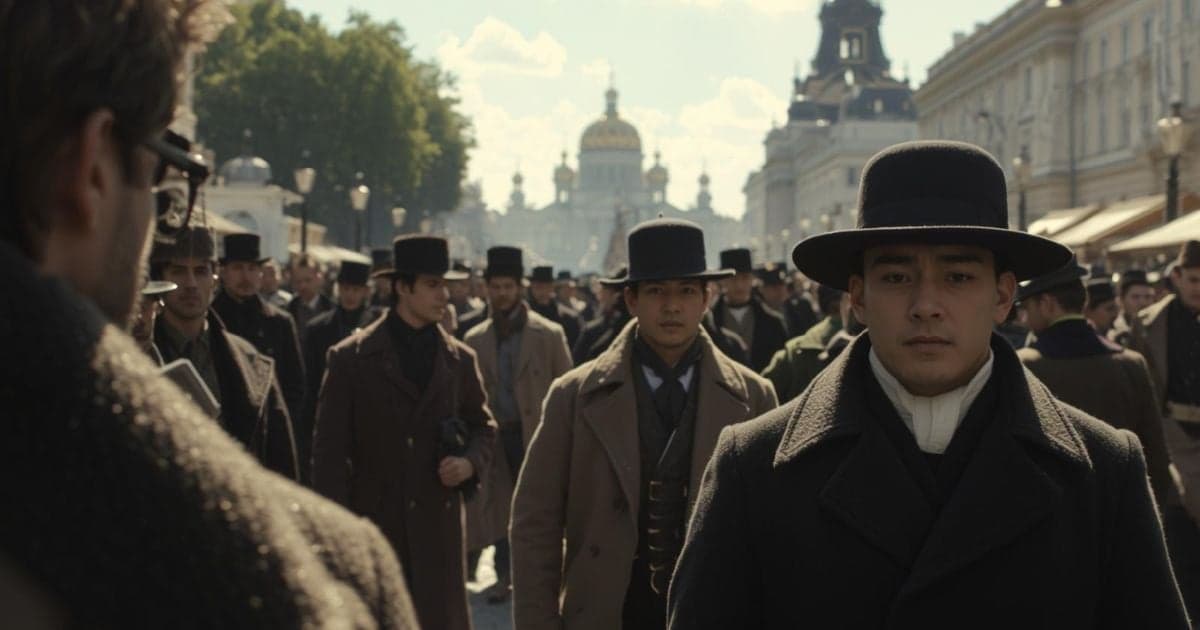
The prince survives to wedding week, outwardly kind while inwardly troubled. Lebedeff plots to have him declared incompetent; Keller promises pistols against a planned charivari; General Ivolgin dies and Myshkin attends the funeral where whispers follow him. Hippolyte warns that Rogojin, who has been watching from church shadows, may murder Aglaya out of jealous love. Nastasia grows merry about finery yet panics at night, once screaming that Rogojin hides in the garden until the fear proves false. On the evening before the ceremony she clings to Myshkin's knees asking what she is doing to him; by morning she is radiant over diamonds and dressmakers. At seven she steps toward Keller's carriage before a hostile crowd; when she sees Rogojin she rushes to him crying save me, and they flee to the train. Left at the church, Myshkin murmurs he was afraid this would happen and receives curious townspeople at home with tea instead of rage. He asks Vera to wake him for the first Petersburg train and kisses her forehead saying until tomorrow. The chapter shows how public humiliation met with strange grace can still mask a man preparing for the next catastrophe.

In this chapter: Terms Characters Key Quotes Themes Modern Story

Why This Matters

Connect literature to life

Skill: Reading Calm After Blows

Dignity after public harm can be healing or a cover for the next urgent move. Myshkin tells witnesses Nastasia's flight fits her state, serves tea to gawkers, then asks Vera to wake him for the Petersburg train. When someone stays gracious after humiliation, notice what they book for dawn before you call it acceptance.

Coming Up in Chapter 49

By morning the prince is in Petersburg ringing Rogojin's bell while servants lie and blinds stay shut. Rogojin will surface on a street corner, lead him upstairs in whispers, and part a curtain behind which Nastasia lies still.

Share it with friends

PreviousPrevious ChapterNextNext Chapter
Original text
5,408 wordscomplete

Chapter 48

The Wedding That Never Was

The prince did not die before his wedding—either by day or night, as he had foretold that he might. Very probably he passed disturbed nights, and was afflicted with bad dreams; but, during the daytime, among his fellow-men, he seemed as kind as ever, and even contented; only a little thoughtful when alone. The wedding was hurried on. The day was fixed for exactly a week after Evgenie’s visit to the prince. In the face of such haste as this, even the prince’s best friends (if he had had any) would have felt the hopelessness of any attempt to save…

Public-domain chapter text, formatted for reading.

Master this chapter. Complete your experience

Purchase the complete book to access all chapters and support classic literature

Buy at Powell'sBuy on Amazon

Available in paperback, hardcover, and e-book formats

Now let's explore the literary elements.

Key Quotes & Analysis

"Save me!"

— Nastasia Philipovna

Context: Rushing from the wedding carriage to Rogojin in the street

Her public flight abandons the prince at the altar and returns her to the man she fears most.

In Today's Words:

She cries save me and seizes Rogojin's hands before the mocking crowd at the door. The bride chooses flight over the groom waiting at church. When panic picks the familiar danger, witnesses finally see the pattern everyone denied for months of polite rehearsal and borrowed lace.

"I was afraid"

— Prince Myshkin

Context: Hearing at the church that Nastasia fled with Rogojin

His quiet admission shows foreknowledge without power to prevent the outcome.

In Today's Words:

He mutters that he was afraid when Keller brings the news at the altar. He is not shocked so much as confirmed. When you expected disaster and it arrives, say so early instead of performing surprise for the crowd that came to watch you break.

"consistent with the natural order of things"

— Prince Myshkin

Context: Telling witnesses her flight fits her mental state

He reframes betrayal as illness, preserving compassion while accepting abandonment.

In Today's Words:

He says her act is consistent with the natural order given her state. That lets him stay dignified in public. Reframing harm as sickness can protect your peace and still leave you alone at the altar while strangers praise your composure and miss your grief.

"Until tomorrow!"

— Prince Myshkin

Context: Kissing Vera Lebedeff after the ruined wedding night

The farewell signals flight to Petersburg, not rest; grace in the drawing room masks urgent pursuit.

In Today's Words:

He kisses Vera's forehead and says until tomorrow after asking her to wake him for the first train to Petersburg. Politeness to gawkers ends in private escape. When someone handles humiliation with eerie calm, watch what they schedule next before you call the wound closed.

Thematic Threads

Dignity

In This Chapter

Myshkin maintains composure and grace when abandoned at the altar, refusing to let public humiliation destroy his character

Development

Evolution from his earlier naive goodness to mature dignity that can withstand real tests

In Your Life:

Your response to public embarrassment or betrayal reveals and shapes who you really are

Social Expectations

In This Chapter

The townspeople expect drama and victim behavior from Myshkin, but his gracious response completely upends their expectations

Development

Continued exploration of how defying social scripts can transform relationships

In Your Life:

People often have scripts for how you should react to being wronged—you don't have to follow them

Compassion

In This Chapter

Myshkin sees Nastasia as mentally ill rather than malicious, allowing him to respond with understanding instead of anger

Development

His empathy deepens from general kindness to specific understanding of human frailty

In Your Life:

Reframing someone's hurtful behavior as their struggle rather than your attack changes everything

Identity

In This Chapter

Myshkin's sense of self remains intact despite public rejection, showing identity independent of others' approval

Development

Culmination of his journey toward authentic selfhood that doesn't depend on external validation

In Your Life:

Your worth isn't determined by how others treat you or what they think of you

Transformation

In This Chapter

A moment of potential destruction becomes an opportunity for new connections and respect from unexpected sources

Development

Consistent theme of how crisis can become catalyst when handled with wisdom

In Your Life:

Your worst moments can become your most defining ones if you choose your response carefully

You now have the context. Time to form your own thoughts.

Discussion Questions

This is not a test. Five prompts guide you through the chapter, from how it opens to how it closes, so you notice context and rhythm rather than facts to memorize. Sit with each question in your own words. When you see "One way to read it," treat it as a starting point, not the only answer.

  1. 1

    At the carriage step Nastasia sees Rogozhin and flees the wedding with him. What is she choosing in that second?

    ▶One way to read it

    Panic over performance: Rogozhin represents the fate she fears and cannot escape. Public dignity collapses into the man who has stalked her happiness.

    analysis • surface
  2. 2

    Myshkin tells witnesses her act fits her mental state rather than raging. Is that forgiveness, philosophy, or dissociation?

    ▶One way to read it

    All three. He reframes betrayal as illness to preserve meaning and avoid degrading her, which protects his ideal of compassion while leaving him alone at the altar.

    analysis • medium
  3. 3

    He serves tea to curious townspeople who invade his home afterward. How does hospitality become strength?

    ▶One way to read it

    He converts mockery into meeting. Grace disarms spectators who expected a freak show, winning respect through calm where pride would have dueled.

    analysis • medium
  4. 4

    Calling someone 'a sick child' can explain harm and erase accountability. Where is the line?

    ▶One way to read it

    Explain without excusing danger. Myshkin's frame helps him survive humiliation but does not stop Rogozhin or Nastasia's spiral; compassion must still name consequences.

    application • deep
  5. 5

    What does dignified response to public betrayal look like when you refuse to perform vengeance?

    ▶One way to read it

    Not numbness, not self-erasure. He chooses tone and hospitality while privately planning next steps. Strength here is refusing to become the crowd's expected tragedy.

    reflection • deep

Critical Thinking Exercise

10 minutes

Reframe the Betrayal

Think of a recent situation where someone let you down or embarrassed you. Write two versions of what happened: first, the story your wounded pride tells (focusing on how you were wronged), then rewrite it from a place of understanding (like how Myshkin sees Nastasia as troubled rather than malicious). Notice how each version makes you feel and what actions each story suggests.

Consider:

  • •What facts stay the same in both versions, and what changes?
  • •Which version gives you more power to move forward constructively?
  • •How might your response differ based on which story you choose to believe?

Journaling Prompt

Write about a time when someone's graceful response to your mistake or poor behavior surprised you. How did their reaction affect your feelings toward them and yourself?

Coming Up Next...

Chapter 49: The Final Confrontation

By morning the prince is in Petersburg ringing Rogojin's bell while servants lie and blinds stay shut. Rogojin will surface on a street corner, lead him upstairs in whispers, and part a curtain behind which Nastasia lies still.

Continue to Chapter 49
Previous
The Price of Impossible Love
Contents
Next
The Final Confrontation
Keep exploring

Continue Exploring

Study guides, teaching tools, themes, and the full library.More ways to read The Idiot: study guides, teaching tools, and the wider library.

  • The Idiot Study Guide
  • Teaching Resources
  • Essential Life Index
  • Browse by Theme
  • All Books

What this chapter teaches

Theme analyses that draw on this chapter and apply it to modern life.

  • Recognizing Destructive LoveExplore recognizing destructive love through The Idiot by Dostoevsky. Life lessons from classic literature applied to modern challenges.

You Might Also Like

Crime and Punishment cover

Crime and Punishment

Fyodor Dostoevsky

Also by Fyodor Dostoevsky

The Gambler cover

The Gambler

Fyodor Dostoevsky

Also by Fyodor Dostoevsky

The Brothers Karamazov cover

The Brothers Karamazov

Fyodor Dostoevsky

Also by Fyodor Dostoevsky

The Picture of Dorian Gray cover

The Picture of Dorian Gray

Oscar Wilde

Explores morality & ethics

Browse all 106+ books

Share This Chapter

Know someone who'd enjoy this? Spread the wisdom!

TwitterFacebookLinkedInEmail

Go further with Prestige

Unlock study guides and downloads, early access, and exclusive content — and support free access for everyone.

Subscribe to PrestigeCreate free account
Intelligence Amplifier
Intelligence Amplifier™Powering Wide Reads

Exploring human-AI collaboration through books, essays, and philosophical dialogues. Classic literature transformed into navigational maps for modern life.

2025 Books

→ The Amplified Human Spirit→ The Alarming Rise of Stupidity Amplified→ San Francisco: The AI Capital of the World
Visit intelligenceamplifier.org
hello@widereads.com

WideReads Originals

→ You Are Not Lost→ The Last Chapter First→ The Lit of Love→ Wealth and Poverty→ Wisdom for the Wounded
Arvintech
arvintechAmplify your Mind
Visit at arvintech.com

Navigate

  • Home
  • Library
  • Essential Life Index
  • How It Works
  • Subscribe
  • Account
  • About
  • Contact
  • Authors
  • Suggest a Book
  • Landings

Made For You

  • Trending
  • Students
  • Educators
  • Families
  • Readers
  • Literary Analysis
  • Finding Purpose
  • Letting Go
  • Recovering from a Breakup
  • Corruption
  • Gaslighting in the Classics

Newsletter

Weekly insights from the classics. Amplify Your Mind.

Legal

  • Privacy Policy
  • Terms of Service
  • Editorial Standards
  • Cookie Policy
  • Accessibility

Why Public Domain?

We focus on public domain classics because these timeless works belong to everyone. No paywalls, no restrictions—just wisdom that has stood the test of centuries, freely accessible to all readers.

Public domain books have shaped humanity's understanding of love, justice, ambition, and the human condition. By amplifying these works, we help preserve and share literature that truly belongs to the world.

A Pilgrimage

Powell's City of Books

Portland, Oregon

If you ever find yourself in Portland, walk to the corner of Burnside and 10th. The building takes up an entire city block. Inside is over a million books, new and used on the same shelf, organized by color-coded rooms with names like the Rose Room and the Pearl Room. You can lose an afternoon. You can lose a weekend. You will find a book you have been looking for your whole life, and three you did not know existed.

It is a pilgrimage. We cannot find a bookstore like it anywhere on earth. If you read the classics, and you ever get the chance, go. It belongs on every reader's bucket list.

Visit powells.com

We are not in any way affiliated with Powell's. We are just a very big fan.

© 2026 Wide Reads™. All Rights Reserved.

Intelligence Amplifier™ and Wide Reads™ are proprietary trademarks of Arvin Lioanag.

Copyright Protection: All original content, analyses, discussion questions, pedagogical frameworks, and methodology are protected by U.S. and international copyright law. Unauthorized reproduction, distribution, web scraping, or use for AI training is strictly prohibited. See our Copyright Notice for details.

Disclaimer: The information provided on this website is for general informational and educational purposes only and does not constitute professional, legal, financial, or technical advice. While we strive to ensure accuracy and relevance, we make no warranties regarding completeness, reliability, or suitability. Any reliance on such information is at your own risk. We are not liable for any losses or damages arising from use of this site. By using this site, you agree to these terms.