Chapter 32
Birthday Revelations and Philosophical Debates
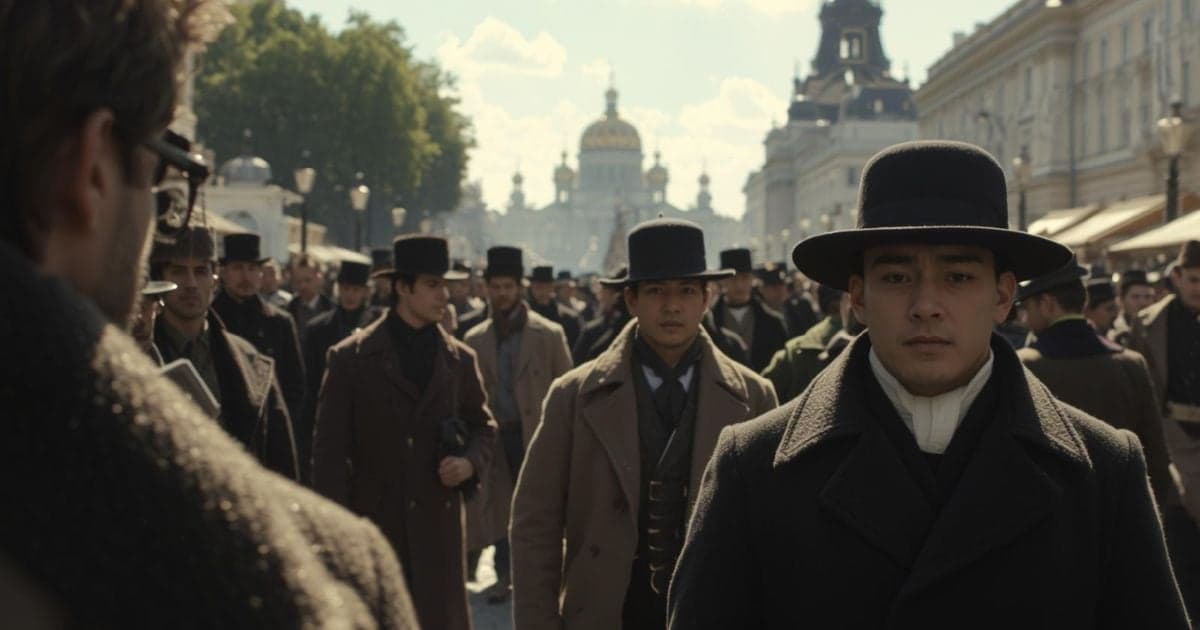
The prince observed with great surprise, as he approached his villa, accompanied by Rogojin, that a large number of people were assembled on his verandah, which was brilliantly lighted up. The company seemed merry and were noisily laughing and talking—even quarrelling, to judge from the sounds. At all events they were clearly enjoying themselves, and the prince observed further on closer investigation—that all had been drinking champagne. To judge from the lively condition of some of the party, it was to be supposed that a considerable quantity of champagne had been consumed already. All the guests were known to the…
Public-domain chapter text, formatted for reading.
Master this chapter. Complete your experience
Purchase the complete book to access all chapters and support classic literature
Available in paperback, hardcover, and e-book formats
Now let's explore the literary elements.
Key Quotes & Analysis
"trot out the champagne"
Context: Entering the prince's verandah and seeing the impromptu birthday crowd
Rogojin reads the gathering as transaction, not affection, because he has been used by fair-weather companions.
In Today's Words:
He assumes word spread about free drinks, not loyalty or concern for the host. That cynicism comes from years with people who swarm when there is something to gain. When a host wonders why everyone arrived at once, follow the incentive trail before you call the turnout love.
"to be or not to be"
Context: Introducing the terrace debate as a contemporary Hamlet theme
Lebedeff frames philosophy as entertainment, turning existential questions into party sport before anyone can answer seriously.
In Today's Words:
He announces Hamlet as tonight's topic the way a host might announce party charades after the third glass. The gravest question becomes a drinking game for the room. When a gathering elevates debate to performance, notice who treats the stakes as real and who chases applause.
"It is accursed, certainly accursed!"
Context: Replying to Evgenie during the argument about progress and railways
Lebedeff's certainty is theatrical, but it voices real anxiety that speed and science have outrun moral cohesion.
In Today's Words:
He answers a teasing question with absolute condemnation of the modern age, the railways, and the whole spirit of progress around them. The delivery is comic theater; the fear underneath is not. When someone at a gathering declares everything ruined, listen for the personal loss driving the sermon.
"I want just to see a ray of the sun"
Context: Asking whether one can drink to the sun's health during the late-night debate
Hippolyte's feverish longing turns the abstract talk toward mortality: he wants daylight because his own time is measured.
In Today's Words:
He interrupts abstract philosophy to ask for a literal sunrise while the room jokes about reading all night without sleep. His body is counting hours the others still treat as endless. When someone at a party fixates on dawn, treat it as a deadline they can see, not a mood.
Thematic Threads
Performance vs Authenticity
In This Chapter
Lebedeff delivers theatrical speeches about civilization while real conversations happen privately between characters
Development
Introduced here
In Your Life:
You might recognize this when family gatherings become stages for showing off rather than connecting.
Social Hierarchies
In This Chapter
The eclectic mix of characters - from clerks to nobility - reveals how class shapes who gets heard and who gets dismissed
Development
Continues from earlier chapters exploring class dynamics
In Your Life:
You see this when certain voices dominate meetings while others are automatically discounted based on job titles.
Hidden Agendas
In This Chapter
Evgenie Pavlovitch maneuvers for private conversation while claiming business matters, showing ulterior motives beneath social pleasantries
Development
Builds on earlier themes of deception and manipulation
In Your Life:
You encounter this when someone seeks you out socially but clearly wants something specific from you.
Moral Nostalgia
In This Chapter
Lebedeff argues that past eras, despite brutality, had unified moral purpose that modern civilization lacks
Development
Introduced here
In Your Life:
You might catch yourself romanticizing 'simpler times' when facing complex modern problems.
Isolation in Crowds
In This Chapter
Characters like Hippolyte and Rogojin remain emotionally isolated despite being surrounded by the party
Development
Continues the prince's ongoing theme of being misunderstood despite good intentions
In Your Life:
You feel this when you're surrounded by people but nobody really sees or understands what you're going through.
You now have the context. Time to form your own thoughts.
Discussion Questions
This is not a test. Five prompts guide you through the chapter, from how it opens to how it closes, so you notice context and rhythm rather than facts to memorize. Sit with each question in your own words. When you see "One way to read it," treat it as a starting point, not the only answer.
- 1
An impromptu birthday party fills Myshkin's veranda with rivals and misfits. Why is that guest list a social bomb?
analysis • surfaceOne way to read it
Rogozhin, Gania, Evgenie, Hippolyte, and Lebedeff share history with the prince and each other. Celebration becomes surveillance: everyone performs while watching who will break first.
- 2
Lebedeff blames railways for spiritual decay and tells a cannibal-monk tale. What is he really arguing?
analysis • mediumOne way to read it
Progress without shared moral language feels like chaos to him. The grotesque anecdote is theater proving old cruelty at least had a story everyone believed, unlike modern fracture.
- 3
Evgenie seeks a private talk with Myshkin while fixating on sick Hippolyte. What agenda hides under 'urgent business'?
analysis • mediumOne way to read it
He maneuvers information and alliances before the manifesto explosion. Interest in Hippolyte is leverage: the dying boy is both witness and weapon in Pavlofsk politics.
- 4
Hippolyte is feverish about seeing the sunrise; Rogozhin broods. How do margin conversations differ from the center debate?
application • deepOne way to read it
The loud philosophy masks personal countdowns. Readers learn to watch who stays silent at parties: urgency often sits beside the punch bowl, not at the lectern.
- 5
When have you seen a gathering's real meaning happen in side talks while the group debated abstractions?
reflection • deepOne way to read it
Dostoevsky stages parlor sport above plotting and grief. The chapter mirrors dinners where marriage, money, or illness get decided in hallways, not in the toast.
Critical Thinking Exercise
Map Your Social Theater
Think of a recent social situation where you felt like everyone was performing rather than connecting. Draw or write out who was playing what role - the entertainer, the expert, the skeptic, the silent observer. Then identify what real conversations or concerns were happening in the margins or going completely unaddressed.
Consider:
- •Notice who was trying to control the narrative versus who was genuinely listening
- •Pay attention to moments when the performance broke down and authentic emotion showed through
- •Consider what you were performing and what you really wanted to say but didn't
Journaling Prompt
Write about a time when you broke through social performance to have a real conversation. What made that possible, and how did it change the dynamic in the room?
Coming Up Next...
Chapter 33: The Sealed Confession
As the party winds down and guests begin to disperse, Evgenie Pavlovitch finally gets his chance for that crucial private conversation with the prince. But Hippolyte's increasingly erratic behavior threatens to disrupt more than just the evening's festivities..