Wide Reads
Literature MattersLife IndexEducators
Sign in
Where to Begin
The Idiot - Birthday Revelations and Philosophical Debates

Fyodor Dostoevsky

The Idiot

Birthday Revelations and Philosophical Debates

Home›Books›The Idiot›Chapter 32
Previous
32 of 50
Next

Summary

Birthday Revelations and Philosophical Debates

The Idiot by Fyodor Dostoevsky

0:000:00
Listen to Next Chapter

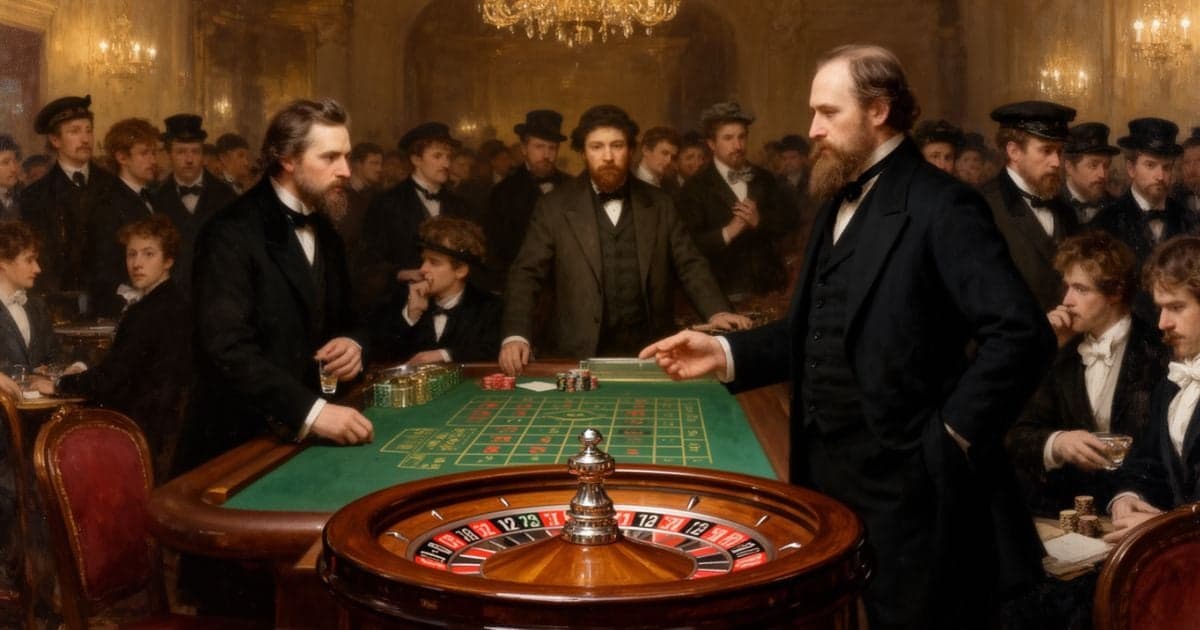
Prince Myshkin returns home with Rogojin to discover an impromptu birthday party in full swing on his veranda. The gathering includes an eclectic mix of characters - Hippolyte (who seems feverish and agitated), Lebedeff and his family, Gania, and surprisingly, Evgenie Pavlovitch. What begins as a celebration quickly transforms into a heated philosophical debate about progress, morality, and human nature. Lebedeff, emboldened by champagne, delivers a passionate speech about how modern civilization - symbolized by railways - has corrupted humanity's spiritual foundations. He tells a grotesque medieval tale of a cannibal who confessed to eating sixty monks, using it to argue that past eras, despite their brutality, possessed a unifying moral force that modern society lacks. The prince, observing quietly, validates some of Lebedeff's historical claims while others mock the clerk's theatrical performance. Meanwhile, Evgenie Pavlovitch maneuvers for a private conversation with the prince, claiming urgent business matters while displaying unusual interest in the sickly Hippolyte. The evening reveals underlying tensions: Hippolyte's feverish excitement about seeing the sunrise, Rogojin's brooding silence, and Evgenie's barely concealed agenda. This chapter demonstrates how social gatherings can become stages where people perform their deepest beliefs and hidden anxieties, while meaningful conversations often happen in the margins.

Coming Up in Chapter 33

As the party winds down and guests begin to disperse, Evgenie Pavlovitch finally gets his chance for that crucial private conversation with the prince. But Hippolyte's increasingly erratic behavior threatens to disrupt more than just the evening's festivities.

Share it with friends

Previous ChapterNext Chapter
GO ADS FREE — JOIN US
Original text
complete·6,031 words
T

he prince observed with great surprise, as he approached his villa, accompanied by Rogojin, that a large number of people were assembled on his verandah, which was brilliantly lighted up. The company seemed merry and were noisily laughing and talking—even quarrelling, to judge from the sounds. At all events they were clearly enjoying themselves, and the prince observed further on closer investigation—that all had been drinking champagne. To judge from the lively condition of some of the party, it was to be supposed that a considerable quantity of champagne had been consumed already.

All the guests were known to the prince; but the curious part of the matter was that they had all arrived on the same evening, as though with one accord, although he had only himself recollected the fact that it was his birthday a few moments since.

“You must have told somebody you were going to trot out the champagne, and that’s why they are all come!” muttered Rogojin, as the two entered the verandah. “We know all about that! You’ve only to whistle and they come up in shoals!” he continued, almost angrily. He was doubtless thinking of his own late experiences with his boon companions.

1 / 34

Master this chapter. Complete your experience

Purchase the complete book to access all chapters and support classic literature

Read Free on GutenbergBuy at Powell'sBuy on Amazon

As an Amazon Associate, we earn a small commission from qualifying purchases at no additional cost to you.

Available in paperback, hardcover, and e-book formats

GO ADS FREE — JOIN US

Why This Matters

Connect literature to life

Skill: Reading Hidden Agendas

This chapter teaches how to spot when someone's casual conversation actually serves a calculated purpose.

Practice This Today

This week, notice when someone at work brings up topics that seem unrelated to their usual concerns - they might be fishing for information or testing reactions.

GO ADS FREE — JOIN US

Now let's explore the literary elements.

Key Quotes & Analysis

"You must have told somebody you were going to trot out the champagne, and that's why they are all come!"

— Rogojin

Context: Rogojin cynically explains why so many people showed up to the prince's unexpected birthday party

This reveals Rogojin's bitter understanding of human nature - people are drawn by what they can get, not genuine affection. His own experience with fair-weather friends has made him suspicious of all social gatherings.

In Today's Words:

Word got out you were buying drinks, so of course everyone showed up

"We know all about that! You've only to whistle and they come up in shoals!"

— Rogojin

Context: Continuing his cynical commentary on the party guests

Rogojin compares people to fish that swarm when food appears. This metaphor shows his deep distrust of social relationships and suggests his own painful experiences with users and hangers-on.

In Today's Words:

People will show up anywhere if they think there's something in it for them

"Railways have ruined everything! The whole spirit of the age has changed!"

— Lebedeff

Context: During his drunken speech about how modern progress has corrupted humanity

Lebedeff uses trains as a symbol for all modern changes that he believes have destroyed traditional moral foundations. This reflects 19th century anxiety about rapid technological change disrupting social order.

In Today's Words:

Technology has ruined everything! People don't connect like they used to!

Thematic Threads

Performance vs Authenticity

In This Chapter

Lebedeff delivers theatrical speeches about civilization while real conversations happen privately between characters

Development

Introduced here

In Your Life:

You might recognize this when family gatherings become stages for showing off rather than connecting.

Social Hierarchies

In This Chapter

The eclectic mix of characters - from clerks to nobility - reveals how class shapes who gets heard and who gets dismissed

Development

Continues from earlier chapters exploring class dynamics

In Your Life:

You see this when certain voices dominate meetings while others are automatically discounted based on job titles.

Hidden Agendas

In This Chapter

Evgenie Pavlovitch maneuvers for private conversation while claiming business matters, showing ulterior motives beneath social pleasantries

Development

Builds on earlier themes of deception and manipulation

In Your Life:

You encounter this when someone seeks you out socially but clearly wants something specific from you.

Moral Nostalgia

In This Chapter

Lebedeff argues that past eras, despite brutality, had unified moral purpose that modern civilization lacks

Development

Introduced here

In Your Life:

You might catch yourself romanticizing 'simpler times' when facing complex modern problems.

Isolation in Crowds

In This Chapter

Characters like Hippolyte and Rogojin remain emotionally isolated despite being surrounded by the party

Development

Continues the prince's ongoing theme of being misunderstood despite good intentions

In Your Life:

You feel this when you're surrounded by people but nobody really sees or understands what you're going through.

GO ADS FREE — JOIN US

You now have the context. Time to form your own thoughts.

Discussion Questions

  1. 1

    What transforms Lebedeff from a quiet clerk into a theatrical philosopher at this party, and how do the other guests respond to his performance?

    analysis • surface
  2. 2

    Why does Evgenie Pavlovitch hover at the edges of the party instead of joining the main conversation, and what does his behavior reveal about his true intentions?

    analysis • medium
  3. 3

    Think about your last family gathering or work meeting - when did you catch yourself or others performing instead of having genuine conversation? What real issues got pushed aside?

    application • medium
  4. 4

    If you were Prince Myshkin observing this party, how would you create space for authentic conversation while everyone else is performing their roles?

    application • deep
  5. 5

    What does this chapter reveal about why people choose performance over genuine connection, even when they desperately need real conversation?

    reflection • deep

Critical Thinking Exercise

10 minutes

Map Your Social Theater

Think of a recent social situation where you felt like everyone was performing rather than connecting. Draw or write out who was playing what role - the entertainer, the expert, the skeptic, the silent observer. Then identify what real conversations or concerns were happening in the margins or going completely unaddressed.

Consider:

  • •Notice who was trying to control the narrative versus who was genuinely listening
  • •Pay attention to moments when the performance broke down and authentic emotion showed through
  • •Consider what you were performing and what you really wanted to say but didn't

Journaling Prompt

Write about a time when you broke through social performance to have a real conversation. What made that possible, and how did it change the dynamic in the room?

GO ADS FREE — JOIN US

Coming Up Next...

Chapter 33: The Sealed Confession

As the party winds down and guests begin to disperse, Evgenie Pavlovitch finally gets his chance for that crucial private conversation with the prince. But Hippolyte's increasingly erratic behavior threatens to disrupt more than just the evening's festivities.

Continue to Chapter 33
Previous
Secrets and Midnight Confessions
Contents
Next
The Sealed Confession

Continue Exploring

The Idiot Study GuideTeaching ResourcesEssential Life IndexBrowse by ThemeAll Books

You Might Also Like

Crime and Punishment cover

Crime and Punishment

Fyodor Dostoevsky

Also by Fyodor Dostoevsky

The Brothers Karamazov cover

The Brothers Karamazov

Fyodor Dostoevsky

Also by Fyodor Dostoevsky

Anna Karenina cover

Anna Karenina

Leo Tolstoy

Explores morality & ethics

War and Peace cover

War and Peace

Leo Tolstoy

Explores society & class

Browse all 47+ books
GO ADS FREE — JOIN US

Share This Chapter

Know someone who'd enjoy this? Spread the wisdom!

TwitterFacebookLinkedInEmail

Read ad-free with Prestige

Get rid of ads, unlock study guides and downloads, and support free access for everyone.

Subscribe to PrestigeCreate free account
Intelligence Amplifier
Intelligence Amplifier™Powering Wide Reads

Exploring human-AI collaboration through books, essays, and philosophical dialogues. Classic literature transformed into navigational maps for modern life.

2025 Books

→ The Amplified Human Spirit→ The Alarming Rise of Stupidity Amplified→ San Francisco: The AI Capital of the World
Visit intelligenceamplifier.org
hello@widereads.com

WideReads Originals

→ You Are Not Lost→ The Last Chapter First→ The Lit of Love→ Wealth and Poverty→ 10 Paradoxes in the Classics · coming soon
Arvintech
arvintechAmplify your Mind
Visit at arvintech.com

Navigate

  • Home
  • Library
  • Essential Life Index
  • How It Works
  • Subscribe
  • Account
  • About
  • Contact
  • Authors
  • Suggest a Book
  • Landings

Made For You

  • Students
  • Educators
  • Families
  • Readers
  • Literary Analysis
  • Finding Purpose
  • Letting Go
  • Recovering from a Breakup
  • Corruption
  • Gaslighting in the Classics

Newsletter

Weekly insights from the classics. Amplify Your Mind.

Legal

  • Privacy Policy
  • Terms of Service
  • Cookie Policy
  • Accessibility

Why Public Domain?

We focus on public domain classics because these timeless works belong to everyone. No paywalls, no restrictions—just wisdom that has stood the test of centuries, freely accessible to all readers.

Public domain books have shaped humanity's understanding of love, justice, ambition, and the human condition. By amplifying these works, we help preserve and share literature that truly belongs to the world.

A Pilgrimage

Powell's City of Books

Portland, Oregon

If you ever find yourself in Portland, walk to the corner of Burnside and 10th. The building takes up an entire city block. Inside is over a million books, new and used on the same shelf, organized by color-coded rooms with names like the Rose Room and the Pearl Room. You can lose an afternoon. You can lose a weekend. You will find a book you have been looking for your whole life, and three you did not know existed.

It is a pilgrimage. We cannot find a bookstore like it anywhere on earth. If you read the classics, and you ever get the chance, go. It belongs on every reader's bucket list.

Visit powells.com

We are not in any way affiliated with Powell's. We are just a very big fan.

© 2026 Wide Reads™. All Rights Reserved.

Intelligence Amplifier™ and Wide Reads™ are proprietary trademarks of Arvin Lioanag.

Copyright Protection: All original content, analyses, discussion questions, pedagogical frameworks, and methodology are protected by U.S. and international copyright law. Unauthorized reproduction, distribution, web scraping, or use for AI training is strictly prohibited. See our Copyright Notice for details.

Disclaimer: The information provided on this website is for general informational and educational purposes only and does not constitute professional, legal, financial, or technical advice. While we strive to ensure accuracy and relevance, we make no warranties regarding completeness, reliability, or suitability. Any reliance on such information is at your own risk. We are not liable for any losses or damages arising from use of this site. By using this site, you agree to these terms.