Chapter 22
The Overprotective Host and Social Tensions
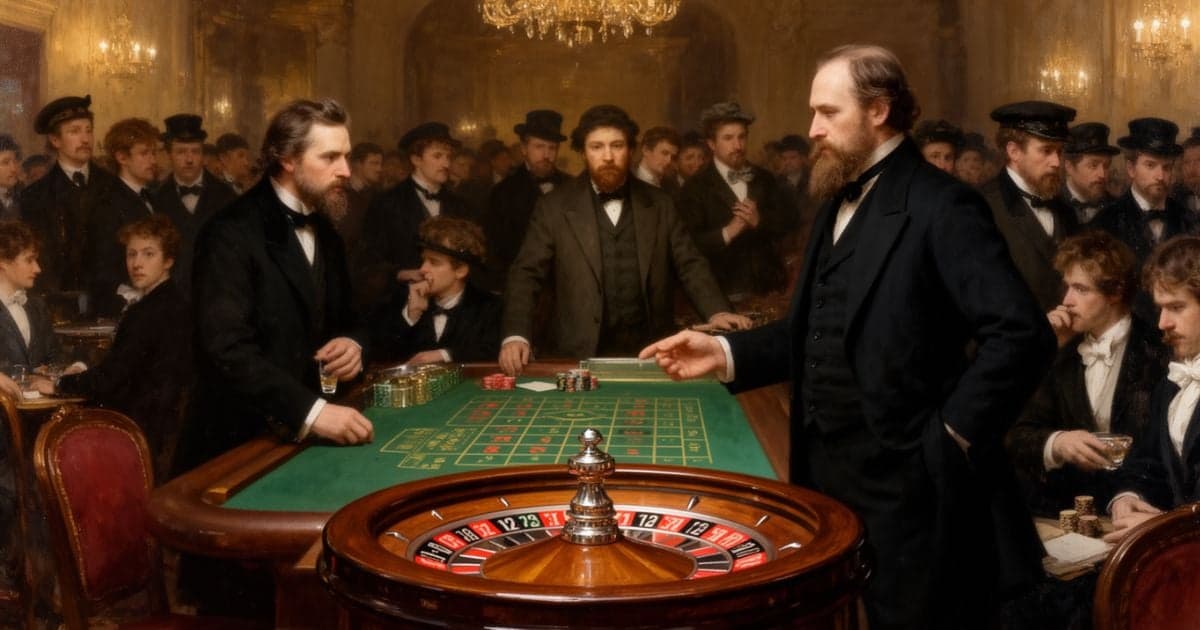
Lebedeff’s country-house was not large, but it was pretty and convenient, especially the part which was let to the prince. A row of orange and lemon trees and jasmines, planted in green tubs, stood on the fairly wide terrace. According to Lebedeff, these trees gave the house a most delightful aspect. Some were there when he bought it, and he was so charmed with the effect that he promptly added to their number. When the tubs containing these plants arrived at the villa and were set in their places, Lebedeff kept running into the street to enjoy the view of…
Public-domain chapter text, formatted for reading.
Master this chapter. Complete your experience
Purchase the complete book to access all chapters and support classic literature
Available in paperback, hardcover, and e-book formats
Now let's explore the literary elements.
Key Quotes & Analysis
"I am vile, vile; I know it!"
Context: Beating his breast after the prince challenges his secretive hovering
The theatrical self-accusation is Lebedeff's way to disarm scrutiny while keeping control of the room.
In Today's Words:
He cries that he is vile and beats his chest when caught managing every visitor at the door. That confession is also a performance designed to end questions before they start. When someone insults themselves before you can accuse them, check what access they are still refusing to give you.
"She is afraid of Aglaya Ivanovna."
Context: Revealing why Nastasia will not meet the prince openly at Pavlofsk
The secret reframes the summer triangle: Nastasia's fear is rivalry, not only Rogojin's violence.
In Today's Words:
He finally says the hidden visitor fears Aglaya, not the man everyone names as monster in every warning. That shifts the whole map of the summer season at once. When a go-between names the wrong fear, listen for the rivalry or shame they are trying to manage for someone else.
"Mamma is cross because the prince hasn't turned up"
Context: Needling her mother at dinner after days of waiting for Myshkin at Pavlofsk
Her teasing exposes how much the family has been tracking his absence while pretending indifference.
In Today's Words:
She says mamma is cross because the prince never appeared, in front of everyone pretending not to care at all. That is how longing gets aired through sarcasm in polite rooms without confession. When teasing carries real waiting, the feeling underneath is usually louder than the joke itself.
"nothing better than the 'poor knight'!"
Context: Quoting Aglaya's earlier words and sparking the terrace joke that embarrasses the prince
The phrase turns private reading into public code, letting the group talk about devotion without naming Myshkin directly.
In Today's Words:
He repeats Aglaya's line about the poor knight and the room knows it is a game about the prince. Literature becomes a mask for romance and mockery at once. When friends quote poetry at someone blushing in a chair, they are usually negotiating feelings nobody will say plainly.
Thematic Threads
Control
In This Chapter
Lebedeff isolates Myshkin under the guise of protecting his health, monitoring visitors and making decisions about access
Development
Evolved from earlier power struggles to this more subtle form of domination through 'care'
In Your Life:
You might see this when someone claims they're 'helping' you by limiting your choices or monitoring your relationships.
Class
In This Chapter
Mrs. Epanchin's arrival creates social tension as different classes navigate expectations and old grievances
Development
Continues exploration of how social position affects interactions and perceived worth
In Your Life:
You experience this when people treat you differently based on your job, education, or family background.
Authenticity
In This Chapter
General Ivolgin's lies about past hospitality contrast with his genuine emotion when recalling carrying Aglaya as a child
Development
Deepens the theme of how rare moments of truth cut through habitual deception
In Your Life:
You see this when someone who usually exaggerates or lies suddenly shares something real and vulnerable.
Recognition
In This Chapter
The mysterious 'poor knight' reference causes visible discomfort, suggesting hidden knowledge or feelings
Development
Introduced here as a new layer of unspoken understanding between characters
In Your Life:
You experience this when inside jokes or references reveal who knows what about whom in your social circle.
Redemption
In This Chapter
Mrs. Epanchin's stern but compassionate lecture to General Ivolgin about the possibility of change
Development
Continues the book's exploration of whether people can truly transform themselves
In Your Life:
You face this when deciding whether to give someone another chance after they've disappointed you repeatedly.
You now have the context. Time to form your own thoughts.
Discussion Questions
This is not a test. Five prompts guide you through the chapter, from how it opens to how it closes, so you notice context and rhythm rather than facts to memorize. Sit with each question in your own words. When you see "One way to read it," treat it as a starting point, not the only answer.
- 1
Lebedeff smothers Myshkin with 'care' while blocking visitors. How is control dressed as concern?
analysis • surfaceOne way to read it
He monitors who sees the prince because information is profit. Health becomes an excuse to keep someone afraid of Aglaya from reaching Myshkin, which shows care and surveillance sharing a mask.
- 2
Mrs. Epanchin expected an invalid and finds a healthy young man. How does that surprise reshape the visit?
analysis • mediumOne way to read it
Her maternal alarm must recalibrate: he is not dying, but he is still entangled with her family. The comedy of error tightens social scrutiny because Pavlofsk gossip and marriage stakes now attach to a vigorous guest.
- 3
General Ivolgin lies habitually, yet mentioning carrying Aglaya as a child breaks him into tears. What makes one memory pierce the performance?
analysis • mediumOne way to read it
It is verifiable and tender, not boastful. Mrs. Epanchin's stern compassion responds to real remorse, which shows redemption begins when fantasy meets a fact that still matters to someone else.
- 4
Talk turns to a 'poor knight' and Aglaya blushes. How do salons use literature to say what propriety forbids?
application • deepOne way to read it
Allusion lets feelings circulate without direct proposal. The chapter trains you to hear coded messages in jokes and poems, especially when a family is negotiating who may court whom.
- 5
When has someone's help felt like ownership in your life? What boundary would you set now?
reflection • deepOne way to read it
Lebedeff's villa is refuge and trap. Naming the difference between gratitude and permission helps you keep allies who respect exits, not only access.
Critical Thinking Exercise
Map the Control Pattern
Think of a relationship where someone claims to be 'protecting' or 'helping' but actually controls decisions. Write down three specific behaviors they use, then identify what they gain from this control. Finally, script one clear boundary you could set that acknowledges their concern while reclaiming your autonomy.
Consider:
- •Controllers often escalate when boundaries are first set - this is normal resistance
- •True helpers respect your right to make mistakes and learn from them
- •The guilt you feel when setting boundaries doesn't mean the boundaries are wrong
Journaling Prompt
Write about a time when you realized someone's 'help' was actually making you less capable of handling your own life. What did you learn about the difference between support and control?
Coming Up Next...
Chapter 23: The Poor Knight's Secret
As Aglaya prepares to dramatically recite the poem about the 'poor knight' that has everyone so intrigued, new arrivals interrupt the performance. General Epanchin and a young companion enter with loud conversation, promising to shift the social dynamics once again..