Wide Reads
Literature MattersLife IndexEducators
Sign in
Where to Begin

The Prince's Mysterious Absence — The Idiot

The Idiot - The Prince's Mysterious Absence

Fyodor Dostoevsky

The Idiot

The Prince's Mysterious Absence

Home›Books›The Idiot›Chapter 17: The Prince's Mysterious Absence
Previous
17 of 50
Next

Analysis by the Wide Reads editorial team·Reviewed against the source text·Updated December 20, 2025

Summary

The Prince's Mysterious Absence

The Idiot by Fyodor Dostoevsky

0:000:00
Listen to Next Chapter

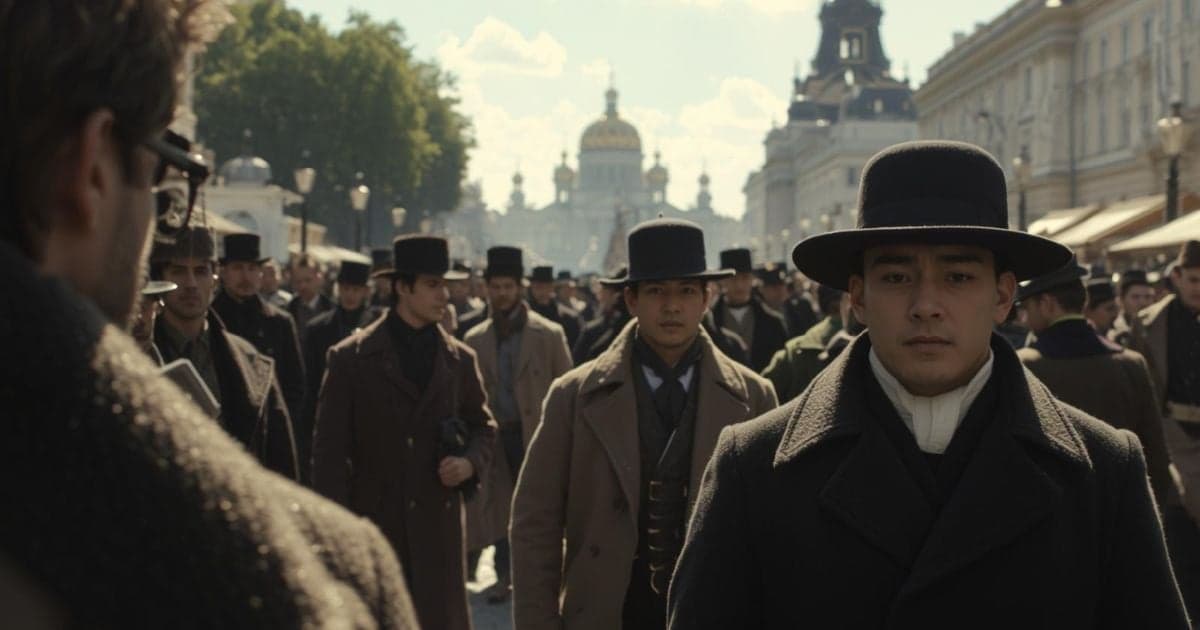
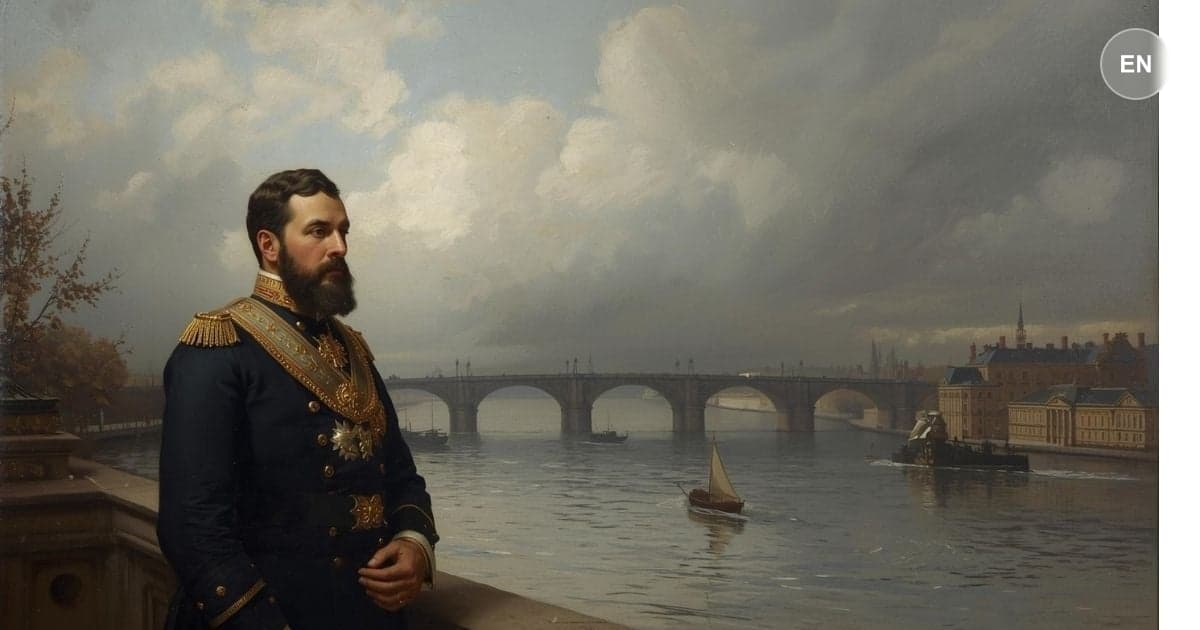
Two days after Nastasia's birthday catastrophe, Prince Myshkin leaves St. Petersburg for Moscow and stays away six months. The Epanchin household treats his name like a wound: Mrs. Epanchin declares she was cruelly mistaken in him, then admits her habit of misjudging people, yet the family cannot shake his impression. Rumors multiply and contradict: a foolish prince inherited millions and married a dancer, or a merchant burned seventy thousand roubles for bravado. The truth is quieter. Myshkin settles an estate smaller than advertised, pays even fraudulent claims himself, and disappears again when Nastasia flees Rogojin once more. Rogojin chases her to Moscow; Gania falls ill, quits his post, and broods over the singed packet he tried to return through the prince. Varia marries Ptitsin; the general lands in debtor's prison over IOUs he thought ceremonial. New suitors arrive for the Epanchin daughters while the family debates a summer abroad. Through Colia, Myshkin sends Aglaya a brief letter asking only whether she is happy; she blushes, hides it inside Don Quixote, and pretends indifference. The chapter shows how absence amplifies influence, and how a single honest question can travel farther than months of gossip.

In this chapter: Terms Characters Key Quotes Themes Modern Story

Why This Matters

Connect literature to life

Skill: Measuring Influence in Absence

Silence after someone leaves often reveals how much they mattered. The Epanchins avoid Myshkin's name for months, yet Aglaya hides his letter asking if she is happy inside Don Quixote. Watch what people do in private when they perform indifference in public.

Coming Up in Chapter 18

The prince finally returns to St. Petersburg, but the city he left behind has changed, and so have the people in it. His unexpected reappearance will force everyone to confront what his absence really meant to them.

Share it with friends

PreviousPrevious ChapterNextNext Chapter
Original text
3,786 wordscomplete

Chapter 17

The Prince's Mysterious Absence

Two days after the strange conclusion to Nastasia Philipovna’s birthday party, with the record of which we concluded the first part of this story, Prince Muishkin hurriedly left St. Petersburg for Moscow, in order to see after some business connected with the receipt of his unexpected fortune. It was said that there were other reasons for his hurried departure; but as to this, and as to his movements in Moscow, and as to his prolonged absence from St. Petersburg, we are able to give very little information. The prince was away for six months, and even those who were most…

Public-domain chapter text, formatted for reading.

Master this chapter. Complete your experience

Purchase the complete book to access all chapters and support classic literature

Buy at Powell'sBuy on Amazon

Available in paperback, hardcover, and e-book formats

Now let's explore the literary elements.

Key Quotes & Analysis

"cruelly mistaken in the prince"

— Mrs. Epanchin

Context: Announcing her revised judgment after Myshkin's sudden departure

Her phrase performs rejection while the household's tension betrays how deeply he mattered.

In Today's Words:

She says cruelly mistaken as if closing a case, yet the family keeps orbiting his absence like a sore tooth. That is what happens when pride tries to outrun attachment. The louder the dismissal, the more you can suspect the feeling underneath has not actually gone anywhere.

"_Are_ you happy?"

— Prince Myshkin

Context: Writing to Aglaya through Colia after months away in Moscow

The question contains no claim, no flirtation, and no demand, only concern for her wellbeing.

In Today's Words:

He does not recap the party, defend himself, or ask for a reply. He asks if she is happy, full stop. That restraint is rare in letters driven by ego or unfinished scenes. When someone checks on your happiness without fishing for reassurance, you are hearing care that is not trying to purchase an answer.

"Trust in anyone after this!"

— General Ivolgin

Context: Lamenting from debtor's prison after IOUs he thought would never be used

His comic despair names how betrayal resets a man's whole theory of human nature overnight.

In Today's Words:

He signed notes he never expected to pay and now sits in prison crying that trust is finished forever. The line is exaggerated, but the feeling is familiar. One financial betrayal can make a formerly open person sound like a cynic before lunch. Notice when pain is rewriting your rules faster than evidence warrants.

"pepper-box"

— Aglaya Epanchin

Context: Dismissing Colia after he delivers the prince's sealed letter

Her contempt for the messenger masks how much the message shook her.

In Today's Words:

She calls him a pepper-box and walks past with theatrical scorn. That performance is cover. She hid the letter in Don Quixote and blushed reading it alone. When someone mocks the carrier, check whether they are trying to downgrade the message before it changes their picture of themselves.

Thematic Threads

Absence and Impact

In This Chapter

Myshkin's six-month absence reveals how deeply he affected everyone, from the Epanchins feeling something missing to Aglaya treasuring his simple letter

Development

Builds on earlier themes of his disruptive presence—now we see the void he leaves behind

In Your Life:

You might notice how certain people's absence from your workplace or family gatherings changes the entire dynamic.

Authenticity vs. Performance

In This Chapter

While others chase money, status, or strategic marriages, Myshkin pays fraudulent debts because it's right, and writes honest letters asking if someone is happy

Development

Continues exploring how his genuine nature contrasts with society's calculated behaviors

In Your Life:

You face daily choices between saying what's expected and saying what's true, between strategic relationships and genuine connections.

Class and Money

In This Chapter

Myshkin's inheritance proves smaller than rumored, but he handles it with characteristic integrity, while others pursue advantageous marriages

Development

Deepens the exploration of how financial status affects relationships and social standing

In Your Life:

You might see how money conversations reveal people's true characters and priorities.

Hidden Emotions

In This Chapter

Aglaya's blush and her hiding of Myshkin's letter in Don Quixote reveals feelings she can't or won't express openly

Development

Continues the pattern of characters struggling to express genuine feelings in a society that demands performance

In Your Life:

You might recognize your own tendency to hide genuine feelings behind socially acceptable responses.

Social Expectations

In This Chapter

New suitors appear with proper credentials—Prince S for Adelaida, Evgenie Pavlovitch for Aglaya—while the family plans conventional European travels

Development

Shows how society continues its prescribed patterns even when disrupted by authentic presence

In Your Life:

You face pressure to follow expected life paths even when your heart points elsewhere.

You now have the context. Time to form your own thoughts.

Discussion Questions

This is not a test. Five prompts guide you through the chapter, from how it opens to how it closes, so you notice context and rhythm rather than facts to memorize. Sit with each question in your own words. When you see "One way to read it," treat it as a starting point, not the only answer.

  1. 1

    Myshkin vanishes to Moscow for six months after the birthday catastrophe. Why does the Epanchin household feel his absence as a wound?

    ▶One way to read it

    He disrupted their masks in a short visit and left emotional unfinished business. Mrs. Epanchin declares she was mistaken about him, yet the family senses a gap only he occupied: honest strangeness in a polished house.

    analysis • surface
  2. 2

    Rumors say the prince married a dancer or burned money; the truth is debt settlement. What does gossip reveal about Petersburg?

    ▶One way to read it

    People prefer scandal to mundane integrity. Paying fraudulent claims fits his character but makes poor theater, so fantasy replaces fact while he quietly cleans an inheritance.

    analysis • medium
  3. 3

    Rogozhin chases Nastasia; Gania falls ill and loses his post; Varia marries Ptitsin. How does the chapter widen the novel's map?

    ▶One way to read it

    After the party explosion, lives redistribute: obsession travels to Moscow, mercenary schemes collapse, steadier matches survive. The pause shows consequences, not closure, while the Epanchins plan Europe and Pavlofsk.

    analysis • medium
  4. 4

    Myshkin insists on honoring debts he could dispute. When does over-scrupulous fairness help character and when does it enable predators?

    ▶One way to read it

    Paying false claims keeps his conscience clean but may fund liars. The chapter invites you to weigh integrity against practicality: he chooses moral sleep over maximum cash, consistent with the 'idiot' who cannot game the world he entered.

    application • deep
  5. 5

    Have you misread someone's silence as indifference when they were actually handling obligations you never saw?

    ▶One way to read it

    The prince's absence looks like abandonment from Petersburg's balcony but is paperwork and duty in Moscow. Readers are nudged to ask what unseen labor explains a disappearance before inventing melodrama.

    reflection • deep

Critical Thinking Exercise

10 minutes

Map Your Authentic Presence Impact

Think of three different environments where you spend time regularly (work, family, social group, etc.). For each setting, honestly assess: Are you showing up as your authentic self, or are you wearing a mask? Write down one small way you could be more genuine in each environment - not dramatically different, just more real.

Consider:

  • •Notice where you feel most comfortable being yourself versus where you feel pressure to perform
  • •Consider how your authentic moments affect others - do people seem more relaxed or engaged?
  • •Think about what you fear might happen if you dropped certain pretenses

Journaling Prompt

Write about a time when someone's authentic presence made you feel more comfortable being yourself. What did they do or say that created that safety? How could you offer that same gift to others?

Coming Up Next...

Chapter 18: Lebedeff's Household and Hidden Motives

The prince finally returns to St. Petersburg, but the city he left behind has changed, and so have the people in it. His unexpected reappearance will force everyone to confront what his absence really meant to them.

Continue to Chapter 18
Previous
The Fire Test of Character
Contents
Next
Lebedeff's Household and Hidden Motives
Keep exploring

Continue Exploring

Study guides, teaching tools, themes, and the full library.More ways to read The Idiot: study guides, teaching tools, and the wider library.

  • The Idiot Study Guide
  • Teaching Resources
  • Essential Life Index
  • Browse by Theme
  • All Books

Life-skill deep dives in The Idiot

  • Maintaining Goodness in a Cynical WorldLearn how Prince Myshkin stays genuinely kind in a world built on calculation—and why Dostoevsky believed cynical society labels real goodness as idiocy.
  • Recognizing Destructive LoveExplore recognizing destructive love through The Idiot by Dostoevsky. Life lessons from classic literature applied to modern challenges.
  • Setting Boundaries With CompassionExplore setting boundaries with compassion through The Idiot by Dostoevsky. Life lessons from classic literature applied to modern challenges.
  • The Cost of CompassionUnderstand why trying to save everyone destroys you—and what Dostoevsky reveals through Myshkin about the difference between compassion and enabling.

You Might Also Like

Crime and Punishment cover

Crime and Punishment

Fyodor Dostoevsky

Also by Fyodor Dostoevsky

The Gambler cover

The Gambler

Fyodor Dostoevsky

Also by Fyodor Dostoevsky

The Brothers Karamazov cover

The Brothers Karamazov

Fyodor Dostoevsky

Also by Fyodor Dostoevsky

The Picture of Dorian Gray cover

The Picture of Dorian Gray

Oscar Wilde

Explores morality & ethics

Browse all 106+ books

Share This Chapter

Know someone who'd enjoy this? Spread the wisdom!

TwitterFacebookLinkedInEmail

Go further with Prestige

Unlock study guides and downloads, early access, and exclusive content — and support free access for everyone.

Subscribe to PrestigeCreate free account
Intelligence Amplifier
Intelligence Amplifier™Powering Wide Reads

Exploring human-AI collaboration through books, essays, and philosophical dialogues. Classic literature transformed into navigational maps for modern life.

2025 Books

→ The Amplified Human Spirit→ The Alarming Rise of Stupidity Amplified→ San Francisco: The AI Capital of the World
Visit intelligenceamplifier.org
hello@widereads.com

WideReads Originals

→ You Are Not Lost→ The Last Chapter First→ The Lit of Love→ Wealth and Poverty→ Wisdom for the Wounded
Arvintech
arvintechAmplify your Mind
Visit at arvintech.com

Navigate

  • Home
  • Library
  • Essential Life Index
  • How It Works
  • Subscribe
  • Account
  • About
  • Contact
  • Authors
  • Suggest a Book
  • Landings

Made For You

  • Trending
  • Students
  • Educators
  • Families
  • Readers
  • Literary Analysis
  • Finding Purpose
  • Letting Go
  • Recovering from a Breakup
  • Corruption
  • Gaslighting in the Classics

Newsletter

Weekly insights from the classics. Amplify Your Mind.

Legal

  • Privacy Policy
  • Terms of Service
  • Editorial Standards
  • Cookie Policy
  • Accessibility

Why Public Domain?

We focus on public domain classics because these timeless works belong to everyone. No paywalls, no restrictions—just wisdom that has stood the test of centuries, freely accessible to all readers.

Public domain books have shaped humanity's understanding of love, justice, ambition, and the human condition. By amplifying these works, we help preserve and share literature that truly belongs to the world.

A Pilgrimage

Powell's City of Books

Portland, Oregon

If you ever find yourself in Portland, walk to the corner of Burnside and 10th. The building takes up an entire city block. Inside is over a million books, new and used on the same shelf, organized by color-coded rooms with names like the Rose Room and the Pearl Room. You can lose an afternoon. You can lose a weekend. You will find a book you have been looking for your whole life, and three you did not know existed.

It is a pilgrimage. We cannot find a bookstore like it anywhere on earth. If you read the classics, and you ever get the chance, go. It belongs on every reader's bucket list.

Visit powells.com

We are not in any way affiliated with Powell's. We are just a very big fan.

© 2026 Wide Reads™. All Rights Reserved.

Intelligence Amplifier™ and Wide Reads™ are proprietary trademarks of Arvin Lioanag.

Copyright Protection: All original content, analyses, discussion questions, pedagogical frameworks, and methodology are protected by U.S. and international copyright law. Unauthorized reproduction, distribution, web scraping, or use for AI training is strictly prohibited. See our Copyright Notice for details.

Disclaimer: The information provided on this website is for general informational and educational purposes only and does not constitute professional, legal, financial, or technical advice. While we strive to ensure accuracy and relevance, we make no warranties regarding completeness, reliability, or suitability. Any reliance on such information is at your own risk. We are not liable for any losses or damages arising from use of this site. By using this site, you agree to these terms.