Chapter 12
A Drunken Guide's False Promises
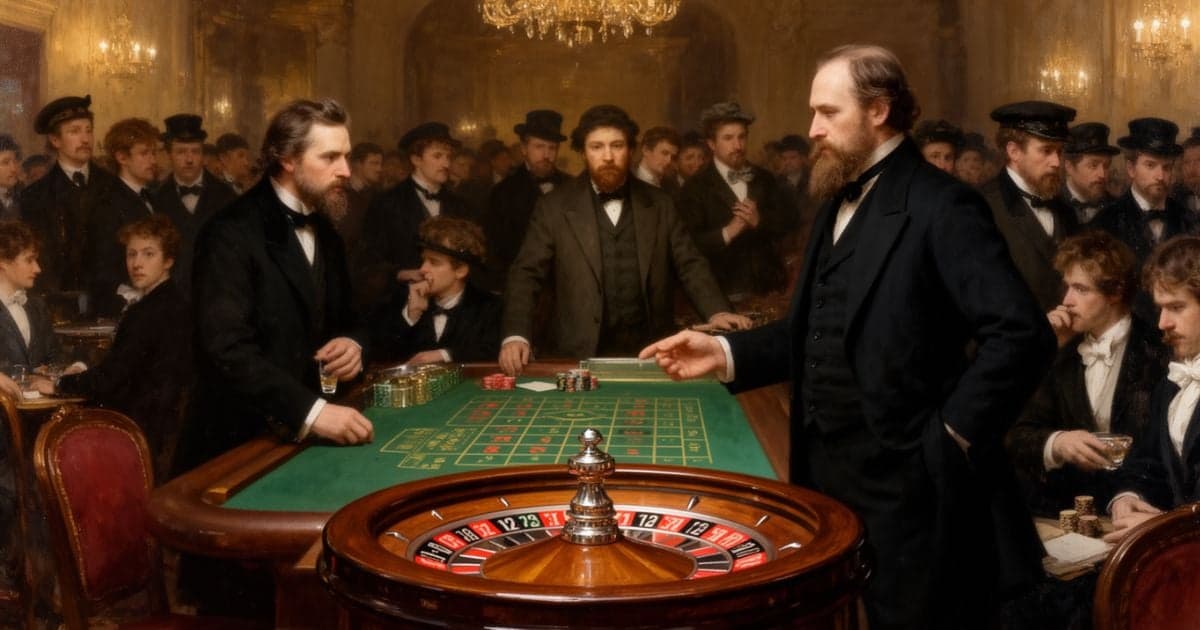
Colia took the prince to a public-house in the Litaynaya, not far off. In one of the side rooms there sat at a table—looking like one of the regular guests of the establishment—Ardalion Alexandrovitch, with a bottle before him, and a newspaper on his knee. He was waiting for the prince, and no sooner did the latter appear than he began a long harangue about something or other; but so far gone was he that the prince could hardly understand a word. “I have not got a ten-rouble note,” said the prince; “but here is a twenty-five. Change it and…
Public-domain chapter text, formatted for reading.
Master this chapter. Complete your experience
Purchase the complete book to access all chapters and support classic literature
Available in paperback, hardcover, and e-book formats
Now let's explore the literary elements.
Key Quotes & Analysis
"I have not got a ten-rouble note," said the prince; "but here is a twenty-five. Change it and give me back the fifteen, or I shall be left without a farthing myself."
Context: Paying the drunken general while protecting his own small funds
Even in charity Myshkin sets a boundary: generosity must not leave him helpless.
In Today's Words:
He will help, but he is not handing over everything and hoping for honor. He asks for change so he keeps enough to function. That small detail matters in dealings with charming dependents: if you cannot name what you need left for yourself, you become the bank for someone else's performance of crisis after crisis
"General Ivolgin and Prince Muishkin.' That'll fetch her, I think, eh? Capital! We'll go at nine; there's time yet."
Context: Planning how to present himself and the prince at Nastasia's door
The general treats names and titles as props that can force entry into any room.
In Today's Words:
He hears the pairing like a magic password that will open Nastasia's door. Titles and borrowed respectability are his currency now that money and truth are gone. When someone believes the right introduction fixes a wrecked reputation, you are watching performance replace substance, and the audience is about to become the next casualty.
"You have made a mistake, general," said he. "The name on the door is Koulakoff"
Context: Stopping Ivolgin from ringing the wrong flat
Myshkin sees facts the general's fantasy refuses, the first of many wrong doors tonight.
In Today's Words:
He points at the nameplate while the general insists it means nothing. That is the whole evening in one beat: one man reads reality, the other reads the story he needs to believe. When you follow a confident guide who ignores signs, verify the door before you walk through it, because their pride will not
"Marfa Borisovna! Marfa Borisovna! Here is... the Prince Muishkin! General Ivolgin and Prince Muishkin"
Context: Introducing the prince during Marfa's furious confrontation
He reaches for ceremonial presentation while his creditor screams about stolen money and hungry orphans.
In Today's Words:
He stammers her name and the prince's title as if etiquette could soften a reckoning. The comedy is brutal: he still performs grandeur while being called a thief in front of children. That is what borrowed authority looks like when the bill arrives and the audience is not impressed by your introduction.
Thematic Threads
Deception
In This Chapter
General Ivolgin weaves elaborate lies about military connections and social status while being unable to perform basic tasks
Development
Builds on earlier themes of social masks, showing how deception becomes a lifestyle rather than occasional necessity
In Your Life:
You might recognize this in family members who constantly reference past successes while avoiding present responsibilities
Class
In This Chapter
The general clings to aristocratic pretensions while living in poverty and debt, exposing the gap between claimed and actual status
Development
Deepens the exploration of social mobility by showing how people can fall from grace while refusing to acknowledge their new reality
In Your Life:
You see this when people maintain expensive appearances they can't afford or refuse jobs they consider 'beneath' their former status
Trust
In This Chapter
Prince Myshkin's naive trust in the general nearly sabotages his important mission, while Colia proves genuinely trustworthy
Development
Contrasts with earlier chapters by showing the real consequences of misplaced trust versus the rewards of recognizing genuine character
In Your Life:
You experience this when choosing who to rely on for important tasks—learning to distinguish between confident talkers and reliable actors
Family Dysfunction
In This Chapter
Colia reveals how his father's drinking and lying affects the entire family, yet he still tries to help both his father and the prince
Development
Introduced here as a new lens for understanding how individual failings ripple through family systems
In Your Life:
You might see this in your own family dynamics where one person's addiction or dishonesty forces others to become caretakers or truth-tellers
Reality vs Illusion
In This Chapter
The general lives in a fantasy world of past glory while Colia faces harsh truths about their actual circumstances
Development
Expands on earlier themes of social pretense by showing how some people completely disconnect from objective reality
In Your Life:
You encounter this when dealing with people who refuse to acknowledge obvious problems in their relationships, finances, or health
You now have the context. Time to form your own thoughts.
Discussion Questions
This is not a test. Five prompts guide you through the chapter, from how it opens to how it closes, so you notice context and rhythm rather than facts to memorize. Sit with each question in your own words. When you see "One way to read it," treat it as a starting point, not the only answer.
- 1
Myshkin trusts General Ivolgin to lead him to Nastasia's house. Why is that trust costly in this chapter?
analysis • surfaceOne way to read it
The general sells confidence he does not own: imaginary friends, false addresses, and detours through creditors. The prince pays in time, dignity, and anxiety while Ivolgin rehearses a life that no longer exists.
- 2
Colia appears as the counter-voice to his father. What does he offer that the general cannot?
analysis • mediumOne way to read it
Facts, apology, and practical help without mythology. Colia names drinking, debt, and embarrassment plainly, which is how the family might heal if anyone listened before the next performance began.
- 3
The creditor scene humiliates Ivolgin in front of Myshkin. How does public debt differ from private pride in the chapter's logic?
analysis • mediumOne way to read it
Pride lives in stories; debt lives in witnesses. When the creditor speaks, the general's uniform of words collapses. Shame becomes social because someone outside the family refuses the fantasy.
- 4
When someone authoritative offers help but keeps missing appointments, how do you decide between patience and a new guide?
application • deepOne way to read it
Myshkin keeps hoping decency will steady Ivolgin, but the pattern is clear: each promise buys another humiliation. The lesson is to separate respect for a person from reliance on their directions when addiction or vanity drives the map.
- 5
Where have you enabled a relative's story because confronting it felt crueler than going along?
reflection • deepOne way to read it
The Ivolgin children live inside their father's fictions until Colia breaks rank. The chapter mirrors families that confuse loyalty with collusion, and asks what 'kindness' means when it delays truth.
Critical Thinking Exercise
Spot the Borrowed Authority
Think of someone in your life who frequently references past achievements, name-drops connections, or tells stories about their glory days when facing current challenges. Write down three specific examples of how they do this, then identify what current competence or responsibility they might be avoiding. Finally, consider how you can navigate interactions with this person more effectively.
Consider:
- •Look for patterns where past accomplishments are mentioned during present failures
- •Notice when someone deflects current problems by talking about who they know or what they used to do
- •Consider whether you sometimes use borrowed authority yourself when feeling insecure or incompetent
Journaling Prompt
Write about a time when you caught yourself relying on past achievements or other people's status instead of building current competence. What was driving that behavior, and how could you handle similar situations differently in the future?
Coming Up Next...
Chapter 13: The Dangerous Game Begins
Finally arriving at Nastasia Philipovna's house, the prince faces his most crucial test yet. Will his unconventional approach to this sophisticated and dangerous woman succeed where others have failed Myshkin arrives at Nastasia Philipovna's birthday gathering anxious and underdressed, unsure whether she will receive him or laugh him away. Inside he finds a strange salon of generals, businessmen, actresses, and gossips, all watching Nastasia.