Chapter 47
The Dappled Grays
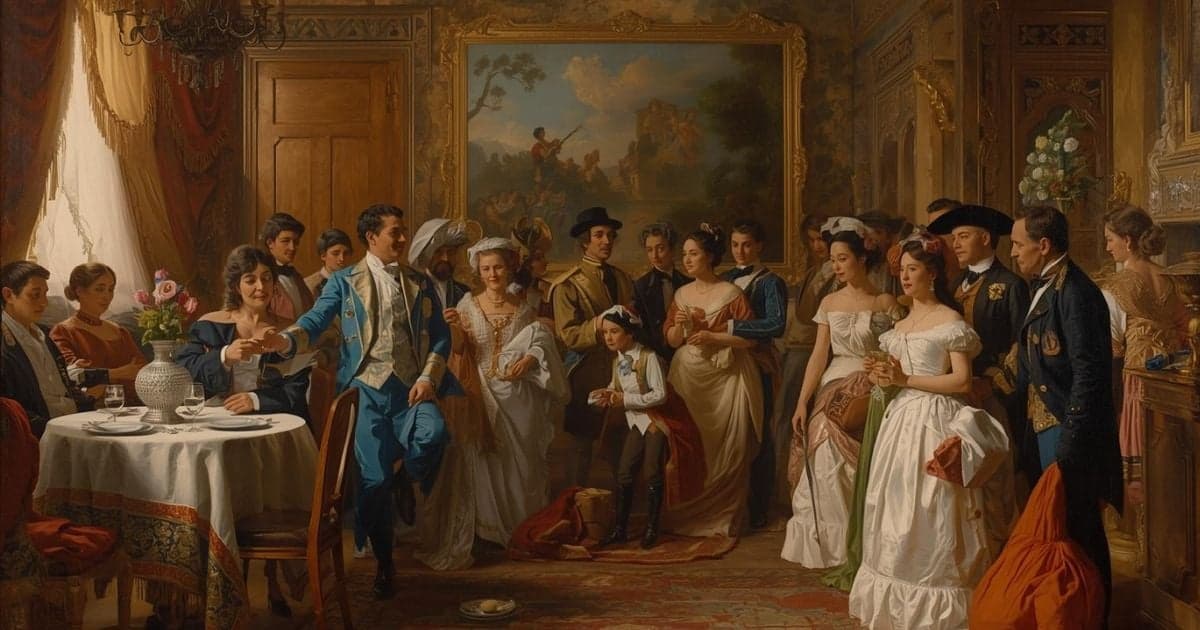
The baron, followed by the count, traversed a long series of apartments, in which the prevailing characteristics were heavy magnificence and the gaudiness of ostentatious wealth, until he reached the boudoir of Madame Danglars—a small octagonal-shaped room, hung with pink satin, covered with white Indian muslin. The chairs were of ancient workmanship and materials; over the doors were painted sketches of shepherds and shepherdesses, after the style and manner of Boucher; and at each side pretty medallions in crayons, harmonizing well with the furnishings of this charming apartment, the only one throughout the great mansion in which any distinctive taste…
Public-domain chapter text, formatted for reading.
Master this chapter. Complete your experience
Purchase the complete book to access all chapters and support classic literature
Available in paperback, hardcover, and e-book formats
Now let's explore the literary elements.
Key Quotes & Analysis
"dappled grays"
Context: The Count mentions the horses he drives in conversation with Madame Danglars
A casual detail detonates the baroness's humiliation over her sold horses.
In Today's Words:
The Count mentions his dappled grays as if describing taste, not warfare. Small possessions can carry whole marriage stories. When someone names an object casually, listen for who sold it and who was never asked. The pattern is not abstract. It appears whenever power, timing, and social ritual quietly decide what people treat as real.
"henceforth in my hands"
Context: The Count reflects after learning Danglars sold his wife's horses
He claims domestic leverage before making any explicit threat.
In Today's Words:
The Count says the Danglars domestic peace is henceforth in his hands. He wins by knowing what spouses hide from each other. Information about a marriage can be worth more than money in the room. The pattern is not abstract. It appears whenever power, timing, and social ritual quietly decide what people treat as real.
"lasso"
Context: Ali stops Madame de Villefort's runaway horses
Spectacle rescue turns the Count's servant into a public hero the family will owe.
In Today's Words:
The narrator says Ali stopped the carriage with a lasso while the crowd cheered. Public rescue creates public debt. When help is performed for an audience, expect the beneficiary to owe more than thanks. The pattern is not abstract. It appears whenever power, timing, and social ritual quietly decide what people treat as real.
"too ugly"
Context: Edward refuses to thank Ali after the rescue
Childish ingratitude shows the moral climate of the house the Count now enters.
In Today's Words:
Edward says Ali is too ugly to thank after saving him from a runaway carriage. Ingratitude often arrives dressed as honesty from the protected child. Notice who feels entitled to dismiss the person who just saved them. The pattern is not abstract. It appears whenever power, timing, and social ritual quietly decide what people treat as real.
Thematic Threads
Marriage and money
In This Chapter
Danglars sold the baroness's grays; the Count now drives them.
Development
Profit inside the house becomes public humiliation.
In Your Life:
Financial decisions made alone can become weapons in later conflicts.
Rescue as debt
In This Chapter
Ali saves Héloïse and Edward from a runaway carriage.
Development
The Count refuses payment, keeping obligation alive.
In Your Life:
Help offered without a price can still create a favor you will be expected to repay.
Childish ingratitude
In This Chapter
Edward mocks Ali's appearance after being saved.
Development
The Villefort home rewards entitlement over virtue.
In Your Life:
Spoiled confidence in children often mirrors what adults tolerate upstairs.
You now have the context. Time to form your own thoughts.
Discussion Questions
This is not a test. Five prompts guide you through the chapter, from how it opens to how it closes, so you notice context and rhythm rather than facts to memorize. Sit with each question in your own words. When you see "One way to read it," treat it as a starting point, not the only answer.
- 1
Madame Danglars discovers the count is driving her dappled grays after her husband sold them for profit. How does the horse episode expose marriage and money in that house?
analysis • surfaceOne way to read it
One way to read it: Danglars sold what was not entirely his to sell. The count returns the horses with diamonds and turns a profit into a humiliation.
- 2
Monte Cristo says afterward that domestic peace in the Danglars home is "henceforth in my hands." What leverage does he gain without yet asking for anything?
analysis • mediumOne way to read it
One way to read it: he makes the baron look foolish and generous at once. Husband and wife owe him different debts, and he knows both.
- 3
Ali stops Madame de Villefort's runaway carriage with a lasso while Edward calls him "too ugly" to thank. How do rescue and ingratitude appear in the same scene?
application • mediumOne way to read it
One way to read it: the child of a procureur judges by appearance; the Nubian saves lives as duty. Monte Cristo watches both with cold interest.
- 4
Héloïse de Villefort writes Hermine that curiosity about the famous grays nearly killed her and Edward. How does one social envy lead the count to a new door?
application • deepOne way to read it
One way to read it: Paris gossip draws the Villeforts into his orbit. A staged near-disaster becomes the introduction the magistrate's wife requests.
- 5
The count gives Edward a drop from his private phial and refuses to let Ali be rewarded. When does helping someone bind them to you more than payment would?
reflection • deepOne way to read it
One way to read it: he frames rescue as mastery, not charity. The Villeforts owe a debt they cannot price and do not yet understand.
Critical Thinking Exercise
Map Your Trust Network
Draw a simple map of the people who trust you most and those you trust most. For each relationship, write one word describing what could damage that trust. Then identify which relationships have the strongest 'evidence trail' if trust were broken. This exercise reveals how reputation really works in your life.
Consider:
- •Notice which relationships feel most vulnerable to betrayal
- •Consider how long it might take for broken trust to surface in different relationships
- •Think about whether you're building genuine trust or just managing appearances
Journaling Prompt
Write about a time when someone's past actions caught up with them in your workplace or family. What warning signs did you notice beforehand, and how did this change your approach to your own reputation?
Coming Up Next...
Chapter 48: Ideology
M. de Villefort will return the Count's visit in his own drawing-room, and gratitude for saving Edward will harden into a philosophical duel over justice, sin, and who may act as Providence M. de Villefort pays the return call other men would delegate, because the Count saved his son Edward and because magistrates who hate ideology still respect power dressed as principle..