Wide Reads
Literature MattersLife IndexEducators
Sign in
Where to Begin
The Count of Monte Cristo - The King's Closet at the Tuileries

Alexandre Dumas

The Count of Monte Cristo

The King's Closet at the Tuileries

Home›Books›The Count of Monte Cristo›Chapter 10
Previous
10 of 117
Next

Summary

The King's Closet at the Tuileries

The Count of Monte Cristo by Alexandre Dumas

0:000:00
Listen to Next Chapter

Edmond Dantès finally escapes from the Château d'If after fourteen years of imprisonment, using the tunnel his fellow prisoner Abbé Faria had dug. When the abbé dies, Dantès takes his place in the burial sack and gets thrown into the sea, then cuts himself free and swims to safety. This escape marks the end of innocent Edmond and the birth of someone harder, more calculating. The young sailor who was wrongfully imprisoned is gone forever, replaced by a man who has learned that the world operates on power, not justice. Dantès has also inherited the abbé's vast knowledge and the secret location of a treasure on the island of Monte Cristo. The chapter represents a complete transformation - not just a physical escape, but a psychological rebirth. The man who emerges from the sea is no longer the trusting young sailor who believed in fairness and friendship. He's someone who understands that survival requires cunning, that revenge might be the only justice available to those without power. This escape scene is crucial because it shows how extreme circumstances can fundamentally change a person's character. Dantès doesn't just break free from prison walls; he breaks free from his old way of thinking. The innocent faith in human goodness that got him imprisoned in the first place has been replaced by a cold understanding of how the world really works. His emergence from the water symbolizes a new birth - he's literally and figuratively a different person than the one who entered that prison cell.

Coming Up in Chapter 11

Free but alone on a desolate island, Dantès must figure out how to survive and find his way back to civilization. His first taste of freedom brings new challenges he never anticipated.

Share it with friends

Previous ChapterNext Chapter
GO ADS FREE — JOIN US
Original text
complete·2,759 words
W

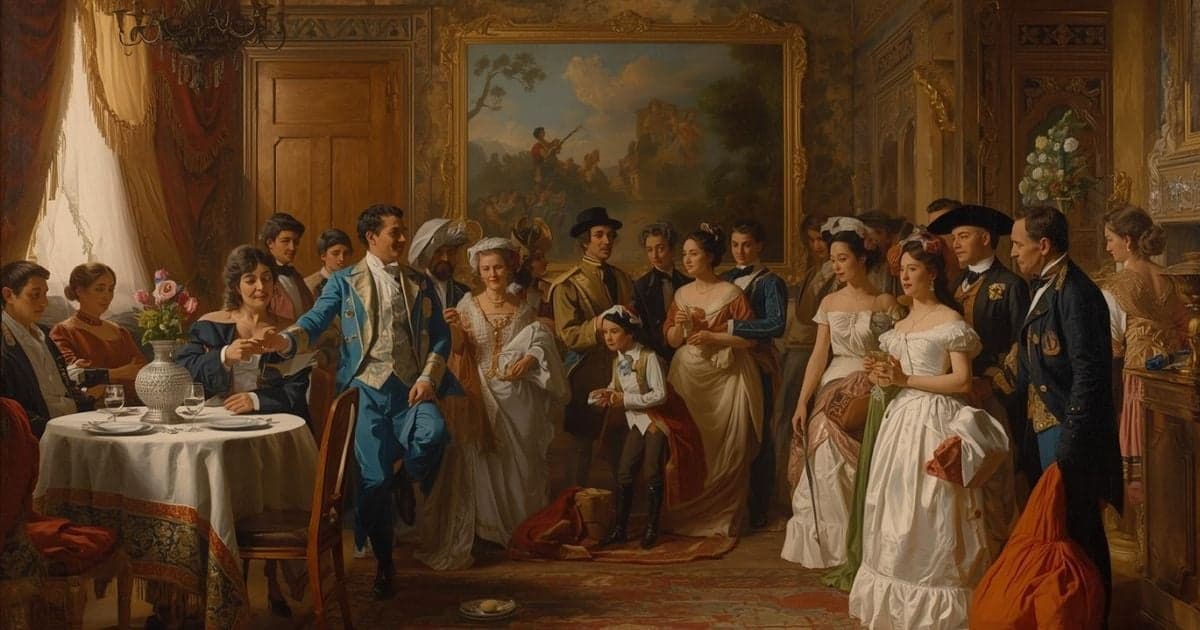
e will leave Villefort on the road to Paris, travelling—thanks to trebled fees—with all speed, and passing through two or three apartments, enter at the Tuileries the little room with the arched window, so well known as having been the favorite closet of Napoleon and Louis XVIII., and now of Louis Philippe.

There, seated before a walnut table he had brought with him from Hartwell, and to which, from one of those fancies not uncommon to great people, he was particularly attached, the king, Louis XVIII., was carelessly listening to a man of fifty or fifty-two years of age, with gray hair, aristocratic bearing, and exceedingly gentlemanly attire, and meanwhile making a marginal note in a volume of Gryphius’s rather inaccurate, but much sought-after, edition of Horace—a work which was much indebted to the sagacious observations of the philosophical monarch.

“You say, sir——” said the king.

“That I am exceedingly disquieted, sire.”

“Really, have you had a vision of the seven fat kine and the seven lean kine?”

1 / 17

Master this chapter. Complete your experience

Purchase the complete book to access all chapters and support classic literature

Read Free on GutenbergBuy at Powell'sBuy on Amazon

As an Amazon Associate, we earn a small commission from qualifying purchases at no additional cost to you.

Available in paperback, hardcover, and e-book formats

GO ADS FREE — JOIN US

Why This Matters

Connect literature to life

Skill: Recognizing Necessary Transformation

This chapter teaches how to identify when your core beliefs and approaches have become obstacles to your survival and success.

Practice This Today

This week, notice when your usual way of handling situations consistently fails—that's your signal that transformation, not just adjustment, might be needed.

GO ADS FREE — JOIN US

Now let's explore the literary elements.

Key Quotes & Analysis

"The young man who had entered the Château d'If was dead; in his place stood a man of thirty-three, with a face bronzed by the sun and eyes that had seen too much."

— Narrator

Context: After Dantès emerges from the sea and realizes his complete transformation

This quote captures the total psychological transformation that has occurred. The innocent young sailor is literally dead - replaced by someone who has been hardened by suffering and injustice. The physical description shows time has passed, but the real change is in his eyes.

In Today's Words:

The kid who went in is gone forever - what came out is someone who's seen how cruel the world really is.

"I must be patient and cunning. The world has shown me no mercy; I shall show it none in return."

— Dantès

Context: His thoughts as he plans his future after escaping

This reveals his complete shift in worldview. He's learned that playing fair gets you destroyed, so he's adopting the same ruthless tactics used against him. This is the birth of the Count of Monte Cristo's calculating nature.

In Today's Words:

They played dirty with me, so I'm done being the nice guy. Time to beat them at their own game.

"The treasure of Monte Cristo was real, and with it, I could become anything I chose to be."

— Dantès

Context: Realizing he now has the means for his transformation and revenge

This shows how knowledge and resources can completely change someone's possibilities. The treasure isn't just money - it's the key to reinventing himself and gaining the power to challenge those who wronged him.

In Today's Words:

Now I've got the money and connections to completely reinvent myself and go after the people who screwed me over.

Thematic Threads

Identity

In This Chapter

Dantès completely sheds his old identity as trusting young sailor and emerges as someone harder and more calculating

Development

Evolved from gradual disillusionment in prison to complete psychological rebirth

In Your Life:

You might experience this when a major betrayal or failure forces you to completely change how you approach relationships or work.

Class

In This Chapter

Dantès now possesses both knowledge and treasure that will allow him to move in higher social circles

Development

Developed from his working-class sailor origins through education and now potential wealth

In Your Life:

You see this when education, money, or connections suddenly give you access to social circles that were previously closed to you.

Personal Growth

In This Chapter

Growth through destruction—becoming stronger by abandoning weakness rather than building on existing strengths

Development

Shifted from gradual learning in prison to radical transformation through escape

In Your Life:

This happens when you realize that getting better requires letting go of comfortable but limiting parts of yourself.

Human Relationships

In This Chapter

Dantès has learned that trust and friendship can be weaponized against you by those with power

Development

Evolved from betrayal by friends to complete rejection of naive trust

In Your Life:

You experience this when workplace politics or family dynamics teach you that being too open makes you vulnerable to manipulation.

GO ADS FREE — JOIN US

You now have the context. Time to form your own thoughts.

Discussion Questions

  1. 1

    What specific changes happened to Dantès during his escape, both physically and mentally?

    analysis • surface
  2. 2

    Why does Dantès have to 'kill' his old trusting self to survive in his new reality?

    analysis • medium
  3. 3

    Where do you see people in your life having to become harder or more strategic to protect themselves?

    application • medium
  4. 4

    If you had to reinvent yourself for survival, what parts of your personality would you keep and what would you change?

    application • deep
  5. 5

    What does this transformation reveal about the difference between staying innocent and staying smart?

    reflection • deep

Critical Thinking Exercise

10 minutes

Map Your Own Metamorphosis

Think of a time when life forced you to become tougher or more strategic than you naturally wanted to be. Draw two columns: 'Old Me' and 'New Me.' List the specific traits, beliefs, or behaviors you had to change. Then identify what you gained and what you lost in the transformation.

Consider:

  • •Was this change necessary for your survival or success?
  • •What positive qualities did you manage to keep through the change?
  • •How did becoming more strategic actually serve your values, not betray them?

Journaling Prompt

Write about a situation where you had to choose between staying naive and getting hurt, or becoming more guarded and protecting yourself. What did that transformation teach you about the real world?

GO ADS FREE — JOIN US

Coming Up Next...

Chapter 11: The Corsican Ogre

Free but alone on a desolate island, Dantès must figure out how to survive and find his way back to civilization. His first taste of freedom brings new challenges he never anticipated.

Continue to Chapter 11
Previous
The Evening of the Betrothal
Contents
Next
The Corsican Ogre

Continue Exploring

The Count of Monte Cristo Study GuideTeaching ResourcesEssential Life IndexBrowse by ThemeAll Books
Moral Dilemmas & EthicsPower & CorruptionIdentity & Self-Discovery

You Might Also Like

Les Misérables: Essential Edition cover

Les Misérables: Essential Edition

Victor Hugo

Explores justice & fairness

The Strange Case of Dr Jekyll and Mr Hyde cover

The Strange Case of Dr Jekyll and Mr Hyde

Robert Louis Stevenson

Explores power & authority

Crime and Punishment cover

Crime and Punishment

Fyodor Dostoevsky

Explores suffering & resilience

Moby-Dick cover

Moby-Dick

Herman Melville

Explores suffering & resilience

Browse all 47+ books
GO ADS FREE — JOIN US

Share This Chapter

Know someone who'd enjoy this? Spread the wisdom!

TwitterFacebookLinkedInEmail

Read ad-free with Prestige

Get rid of ads, unlock study guides and downloads, and support free access for everyone.

Subscribe to PrestigeCreate free account
Intelligence Amplifier
Intelligence Amplifier™Powering Wide Reads

Exploring human-AI collaboration through books, essays, and philosophical dialogues. Classic literature transformed into navigational maps for modern life.

2025 Books

→ The Amplified Human Spirit→ The Alarming Rise of Stupidity Amplified→ San Francisco: The AI Capital of the World
Visit intelligenceamplifier.org
hello@widereads.com

WideReads Originals

→ You Are Not Lost→ The Last Chapter First→ The Lit of Love→ Wealth and Poverty→ 10 Paradoxes in the Classics · coming soon
Arvintech
arvintechAmplify your Mind
Visit at arvintech.com

Navigate

  • Home
  • Library
  • Essential Life Index
  • How It Works
  • Subscribe
  • Account
  • About
  • Contact
  • Authors
  • Suggest a Book
  • Landings

Made For You

  • Students
  • Educators
  • Families
  • Readers
  • Literary Analysis
  • Finding Purpose
  • Letting Go
  • Recovering from a Breakup
  • Corruption
  • Gaslighting in the Classics

Newsletter

Weekly insights from the classics. Amplify Your Mind.

Legal

  • Privacy Policy
  • Terms of Service
  • Cookie Policy
  • Accessibility

Why Public Domain?

We focus on public domain classics because these timeless works belong to everyone. No paywalls, no restrictions—just wisdom that has stood the test of centuries, freely accessible to all readers.

Public domain books have shaped humanity's understanding of love, justice, ambition, and the human condition. By amplifying these works, we help preserve and share literature that truly belongs to the world.

A Pilgrimage

Powell's City of Books

Portland, Oregon

If you ever find yourself in Portland, walk to the corner of Burnside and 10th. The building takes up an entire city block. Inside is over a million books, new and used on the same shelf, organized by color-coded rooms with names like the Rose Room and the Pearl Room. You can lose an afternoon. You can lose a weekend. You will find a book you have been looking for your whole life, and three you did not know existed.

It is a pilgrimage. We cannot find a bookstore like it anywhere on earth. If you read the classics, and you ever get the chance, go. It belongs on every reader's bucket list.

Visit powells.com

We are not in any way affiliated with Powell's. We are just a very big fan.

© 2026 Wide Reads™. All Rights Reserved.

Intelligence Amplifier™ and Wide Reads™ are proprietary trademarks of Arvin Lioanag.

Copyright Protection: All original content, analyses, discussion questions, pedagogical frameworks, and methodology are protected by U.S. and international copyright law. Unauthorized reproduction, distribution, web scraping, or use for AI training is strictly prohibited. See our Copyright Notice for details.

Disclaimer: The information provided on this website is for general informational and educational purposes only and does not constitute professional, legal, financial, or technical advice. While we strive to ensure accuracy and relevance, we make no warranties regarding completeness, reliability, or suitability. Any reliance on such information is at your own risk. We are not liable for any losses or damages arising from use of this site. By using this site, you agree to these terms.