
The Brothers Karamazov
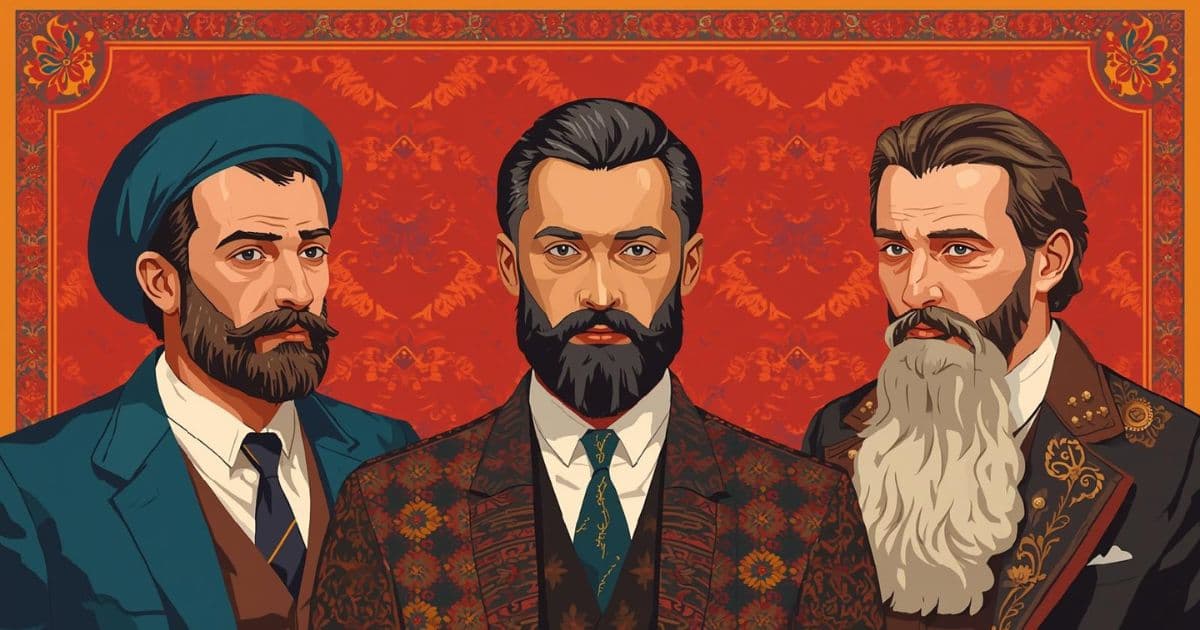
Fyodor Dostoevsky
Essential truths through The Brothers Karamazov
Bread Instead of Freedom
Sit in the tavern while Ivan returns his ticket, then hear a cardinal in Seville explain why people prefer bread to freedom.
The Mind That Cannot Land
Follow Ivan from one reptile will devour the other to a hanging and a devil who talks like a poor relation.
The Karamazovs come to the monastery to talk about money, and the meeting turns into a scandal before anyone has settled a rouble. Fyodor Pavlovich plays the fool. Dmitri shouts. Ivan watches. Alyosha stands in his novice's robe and cannot make them decent. Then the elder Zosima bows to the ground before Dmitri. Dmitri has already said he will kill his father. Both men want Grushenka. Dostoevsky published The Brothers Karamazov in 1879 and 1880, his last novel. The rest of the book spends that bow: a blessing, a warning, and a debt that will be collected in a kitchen the town does not count as a son's.
Fyodor Pavlovich is a landowner, a buffoon, and a father who treats his sons as props. Dmitri, the eldest, wants the three thousand roubles he believes his mother left him and cannot stop spending what he does not have. Ivan has come home from the university with arguments instead of affection. Alyosha lives under Zosima and still has to walk back into the house. Smerdyakov, the cook, is the fourth son the town will not name as a brother, born of Stinking Lizaveta and kept by the stove. Grushenka holds father and eldest in the same town. Katerina Ivanovna holds a drunken letter that will later look like proof. The pressure among them is money, lust, and a sentence about God that someone in the kitchen is taking as permission.
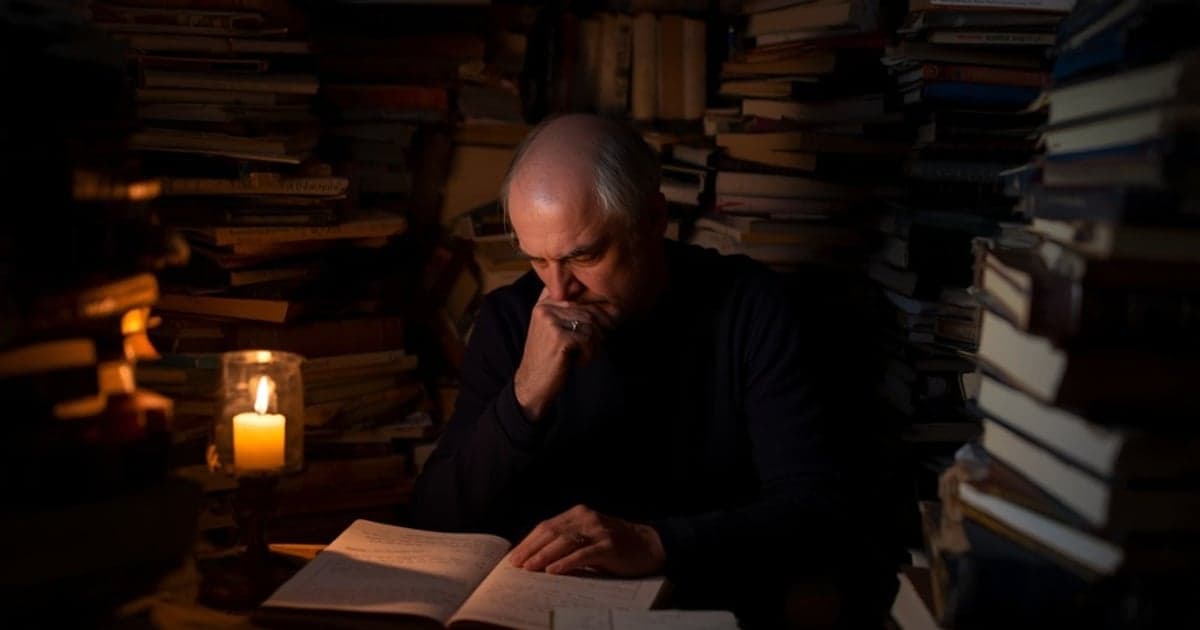
Ivan takes Alyosha to a tavern and returns his ticket. He will not accept a harmony purchased with the torture of children: a serf boy torn by dogs, a five-year-old locked in a freezing outhouse. Then he tells the parable. Christ comes back to Seville. The Grand Inquisitor arrests him and explains the correction. People do not want freedom. They want bread, miracle, and someone to obey. Alyosha kisses him the way Christ kissed the Inquisitor. Zosima dies in those same days. The body smells. The town takes the odor as a verdict. Alyosha leaves the monastery and goes to Grushenka, who tells him the story of the onion. Dmitri takes a brass pestle, climbs the garden fence, and spies on his father waiting at the window. He strikes Grigory and runs. That night Smerdyakov murders Fyodor with a paperweight, takes the envelope of notes, and fakes a fit. Dmitri finds Grushenka at Mokroye, throws a last feast with the fifteen hundred sewn into an amulet, and is arrested with blood on his hands. He did not kill his father. He wanted to. The town treats the want as the act.
Dostoevsky built the book in twelve parts and an epilogue: a family novel, a murder trial, and a theological argument that will not stay in the tavern. He died four months after the last installment. The crime is named early. The book spends the rest of its pages on who taught the blow. Smerdyakov tells Ivan he did it because Ivan taught him that if God does not exist, everything is permitted. He hands over the three thousand and hangs himself. A devil sits in Ivan's room and talks like a poor relation. At the trial Katerina produces Dmitri's letter. The jury convicts. Plans are laid for an escape to America. In the epilogue the boy Ilyusha dies. Alyosha speaks to the schoolboys at the stone and tells them they will rise again and remember that they were kind.
The first pressure is already in that monastery cell: a bow nobody asked for, and a son who has already said the killing out loud. The Grand Inquisitor's Challenge is the tavern, the returned ticket, and a cardinal in Seville who says people want bread and a quiet conscience more than freedom. When Doubt Becomes Identity is the longer wreck, from one reptile will devour the other to a hanging and a devil who sounds like a poor relation. Love in Action vs Love in Dreams is Zosima telling a visitor that beautiful feelings are cheap, then Alyosha doing the harder work at Ilyusha's stone. Recognizing Intellectual Responsibility is how fast a sentence about God becomes a paperweight in a dark room. Understanding Vicarious Guilt is Dmitri on the fence with a pestle, convicted of a murder he only wanted. Breaking Generational Dysfunction is the boys at the stone, and whether anyone in this house can stop repeating the father.
The fifteen hundred roubles stay sewn in Dmitri's amulet while the town convicts him of stealing three thousand. Wide Reads keeps summaries, quotes, and audio on all ninety-six chapters, from a monastery meeting that settled nothing to a stone where schoolboys are told to remember they were kind.
The Essential Truths through The Brothers Karamazov
Theme-by-theme chapter breakdowns of the essential life skills in this classic novel.
The Grand Inquisitor's Challenge
Ivan returns his ticket in a tavern, then a cardinal in Seville explains the correction. Across eight chapters from the rebellion to the trial, Dostoevsky traces why people might want bread, miracle, and a quiet conscience more than freedom, and why Christ's only answer is a kiss.
When Doubt Becomes Identity
One reptile will devour the other is a sentence before it is a hanging. Ten chapters follow Ivan from tavern sophistication to a devil who sounds like a poor relation, as doubt hardens into the permission Smerdyakov was waiting for.
Love in Action vs Love in Dreams
10 chapters from Zosima's cheap beautiful feelings to Alyosha at Ilyusha's stone: unglamorous labor for a specific person.
Recognizing Intellectual Responsibility
8 chapters on how fast a sentence about God becomes a paperweight in a dark room.
Understanding Vicarious Guilt
8 chapters from the fence and the pestle to a conviction for a murder Dmitri only wanted.
Breaking Generational Dysfunction
8 chapters from abandoned sons to the boys at the stone: whether anyone can stop repeating the father.
Table of Contents
Meet the Karamazov Patriarch
Some people are brilliant at money and bankrupt at being human. Fyodor Pavlovitch Karamazov is the t...
When Parents Abandon Their Children
Some parents do not attack their children; they forget them. After Adelaïda's death, Fyodor abandons...
The Second Marriage's Dark Pattern
Escaping one cage often means walking into another. Sixteen-year-old Sofya Ivanovna marries Fyodor a...
The Heart That Trusts Everyone
Some people do not fight corruption; they refuse to mirror it. At twenty Alyosha is no fanatic but a...
The Power of Spiritual Authority
Faith can look like realism when it runs all the way through you. Alyosha at nineteen is healthy and...
First Impressions at the Monastery
Status does not travel the way you expect. Miüsov arrives in an elegant carriage after skipping mass...
The Old Buffoon's Performance
Sacred room, profane guest. In Zossima's cell Miüsov refuses the bowing he now calls theater; Fyodor...
The Healing Power of Being Heard
While the Karamazovs wait inside, Zossima comes to the portico where peasant women press toward the ...
Faith, Love, and Self-Deception
Madame Hohlakov meets Zossima in tears after the peasant scene, praising Russia's splendid people an...
Church vs State Power Debate
Dmitri is late and almost forgotten. When Zossima returns exhausted to his cell, Ivan is already deb...
Family Scandal Erupts
Dmitri arrives late, handsome and strained, eyes that do not match his mood. He bows to Zossima and ...
The Mentor's Final Blessing
Zossima sends Alyosha from his cell to the Father Superior's table, then keeps him with harder news:...
The Scandalous Scene
Miüsov climbs to the Father Superior's dinner ashamed of his own temper, ready to drop the monastery...
The Loyal Servants and Their Burdens
Book Three opens in the servants' lodge behind the gray Karamazov house. Fyodor locks himself in at ...
The Town's Holy Fool
Lizaveta wanders the town barefoot in a hemp smock, treated as an idiot dear to God while gifts pass...
Dmitri's Passionate Confession Begins
Alyosha leaves the monastery scandal unruffled by his father's order to pack up forever; he knows th...
The Power of Moral Blackmail
Dmitri keeps confessing in the summer-house, insisting his father's tales of buying innocence are li...
Dmitri's Desperate Confession
Dmitri tells Alyosha the first half of his story was drama in the garrison town; the second half is ...
Meeting the Mysterious Smerdyakov
Alyosha finds his father still at table with Ivan, coffee, and the servants in good spirits. Fyodor ...
Faith, Logic, and Loopholes
Balaam's ass speaks at table: Grigory tells the newspaper story of a soldier flayed alive rather tha...
Truth and Brandy Don't Mix
After the controversy, Fyodor Pavlovitch turns peevish, drinks more brandy, and sends the servants a...
Violence Erupts in the Karamazov House
Dmitri bursts in hunting Grushenka, knocks Grigory down, breaks through the locked inner door, and f...
When Two Worlds Collide
Alyosha leaves his father's house in despair, unable to fit the day's fragments together. Ivan's han...
About Fyodor Dostoevsky
Published 1880
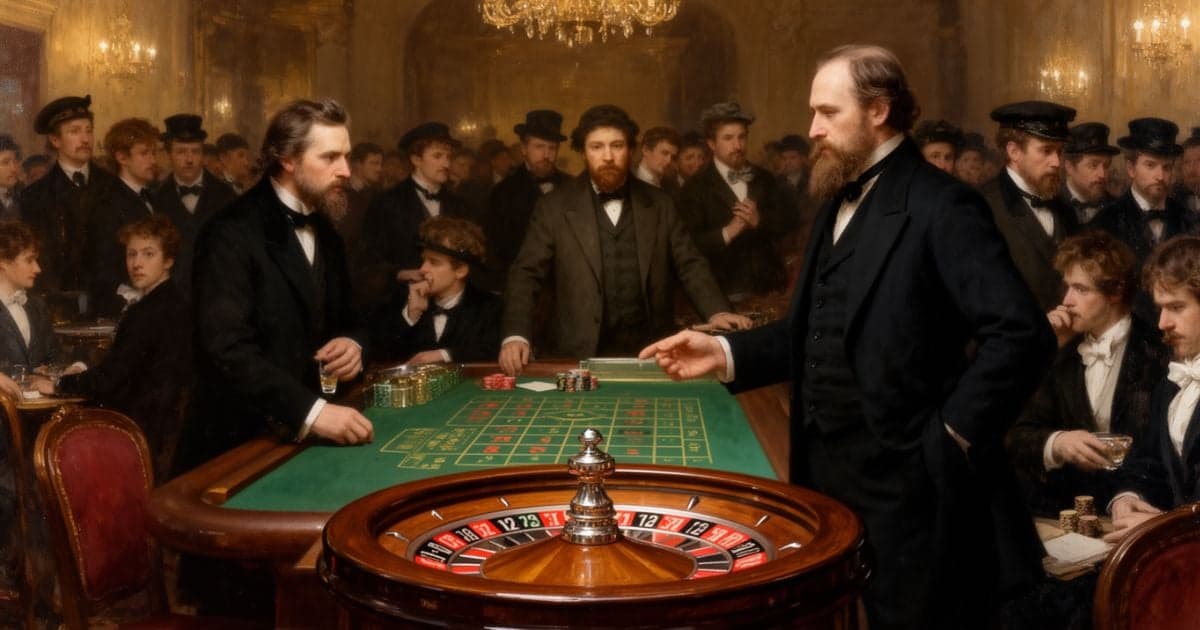
Fyodor Dostoevsky (1821-1881) wrote The Brothers Karamazov in the last two years of his life. He was fifty-eight. He had survived a mock execution, four years in a Siberian prison camp, epilepsy, gambling debts, and the death of his three-year-old son Alyosha from a seizure. He gave the youngest Karamazov that name. He meant the book as his last word on faith, doubt, and whether a person answers for the ideas he sets loose.
The novel ran in The Russian Messenger from 1879 to 1880. Dostoevsky died in January 1881, four months after the last installment. Ivan's refusal of a universe that tortures children is Dostoevsky's own horror given a speaking part. Alyosha's active love is the answer he could practice but never quite prove. The book is a family novel, a murder trial, and a theological argument at once.
Readers still come to it when they need to watch a mind try to think its way out of guilt and fail. It does not settle the argument. It makes both sides too alive to dismiss.
Why This Author Matters Today
Reading Fyodor Dostoevsky is an act of self-discovery — one that tends to be more unsettling, and more rewarding, than you expect. Their work doesn't offer easy answers. It offers something rarer: the right questions. Questions about what we owe each other, what we owe ourselves, and what kind of person we are quietly becoming through the choices we make every day.
What makes Fyodor Dostoevsky indispensable isn't just their insight into human nature — it's their honesty about its contradictions. They understood that people are capable of extraordinary courage and ordinary cowardice, often in the same breath. That we can hold convictions firmly and abandon them the moment they cost us something. That the gap between who we think we are and who we actually are is where most of life's real drama lives.
In an age of noise, distraction, and the constant pressure to perform certainty we don't feel,Fyodor Dostoevsky is a corrective. Their pages slow you down and ask you to look more carefully — at the world, yes, but especially at yourself. Few writers have done more to show us that thinking well is not an academic exercise but a survival skill, and that the examined life is not a luxury but the only honest way to live.
More by Fyodor Dostoevsky in Our Library
Wide Reads is different.
not a sparknotes, nor a cliffnotes
Two ways in
Read & listen to the summary
Walk with the characters. Hear the story told completely — chapter by chapter, with audio. Feel what they feel. The meaning arrives because you experienced it, not because someone listed bullet points. Every chapter has a summary that speaks.
Start with this.
Read the original text
The manuscript. The actual words the author wrote. Every book on Wide Reads includes the original text alongside the summary — so you can read Austen as Austen wrote her, Dostoevsky as he wrote his. Use the summary as a guide, then step into the source.
Then step into the source.
Either way, the door opens inward.
As you enter the realm — each chapter goes deeper
— and most of all, Why does this matter?
Get the Full Book
Purchase the complete book to access all chapters and support classic literature
Available in paperback, hardcover, and e-book formats
You Might Also Like
Free to read • No account required
