Wide Reads
Literature MattersLife IndexEducators
Sign in
Where to Begin
The Brothers Karamazov - A Hymn and a Secret

Fyodor Dostoevsky

The Brothers Karamazov

A Hymn and a Secret

Home›Books›The Brothers Karamazov›Chapter 73
Previous
73 of 96
Next

Summary

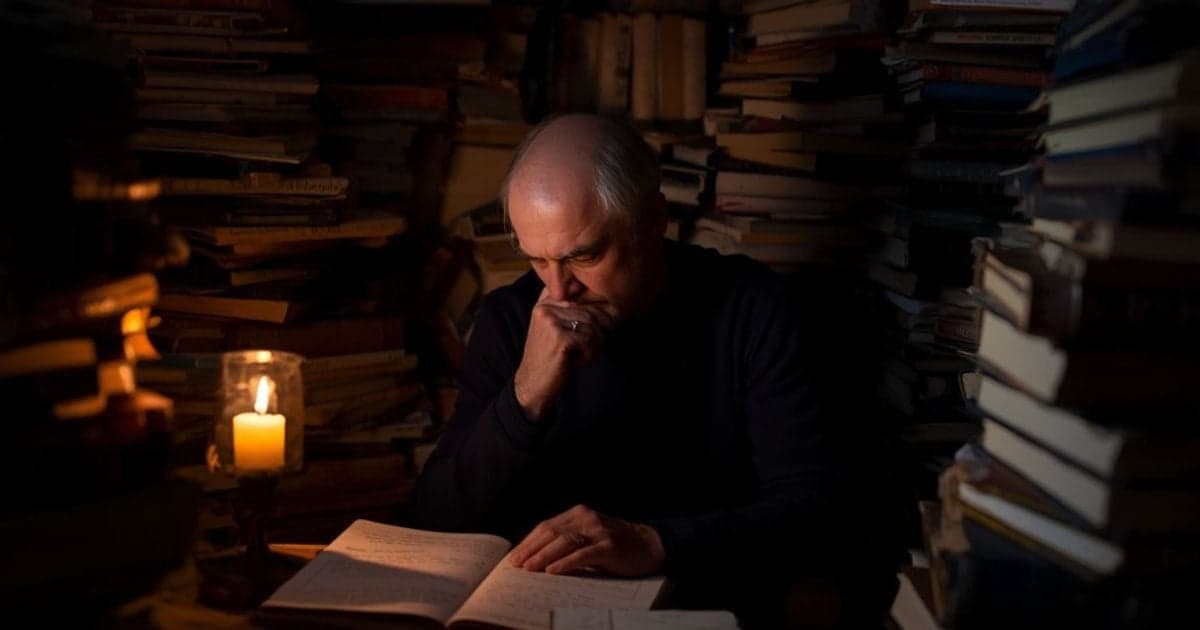
Alyosha visits Mitya in prison on the eve of his trial, finding his brother transformed by his ordeal. Mitya has been listening to Rakitin's materialist philosophy—that humans are just chemistry and nerves, that God doesn't exist—yet paradoxically feels 'sorry to lose God.' Despite facing possible conviction for murder, Mitya has discovered a 'new man' within himself, someone who could find meaning even breaking rocks in Siberian mines. He speaks passionately about singing hymns underground, about taking responsibility for all suffering, especially 'the babes'—the innocent and vulnerable. The chapter reveals Mitya's spiritual awakening through suffering, contrasting sharply with Rakitin's cynical opportunism. Rakitin plans to write about Mitya's case to launch his career, viewing everything through the lens of social utility and personal advancement. Meanwhile, Ivan has proposed an escape plan to America, creating a moral dilemma for Mitya between accepting suffering as redemption or fleeing to freedom with Grushenka. The chapter culminates in Mitya's desperate need for Alyosha's faith in his innocence—a moment of profound vulnerability that reveals how isolation and doubt can devastate even the strongest spirits. Through Mitya's transformation, Dostoevsky explores how genuine spiritual awakening often emerges from our darkest moments.

Coming Up in Chapter 74

Alyosha rushes to see Ivan, deeply troubled by both brothers' spiritual crises. What he discovers about Ivan's state of mind will shake him to his core, as the brilliant but tormented brother faces his own reckoning with guilt and responsibility.

Share it with friends

Previous ChapterNext Chapter
GO ADS FREE — JOIN US
Original text
complete·5,797 words
A

Hymn And A Secret

It was quite late (days are short in November) when Alyosha rang at the prison gate. It was beginning to get dusk. But Alyosha knew that he would be admitted without difficulty. Things were managed in our little town, as everywhere else. At first, of course, on the conclusion of the preliminary inquiry, relations and a few other persons could only obtain interviews with Mitya by going through certain inevitable formalities. But later, though the formalities were not relaxed, exceptions were made for some, at least, of Mitya’s visitors. So much so, that sometimes the interviews with the prisoner in the room set aside for the purpose were practically tête‐à‐tête.

1 / 30

Master this chapter. Complete your experience

Purchase the complete book to access all chapters and support classic literature

Read Free on GutenbergBuy at Powell'sBuy on Amazon

As an Amazon Associate, we earn a small commission from qualifying purchases at no additional cost to you.

Available in paperback, hardcover, and e-book formats

GO ADS FREE — JOIN US

Why This Matters

Connect literature to life

Skill: Recognizing Transformative Moments

This chapter teaches how to identify when our hardest experiences might be opportunities for profound personal growth rather than just problems to escape.

Practice This Today

This week, notice when you face a difficult choice between the easy path and the harder but more meaningful one—ask yourself what new version of you might emerge from taking responsibility rather than avoiding consequences.

GO ADS FREE — JOIN US

Now let's explore the literary elements.

Key Quotes & Analysis

"I'm sorry to lose God!"

— Mitya

Context: After listening to Rakitin's materialist arguments about God not existing

This reveals Mitya's spiritual struggle—intellectually he might accept Rakitin's logic, but emotionally he recognizes that losing faith means losing meaning and hope. It shows how spiritual beliefs aren't just intellectual positions but sources of comfort and purpose.

In Today's Words:

Even if you're right that there's no higher power, I hate losing that hope.

"I want to suffer for all. There are no guilty ones!"

— Mitya

Context: Explaining his newfound spiritual understanding to Alyosha

Mitya has discovered the concept of universal responsibility—that we're all connected and share in both suffering and healing. This represents his complete transformation from selfish hedonist to someone who sees meaning in taking on pain for others.

In Today's Words:

I want to take responsibility for everyone's pain because we're all in this together.

"The people need me there. I shall go and work in the mines, and I shall sing hymns underground."

— Mitya

Context: Describing how he could find meaning even in Siberian exile

This shows Mitya's complete spiritual transformation—he can now imagine finding purpose and even joy in the worst circumstances. The image of singing hymns underground represents finding light in darkness, hope in despair.

In Today's Words:

Even if I end up in the worst place possible, I'll find a way to help people and keep my spirit alive.

Thematic Threads

Spiritual Awakening

In This Chapter

Mitya discovers his 'new man' through imprisonment and impending trial

Development

Evolved from his earlier reckless hedonism to genuine self-reflection

In Your Life:

You might find your deepest insights come during your most challenging periods

Cynical Opportunism

In This Chapter

Rakitin plans to exploit Mitya's tragedy to launch his writing career

Development

Consistent with his earlier manipulation and social climbing

In Your Life:

You've likely encountered people who see your struggles as their opportunities

Moral Choice

In This Chapter

Mitya must choose between Ivan's escape plan and accepting responsibility

Development

Builds on the novel's exploration of free will versus determinism

In Your Life:

You face daily choices between taking the easy way out or doing what's right

Faith and Doubt

In This Chapter

Mitya feels 'sorry to lose God' while absorbing materialist philosophy

Development

Mirrors Ivan's earlier theological struggles but with different resolution

In Your Life:

You might struggle between what your heart believes and what your mind questions

Brotherhood

In This Chapter

Mitya desperately needs Alyosha's faith in his innocence

Development

Shows the ongoing importance of family bonds despite conflicts

In Your Life:

You need people who believe in you even when you doubt yourself

GO ADS FREE — JOIN US

You now have the context. Time to form your own thoughts.

Discussion Questions

  1. 1

    What two different philosophies about life does Mitya encounter in prison, and how does he respond to each?

    analysis • surface
  2. 2

    Why does Mitya say he's 'sorry to lose God' even while listening to Rakitin's materialist arguments?

    analysis • medium
  3. 3

    Where do you see people today choosing between 'escape plans' and accepting responsibility for difficult situations?

    application • medium
  4. 4

    How would you help someone who's facing their own 'dark night' find meaning in their suffering rather than just trying to escape it?

    application • deep
  5. 5

    What does Mitya's transformation suggest about when and how people discover their true strength?

    reflection • deep

Critical Thinking Exercise

10 minutes

Map Your Transformation Moments

Think of a difficult period in your life when you felt stripped down to basics. Draw a simple before-and-after comparison: What did you lose during that time? What unexpected strengths or insights did you discover? How did facing the difficulty change you in ways that avoiding it never could have?

Consider:

  • •Focus on what you gained, not just what you lost
  • •Consider how the struggle itself taught you something
  • •Think about whether you would trade the lesson to undo the pain

Journaling Prompt

Write about a time when you had to choose between an 'escape plan' and staying to face consequences. What influenced your decision, and how do you feel about that choice now?

GO ADS FREE — JOIN US

Coming Up Next...

Chapter 74: The Accusation That Changes Everything

Alyosha rushes to see Ivan, deeply troubled by both brothers' spiritual crises. What he discovers about Ivan's state of mind will shake him to his core, as the brilliant but tormented brother faces his own reckoning with guilt and responsibility.

Continue to Chapter 74
Previous
When Darkness Calls Your Name
Contents
Next
The Accusation That Changes Everything

Continue Exploring

The Brothers Karamazov Study GuideTeaching ResourcesEssential Life IndexBrowse by ThemeAll Books
Moral Dilemmas & EthicsIdentity & Self-DiscoveryLove & Relationships

You Might Also Like

Crime and Punishment cover

Crime and Punishment

Fyodor Dostoevsky

Also by Fyodor Dostoevsky

The Idiot cover

The Idiot

Fyodor Dostoevsky

Also by Fyodor Dostoevsky

Thus Spoke Zarathustra cover

Thus Spoke Zarathustra

Friedrich Nietzsche

Explores morality & ethics

Hamlet cover

Hamlet

William Shakespeare

Explores morality & ethics

Browse all 47+ books
GO ADS FREE — JOIN US

Share This Chapter

Know someone who'd enjoy this? Spread the wisdom!

TwitterFacebookLinkedInEmail

Read ad-free with Prestige

Get rid of ads, unlock study guides and downloads, and support free access for everyone.

Subscribe to PrestigeCreate free account
Intelligence Amplifier
Intelligence Amplifier™Powering Wide Reads

Exploring human-AI collaboration through books, essays, and philosophical dialogues. Classic literature transformed into navigational maps for modern life.

2025 Books

→ The Amplified Human Spirit→ The Alarming Rise of Stupidity Amplified→ San Francisco: The AI Capital of the World
Visit intelligenceamplifier.org
hello@widereads.com

WideReads Originals

→ You Are Not Lost→ The Last Chapter First→ The Lit of Love→ Wealth and Poverty→ 10 Paradoxes in the Classics · coming soon
Arvintech
arvintechAmplify your Mind
Visit at arvintech.com

Navigate

  • Home
  • Library
  • Essential Life Index
  • How It Works
  • Subscribe
  • Account
  • About
  • Contact
  • Authors
  • Suggest a Book
  • Landings

Made For You

  • Students
  • Educators
  • Families
  • Readers
  • Literary Analysis
  • Finding Purpose
  • Letting Go
  • Recovering from a Breakup
  • Corruption
  • Gaslighting in the Classics

Newsletter

Weekly insights from the classics. Amplify Your Mind.

Legal

  • Privacy Policy
  • Terms of Service
  • Cookie Policy
  • Accessibility

Why Public Domain?

We focus on public domain classics because these timeless works belong to everyone. No paywalls, no restrictions—just wisdom that has stood the test of centuries, freely accessible to all readers.

Public domain books have shaped humanity's understanding of love, justice, ambition, and the human condition. By amplifying these works, we help preserve and share literature that truly belongs to the world.

A Pilgrimage

Powell's City of Books

Portland, Oregon

If you ever find yourself in Portland, walk to the corner of Burnside and 10th. The building takes up an entire city block. Inside is over a million books, new and used on the same shelf, organized by color-coded rooms with names like the Rose Room and the Pearl Room. You can lose an afternoon. You can lose a weekend. You will find a book you have been looking for your whole life, and three you did not know existed.

It is a pilgrimage. We cannot find a bookstore like it anywhere on earth. If you read the classics, and you ever get the chance, go. It belongs on every reader's bucket list.

Visit powells.com

We are not in any way affiliated with Powell's. We are just a very big fan.

© 2026 Wide Reads™. All Rights Reserved.

Intelligence Amplifier™ and Wide Reads™ are proprietary trademarks of Arvin Lioanag.

Copyright Protection: All original content, analyses, discussion questions, pedagogical frameworks, and methodology are protected by U.S. and international copyright law. Unauthorized reproduction, distribution, web scraping, or use for AI training is strictly prohibited. See our Copyright Notice for details.

Disclaimer: The information provided on this website is for general informational and educational purposes only and does not constitute professional, legal, financial, or technical advice. While we strive to ensure accuracy and relevance, we make no warranties regarding completeness, reliability, or suitability. Any reliance on such information is at your own risk. We are not liable for any losses or damages arising from use of this site. By using this site, you agree to these terms.