Chapter 54
When Duty Calls at Midnight
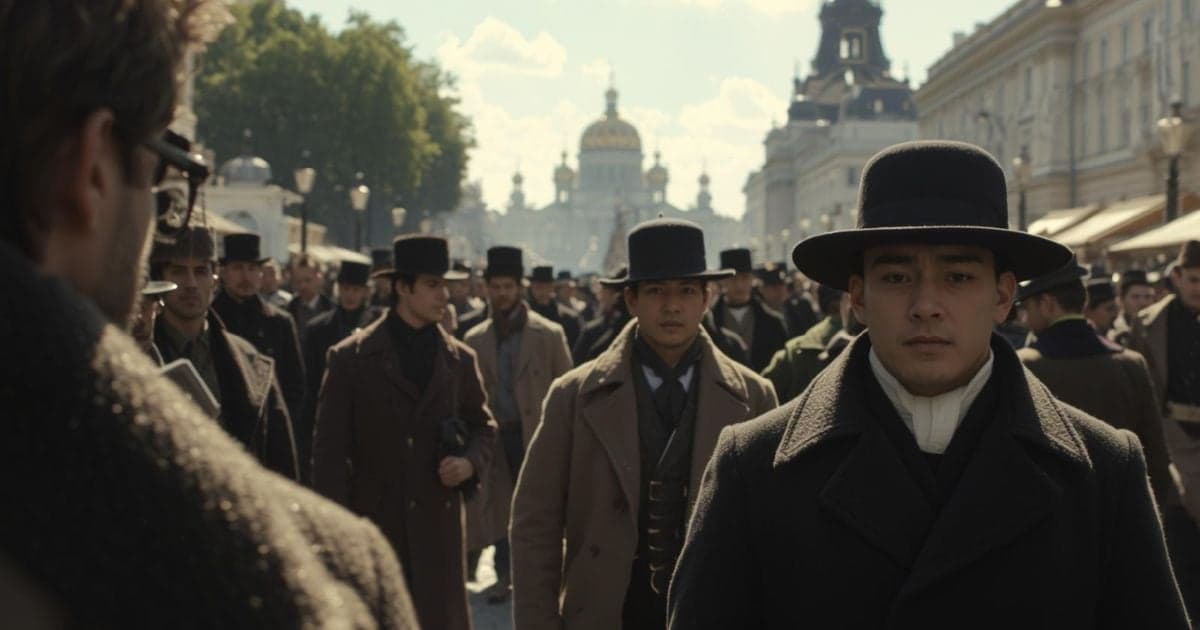
The Beginning Of Perhotin’s Official Career Pyotr Ilyitch Perhotin, whom we left knocking at the strong locked gates of the widow Morozov’s house, ended, of course, by making himself heard. Fenya, who was still excited by the fright she had had two hours before, and too much “upset” to go to bed, was almost frightened into hysterics on hearing the furious knocking at the gate. Though she had herself seen him drive away, she fancied that it must be Dmitri Fyodorovitch knocking again, no one else could knock so savagely. She ran to the house‐porter, who had already waked up…
Public-domain chapter text, formatted for reading.
Master this chapter. Complete your experience
Purchase the complete book to access all chapters and support classic literature
Available in paperback, hardcover, and e-book formats
Now let's explore the literary elements.
Key Quotes & Analysis
"he had snatched up a pestle from the mortar, and that when he returned, the pestle was not with him and his hands were smeared with blood."
Context: Pyotr Ilyitch learns the facts in Fenya’s kitchen
The missing pestle turns rumor into sequence. Blood without the tool points Perhotin toward the father’s house.
In Today's Words:
She says he grabbed the pestle when he ran out and came back without it, hands covered in blood. That is how a community begins a murder story: one object missing, one stain visible. Before you repeat the tale, ask what was seen and what fear added. Perhotin will carry that sequence to Hohlakov and the police.
"that that was human blood, and that he had just killed some one."
Context: When she asked why his hands were bloody
Mitya’s confession to a servant spreads faster than law. Fenya’s terror magnifies drops into rivers in her retelling.
In Today's Words:
Fenya says Mitya told her it was human blood and that he had just killed someone, then ran off like a madman. A confession in panic becomes evidence for everyone who hears it. When someone speaks in shock, write down the words and separate them from the screams that follow.
"scandal was what Pyotr Ilyitch dreaded more than anything in the world."
Context: Why he hesitates to knock at Fyodor Pavlovitch’s gate
Social shame competes with moral alarm. The man who dreads scandal still drives himself to Hohlakov and the police.
In Today's Words:
The narrator says Perhotin feared scandal more than anything, which is why he dreaded waking a landowner at midnight. That is the brake on many honest people: not indifference, but reputation. Notice when your fear of looking foolish is the real reason you delay a necessary call. He goes anyway, which is the whole chapter.
"foundation of the whole career of that practical and precise young man."
Context: Closing reflection on the Hohlakov interview
One night of reluctant action launches an official life. Conscience, once obeyed, becomes profession.
In Today's Words:
The book says this strange visit to a widow at eleven at night became the base of Perhotin’s entire career. Small choices at high stakes define people more than temperament. When you act once on what you cannot ignore, you may find you have trained yourself for every later duty. Book IX begins in that choice.
Thematic Threads
Moral Responsibility
In This Chapter
Perhotin wrestles with whether to act on his suspicions about Dmitri, ultimately choosing conscience over comfort
Development
Building from earlier themes of family duty and social obligation into individual moral courage
In Your Life:
You face this when you witness workplace harassment, unsafe conditions, or family abuse—do you speak up or look away?
Class Anxiety
In This Chapter
Perhotin worries about the social awkwardness of late-night visits and potential embarrassment with upper-class Hohlakov
Development
Continues the novel's exploration of how social position affects moral choices
In Your Life:
You might hesitate to report problems because you fear how it will look to supervisors or people with more status.
Truth vs. Appearance
In This Chapter
Perhotin seeks verification of Dmitri's claims rather than accepting surface explanations, getting written testimony from Hohlakov
Development
Echoes the novel's ongoing tension between what seems true and what is actually true
In Your Life:
You encounter this when someone's story doesn't add up—do you dig deeper or accept the convenient explanation?
Individual Agency
In This Chapter
Despite his cautious nature, Perhotin chooses to act independently rather than delegate responsibility to others
Development
Shows how personal choice can override natural temperament when stakes are high enough
In Your Life:
You discover this when crisis forces you to step up beyond your comfort zone, revealing strength you didn't know you had.
Social Networks
In This Chapter
Perhotin navigates multiple relationships—Fenya, Hohlakov, the authorities—to piece together the truth
Development
Demonstrates how individual actions ripple through community connections
In Your Life:
You see this when one person's crisis affects everyone in your circle—coworkers, family, neighbors—requiring careful navigation.
You now have the context. Time to form your own thoughts.
Discussion Questions
This is not a test. Five prompts guide you through the chapter, from how it opens to how it closes, so you notice context and rhythm rather than facts to memorize. Sit with each question in your own words. When you see "One way to read it," treat it as a starting point, not the only answer.
- 1
What does Fenya tell Perhotin about the pestle, the blood, and Mitya’s words?
analysis • surfaceOne way to read it
Fenya tells Perhotin that Mitya snatched the brass pestle, returned with hands smeared in blood, said he had killed someone, and galloped toward Mokroe. The servant's testimony links weapon, blood, and confession before anyone reaches the lodge.
- 2
Why does Perhotin fear scandal, and why does he go to Hohlakov instead of straight to Fyodor’s house?
analysis • mediumOne way to read it
Perhotin dreads scandal and awkwardness more than crime, yet he keeps following the trail. He goes to Hohlakov near eleven in his dressing-gown because her sworn statement about the three thousand may clarify motive before he acts publicly.
- 3
What does Madame Hohlakov say about the three thousand and what note does she write?
application • mediumOne way to read it
She shrieks that Mitya tried to murder her, insists she never lent him three thousand, and writes a sworn statement to that effect. The note sends Perhotin onward with official denial of the loan the town will still dispute.
- 4
Where is Perhotin going at the chapter’s end, and what does the narrator say it meant for his career?
application • deepOne way to read it
He rides to the police captain with Hohlakov's note and the pestle story confirmed in his notebook. The narrator says this night made his career. A fussy man who feared embarrassment became the official who set the investigation moving.
- 5
When have you almost stayed silent because involvement felt embarrassing?
reflection • deepOne way to read it
Perhotin is no hero by temperament but cannot let the night go. People often know something is wrong yet hesitate because speaking up means scrutiny. His choice shows embarrassment outweighed by dread of being wrong in public if he stayed quiet.
Critical Thinking Exercise
Map Your Moral Courage Decision Tree
Create a personal decision-making framework for situations where you witness potential wrongdoing. Start with a real or hypothetical scenario where you might need to choose between staying quiet and speaking up. Map out the key questions you would ask yourself, the evidence you would gather, and the support systems you would activate before taking action.
Consider:
- •What level of evidence or certainty would you need before acting?
- •Who in your life could provide guidance or support if you decided to speak up?
- •How would you protect yourself from potential retaliation while still doing the right thing?
Journaling Prompt
Write about a time when you witnessed something wrong but chose not to act, or when you did speak up despite personal risk. What did you learn about yourself and your values from that experience?
Coming Up Next...
Chapter 55: When Authority Responds to Crisis
Perhotin's midnight mission continues as he finally takes his evidence to the police captain, setting off an official investigation that will change everything for the Karamazov family Book IX begins not at the crime scene but at Police Captain Makarov's house, where card-players and dancing girls make a little capital of sociability. By chance the prosecutor Ippolit Kirillovitch, the new doctor, and young Nikolay.