Chapter 09
Dignity Over Desperation
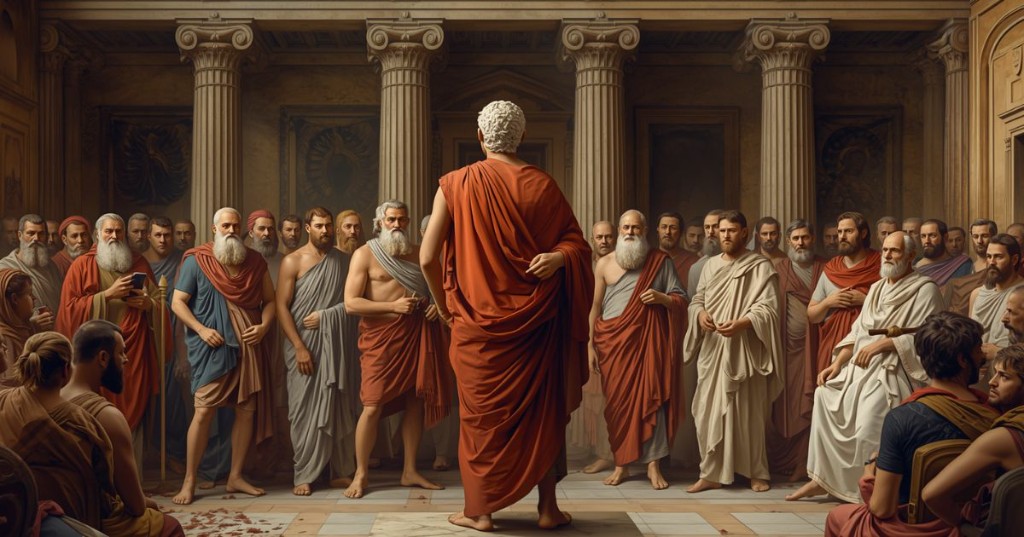
have to offer. Yet a word more. Perhaps there may be some one who is offended at me, when he calls to mind how he himself on a similar, or even a less serious occasion, prayed and entreated the judges with many tears, and how he produced his children in court, which was a moving spectacle, together with a host of relations and friends; whereas I, who am probably in danger of my life, will do none of these things. The contrast may occur to his mind, and he may be set against me, and vote in anger because he…
Public-domain chapter text, formatted for reading.
Master this chapter. Complete your experience
Purchase the complete book to access all chapters and support classic literature
Available in paperback, hardcover, and e-book formats
Now let's explore the literary elements.
Key Quotes & Analysis
"I have a family, yes, and sons, O Athenians, three in number, one almost a man, and two others who are still young; and yet I will not bring any of them hither in order to petition you for an acquittal."
Context: Answering the juror who expects tears and family spectacle
He admits the stakes before refusing the performance; humanity makes the refusal meaningful.
In Today's Words:
Socrates admits he is flesh and blood with three sons, one almost a man and two still young, yet he will not bring them to petition for acquittal. He refuses the moving spectacle other defendants use even when facing death. Having everything to lose can make a principled refusal more credible, not less.
"such conduct would be discreditable to myself, and to you, and to the whole state."
Context: Giving his first reason for refusing a desperate appeal
The courtroom spectacle shames everyone involved, not only the defendant.
In Today's Words:
Socrates says parading children and weeping would discredit himself, the jury, and the whole state of Athens. Men held up as wise who grovel at the last moment teach the city that principle collapses under pressure. Public breakdowns for sympathy can humiliate the institution watching them as much as the person performing.
"his duty is, not to make a present of justice, but to give judgment; and he has sworn that he will judge according to the laws, and not according to his own good pleasure; and we ought not to encourage you, nor should you allow yourselves to be encouraged, in this habit of perjury—there can be no piety in that."
Context: Explaining why asking favors of judges is wrong
Justice is not a gift exchanged for tears; judges swear to decide by law.
In Today's Words:
A judge's duty is not to make a present of justice but to give judgment according to law and oath. Socrates says encouraging jurors to decide by pity teaches perjury, not piety. When someone asks you to bend rules out of sympathy, name what oath or standard would break.
"I should be teaching you to believe that there are no gods, and in defending should simply convict myself of the charge of not believing in them."
Context: Explaining why emotional appeals would prove the impiety charge true
Begging the jury to ignore their oaths treats sacred promises as theater, which would be real impiety.
In Today's Words:
If Socrates overpowered the jury's oaths through entreaty, he would teach them oaths mean nothing and convict himself of impiety while defending against impiety. Begging would show he does not believe sacred promises matter. How you ask for mercy can confirm the charge you deny.
Thematic Threads
Class
In This Chapter
Socrates refuses to perform the expected role of a desperate defendant, maintaining dignity despite social pressure to conform
Development
Builds on earlier themes of how class expectations shape behavior and social performance
In Your Life:
You might feel pressure to act a certain way in professional or family situations that contradict your actual values
Identity
In This Chapter
Socrates defines himself by his principles rather than by what others expect or what might save him
Development
Deepens the exploration of authentic self versus performed self from previous chapters
In Your Life:
You face moments where being true to yourself conflicts with what others want or expect from you
Social Expectations
In This Chapter
The court expects emotional theater and manipulation, but Socrates deliberately violates these unspoken rules
Development
Continues the theme of challenging social norms and expectations established throughout the trial
In Your Life:
You encounter situations where 'everyone does it this way' but that way feels wrong to you personally
Personal Growth
In This Chapter
Socrates demonstrates that growth means staying consistent with your values even when it's costly
Development
Builds on the idea that wisdom involves understanding what truly matters versus what appears urgent
In Your Life:
You realize that real maturity sometimes means accepting negative consequences rather than compromising your principles
Human Relationships
In This Chapter
Socrates shows respect for the judges by refusing to manipulate them, treating them as rational beings capable of justice
Development
Extends the theme of honest communication and mutual respect from earlier interactions
In Your Life:
You build stronger relationships by being direct and honest rather than trying to manipulate outcomes through emotional tactics
You now have the context. Time to form your own thoughts.
Discussion Questions
This is not a test. Five prompts guide you through the chapter, from how it opens to how it closes, so you notice context and rhythm rather than facts to memorize. Sit with each question in your own words. When you see "One way to read it," treat it as a starting point, not the only answer.
- 1
Why will Socrates not bring his three sons into court to plead for his acquittal?
analysis • surfaceOne way to read it
He has sons but will not use them to petition; such conduct would discredit himself, the jury, and the whole state.
- 2
How does Socrates say theatrical begging affects the reputation of Athens?
analysis • mediumOne way to read it
Men reputed for wisdom who grovel make the city ridiculous; strangers would say eminent Athenians are no better than women at the last moment.
- 3
When might asking for mercy corrupt the decision-maker rather than help your case?
application • mediumOne way to read it
Asking a favor invites judges to break their oath to decide by law; Socrates says that would teach them oaths mean nothing.
- 4
Why does Socrates argue that emotional appeals could prove the impiety charge against him?
application • deepOne way to read it
If he overpowered their oaths through tears, he would show he does not believe in gods or sacred promises, convicting himself on the very charge he faces.
- 5
What would you refuse to perform even under pressure if performing it would betray what you stand for?
reflection • deepOne way to read it
Socrates refuses theatrical begging though he could die; you might name refusing lies, public groveling, or manipulating family to win sympathy.
Critical Thinking Exercise
Map Your Pressure Points
Think of three different areas where you face regular pressure: work, family, finances, or health. For each area, write down what tactics you've seen people use when they get desperate, and what you've observed happens to their relationships and reputation afterward. Then identify what your own 'non-negotiable' principles are in each area.
Consider:
- •Notice the difference between temporary relief and long-term consequences
- •Consider how others remember your behavior under pressure
- •Think about what you want to be known for when things get difficult
Journaling Prompt
Write about a time when you maintained your principles despite pressure to compromise. What did it cost you in the short term, and what did you gain in the long term?
Coming Up Next...
Chapter 10: Facing Death with Dignity
The jury has spoken, and Socrates faces their verdict. His reaction to the decision reveals surprising insights about fear, expectations, and what it truly means to accept consequences with grace.