Chapter 02
The Power of Plain Truth
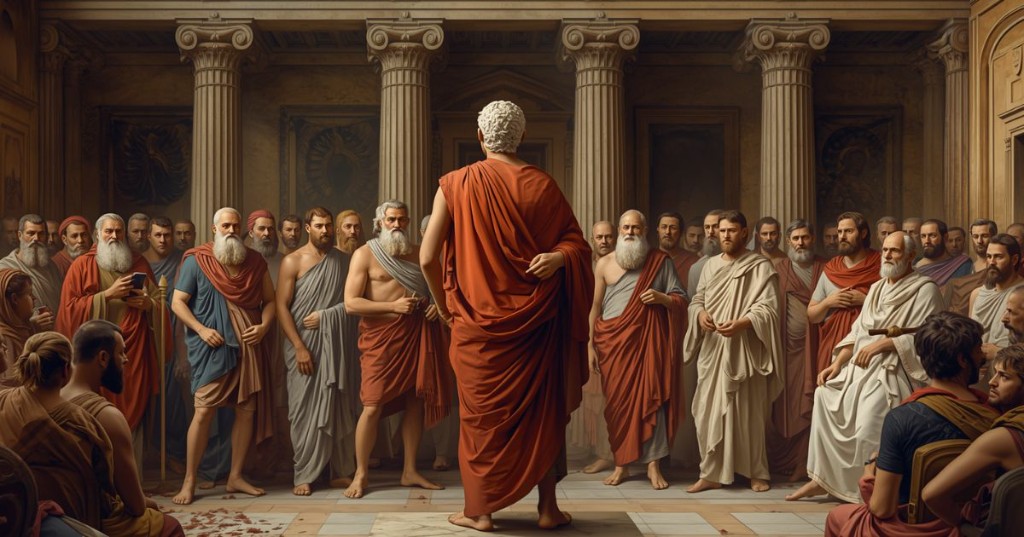
How you, O Athenians, have been affected by my accusers, I cannot tell; but I know that they almost made me forget who I was—so persuasively did they speak; and yet they have hardly uttered a word of truth. But of the many falsehoods told by them, there was one which quite amazed me;—I mean when they said that you should be upon your guard and not allow yourselves to be deceived by the force of my eloquence. To say this, when they were certain to be detected as soon as I opened my lips and proved myself to be…
Public-domain chapter text, formatted for reading.
Master this chapter. Complete your experience
Purchase the complete book to access all chapters and support classic literature
Available in paperback, hardcover, and e-book formats
Now let's explore the literary elements.
Key Quotes & Analysis
"I know that they almost made me forget who I was—so persuasively did they speak; and yet they have hardly uttered a word of truth."
Context: Opening line of the defense
He names how close persuasion came to working, then immediately separates style from truth.
In Today's Words:
They almost got inside my head with how well they spoke, and almost nothing they said was true. Socrates admits persuasion nearly worked on him before he separates eloquence from accuracy. In any high-stakes meeting, notice when style lands first and ask what evidence supports the story.
"unless by the force of eloquence they mean the force of truth; for if such is their meaning, I admit that I am eloquent."
Context: Redefining the accusers' warning about his eloquence
He accepts the label only on his terms: truth, not ornament, is the force he claims.
In Today's Words:
If eloquence means the force of truth, Socrates will accept the title, but his truth and theirs are not the same thing. He turns the accusers' warning back on them by redefining the word they used to frighten the jury. When someone labels you dangerous or persuasive, ask what definition they are smuggling in.
"but from me you shall hear the whole truth: not, however, delivered after their manner in a set oration duly ornamented with words and phrases."
Context: Contrasting his plain speech with polished courtroom rhetoric
He rejects performance as the price of being heard. Truth will arrive unornamented, or not at all.
In Today's Words:
You will get the full truth from Socrates, but not dressed up like a lawyer's set speech with polished phrases. He promises completeness without the ornamental style the court expects from a juvenile orator. That is a useful standard anywhere: full honesty does not require corporate packaging.
"let the speaker speak truly and the judge decide justly."
Context: His single request before the defense continues
The whole opening collapses into one standard: truth from the speaker, justice from the jury.
In Today's Words:
Ignore how it sounds and ask if it is true, then judge fairly. Socrates asks the jury to treat him like a stranger speaking plainly rather than punishing his lack of courtroom polish. Before your next review or dispute, state the standard you want: truth from speakers, justice from decision-makers.
Thematic Threads
Authenticity
In This Chapter
Socrates chooses plain speaking over courtroom rhetoric, making his inexperience a sign of honesty rather than weakness
Development
Introduced here as core defense strategy
In Your Life:
You might see this when deciding whether to adopt corporate speak in meetings or speak in your natural voice
Class
In This Chapter
Socrates positions himself as an outsider to legal formalities, comparing himself to a foreigner who deserves patience
Development
Introduced here through legal system dynamics
In Your Life:
You might see this when navigating professional environments where you feel like an outsider due to background or experience
Identity
In This Chapter
At seventy, Socrates refuses to change his speaking style to match expectations, staying true to who he is
Development
Introduced here as resistance to performance pressure
In Your Life:
You might see this when facing pressure to change your personality or communication style to fit in
Social Expectations
In This Chapter
The courtroom expects polished rhetoric, but Socrates deliberately subverts this expectation to expose his accusers' emptiness
Development
Introduced here through courtroom dynamics
In Your Life:
You might see this when social situations demand certain behaviors that don't align with your values or natural style
Truth vs Performance
In This Chapter
Socrates contrasts his honest, plain speaking with his accusers' slick but empty presentation
Development
Introduced here as central conflict
In Your Life:
You might see this when choosing between saying what people want to hear versus what you actually believe
You now have the context. Time to form your own thoughts.
Discussion Questions
This is not a test. Five prompts guide you through the chapter, from how it opens to how it closes, so you notice context and rhythm rather than facts to memorize. Sit with each question in your own words. When you see "One way to read it," treat it as a starting point, not the only answer.
- 1
Why does Socrates say his accusers almost made him forget who he was?
analysis • surfaceOne way to read it
They spoke so persuasively that he nearly lost his footing, yet he adds they said hardly a word of truth.
- 2
How does Socrates redefine eloquence when answering the warning about his dangerous speech?
analysis • mediumOne way to read it
If eloquence means the force of truth, he accepts the label, but his truth arrives without ornamental set speeches.
- 3
When have you been warned about someone's persuasion before they actually spoke?
application • mediumOne way to read it
One way to read it: pre-hearing labels like difficult or disruptive often arrive before facts, the way the accusers warned the jury about Socrates' eloquence.
- 4
What does Socrates ask the jury to do if he speaks in his accustomed agora manner?
application • deepOne way to read it
He asks them not to be surprised or interrupt, to treat him like a stranger using his native tongue, and to judge the truth of his words rather than courtroom polish.
- 5
What would it cost you to refuse performance in a situation where everyone expects polish?
reflection • deepOne way to read it
You may lose sympathy or seem unprepared, but Socrates suggests the deeper cost of performing is letting style hide whether your words are true.
Critical Thinking Exercise
Test the Authenticity Strategy
Think of a situation where you need to defend a decision, ask for something important, or address criticism. Write two versions: one using polished, formal language trying to impress, and another using Socrates's plain-speaking approach where you acknowledge your limitations but focus on your core message. Compare which version feels more honest and which you'd trust more if you heard it from someone else.
Consider:
- •Notice which version requires you to pretend or perform versus just being yourself
- •Consider how acknowledging weaknesses upfront might actually strengthen your position
- •Think about which approach would build longer-term trust with your audience
Journaling Prompt
Write about a time when someone's honesty about their limitations made you trust them more, or when your own authenticity worked better than trying to impress. What did you learn about the power of being genuine?
Coming Up Next...
Chapter 3: Fighting Shadows and Old Lies
Socrates turns his attention to the deeper threat: not his current accusers, but the whispered rumors that have shaped public opinion for decades. He's about to tackle the most dangerous enemy of all, the one that's been poisoning minds since his audience was young.