
The Analects
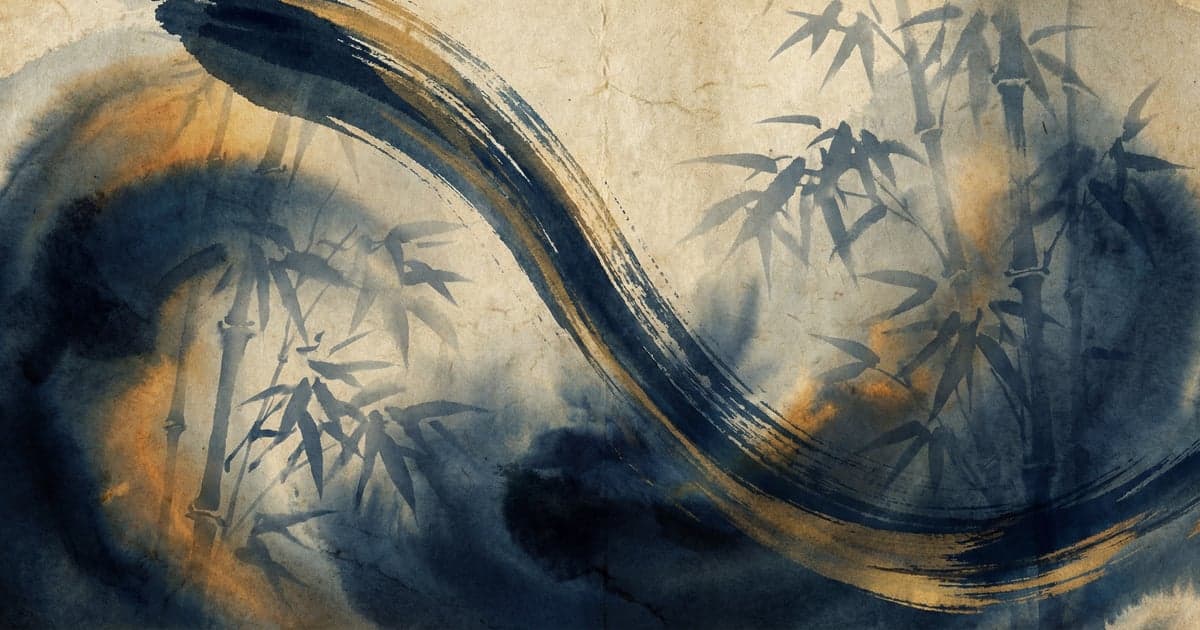
The Analects
A Brief Description
Compiled by the disciples of Confucius after his death in 479 BCE, The Analects is not a systematic treatise but a collection of conversations: short exchanges between the master and his students on how to live, lead, and become fully human. It is one of the most influential books ever written, shaping Chinese civilization for over two thousand years and still read daily across East Asia today.
At the center of everything is ren, often translated as humaneness, benevolence, or loving others. For Confucius, ren is not a feeling but a practice: the daily work of treating people with genuine care and respect. It develops through ritual, relationship, and the relentless effort to refine your own character. Filial piety and steady learning are where that work begins. You cannot be fully human alone. You become yourself through your obligations to others: as a child, a parent, a friend, a citizen.
Confucius was obsessed with the gap between what people are and what they could be. He had little patience for performance without substance: leaders who looked virtuous but relied on punishments rather than cultivating shame and virtue, students who recited the classics but had not internalized them. The Analects is full of blunt, sometimes sharp, assessments of people who had the form of virtue but not the reality.
The book's most practical thread is the concept of the junzi, the exemplary person or noble character. This is not someone born into privilege but someone who has done the work: studied seriously, examined themselves honestly, and made ritual and right conduct habitual. The junzi leads by example. People follow not because they are forced to but because the quality of the character in front of them is unmistakable.
What makes The Analects strange and alive is its incompleteness. The text was assembled after Confucius's death from scattered notes and remembered exchanges, so it reads less like a finished doctrine than an ongoing conversation. He admits what he does not know, revises his answers for different students, and returns again and again to the same questions. The book feels less like a monument and more like a teacher still at work.
Life-Skill Deep Dives
Theme-by-theme chapter breakdowns of the essential skills in this classic work.
Daily Self-Examination
4 books on Tsang's nightly inventory and Confucius on building character through small daily checks before public performance catches up.
Leading by Character Not Force
4 books on how the junzi earns followership through steadiness and example rather than punishment, charm, or rank.
Reading People Before Rhetoric
4 books on Confucius's standard: misreading someone matters more than being misunderstood yourself.
Ritual and Propriety as Structure
4 books on li: why respect, boldness, and honesty need form or they curdle into people-pleasing, fear, or cruelty.
When to Serve and When to Leave
4 books on upright service, principled exit, and refusing complicity without abandoning humanity.
Cultivating the Junzi
4 books on study, self-correction, ritual, and relationships compounding into the exemplary person Confucius keeps pointing toward.
Table of Contents
The Foundation of Character
Confucius starts with a counterintuitive claim: learning should feel good, and a person of real char...
Leadership, Learning, and Character
Confucius opens Book II with one of his best leadership images: a good ruler is like the North Star....
Ritual, Respect, and Real Leadership
Confucius opens with a sharp status test. The Chi family performs an eight-row dance only the ruler ...
Living Your Values Every Day
Confucius starts with a practical life choice: pick a neighborhood known for good character, or you ...
Reading People and Choosing Character
Confucius puts character on the line in marriage and office. He gives his daughter to Kung-ye Ch'ang...
Choosing Your People
Confucius starts with leadership judgment under pressure. He says Yung could stand in a prince's pla...
The Humble Teacher's Way
Confucius defines himself as a transmitter, not an inventor, who loves the ancients and compares him...
Leadership Without Ego
Confucius opens with T'ai-po, who declined a kingdom three times so fully that people could not even...
The Art of True Leadership
Confucius seldom speaks of profit, Heaven's appointments, or perfect virtue, as if some truths resis...
The Art of Showing Respect
Confucius looks simple and reluctant to speak in his village, but in temple and court he is careful ...
Teaching Through Individual Differences
A good teacher knows the room before the lesson. Confucius prefers old ceremonies over polished mode...
The Art of Perfect Virtue
Perfect virtue is not a mood; it is restraint you practice. Yen Yuan asks how; Confucius says subdue...
The Art of Leadership
Leadership starts with sweat, not slogans. Tsze-lu asks about government; Confucius says go before p...
Character, Leadership, and Practical Wisdom
Some people never stop calculating their paycheck. Hsien asks what is shameful; Confucius answers th...
Practical Wisdom for Daily Life
Duke Ling asks about war; Confucius says he knows ritual vessels, not military matters, and leaves. ...
Power, Friendship, and Life's Three Stages
The Chi family plans to attack Chwan-yu. Zan Yu and Chi-lu visit Confucius and say their chief wants...
Politics, Character, and Human Nature
Yang Ho wants Confucius but cannot get a visit. He sends a pig; Confucius pays respects when Ho is o...
When to Stay and When to Walk Away
Book XVIII opens with three answers to a bad king. The Viscount of Wei withdraws from court. The Vis...
The Student and the Master
Book XIX opens with disciples talking past one another. Tsze-chang says a trained scholar faces dang...
The Art of Good Leadership
The Analects ends where Chinese kingship begins. Yao tells Shun the succession now rests with him: h...
About Confucius
Published -479
Confucius (551-479 BCE), known in Chinese as Kong Qiu and honorifically as Kongzi (Master Kong), was born in the small state of Lu in what is now Shandong province. His father died when he was three. He grew up in poverty, educated himself voraciously, and took a series of minor government positions before deciding that the political culture around him was too corrupt to serve with integrity.
He spent much of his adult life as a wandering teacher, traveling between the warring states of Zhou-era China with a circle of devoted students, seeking a ruler who would implement his vision of ethical governance. He never found one. Despite his fame as a thinker, he died in 479 BCE believing himself a failure: his ideas untested, his political ambitions unfulfilled.
He was wrong. His students compiled his teachings into The Analects, and within two centuries his philosophy had become the intellectual foundation of Chinese statecraft. By the Han dynasty (206 BCE-220 CE), Confucianism was the official state ideology, and it remained so, with interruptions, for two thousand years. The imperial examination system, which governed Chinese government for over a millennium, was built on mastery of Confucian texts. Every educated person in China, Korea, Japan, and Vietnam was shaped by his ideas whether they knew it or not.
Confucius believed that the health of a society depended entirely on the quality of its people, not its laws, its wealth, or its military power. Cultivate enough exemplary individuals and good governance follows naturally. Neglect character and all the rules in the world won't save you.
He remains the most influential teacher in human history by almost any measure.
Why This Author Matters Today
Reading Confucius is an act of self-discovery — one that tends to be more unsettling, and more rewarding, than you expect. Their work doesn't offer easy answers. It offers something rarer: the right questions. Questions about what we owe each other, what we owe ourselves, and what kind of person we are quietly becoming through the choices we make every day.
What makes Confucius indispensable isn't just their insight into human nature — it's their honesty about its contradictions. They understood that people are capable of extraordinary courage and ordinary cowardice, often in the same breath. That we can hold convictions firmly and abandon them the moment they cost us something. That the gap between who we think we are and who we actually are is where most of life's real drama lives.
In an age of noise, distraction, and the constant pressure to perform certainty we don't feel,Confucius is a corrective. Their pages slow you down and ask you to look more carefully — at the world, yes, but especially at yourself. Few writers have done more to show us that thinking well is not an academic exercise but a survival skill, and that the examined life is not a luxury but the only honest way to live.
Wide Reads is different.
not a sparknotes, nor a cliffnotes
Two ways in
Read & listen to the summary
Walk with the characters. Hear the story told completely — chapter by chapter, with audio. Feel what they feel. The meaning arrives because you experienced it, not because someone listed bullet points. Every chapter has a summary that speaks.
Start with this.
Read the original text
The manuscript. The actual words the author wrote. Every book on Wide Reads includes the original text alongside the summary — so you can read Austen as Austen wrote her, Dostoevsky as he wrote his. Use the summary as a guide, then step into the source.
Then step into the source.
Either way, the door opens inward.
As you enter the realm — each chapter goes deeper
— and most of all, Why does this matter?
Get the Full Book
Purchase the complete book to access all chapters and support classic literature
Available in paperback, hardcover, and e-book formats
You Might Also Like


Free to read • No account required
