
Beowulf
Unknown
0:00 / 0:00
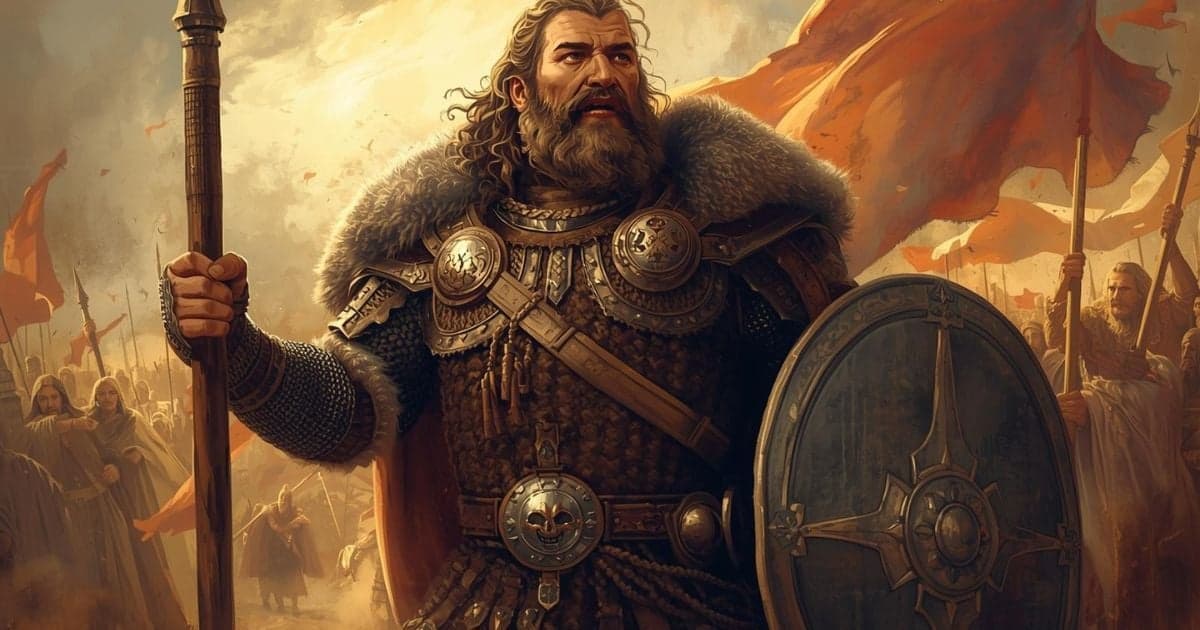
A coast-guard on a Danish shore stops a boat of armed strangers and asks who they think they are. The leader does not brag or threaten. He names his people, his king, and his purpose: he has come to kill the monster that has emptied Heorot for twelve winters. This is Beowulf, the oldest surviving long poem in English, composed somewhere between 700 and 1000 AD by a poet whose name was never recorded. The rest of the poem spends forty-three chapters proving that the monster fights are the easy part. The harder work is what authority costs, what victory wakes up, and what you leave behind when your strength finally fails.
Beowulf is a Geatish warrior who has built a reputation on doing what other men will not. Hrothgar is the aging Danish king whose great hall, Heorot, has become a slaughterhouse. Grendel, a descendant of Cain, raids by night and cannot be bought, reasoned with, or frightened. Unferth is the court warrior who would rather puncture a stranger's story than admit his own hall has failed. Wealhtheow keeps the peace with cups and careful speech. Later, Grendel's mother comes for blood the hall thought it had already paid. Still later, a stolen cup wakes a dragon, Wiglaf is the only thane who walks back into the fire, and an old Beowulf, now king of the Geats, decides to meet the last threat himself.
Beowulf earns the right to enter at the coast-guard's gate before he earns the right to fight. He silences Unferth with the record, not with rage. He waits unarmed in Heorot and rips Grendel's arm from the socket. The hall celebrates, then Grendel's mother kills Hrothgar's closest advisor and Beowulf dives into the mere. He rules the Geats for fifty winters. A thief takes a cup from a barrow. The dragon burns the hall. Beowulf goes out with eleven men and ten of them run. Wiglaf stays. The old king kills the dragon and dies of the wound. His people build a beacon on the headland that sailors will steer by long after the funeral smoke is gone.
The poem never treats this as a simple monster story with a hero attached. It is a study of how authority is made, how winning creates the next problem, and how a life of service looks when the body that did the serving gives out. Courage here is not a mood. It is a sequence: show your credentials, deliver the result, go back in when the job is not done, and transfer what matters before the end. The hall, the mere, and the barrow are the same test at three ages of a career.
Six lessons run under these scenes, each pinned to a moment rather than a label. Heroism shows up as forward motion, not fearlessness: Beowulf names himself at the coast-guard's gate, answers Unferth with the record instead of rage, and dives into the mere when Grendel's mother comes for blood the hall thought it had already paid. Authority tracks a different arc, from Scyld rising out of nothing to Beowulf insisting on leading the dragon fight in person, and finally to Wiglaf, who becomes a leader the moment he refuses to run. Mortality arrives in the dragon: not only a beast but the limit every strong body eventually meets, which is why Beowulf's dying words are about his people and not his own fame. Legacy gathers in the objects the poem keeps returning to: Scyld's ship burial, the gifts that bind a hall together, the beacon built on the headland once the pyre smoke clears. Victory keeps generating its own next threat: Heorot's fame draws Grendel, Grendel's death draws his mother, and one stolen cup ends fifty winters of peace. Stepping up belongs to Wiglaf alone, the single thane who walks back into the fire while ten others run, and that choice hands him command more surely than any title could.
The work that built Beowulf's name is the same work that eventually asks more than he has left, and the people who stay when the room empties turn out to be the only succession plan a hall ever gets. Wide Reads walks the full 43 chapters with summaries, quotes, and audio, out to the barrow on the headland where Wiglaf watches the last smoke go up and the new beacon takes its place.
Lessons from Beowulf
Theme-by-theme chapter breakdowns of the essential skills in this classic work.
Lessons from Beowulf
Theme-by-theme chapter breakdowns of the essential skills in this classic work.Deep dives
Chapter-by-chapter breakdowns
The Dragon at the End
Face mortality when strength fades and transfer what matters before the end
But a little-while lasts thy life-vigor's fulness
What You Leave Behind
Distinguish legacy from reputation: what people do differently because you existed
Scyld then departed to the All-Father's keeping
Table of Contents
The Making of a Legend
Chapter I carries the title "The Life and Death of Scyld" and opens not with the hero of the poem bu...
Building Dreams and Awakening Nightmares
After Scyld's death, his descendants continue to build the Danish kingdom. Hrothgar emerges as a pow...
The Monster's Reign of Terror
Grendel launches his brutal campaign against Heorot, and what starts as a single night of horror bec...
Common Questions About Beowulf
Trending search questions mapped to the lessons in this epic—what readers actually ask Google about Grendel and his mother, heroism, the dragon, earned authority, legacy, and who stays when the hall empties.
What is Beowulf about?
A Geatish warrior crosses the sea to kill the monster that has emptied Hrothgar's hall Heorot for twelve winters. Beowulf names his people at the coast-guard gate, silences Unferth with the record, rips Grendel's arm from the socket, dives into the mere after Grendel's mother, rules the Geats for fifty years, then meets a dragon alone with only Wiglaf at his side. The poem is not only monster fights. It is what authority costs, what victory wakes up, and what you leave when strength fails.
Explore The Only Way Through Is ThroughWho is Grendel in Beowulf?
A descendant of Cain who raids Heorot by night and cannot be bought, reasoned with, or frightened. Hrothgar's hall has been a slaughterhouse for twelve winters when Beowulf arrives. Grendel's defeat feels like deliverance, but the poem treats it as the first movement, not the finale. Kill one monster and the hall's glory has already summoned the next threat waiting in the mere.
Explore When Victory Opens the Next ThreatWho is Grendel's mother in Beowulf?
After Beowulf hangs Grendel's arm in Heorot, the hall sleeps on the trophy and Æschere is dead by morning. Grendel's mother is Cain's kin like her son, and she kills Hrothgar's closest shoulder-companion before retreating to the blood-warm mere. Beowulf borrows Unferth's sword Hrunting, dives a full day, and finds an underwater hall where the blade fails and bare-handed fight decides the ending. The first win rearranges the board and the next threat already knows your name.
Explore When Victory Opens the Next ThreatWhat makes Beowulf a hero in Beowulf?
Not fearlessness but forward motion earned in sequence: credentials at the coast-guard gate, delivery in the hall, return to the mere when the job is not done, and finally staying when ten companions flee the dragon. He silences Unferth with facts, not rage. He rules by generosity and action, then transfers what matters to Wiglaf before the end. Heroism in this poem is a career of showing up when others step back.
Explore The Earned Authority LoopWhy does Beowulf fight the dragon in Beowulf?
After fifty years of rule a thief steals a cup from a barrow and wakes the dragon. Beowulf goes out with eleven men; ten run and Wiglaf stays. The old king kills the beast, dies of the wound, and asks Wiglaf to bring the treasure so he can see what he bought his people before they build a beacon on the headland. The dragon is the limit every strong person eventually meets, and the test of who walks back into fire when the room empties.
Explore The Dragon at the EndWhat life lessons does Beowulf teach?
Six lessons run through the epic: the only way through is through; authority is earned in a loop of action and proof; mortality arrives like a dragon at the end; legacy is what people do differently because you existed; victory opens the next threat if you stop paying attention; and stepping up when others run is how real leadership is revealed. Those skills, not a simple monster story, are why the poem still answers modern searches.
About Unknown
Published 1000
Nobody knows who wrote Beowulf, and that anonymity is itself part of the story. An Anglo-Saxon poet composed it sometime between 700 and 1000 AD, literate in an era when almost no one was, steeped in Scandinavian legend, and versed enough in scripture to braid it into older stories about fate, monsters, and warrior glory. They also had a rare gift for language, coining kennings like whale-road for the sea and ring-giver for a generous king.
The poem survived in a single manuscript, copied around 1000 AD by two scribes. That manuscript nearly did not survive: a 1731 fire at the Cotton Library in London scorched its edges, and scholars raced to transcribe damaged pages before more crumbled away. We have Beowulf today because a handful of people cared enough to save it.
The poet's anonymity fits the poem's own argument. Beowulf reads less like a personal memoir than a cultural inheritance, carrying the values and hard-won wisdom of a people caught between an old world and a new one. The unknown author was not writing to be remembered personally. They were transmitting something worth remembering: authority is earned through action, not granted by title, and what you leave behind is the real measure of a life.
Why the Beowulf Poet Matters Today
The unknown Beowulf poet speaks to the moment when the reputation you built through real action becomes the exact thing everyone now expects you to keep proving: the promotion that came because you stepped up once, the family that assumes you will always handle the crisis, the team that measures you against your best day and forgets you are allowed an ordinary one.
What makes this poet indispensable is the anonymity itself. They wrote for a hall built on cups and gift-giving, where a leader's worth was checked in public, in real time, against what he actually did that winter. The poem never lets Beowulf coast on his coast-guard-gate reputation. Every fight resets the ledger: Grendel, then Grendel's mother, then, fifty years later, a dragon that does not care what he did as a young man.
The mistake most readers make is treating Beowulf as a monster story with a strong man attached. Coaches, executives, and anyone handed a title after doing good work keep finding it because it names the part self-help usually skips: the last fight, the one you take on when your body has already started failing you, and whether you have trained anyone to walk back into the fire after you.
Wide Reads is different.
Plot, characters, and themes — plus audio, source text, and patterns you can use after class
Two ways in
Read & listen to the summary
Chapter by chapter, with audio. The meaning arrives because you experienced it — not because someone listed bullet points.
Start with this.
Read the original text
The actual words the author wrote, alongside every summary. Use the guide, then step into the source.
Then step into the source.
Either way, the door opens inward.
— and most of all, Why does this matter?
Get the Full Book
Purchase the complete book to access all chapters and support classic literature

Available in paperback, hardcover, and e-book formats
You Might Also Like



Free to read • No account required