Wide Reads
Literature MattersLife IndexEducators
Sign in
Where to Begin
Proverbs - Dealing with Difficult People

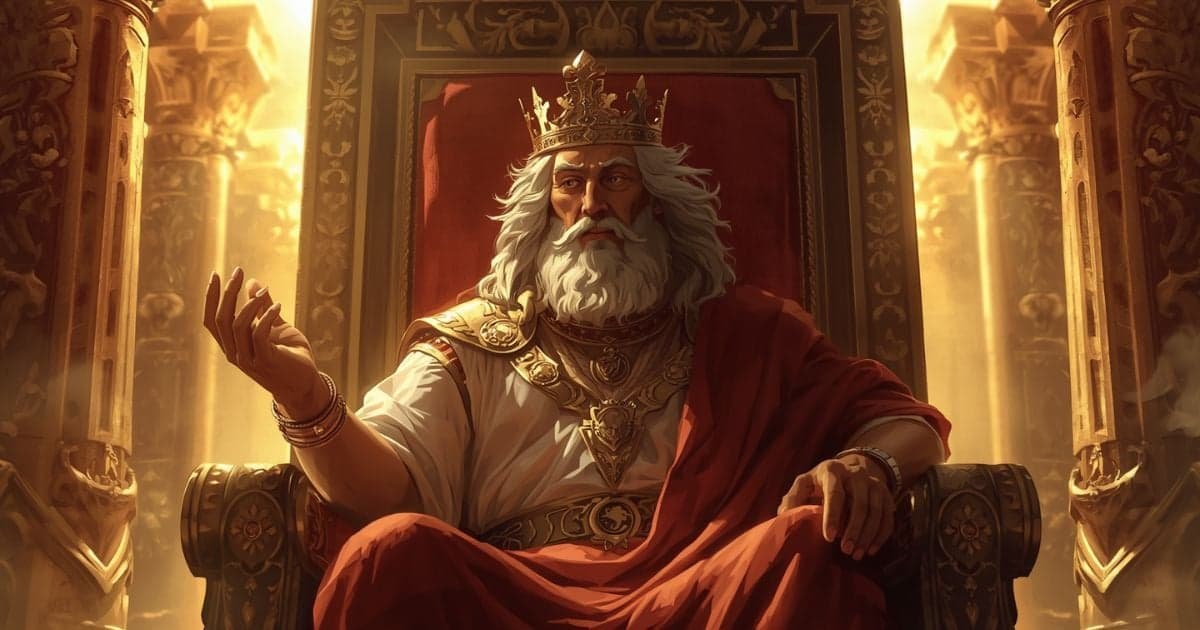
King Solomon (attributed)

Proverbs

Dealing with Difficult People

Home›Books›Proverbs›Chapter 26
Previous
26 of 31
Next

Summary

Dealing with Difficult People

Proverbs by King Solomon (attributed)

0:000:00
Listen to Next Chapter

Chapter 26 is organized into three portrait sections — the fool, the sluggard, and the malicious person — each with its own cluster of observations. The fool section (vv. 1-12) is the most varied and contains the chapter's most famous pair of verses. Verse 4 says: answer not a fool according to his folly, lest you be like him. Verse 5 immediately says: answer a fool according to his folly, lest he be wise in his own conceit. These consecutive and contradictory commands are not a contradiction to be resolved — they are a description of the tension that cannot be resolved. Both are true; wisdom is knowing which applies in any given moment. Also here: as a dog returns to his vomit, so a fool returns to his folly — one of the most quoted images in the entire Bible. And: do you see a man wise in his own conceit? There is more hope of a fool than of him. Self-conceit places someone below even a fool on the scale of recoverability. The sluggard section (vv. 13-16): the slothful man says there is a lion in the way. As the door turns on its hinges, so the sluggard turns on his bed. He hides his hand in his bosom; it grieves him to bring it back to his mouth. The sluggard is wiser in his own conceit than seven men who can give a reason. The malicious person section (vv. 17-28): he that passes by and meddles with strife not his own is like one who takes a dog by the ears — inviting a bite that was not inevitable. As a madman who throws firebrands, arrows, and death, so is the man who deceives his neighbor and then says, Am I not in sport? Where no wood is, the fire goes out; where there is no talebearer, strife ceases. Burning lips and a wicked heart are like a pot sherd covered with silver dross — beautiful on the outside, worthless beneath. Whose hatred is covered by deceit — his wickedness will be shown before the whole congregation. Whoever digs a pit shall fall into it; whoever rolls a stone, it will return upon him. A lying tongue hates those it afflicts, and a flattering mouth works ruin.

Coming Up in Chapter 27

After dealing with difficult people, Solomon turns to something we all struggle with - the temptation to brag about our plans and accomplishments. He's about to reveal why humility isn't just nice, it's smart.

Share it with friends

Previous ChapterNext Chapter
GO ADS FREE — JOIN US
Original text
complete·459 words
A

s snow in summer, and as rain in harvest, so honour is not seemly for a fool.

As the bird by wandering, as the swallow by flying, so the curse causeless shall not come.

A whip for the horse, a bridle for the ass, and a rod for the fool's back.

Answer not a fool according to his folly, lest thou also be like unto him.

Answer a fool according to his folly, lest he be wise in his own conceit.

He that sendeth a message by the hand of a fool cutteth off the feet, and drinketh damage.

The legs of the lame are not equal: so is a parable in the mouth of fools.

As he that bindeth a stone in a sling, so is he that giveth honour to a fool.

As a thorn goeth up into the hand of a drunkard, so is a parable in the mouths of fools.

The great God that formed all things both rewardeth the fool, and rewardeth transgressors.

As a dog returneth to his vomit, so a fool returneth to his folly.

1 / 3

Master this chapter. Complete your experience

Purchase the complete book to access all chapters and support classic literature

Read Free on GutenbergBuy at Powell'sBuy on Amazon

As an Amazon Associate, we earn a small commission from qualifying purchases at no additional cost to you.

Available in paperback, hardcover, and e-book formats

GO ADS FREE — JOIN US

Why This Matters

Connect literature to life

Skill: Reading Energy Patterns

This chapter teaches how to identify people whose behavioral patterns consistently drain others without contributing positive value.

Practice This Today

This week, notice when someone's request or conversation leaves you feeling exhausted rather than energized, then ask yourself what pattern they're repeating.

GO ADS FREE — JOIN US

Now let's explore the literary elements.

Key Quotes & Analysis

"Answer not a fool according to his folly, lest thou also be like unto him. Answer a fool according to his folly, lest he be wise in his own conceit."

— Solomon

Context: Teaching when to engage with difficult people and when to walk away

This seeming contradiction is actually brilliant advice about reading the room. Sometimes arguing back just makes you look foolish too. Other times, you need to shut down their nonsense so they don't think they won.

In Today's Words:

Sometimes don't argue with idiots - they'll drag you down to their level. But sometimes you have to call them out or they'll think they're right.

"Where no wood is, there the fire goeth out: so where there is no talebearer, the strife ceaseth."

— Solomon

Context: Explaining how gossip fuels conflict in relationships and communities

One of the most practical pieces of advice about handling drama. Cut off the fuel source and the fire dies. Stop feeding the gossip mill and the drama stops.

In Today's Words:

Drama dies when you stop feeding it. No gossip, no conflict.

"As a dog returneth to his vomit, so a fool returneth to his folly."

— Solomon

Context: Describing how some people keep making the same mistakes over and over

A disgusting but memorable image that captures how some people are drawn back to destructive behaviors even when they know better. It's about recognizing this pattern in others.

In Today's Words:

Some people keep going back to the same bad choices that hurt them, like a dog eating its own throw-up.

"The slothful man saith, There is a lion in the way; a lion is in the streets."

— Solomon

Context: Mocking the elaborate excuses lazy people make to avoid work

This is ancient sarcasm at its finest. Solomon is calling out people who make ridiculous excuses to avoid doing what they should do. It's so extreme it's almost funny.

In Today's Words:

Lazy people always have dramatic excuses for why they can't do simple tasks.

Thematic Threads

Boundaries

In This Chapter

Solomon shows how to engage or disengage strategically with difficult people rather than being reactive

Development

Builds on earlier wisdom about choosing your battles and protecting your peace

In Your Life:

You might recognize times when you've been drained by people who always seem to need something from you

Social Dynamics

In This Chapter

Detailed analysis of how gossip spreads and how some people ignite conflict wherever they go

Development

Expands from individual character to group dynamics and social poison

In Your Life:

You might notice how certain people always seem to be at the center of workplace or family drama

Personal Responsibility

In This Chapter

Contrasts those who make excuses for everything with the need to take ownership of your responses

Development

Deepens the theme of self-accountability while recognizing others' patterns

In Your Life:

You might catch yourself making excuses or recognize when others consistently avoid responsibility

Deception

In This Chapter

Warning about people who smile to your face while plotting harm, emphasizing the gap between appearance and reality

Development

Builds on earlier themes about discernment and not taking people at face value

In Your Life:

You might remember times when someone's friendliness felt off or when you discovered hidden agendas

Justice

In This Chapter

The principle that those who dig pits for others eventually fall into them themselves

Development

Reinforces the cosmic justice theme that consequences eventually catch up

In Your Life:

You might have witnessed how people who consistently harm others eventually face their own downfall

You now have the context. Time to form your own thoughts.

Discussion Questions

  1. 1

    Solomon describes three types of difficult people: fools who argue endlessly, lazy people who make excuses, and gossips who spread drama. Which type do you encounter most often in your daily life?

    analysis • surface
  2. 2

    Why does Solomon say sometimes you should argue back with a fool and sometimes you shouldn't? What's the difference between these situations?

    analysis • medium
  3. 3

    Think about your workplace or family. Who fits Solomon's description of someone who 'removes wood from the fire' - meaning they actually calm things down when drama starts?

    application • medium
  4. 4

    Solomon warns about people who 'dig pits for others' but end up falling in themselves. How would you handle someone who's actively trying to undermine you without becoming like them?

    application • deep
  5. 5

    What does this chapter teach us about protecting our energy while still being good people? How do you balance helping others with not enabling destructive behavior?

    reflection • deep

Critical Thinking Exercise

10 minutes

Map Your Energy Drains

Draw three columns: Fools (people who argue in circles), Lazy (people who make their problems yours), and Gossips (people who spread drama). List specific people or situations from your life in each column. Then beside each entry, write whether you currently engage, avoid, or set boundaries - and note what results you're getting.

Consider:

  • •Look for patterns in how these behaviors affect your mood and productivity
  • •Notice which responses actually change the dynamic versus which ones feed it
  • •Consider whether you sometimes exhibit these behaviors yourself

Journaling Prompt

Write about one relationship where you've been feeding a destructive pattern. What would happen if you changed your response? What are you afraid might happen if you set a boundary?

Coming Up Next...

Chapter 27: Iron Sharpens Iron: True Friendship

After dealing with difficult people, Solomon turns to something we all struggle with - the temptation to brag about our plans and accomplishments. He's about to reveal why humility isn't just nice, it's smart.

Continue to Chapter 27
Previous
Timing, Boundaries, and Self-Control
Contents
Next
Iron Sharpens Iron: True Friendship

Continue Exploring

Proverbs Study GuideTeaching ResourcesEssential Life IndexBrowse by ThemeAll Books

You Might Also Like

The Dhammapada cover

The Dhammapada

Buddha

Explores morality & ethics

Nicomachean Ethics cover

Nicomachean Ethics

Aristotle

Explores morality & ethics

The Bhagavad Gita cover

The Bhagavad Gita

Vyasa

Explores morality & ethics

The Book of Job cover

The Book of Job

Anonymous

Explores morality & ethics

Browse all 47+ books

Share This Chapter

Know someone who'd enjoy this? Spread the wisdom!

TwitterFacebookLinkedInEmail

Read ad-free with Prestige

Get rid of ads, unlock study guides and downloads, and support free access for everyone.

Subscribe to PrestigeCreate free account
Intelligence Amplifier
Intelligence Amplifier™Powering Wide Reads

Exploring human-AI collaboration through books, essays, and philosophical dialogues. Classic literature transformed into navigational maps for modern life.

2025 Books

→ The Amplified Human Spirit→ The Alarming Rise of Stupidity Amplified→ San Francisco: The AI Capital of the World
Visit intelligenceamplifier.org
hello@widereads.com

WideReads Originals

→ You Are Not Lost→ The Last Chapter First→ The Lit of Love→ Wealth and Poverty→ 10 Paradoxes in the Classics · coming soon
Arvintech
arvintechAmplify your Mind
Visit at arvintech.com

Navigate

  • Home
  • Library
  • Essential Life Index
  • How It Works
  • Subscribe
  • Account
  • About
  • Contact
  • Authors
  • Suggest a Book
  • Landings

Made For You

  • Students
  • Educators
  • Families
  • Readers
  • Literary Analysis
  • Finding Purpose
  • Letting Go
  • Recovering from a Breakup
  • Corruption
  • Gaslighting in the Classics

Newsletter

Weekly insights from the classics. Amplify Your Mind.

Legal

  • Privacy Policy
  • Terms of Service
  • Cookie Policy
  • Accessibility

Why Public Domain?

We focus on public domain classics because these timeless works belong to everyone. No paywalls, no restrictions—just wisdom that has stood the test of centuries, freely accessible to all readers.

Public domain books have shaped humanity's understanding of love, justice, ambition, and the human condition. By amplifying these works, we help preserve and share literature that truly belongs to the world.

A Pilgrimage

Powell's City of Books

Portland, Oregon

If you ever find yourself in Portland, walk to the corner of Burnside and 10th. The building takes up an entire city block. Inside is over a million books, new and used on the same shelf, organized by color-coded rooms with names like the Rose Room and the Pearl Room. You can lose an afternoon. You can lose a weekend. You will find a book you have been looking for your whole life, and three you did not know existed.

It is a pilgrimage. We cannot find a bookstore like it anywhere on earth. If you read the classics, and you ever get the chance, go. It belongs on every reader's bucket list.

Visit powells.com

We are not in any way affiliated with Powell's. We are just a very big fan.

© 2026 Wide Reads™. All Rights Reserved.

Intelligence Amplifier™ and Wide Reads™ are proprietary trademarks of Arvin Lioanag.

Copyright Protection: All original content, analyses, discussion questions, pedagogical frameworks, and methodology are protected by U.S. and international copyright law. Unauthorized reproduction, distribution, web scraping, or use for AI training is strictly prohibited. See our Copyright Notice for details.

Disclaimer: The information provided on this website is for general informational and educational purposes only and does not constitute professional, legal, financial, or technical advice. While we strive to ensure accuracy and relevance, we make no warranties regarding completeness, reliability, or suitability. Any reliance on such information is at your own risk. We are not liable for any losses or damages arising from use of this site. By using this site, you agree to these terms.