
The Bhagavad Gita
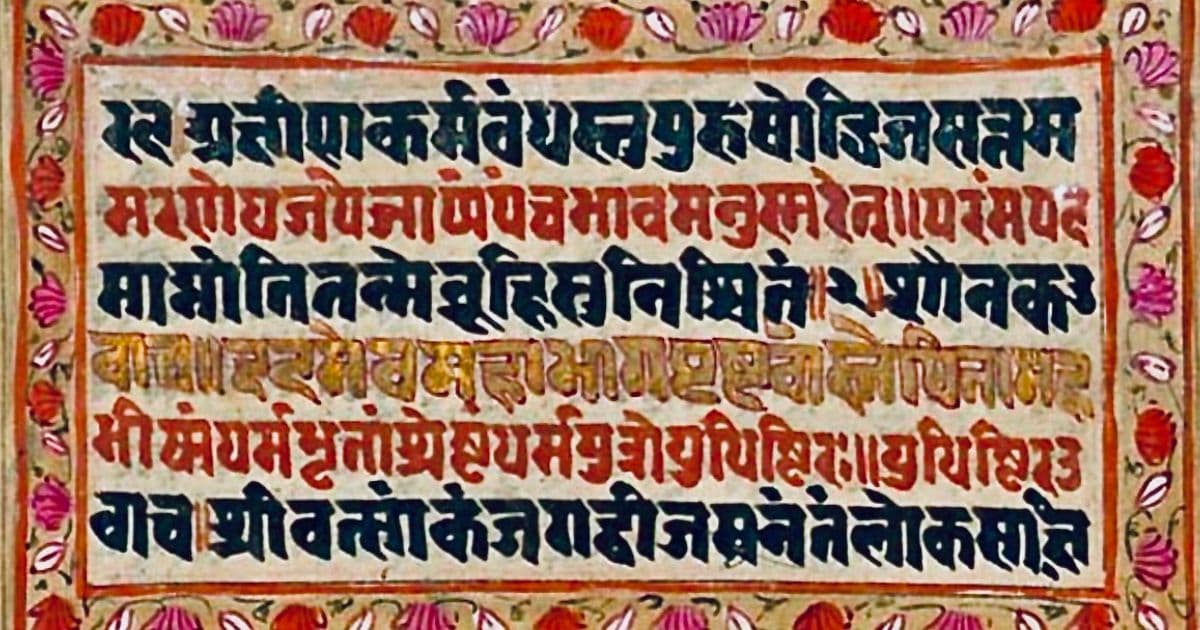
Vyasa
0:00 / 0:00
Arjuna asks Krishna to drive the chariot to the center of Kurukshetra and halt between two armies about to slaughter each other. He looks across the field and sees Bhishma, Drona, cousins, and friends lined up to be killed, and his bow slips from his hands. The Bhagavad Gita is this stalled moment expanded across eighteen chapters of dialogue in the sixth book of the Mahabharata, composed sometime between 400 and 200 BCE. The greatest warrior in the epic cannot lift a weapon until he stops needing a clean outcome to justify the act.
Arjuna is a prince and master bowman, trained for this war, yet so morally awake that seeing his own teachers in the enemy ranks unmakes him. Krishna is his charioteer, cousin, and the one teacher who will not let collapse pass for wisdom. Bhishma and Drona stand in the opposite line as living debts, the men who raised and armed him. Duryodhana has already counted the field as his. Sanjaya reports every spoken word to the blind king Dhritarashtra. The teaching that follows will name the soul that cannot be slain, the three gunas that shape appetite and faith, and four paths Krishna refuses to rank as rivals.
Chapter 1 is collapse before any cure: ill omens, slack hands, a warrior who would rather die unarmed than win this war. Chapter 2 answers with the first hard reframe: the soul is unborn, action is yours, fruit is not, and steady wisdom does not ride gain and loss. Chapter 3 closes the escape hatch of inaction; even sitting still is an act with consequences. Chapter 11 grants Arjuna's request to see Krishna's true form, and the vision is so vast he begs for the familiar face back. Chapter 14 names sattva, rajas, and tamas, the three forces behind food, work, and faith. Chapter 18 gathers the teaching into surrender: do the work that belongs to you, then release the claim that you authored the result.
The compilers never treat the battlefield as scenery, or Krishna's speech as a sermon to file under religion and leave at the temple door. They refuse the comforting claim that the right choice is the one that hurts no one you love. Paralysis here is not cowardice but intelligence seeing a genuine collision of duties. What remains is not permission to stop caring. It is a picture of how to act completely when you cannot control who will be wounded by the act, and how to keep a mind that does not rise and fall with every report from the field.
The bow in the dust comes first. Moving Through Paralysis lives in chapter 1's collapse and chapter 11's vision, which makes the crisis larger before it makes action livable again. Acting Without Attachment begins when chapter 2 gives the right to work without owning fruits, chapter 3 treats even stillness as action, and chapter 18 releases the claim that you authored the outcome. The Three Forces That Drive You is sattva, rajas, and tamas named in chapter 14, then traced through food and faith in chapter 17. The Stable Mind is the sthitaprajna of chapter 2, unshaken by gain and loss, then the same equanimity in honor and disgrace by chapter 18. Knowing What Is Actually Yours holds the soul that cannot be slain in chapter 2 apart from the field and knower of chapter 13. Choosing a Path and Walking It is Krishna's final insistence that karma, jnana, dhyana, or bhakti be taken as one road walked, not four collected and never practiced.
Between the two armies the chariot stays halted while eighteen chapters of speech pass. Arjuna sees the universal form and begs for Krishna's human face again. Wide Reads keeps summaries, quotes, and audio on every chapter, and the last one still ends with a warrior who stands up and says he will do what must be done.
Lessons from The Bhagavad Gita
Theme-by-theme chapter breakdowns of the essential skills in this classic work.
Lessons from The Bhagavad Gita
Theme-by-theme chapter breakdowns of the essential skills in this classic work.Deep dives
Chapter-by-chapter breakdowns
The Three Forces That Drive You
Name sattva, rajas, and tamas in chapter 14, then watch the same three shape food and faith in chapter 17.
Kama it is! Passion it is! born of the Darknesses, which pusheth him. Mighty of appetite, sinful, and strong is this: man's…
The Stable Mind
Find the sthitaprajna in chapter 2, the sitting practice in chapter 6, and the mind that holds in honor and disgrace.
And like the ocean, day by day receiving floods from all lands, which never overflows its boundary-line not leaping, and not leaving,…
Table of Contents
The Warrior's Crisis of Conscience
Blind King Dhritarashtra asks his advisor Sanjaya what is happening on the holy battlefield at Kuruk...
When Duty Conflicts with Love
Sanjaya tells the blind king that Krishna scolds the weeping prince. Weakness does not suit a warrio...
The Path of Righteous Action
Arjuna is confused. Krishna told him to fight, but also praised quiet meditation. Which path is bett...
The Religion of Knowledge
Krishna tells Arjuna he taught this same yoga long ago to the sun god Vivaswata, who passed it down ...
Working Without Attachment
Arjuna asks again which path is better: stop all work, or serve through work. Krishna says both can ...
The Art of Self-Mastery
Krishna says real renunciation is not walking away from your job. Whoever does right work without ch...
Common Questions About The Bhagavad Gita
Trending search questions mapped to the six lessons in this text—what readers actually ask Google about paralysis under duty, acting without attachment, the three gunas, a stable mind, what is actually yours, and choosing one path to walk.
Why does Arjuna refuse to fight in The Bhagavad Gita?
Chapter 1 opens on a halted chariot between two armies. Arjuna asks Krishna to drive him to the center so he can see whom he must slay, then looks across the field and sees Bhishma, Drona, cousins, and friends in the enemy line. His members fail, his tongue dries, and Gandiv slips from a weak hand. He would rather die unarmed than win this war. Krishna does not treat the collapse as cowardice. It is a trained warrior seeing two duties wear the same faces.
Explore Moving Through ParalysisWhat is karma yoga in The Bhagavad Gita?
Chapter 2 gives Arjuna the right to work without owning the harvest. You have power over action alone, never over its fruits. Chapter 3 closes the escape hatch of sitting still: even inaction is a choice with consequences. Chapter 5 and chapter 18 repeat the same release. Do the work that belongs to you with full force, then stop claiming you authored the outcome. That is karma yoga: complete action, surrendered fruit.
Explore Acting Without AttachmentWhat are the three gunas in The Bhagavad Gita?
Chapter 14 names sattva, rajas, and tamas, the three qualities that bind the spirit in flesh. Sattva pulls toward clarity and light. Rajas toward motion, appetite, and restlessness. Tamas toward inertia, confusion, and sleep. Chapter 17 traces the same three through food, sacrifice, and faith. Krishna is not offering a mood chart. He is showing the forces behind what you crave, how you work, and what you trust when pressure arrives.
Explore The Three Forces That Drive YouWhat does Krishna teach about the soul in The Bhagavad Gita?
Chapter 2 says the soul was never born and never dies. Weapons cannot cut it, fire cannot burn it, water cannot wet it. Chapter 13 later splits the field from the knower of the field: the body, senses, and objects are one layer; the witness is another. What is actually yours is the duty and the act. The fruit, the reputation, and even the body that carries you are on a different list. Hold that line and the battlefield stops asking you to own what you never could.
Explore Knowing What Is Actually YoursWhat is a stable mind (sthitaprajna) in The Bhagavad Gita?
Chapter 2 describes the man of steady wisdom as one who does not rejoice at good news or grieve at bad, who keeps the same face in honor and disgrace. Chapter 6 turns that steadiness into practice: sit, breathe, return when the mind wanders. Chapter 12 and chapter 18 extend the same equanimity to devotion and the final stand. The stable mind is not numbness. It is a mind that acts fully without rising and falling with every report from the field.
Explore The Stable MindWhat paths does Krishna describe in The Bhagavad Gita?
Krishna names karma yoga, jnana yoga, dhyana yoga, and bhakti yoga across the eighteen chapters, but he refuses to let Arjuna collect them as badges. Chapter 3 insists on righteous action. Chapter 4 on knowledge burned clean by practice. Chapter 6 on disciplined sitting. Chapter 12 on loving devotion without bargaining. Chapter 18 gathers the teaching: take the path that fits your nature, walk it, and stop performing indecision as wisdom.
Explore Choosing a Path and Walking ItAbout Vyasa
Published -400
The Bhagavad Gita is attributed to the sage Vyasa, the legendary compiler of the Mahabharata, where this dialogue sits in the sixth book. Scholars date the composition to roughly 400 to 200 BCE, though it draws on older Indian thought. In Hindu tradition Vyasa organises the Vedas and writes the Puranas as well as the epic. The Gita is his most portable piece: a stalled chariot, two armies, and a teacher who will not let collapse pass for wisdom.
Charles Wilkins's 1785 English translation carried it into Europe. Emerson and Thoreau read it as a map for action under pressure. Gandhi later called it his spiritual dictionary. Robert Oppenheimer quoted it after the first nuclear test. The same lines have been used to stay kind and to stay armed.
The problem it names has no clean exit: how to act when every option wounds someone you love. Krishna's answer is not a mood. Do the work that belongs to you. Release the fruit you never owned. Keep a mind that does not rise and fall with every report from the field.
Why the Gita Matters Today
The Gita speaks to the moment a competent person freezes because every option hurts someone they love: the restructure that costs a team, the diagnosis that forces a hard choice, the family fight where staying quiet and speaking both do damage. Arjuna drops Gandiv for that reason, not because he is weak. Wellness culture often sells the same freeze as self-care. Krishna will not.
What makes this teaching indispensable is how little it flatters the reader. Vyasa puts the dialogue on a battlefield, not a retreat, and Krishna refuses both the sermon and the exit. Sitting still is still an act. The fruit of the work is not yours to own. The three gunas keep naming why you crave, stall, or push when the hour arrives. That is a sorting tool, not a mood.
Gandhi kept it as a working book. Readers still reach for it when a decision cannot stay clean and they need a way to move anyway. The last chapter does not hand Arjuna a better war. It hands him a bow and a mind that can stand without needing the outcome to justify the blow.
Wide Reads is different.
Plot, characters, and themes — plus audio, source text, and patterns you can use after class
Two ways in
Read & listen to the summary
Chapter by chapter, with audio. The meaning arrives because you experienced it — not because someone listed bullet points.
Start with this.
Read the original text
The actual words the author wrote, alongside every summary. Use the guide, then step into the source.
Then step into the source.
Either way, the door opens inward.
— and most of all, Why does this matter?
Get the Full Book
Purchase the complete book to access all chapters and support classic literature

Available in paperback, hardcover, and e-book formats
You Might Also Like


Free to read • No account required