Chapter 38
You can leave one world performing normal gratitude while carrying ...
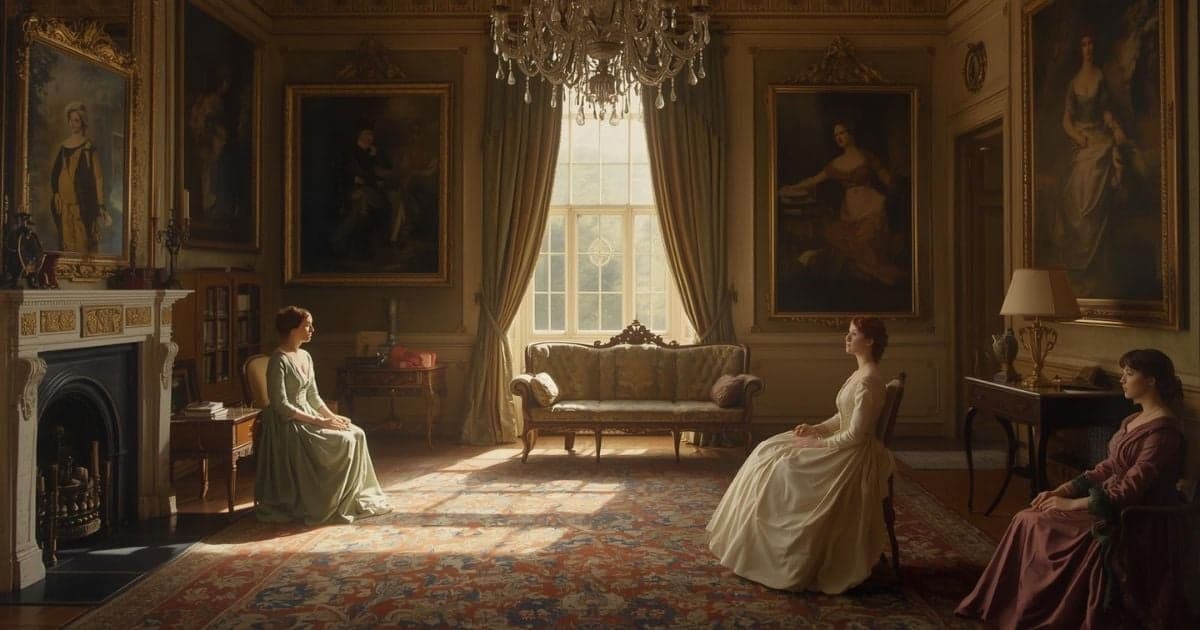
[Illustration] On Saturday morning Elizabeth and Mr. Collins met for breakfast a few minutes before the others appeared; and he took the opportunity of paying the parting civilities which he deemed indispensably necessary. “I know not, Miss Elizabeth,” said he, “whether Mrs. Collins has yet expressed her sense of your kindness in coming to us; but I am very certain you will not leave the house without receiving her thanks for it. The favour of your company has been much felt, I assure you. We know how little there is to tempt anyone to our humble abode. Our plain manner…
Public-domain chapter text, formatted for reading.
Master this chapter. Complete your experience
Purchase the complete book to access all chapters and support classic literature
Available in paperback, hardcover, and e-book formats
Now let's explore the literary elements.
Key Quotes & Analysis
"And how much I shall have to conceal!"
Context: In the carriage after leaving Hunsford
The chapter's hinge—public travel, private secrets: proposal, letter, Wickham, Darcy.
In Today's Words:
The mental load of keeping secrets is exhausting. When you're processing major revelations about people you thought you knew, staying composed in public becomes performance art. Between family dinners and team meetings, you're constantly code-switching between your inner reality and the face everyone expects to see.
"fortunately having it in our power to introduce you to very superior society, and from our connection with Rosings, the frequent means of varying the humble home scene, I think we may flatter ourselves that your Hunsford visit cannot have been entirely irksome. Our situation with regard to Lady Catherine’s family is, indeed, the sort of extraordinary advantage and blessing which few can boast. You see on what a footing we are. You see how continually we are engaged there. In truth, I must acknowledge, that, with all the disadvantages of this humble parsonage, I should not think anyone abiding in it an object of compassion, while they are sharers of our intimacy at Rosings."
Context: Farewell breakfast at the parsonage
Collins measures happiness by proximity to Lady Catherine—comic contrast to Elizabeth's inner storm.
In Today's Words:
Some people measure their worth entirely by their proximity to power and influence. They name-drop connections and brag about exclusive access as if borrowed prestige makes them important. It's the corporate equivalent of constantly mentioning which executives you've had coffee with, mistaking reflected status for actual achievement.
"To know that she had the power of revealing what would so exceedingly astonish Jane, and must, at the same time, so highly gratify whatever of her own vanity she had not yet been able to reason away, was such a temptation to openness as nothing could have conquered, but the state of indecision in which she remained as to the extent of what she should communicate, and her fear, if she once entered on the subject, of being hurried into repeating something of Bingley, which might only grieve her sister further."
Context: At the Gardiners' before Longbourn
She wants to tell Jane of the proposal but calculates what would re-wound her about Bingley.
In Today's Words:
The urge to share shocking news battles against protecting someone you love from additional pain. You want to tell your sister about the unexpected career opportunity, but know it might remind her of her own professional disappointments. Sometimes caring means calculating what information will help versus what will hurt.
"They had forgotten to leave any message"
Context: From the second half of the chapter
This line anchors the chapter's closing movement and shows how social pressure and private feeling collide in the scene.
In Today's Words:
In today's language, the passage says: They had forgotten to leave any message Readers still recognize the same dynamic when pride, strategy, or family pressure turns a private moment into public consequence. The pattern still shows up in offices, families, and neighborhoods today, where the same pressure narrows what people can see before anyone admits
Thematic Threads
Public vs private
In This Chapter
Conceal line
Development
Jane confession deferred
In Your Life:
When have you acted fine while hiding what mattered?
Charlotte's bargain
In This Chapter
Poultry and parish
Development
Chosen with open eyes
In Your Life:
When have you left a friend in a life you would not choose?
Collins's Rosings
In This Chapter
Superior society boast
Development
Comic baseline restored
In Your Life:
When has someone's self-importance made your silence necessary?
Secrets for Jane
In This Chapter
Darcy proposal withheld
Development
Bingley danger named
In Your Life:
When did you delay truth to protect someone?
Transition home
In This Chapter
Hunsford to Gardiners
Development
Longbourn next
In Your Life:
When has the journey home felt like two different lives?
You now have the context. Time to form your own thoughts.
Discussion Questions
This is not a test. Five prompts guide you through the chapter, from how it opens to how it closes, so you notice context and rhythm rather than facts to memorize. Sit with each question in your own words. When you see "One way to read it," treat it as a starting point, not the only answer.
- 1
What does Mr. Collins say to Elizabeth at breakfast before she leaves Hunsford?
analysis • surfaceOne way to read it
He offers parting civilities, thanks her for condescension, boasts of introducing her to superior society at Rosings, and speaks of his and Charlotte's one mind and way of thinking.
- 2
What does Elizabeth think when Maria says how much has happened during the visit?
analysis • mediumOne way to read it
She sighs and privately adds, And how much I shall have to conceal. Maria sees social events; Elizabeth carries proposal, letter, and revised judgment she cannot yet share.
- 3
When have you left a place knowing you could not tell the people at home the most important thing that happened there?
application • mediumOne way to read it
Think of returning from a trip that changed you, a workplace experience bound by confidentiality, or Elizabeth performing normal gratitude while hiding Darcy's proposal and her transformed view of Wickham.
- 4
Elizabeth sorrows for Charlotte left to such society, yet answers Collins with civility and truth. What tension runs through her farewell?
application • deepOne way to read it
She pities Charlotte's marriage to Collins and life under Lady Catherine, but respects her friend's choice enough not to say so openly. Gratitude and grief sit together in the goodbye.
- 5
Why does Elizabeth wait for Longbourn before telling Jane about Mr. Darcy's proposal?
reflection • deepOne way to read it
She is restrained by indecision and fear of grieving Jane with talk of Bingley. The letter's half about Jane's happiness must stay buried until she can study Jane's spirits in private.
Critical Thinking Exercise
What You Conceal on the Way Home
Recall leaving a place where something major happened that you could not explain to your travel companion. What did you keep back, and from whom?
Consider:
- •What required performance versus honesty?
- •Who deserved full truth first?
- •What might have hurt someone if spoken too soon?
Coming Up Next...
Chapter 39: Chapter XXXIX
At Longbourn Lydia will be invited to Brighton with the regiment, and Elizabeth's unease will sharpen. You can leave one world performing normal gratitude while carrying knowledge you cannot yet share. Mr. Bennet dominates the opening movement..