Wide Reads
Literature MattersLife IndexEducators
Sign in
Where to Begin

Chapter XXXVII — Pride and Prejudice

Pride and Prejudice - Chapter XXXVII

Jane Austen

Pride and Prejudice

Chapter XXXVII

Home›Books›Pride and Prejudice›Chapter 37
Previous
37 of 61
Next

Analysis by the Wide Reads editorial team·Reviewed against the source text·Updated November 27, 2025

Summary

Chapter XXXVII

Pride and Prejudice by Jane Austen

0:000:00
Listen to Next Chapter

After a rupture, social life continues while the mind works overtime in private, with contradictions still unresolved in public. Darcy and Fitzwilliam leave Rosings; Collins reports them in tolerable spirits. Elizabeth cannot face Lady Catherine without smiling at what might have been, presented as her future niece, and amuses herself imagining her Ladyship's indignation.

Lady Catherine mourns the diminished party, urges Elizabeth to stay beyond six weeks, and offers the barouche to London while lecturing on proper escorts for young women. Elizabeth must be in town next Saturday; her father has written to hurry her home. Solitary walks hold unpleasant recollections; she studies Darcy's letter until she nearly knows it by heart, indignation at his address alternating with anger at herself, compassion for his disappointment, respect but no approval, no repentance of her refusal.

She broods on hopeless family defects, Lydia and Kitty's flirtations with officers, and Jane's grievous loss now that Darcy's conduct is cleared and Bennet folly is plain. The last Rosings evenings return; Lady Catherine dictates packing; they part with condescending wishes to return next year. When they parted, Lady Catherine, with great condescension, wished them a good journey, and invited them to come to Hunsford again next year; and Miss de Bourgh exerted herself so far as to courtesy and hold out her hand.

In this chapter: Terms Characters Key Quotes Themes Modern Story

Why This Matters

Connect literature to life

Skill: Processing moral revision without immediate action

New truth often arrives before you know what to do with it, and public life keeps going anyway. Elizabeth refuses Lady Catherine's extended stay, memorizes Darcy's letter in solitary walks, and grieves Jane's loss now that family folly and cleared conduct tell a harder story. Let routine buy time for reflection, track shifting feelings without false clarity, and name family patterns that harmed someone you love.

Coming Up in Chapter 38

At Longbourn Elizabeth will find Lydia invited to Brighton, and fresh worry about Wickham and the regiment. After a rupture, social life continues while the mind works overtime in private, with contradictions still unresolved in public.

Share it with friends

PreviousPrevious ChapterNextNext Chapter
Original text
1,376 wordscomplete

Chapter 37

After a rupture, social life continues while the mind works overtim...

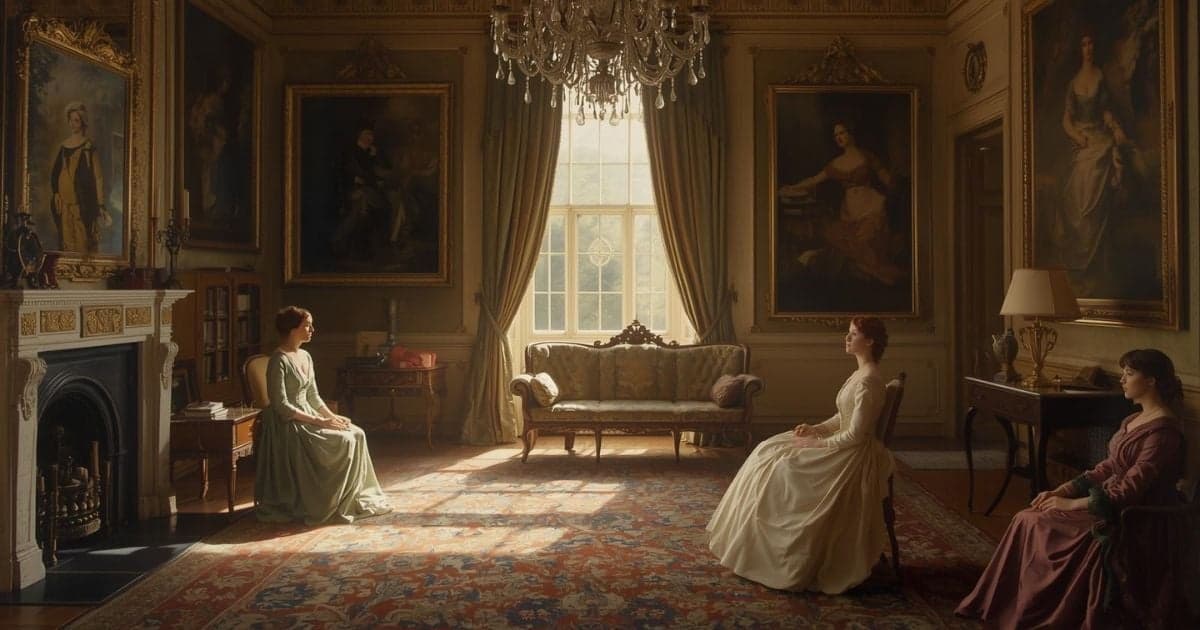
[Illustration] The two gentlemen left Rosings the next morning; and Mr. Collins having been in waiting near the lodges, to make them his parting obeisance, was able to bring home the pleasing intelligence of their appearing in very good health, and in as tolerable spirits as could be expected, after the melancholy scene so lately gone through at Rosings. To Rosings he then hastened to console Lady Catherine and her daughter; and on his return brought back, with great satisfaction, a message from her Ladyship, importing that she felt herself so dull as to make her very desirous of having…

Public-domain chapter text, formatted for reading.

Master this chapter. Complete your experience

Purchase the complete book to access all chapters and support classic literature

Buy at Powell'sBuy on Amazon

Available in paperback, hardcover, and e-book formats

Now let's explore the literary elements.

Key Quotes & Analysis

"had she chosen it, she might by this time have been presented to her as her future niece;"

— Narrator (Elizabeth's thought)

Context: Seeing Lady Catherine after the proposal

Bitter comedy—Elizabeth measures how close she came to Lady Catherine as aunt.

In Today's Words:

Elizabeth realizes the irony that if she'd said yes to Darcy's proposal, this intimidating woman would now be her future aunt-in-law. It's like meeting your ex's family at a work conference and thinking how different things could have been. Sometimes dodging a bullet means dodging their entire social circle too.

"Mr. Darcy’s letter she was in a fair way of soon knowing by heart."

— Narrator

Context: Elizabeth alone between Rosings engagements

The letter becomes obsession—respect and compassion without reversing her refusal.

In Today's Words:

Elizabeth keeps rereading Darcy's email explanation until she practically has it memorized. It's like when someone sends you feedback that completely changes how you see a situation at work. You keep going back to process every detail, even when you're not ready to admit they were right about everything.

"Jane had been deprived, by the folly and indecorum of her own family!"

— Narrator (Elizabeth's thought)

Context: After clearing Darcy's conduct toward Bingley

Family shame enters the moral accounting—Jane's tragedy tied to Bennet indecorum.

In Today's Words:

Elizabeth realizes her family's dysfunction actually sabotaged Jane's relationship prospects. It's like watching your sister lose out on a promotion because your parents embarrassed themselves at the company holiday party. Sometimes the people closest to us become our biggest professional and personal liabilities without meaning to.

"My uncle is to send a servant for us."

— Narrator

Context: From the second half of the chapter

This line anchors the chapter's closing movement and shows how social pressure and private feeling collide in the scene.

In Today's Words:

In today's language, the passage says: My uncle is to send a servant for us. Readers still recognize the same dynamic when pride, strategy, or family pressure turns a private moment into public consequence. The pattern still shows up in offices, families, and neighborhoods today, where the same pressure narrows what people can see before

Thematic Threads

Limbo after truth

In This Chapter

Darcy gone, letter memorized

Development

No repentance of refusal yet

In Your Life:

When have you known more but not acted on it?

Family shame

In This Chapter

Lydia, Kitty, parents

Development

Jane's loss reattributed

In Your Life:

When has your family's behavior hurt someone you love?

Mixed feelings

In This Chapter

Indignation and compassion

Development

Respect without approval

In Your Life:

When have you admired someone you could not accept?

Lady Catherine's world

In This Chapter

Stay, travel, packing

Development

Unchanged power

In Your Life:

When has etiquette continued after your life exploded?

Near-miss identity

In This Chapter

Future niece joke

Development

Rejected path

In Your Life:

When have you smiled at a life you refused?

You now have the context. Time to form your own thoughts.

Discussion Questions

This is not a test. Five prompts guide you through the chapter, from how it opens to how it closes, so you notice context and rhythm rather than facts to memorize. Sit with each question in your own words. When you see "One way to read it," treat it as a starting point, not the only answer.

  1. 1

    How do Mr. Darcy and Colonel Fitzwilliam leave Rosings, and how does Elizabeth view Lady Catherine afterward?

    ▶One way to read it

    Collins reports them in tolerable spirits. Elizabeth cannot face Lady Catherine without smiling at what might have been presented as her future niece, and amuses herself imagining her Ladyship's indignation.

    analysis • surface
  2. 2

    How does Elizabeth spend her solitary time during her last days at Hunsford?

    ▶One way to read it

    She studies Darcy's letter until she nearly knows it by heart, feeling indignation at his address alternating with anger at herself, compassion for his disappointment, respect but no approval, and no repentance of her refusal.

    analysis • medium
  3. 3

    When have you revisited a painful message or conversation repeatedly without reaching a clean conclusion?

    ▶One way to read it

    Think of rereading an old argument, replaying a rejection, or Elizabeth holding mixed feelings toward Darcy because the letter changed her judgment without changing her answer.

    application • medium
  4. 4

    Elizabeth broods on hopeless family defects and Jane's situation with Bingley. What shift in blame appears in her thinking?

    ▶One way to read it

    She no longer sees Darcy alone as Jane's enemy. She recognizes her family's impropriety, Lydia and Kitty's behaviour, and the social facts Darcy cited, even while she still grieves Jane's loss.

    application • deep
  5. 5

    What does Elizabeth's departure from Kent reveal about carrying new self-knowledge back into an unchanged home?

    ▶One way to read it

    She leaves knowing herself and Darcy differently, but Longbourn and Jane's pain await unchanged. Insight gained in Kent cannot fix what she is not yet ready or able to tell her sister.

    reflection • deep

Critical Thinking Exercise

Living in the In-Between

Recall a time you knew your judgment of someone had shifted but you had not yet told them or changed your behavior. How did you act in public while thinking in private?

Consider:

  • •What rituals continued unchanged?
  • •What did you re-read or replay repeatedly?
  • •What family or systemic problem became clearer?

Coming Up Next...

Chapter 38: Chapter XXXVIII

At Longbourn Elizabeth will find Lydia invited to Brighton, and fresh worry about Wickham and the regiment. After a rupture, social life continues while the mind works overtime in private, with contradictions still unresolved in public.

Continue to Chapter 38
Previous
Chapter XXXVI
Contents
Next
Chapter XXXVIII
Keep exploring

Continue Exploring

Study guides, teaching tools, themes, and the full library.More ways to read Pride and Prejudice: study guides, teaching tools, and the wider library.

  • Pride and Prejudice Study Guide
  • Teaching Resources
  • Essential Life Index
  • Browse by Theme
  • All Books

What this chapter teaches

Theme analyses that draw on this chapter and apply it to modern life.

  • Developing Self-AwarenessExplore developing self-awareness through Pride and Prejudice by Jane Austen. Life lessons from classic literature applied to modern challenges.
Social Class & StatusLove & RelationshipsIdentity & Self-Discovery

You Might Also Like

Persuasion cover

Persuasion

Jane Austen

Also by Jane Austen

Emma cover

Emma

Jane Austen

Also by Jane Austen

Sense and Sensibility cover

Sense and Sensibility

Jane Austen

Also by Jane Austen

Northanger Abbey cover

Northanger Abbey

Jane Austen

Also by Jane Austen

Browse all 106+ books

Share This Chapter

Know someone who'd enjoy this? Spread the wisdom!

TwitterFacebookLinkedInEmail

Go further with Prestige

Unlock study guides and downloads, early access, and exclusive content — and support free access for everyone.

Subscribe to PrestigeCreate free account
Intelligence Amplifier
Intelligence Amplifier™Powering Wide Reads

Exploring human-AI collaboration through books, essays, and philosophical dialogues. Classic literature transformed into navigational maps for modern life.

2025 Books

→ The Amplified Human Spirit→ The Alarming Rise of Stupidity Amplified→ San Francisco: The AI Capital of the World
Visit intelligenceamplifier.org
hello@widereads.com

WideReads Originals

→ You Are Not Lost→ The Last Chapter First→ The Lit of Love→ Wealth and Poverty→ Wisdom for the Wounded
Arvintech
arvintechAmplify your Mind
Visit at arvintech.com

Navigate

  • Home
  • Library
  • Essential Life Index
  • How It Works
  • Subscribe
  • Account
  • About
  • Contact
  • Authors
  • Suggest a Book
  • Landings

Made For You

  • Trending
  • Students
  • Educators
  • Families
  • Readers
  • Literary Analysis
  • Finding Purpose
  • Letting Go
  • Recovering from a Breakup
  • Corruption
  • Gaslighting in the Classics

Newsletter

Weekly insights from the classics. Amplify Your Mind.

Legal

  • Privacy Policy
  • Terms of Service
  • Editorial Standards
  • Cookie Policy
  • Accessibility

Why Public Domain?

We focus on public domain classics because these timeless works belong to everyone. No paywalls, no restrictions—just wisdom that has stood the test of centuries, freely accessible to all readers.

Public domain books have shaped humanity's understanding of love, justice, ambition, and the human condition. By amplifying these works, we help preserve and share literature that truly belongs to the world.

A Pilgrimage

Powell's City of Books

Portland, Oregon

If you ever find yourself in Portland, walk to the corner of Burnside and 10th. The building takes up an entire city block. Inside is over a million books, new and used on the same shelf, organized by color-coded rooms with names like the Rose Room and the Pearl Room. You can lose an afternoon. You can lose a weekend. You will find a book you have been looking for your whole life, and three you did not know existed.

It is a pilgrimage. We cannot find a bookstore like it anywhere on earth. If you read the classics, and you ever get the chance, go. It belongs on every reader's bucket list.

Visit powells.com

We are not in any way affiliated with Powell's. We are just a very big fan.

© 2026 Wide Reads™. All Rights Reserved.

Intelligence Amplifier™ and Wide Reads™ are proprietary trademarks of Arvin Lioanag.

Copyright Protection: All original content, analyses, discussion questions, pedagogical frameworks, and methodology are protected by U.S. and international copyright law. Unauthorized reproduction, distribution, web scraping, or use for AI training is strictly prohibited. See our Copyright Notice for details.

Disclaimer: The information provided on this website is for general informational and educational purposes only and does not constitute professional, legal, financial, or technical advice. While we strive to ensure accuracy and relevance, we make no warranties regarding completeness, reliability, or suitability. Any reliance on such information is at your own risk. We are not liable for any losses or damages arising from use of this site. By using this site, you agree to these terms.