Chapter 26
One season can stack every emotional test at once: a warning about ...
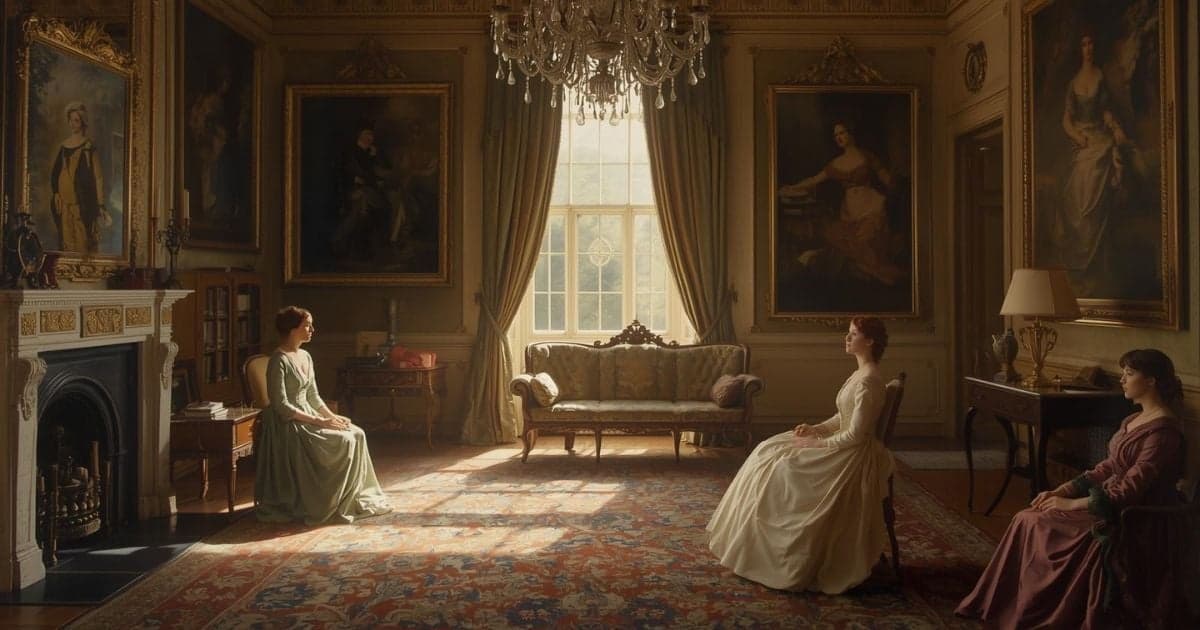
[Illustration] Mrs. Gardiner’s caution to Elizabeth was punctually and kindly given on the first favourable opportunity of speaking to her alone: after honestly telling her what she thought, she thus went on:-- “You are too sensible a girl, Lizzy, to fall in love merely because you are warned against it; and, therefore, I am not afraid of speaking openly. Seriously, I would have you be on your guard. Do not involve yourself, or endeavour to involve him, in an affection which the want of fortune would make so very imprudent. I have nothing to say against him: he is a…
Public-domain chapter text, formatted for reading.
Master this chapter. Complete your experience
Purchase the complete book to access all chapters and support classic literature
Available in paperback, hardcover, and e-book formats
Now let's explore the literary elements.
Key Quotes & Analysis
"Do not involve yourself, or endeavour to involve him, in an affection which the want of fortune would make so very imprudent."
Context: Warning Elizabeth against imprudent attachment to Wickham
Sets financial realism at the heart of Regency courtship without demonizing charm.
In Today's Words:
Don't get yourself or him caught up in feelings that would be financially stupid. Mrs. Gardiner basically tells Elizabeth to be realistic about dating someone without money. It's like warning a friend not to fall for that charming but broke startup founder when they need actual stability in their life.
"entirely deceived in Miss Bingley’s regard for me"
Context: In her letter to Elizabeth after Caroline's cold visit
Jane names betrayal while still pitying Caroline—growth without bitterness.
In Today's Words:
Jane realizes Caroline Bingley completely played her about their friendship. She thought they had a real connection, but Caroline was just being fake nice. It's like finding out your work friend who seemed so supportive was actually talking behind your back the whole time to management.
"I am now convinced, my dear aunt, that I have never been much in love; for had I really experienced that pure and elevating passion, I should at present detest his very name, and wish him all manner of evil. But my feelings are not only cordial towards _him_, they are even impartial towards Miss King. I cannot find out that I hate her at all, or that I am in the least unwilling to think her a very good sort of girl. There can be no love in all this. My watchfulness has been effectual; and though I should certainly be a more interesting object to all my acquaintance, were I distractedly in love with him, I cannot say that I regret my comparative insignificance. Importance may sometimes be purchased too dearly."
Context: Reporting to Mrs. Gardiner that Wickham now pursues Miss King
Elizabeth's emotional accounting—she was never deeply in love, and prefers calm to drama.
In Today's Words:
Elizabeth does some serious self-reflection and realizes she was never actually in love with Wickham. She figures if she really loved him, she'd be furious about him chasing another woman for money. Instead, she's totally fine with it, which proves it was just attraction, not real feelings.
"I was right, therefore; my last letter had never reached her."
Context: Warning Elizabeth in her letter about Wickham's attentions
The aunt names the real risk: Elizabeth's partiality to Wickham will make her reject sound advice as jealousy or meddling.
In Today's Words:
Mrs Gardiner tells Elizabeth she trusts her niece will not let pride in her own judgment block a warning about Wickham. It's the family member who knows your crush makes you deaf to caution and tries to reach you before charm outruns evidence. The pattern still shows up in offices, families, and neighborhoods today, where
Thematic Threads
Fortune and feeling
In This Chapter
Mrs. Gardiner on imprudent affection
Development
Wickham plot's moral frame
In Your Life:
When has money made a relationship 'imprudent' on paper while chemistry felt real?
Friendship after marriage
In This Chapter
Charlotte's polished letters
Development
Intimacy replaced by performance
In Your Life:
When has a friend's updates sounded fine but felt hollow?
Letter as evidence
In This Chapter
Jane on Caroline
Development
Jane stops deceiving herself
In Your Life:
When did someone's delayed reply tell you more than their words?
Mercenary shift
In This Chapter
Wickham and Miss King
Development
Elizabeth's clear-eyed acceptance
In Your Life:
When did someone you liked pivot to a wealthier match—and did you mind?
Hunsford promise
In This Chapter
Charlotte's invitation
Development
Path to Rosings and Darcy
In Your Life:
When did you agree to visit someone out of duty, expecting little joy?
You now have the context. Time to form your own thoughts.
Discussion Questions
This is not a test. Five prompts guide you through the chapter, from how it opens to how it closes, so you notice context and rhythm rather than facts to memorize. Sit with each question in your own words. When you see "One way to read it," treat it as a starting point, not the only answer.
- 1
What does Mrs. Gardiner warn Elizabeth about regarding Mr. Wickham, and how does Elizabeth respond?
analysis • surfaceOne way to read it
She warns Elizabeth not to involve herself or Wickham in an affection made imprudent by want of fortune. Elizabeth jokes, then speaks honestly that she is not in love with him but finds him the most agreeable man she ever saw, and promises not to be in a hurry.
- 2
What does Jane's letter from London reveal about Caroline Bingley's regard for her?
analysis • mediumOne way to read it
Caroline was absent a week, then received Jane coldly at Grosvenor Street while Charles is engaged with Mr. Darcy. Jane concludes she was entirely deceived in Caroline's regard and ends the acquaintance.
- 3
When have you watched a friend discover that someone they trusted was performing friendship all along?
application • mediumOne way to read it
Think of a coworker who was warm in meetings but blocked you privately, a relative who welcomed you in public and cooled once alone, or Jane learning Caroline's civility at Netherfield did not survive London.
- 4
Elizabeth gives up all hope for Bingley after reading Jane's account. What shift in her judgment does that mark?
application • deepOne way to read it
She had defended Bingley's attachment against Caroline's letter; Jane's firsthand experience in London makes the separation feel settled. Elizabeth's anger turns from suspicion into conviction that Bingley has failed Jane.
- 5
What does Elizabeth tell Mrs. Gardiner about Wickham and Miss King, and what does that conversation suggest about how quickly charm can look like mercenary conduct?
reflection • deepOne way to read it
Wickham turns his attention to Miss King once she inherits ten thousand pounds. Elizabeth defends him to her aunt, showing how hard it is to apply the same standard of prudence to a man you already prefer over Darcy.
Critical Thinking Exercise
Three Plots, One Season
List three emotional storylines active in your life or in this chapter (warning, friendship/marriage, letter betrayal, money shift). For each, write one fact, one feeling, and one boundary you could set—or did set.
Consider:
- •Which storyline tempted you to perform calm while hurting inside?
- •Where did a letter or message prove what conversation avoided?
- •When was following money wiser than following charm—and who admitted it?
Coming Up Next...
Chapter 27: Chapter XXVII
With little else happening at Longbourn, March will bring Elizabeth to Hunsford, and Lady Catherine de Bourgh's domain. One season can stack every emotional test at once: a warning about imprudence, a friend's wedding, cruel letters from town, and a charmer pivoting to money.