Chapter 06
The Wealthy Hypocrite's Empire
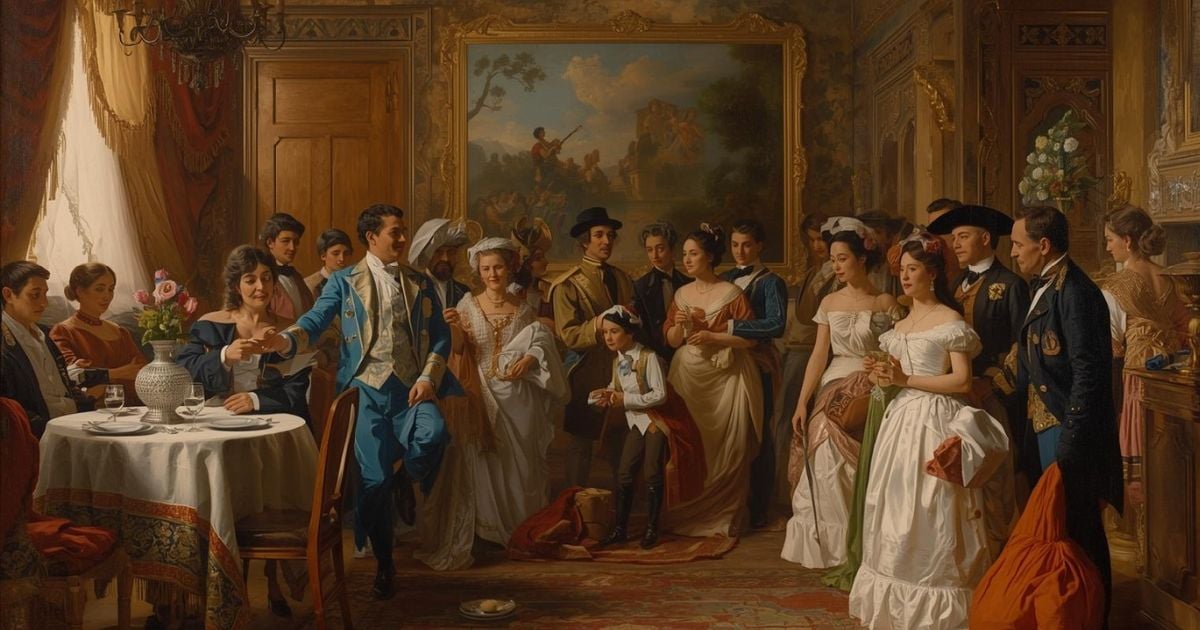
Capitan Tiago Thy will be done on earth. While our characters are deep in slumber or busy with their breakfasts, let us turn our attention to Capitan Tiago. We have never had the honor of being his guest, so it is neither our right nor our duty to pass him by slightingly, even under the stress of important events. Low in stature, with a clear complexion, a corpulent figure and a full face, thanks to the liberal supply of fat which according to his admirers was the gift of Heaven and which his enemies averred was the blood of the…
Public-domain chapter text, formatted for reading.
Master this chapter. Complete your experience
Purchase the complete book to access all chapters and support classic literature
Available in paperback, hardcover, and e-book formats
Now let's explore the literary elements.
Key Quotes & Analysis
"his enemies averred was the blood of the poor"
Context: Describing the source of Capitan Tiago's wealth
Rizal splits opinion: admirers call Tiago's fat a gift from heaven, critics say it is nourished by the poor. The line names how colonial fortunes are debated but rarely stopped.
In Today's Words:
People argue whether a rich man's comfort is blessed or stolen, yet the system keeps paying him either way. The same pattern still appears when corrupt institutions punish honesty, reward flattery, and teach people to mistake cruelty for order or tradition. The same pattern still appears when corrupt institutions punish honesty, reward flattery, and teach
"I know that he's an archangel, but I don't trust him, no, I don't trust him."
Context: About his statue of St. Michael with a kris
Even Tiago's piety is cautious commerce. He funds saints but fears the one that looks ready to strike, revealing belief mixed with superstition and self-interest.
In Today's Words:
He donates to religion yet steers clear of any symbol that might punish him, treating faith like a contract with escape clauses. The same pressure appears today when a family promise shrinks under a partner's influence, or when someone with power keeps sounding reasonable while doing less and less for the people who depend on
"Glory to God in the highest and peace to men of good-will on earth!"
Context: Ironic gloss on Tiago's harmony with authorities
Rizal quotes scripture with bite: Tiago is at peace because he never challenges power. The verse foreshadows that good-will alone cannot produce justice.
In Today's Words:
The narrator uses a Christmas line to describe a man cozy with governors while farmers suffer, hinting that peace can mean surrender. The same pressure appears today when a family promise shrinks under a partner's influence, or when someone with power keeps sounding reasonable while doing less and less for the people who depend on
"Capriciousness, natural in her condition,"
Context: Explaining Doña Pia's melancholy during pregnancy
The comment dismisses a woman's grief as biology, hiding the cost of an heir bought through Obando's rites. Maria Clara's origin is framed by others' explanations.
In Today's Words:
A society reads a mother's sadness as mood, not as warning that something is wrong in the house. The same pattern still appears when corrupt institutions punish honesty, reward flattery, and teach people to mistake cruelty for order or tradition. The same pattern still appears when corrupt institutions punish honesty, reward flattery, and teach people
Thematic Threads
Class
In This Chapter
Tiago's wealth comes from exploiting prisoners and controlling opium, yet his status protects him from consequences
Development
Builds on earlier class tensions, showing how the wealthy justify their position through religious performance
In Your Life:
You might see this when wealthy people use charity galas to maintain their image while their businesses harm workers.
Identity
In This Chapter
Tiago constructs his identity as a devout Catholic while his actions contradict his professed values
Development
Continues the theme of characters struggling between their public personas and private realities
In Your Life:
You might recognize this when you or others perform virtue publicly while compromising privately.
Social Expectations
In This Chapter
Tiago competes with a wealthy widow in religious displays, each trying to outdo the other's donations
Development
Shows how social pressure drives performative behavior rather than authentic action
In Your Life:
You might see this in social media virtue signaling or keeping up with neighbors' charitable giving.
Human Relationships
In This Chapter
Tiago treats saints like business partners and maintains relationships with officials through entertainment and compliance
Development
Reveals how power corrupts even sacred relationships, turning them into transactions
In Your Life:
You might notice this when relationships feel more like business deals than genuine connections.
Personal Growth
In This Chapter
Tiago's character shows stunted moral development, using wealth to avoid confronting his ethical failures
Development
Contrasts with characters who face difficult truths about themselves
In Your Life:
You might recognize this when avoiding hard conversations about your own behavior by focusing on good deeds instead.
You now have the context. Time to form your own thoughts.
Discussion Questions
This is not a test. Five prompts guide you through the chapter, from how it opens to how it closes, so you notice context and rhythm rather than facts to memorize. Sit with each question in your own words. When you see "One way to read it," treat it as a starting point, not the only answer.
- 1
Why does Rizal devote a full chapter to Capitan Tiago before deepening Ibarra's story?
analysis • surfaceOne way to read it
Tiago funds the social world of the novel and embodies colonial collaboration. Understanding his piety and profits explains why later characters court or fear him.
- 2
How does Capitan Tiago treat saints and masses as business tools?
analysis • mediumOne way to read it
He pays for prayers, promises gifts to favored images, and times donations to cockfights and contracts. Religion secures luck and official favor, not moral transformation.
- 3
What does the rivalry between Tiago and Doña Patrocinio reveal about public faith?
application • mediumOne way to read it
Their competition turns devotion into display measured in arches, masses, and silver andas. Whoever spends more wins prestige in the community and with priests.
- 4
How does Maria Clara's birth story foreshadow her later confinement and engagement?
application • deepOne way to read it
She is conceived through ritual pressure, loses her mother, is raised by Isabel, educated in a convent, and betrothed for business. Her life is planned by men and rites before she chooses.
- 5
Where have you seen generosity used mainly to protect someone's reputation or deals?
reflection • deepOne way to read it
Strong answers name a donor or sponsor whose public giving did not match how they treated workers, tenants, or family. The point is to separate display from impact.
Critical Thinking Exercise
Spot the Virtue Performance
Think of three public figures, companies, or organizations that heavily promote their charitable work or moral stances. For each one, research what they do behind the scenes - their business practices, how they treat employees, or their actual policy positions. Create a simple chart comparing their public virtue signals with their private actions.
Consider:
- •Look for patterns where the charity work directly benefits their business interests
- •Notice if their good deeds get more publicity than their questionable practices
- •Consider whether their virtue signaling increases during times of controversy
Journaling Prompt
Write about a time when you felt pressured to perform goodness for appearances rather than acting from genuine care. What was driving that pressure, and how did it feel different from times when you helped others without anyone watching?
Coming Up Next...
Chapter 7: Love Letters and Hidden Feelings
The story shifts to a romantic scene on a rooftop terrace, where we'll witness the tender reunion between two young lovers whose lives have been shaped by the very system Capitan Tiago represents. The opening of An Idyl on an Azotea will tighten the family's position faster than anyone at Norland expected, and the next scene will test whether good intentions survive polite pressure..