Wide Reads
Literature MattersLife IndexEducators
Sign in
Where to Begin

When Love Meets Politics — Noli Me Tángere

Noli Me Tángere - When Love Meets Politics

José Rizal

Noli Me Tángere

When Love Meets Politics

Home›Books›Noli Me Tángere›Chapter 48: When Love Meets Politics
Previous
48 of 63
Next

Analysis by the Wide Reads editorial team·Reviewed against the source text·Updated January 6, 2026

Summary

When Love Meets Politics

Noli Me Tángere by José Rizal

0:000:00
Listen to Next Chapter

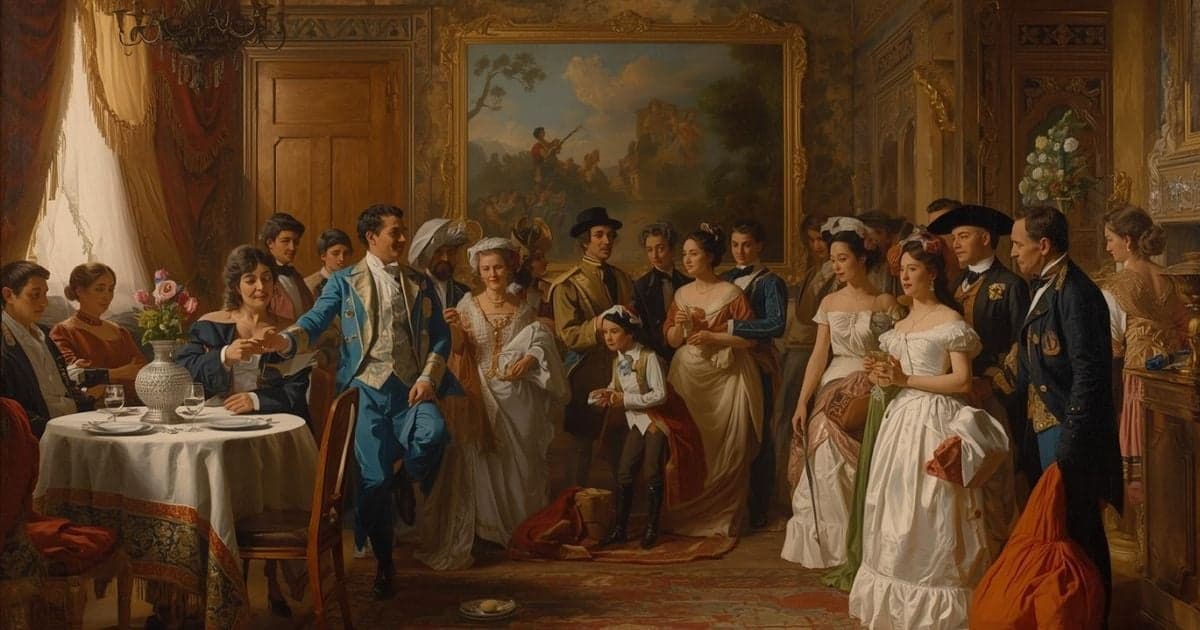
Ibarra returns reconciled with the Church carrying an Archbishop's letter, only to find Linares arranging flowers beside a silent Maria Clara on the balcony. Embarrassed silence, a dropped fan, and a faint welcome send him away wondering if she is faithless while Aunt Isabel still gossips about discommunication. At the rising schoolhouse workers salute him regardless of excommunication; Elias, absent from payroll lists, asks for a lake meeting tonight. Ibarra flees the alferez by pretending travel to another town. Rizal stages the absence vacuum: political exile lets rivals occupy domestic space while honest labor continues and conspiracy gathers off the books.

In this chapter: Terms Characters Key Quotes Themes Modern Story

Why This Matters

Connect literature to life

Skill: Guarding Against the Absence Vacuum

While you fix one crisis, others fill your place at home and work. Ibarra returns pardoned to find Linares with Maria Clara; Elias hides among laborers unlisted. Secure relationships before long absences or political battles.

Coming Up in Chapter 49

Elias has urgent information that could change everything for Ibarra. Their clandestine meeting by the lake will reveal truths about the conspiracy forming against him, and force Ibarra to confront just how dangerous his situation has become.

Share it with friends

PreviousPrevious ChapterNextNext Chapter
Original text
835 wordscomplete

Chapter 48

When Love Meets Politics

The Enigma Volverán las oscuras golondrinas. [130] BECQUER. As Lucas had foretold, Ibarra arrived on the following day. His first visit was to the family of Capitan Tiago for the purpose of seeing Maria Clara and informing her that his Grace had reconciled him with religion, and that he brought to the curate a letter of recommendation in the handwriting of the Archbishop himself. Aunt Isabel was not a little rejoiced at this, for she liked the young man and did not look favorably on the marriage of her niece with Linares. Capitan Tiago was not at home. "Come in,"…

Public-domain chapter text, formatted for reading.

Master this chapter. Complete your experience

Purchase the complete book to access all chapters and support classic literature

Buy at Powell'sBuy on Amazon

Available in paperback, hardcover, and e-book formats

Now let's explore the literary elements.

Key Quotes & Analysis

"Oh, only a woman after all!"

— Ibarra

Context: After Maria Clara faints on the balcony

Reformer's doubt collapses into sexist relief. He misreads illness as proof of feminine weakness.

In Today's Words:

Ibarra murmurs that she is only a woman after all when Maria Clara nearly faints during their meeting. The same pattern still appears when corrupt institutions punish honesty, reward flattery, and teach people to mistake cruelty for order or tradition. The same pattern still appears when corrupt institutions punish honesty, reward flattery, and teach people

"The Archbishop has _discommunicated_ him."

— Aunt Isabel

Context: Explaining Ibarra's church status to visitors

Political reconciliation fails at the dinner table. Absolution elsewhere does not reach San Diego gossip.

In Today's Words:

Aunt Isabel tells guests the Archbishop has discommunicated Ibarra despite his letter of reconciliation. The same pattern still appears when corrupt institutions punish honesty, reward flattery, and teach people to mistake cruelty for order or tradition. The same pattern still appears when corrupt institutions punish honesty, reward flattery, and teach people to mistake cruelty for

"May I come tomorrow?"

— Ibarra

Context: Leaving Maria Clara on the balcony

Love defers to rivals in the room. He asks permission while Linares arranges flowers beside her.

In Today's Words:

Ibarra asks Maria Clara if he may come tomorrow after awkward silence with Linares at her side. The same pattern still appears when corrupt institutions punish honesty, reward flattery, and teach people to mistake cruelty for order or tradition. The same pattern still appears when corrupt institutions punish honesty, reward flattery, and teach people to

"the name of Elias did not appear on it!"

— Narrator

Context: On the school payroll Ibarra reviews

Honest labor hides off the books. Elias builds the school while absent from official lists.

In Today's Words:

Rizal notes Elias's name did not appear on the payroll though he worked at the rising schoolhouse. The same pattern still appears when corrupt institutions punish honesty, reward flattery, and teach people to mistake cruelty for order or tradition. The same pattern still appears when corrupt institutions punish honesty, reward flattery, and teach people to

Thematic Threads

Displacement

In This Chapter

Ibarra returns to find Linares has taken his place in Maria Clara's affections and social circle

Development

Introduced here as consequence of his earlier excommunication crisis

In Your Life:

You might see this when you focus so hard on one problem that you lose ground in other areas of your life.

Class Barriers

In This Chapter

The workers at the construction site treat Ibarra with respect regardless of his religious status, while the elite obsess over Church politics

Development

Continues the pattern of ordinary people being more genuine than the upper classes

In Your Life:

You might find that working-class colleagues judge you less harshly than management when you face personal difficulties.

Hidden Networks

In This Chapter

Elias appears among the workers but isn't on the official list, suggesting underground connections

Development

Builds on earlier hints that Elias operates outside normal social structures

In Your Life:

You might encounter people who seem to have access and influence that doesn't match their official position.

Emotional Distance

In This Chapter

Maria Clara can barely speak to Ibarra and appears pale and withdrawn in his presence

Development

Sharp contrast to their earlier intimate conversations and shared dreams

In Your Life:

You might experience this when someone you love becomes distant after you've been absent or distracted for an extended period.

Power Manipulation

In This Chapter

Colonial authorities have used Ibarra's forced reconciliation with the Church to weaken his personal relationships

Development

Shows how political pressure extends into private life, building on earlier themes

In Your Life:

You might see this when workplace politics or family drama forces you to choose between different loyalties, weakening your position overall.

You now have the context. Time to form your own thoughts.

Discussion Questions

This is not a test. Five prompts guide you through the chapter, from how it opens to how it closes, so you notice context and rhythm rather than facts to memorize. Sit with each question in your own words. When you see "One way to read it," treat it as a starting point, not the only answer.

  1. 1

    Why does Ibarra's Archbishop letter fail to clear his name in San Diego?

    ▶One way to read it

    Local gossip and friar politics outrun distant absolution. Aunt Isabel still reports discommunication at Tiago's table.

    analysis • surface
  2. 2

    How does Linares's presence on the balcony change Ibarra's reunion with Maria Clara?

    ▶One way to read it

    Flowers and silence replace confession. Political exile let a rival occupy intimate space while workers still cheer Ibarra.

    analysis • medium
  3. 3

    Why is Elias missing from the school payroll?

    ▶One way to read it

    He aids the project while hunted. Official lists cannot name a fugitive even when his labor builds the reform.

    application • medium
  4. 4

    What does Ibarra mean by saying Maria Clara is only a woman after all?

    ▶One way to read it

    Fear dresses itself as sexist relief. He misreads faintness as weakness instead of pressure from fathers and friars.

    application • deep
  5. 5

    When have you returned from solving one crisis to find someone else had taken your place at home or work?

    ▶One way to read it

    Deployments, long hospital stays, or political campaigns that leave partners and projects unguarded mirror Ibarra's absence vacuum.

    reflection • deep

Critical Thinking Exercise

10 minutes

Map Your Absence Impact

Think about a time when you had to focus intensely on one area of your life - work, school, family crisis, health issue. Make two lists: what you gained by focusing there, and what shifted or suffered while your attention was elsewhere. Then identify one relationship or responsibility that you want to protect the next time you need to focus elsewhere.

Consider:

  • •Consider both obvious changes and subtle shifts in relationships
  • •Think about how others filled the space when you were unavailable
  • •Notice patterns in what tends to suffer when you're focused elsewhere

Journaling Prompt

Write about a relationship that changed while you were handling other priorities. What would you do differently now to maintain that connection during intense focus periods?

Coming Up Next...

Chapter 49: The Voice of the Hunted

Elias has urgent information that could change everything for Ibarra. Their clandestine meeting by the lake will reveal truths about the conspiracy forming against him, and force Ibarra to confront just how dangerous his situation has become.

Continue to Chapter 49
Previous
When Status Wars Explode
Contents
Next
The Voice of the Hunted
Keep exploring

Continue Exploring

Study guides, teaching tools, themes, and the full library.More ways to read Noli Me Tángere: study guides, teaching tools, and the wider library.

  • Noli Me Tángere Study Guide
  • Teaching Resources
  • Essential Life Index
  • Browse by Theme
  • All Books

What this chapter teaches

Theme analyses that draw on this chapter and apply it to modern life.

  • Strategic Resistance Without MartyrdomExplore the key chapters in Noli Me Tángere that teach us how to resist oppression effectively without sacrificing yourself unnecessarily.
Social Class & StatusPower & CorruptionMoral Dilemmas & Ethics

You Might Also Like

Mi Último Adiós cover

Mi Último Adiós

José Rizal

Also by José Rizal

Heart of Darkness cover

Heart of Darkness

Joseph Conrad

Explores power & authority

Hard Times cover

Hard Times

Charles Dickens

Explores justice & fairness

A Tale of Two Cities cover

A Tale of Two Cities

Charles Dickens

Explores justice & fairness

Browse all 106+ books

Share This Chapter

Know someone who'd enjoy this? Spread the wisdom!

TwitterFacebookLinkedInEmail

Go further with Prestige

Unlock study guides and downloads, early access, and exclusive content — and support free access for everyone.

Subscribe to PrestigeCreate free account
Intelligence Amplifier
Intelligence Amplifier™Powering Wide Reads

Exploring human-AI collaboration through books, essays, and philosophical dialogues. Classic literature transformed into navigational maps for modern life.

2025 Books

→ The Amplified Human Spirit→ The Alarming Rise of Stupidity Amplified→ San Francisco: The AI Capital of the World
Visit intelligenceamplifier.org
hello@widereads.com

WideReads Originals

→ You Are Not Lost→ The Last Chapter First→ The Lit of Love→ Wealth and Poverty→ Wisdom for the Wounded
Arvintech
arvintechAmplify your Mind
Visit at arvintech.com

Navigate

  • Home
  • Library
  • Essential Life Index
  • How It Works
  • Subscribe
  • Account
  • About
  • Contact
  • Authors
  • Suggest a Book
  • Landings

Made For You

  • Trending
  • Students
  • Educators
  • Families
  • Readers
  • Literary Analysis
  • Finding Purpose
  • Letting Go
  • Recovering from a Breakup
  • Corruption
  • Gaslighting in the Classics

Newsletter

Weekly insights from the classics. Amplify Your Mind.

Legal

  • Privacy Policy
  • Terms of Service
  • Editorial Standards
  • Cookie Policy
  • Accessibility

Why Public Domain?

We focus on public domain classics because these timeless works belong to everyone. No paywalls, no restrictions—just wisdom that has stood the test of centuries, freely accessible to all readers.

Public domain books have shaped humanity's understanding of love, justice, ambition, and the human condition. By amplifying these works, we help preserve and share literature that truly belongs to the world.

A Pilgrimage

Powell's City of Books

Portland, Oregon

If you ever find yourself in Portland, walk to the corner of Burnside and 10th. The building takes up an entire city block. Inside is over a million books, new and used on the same shelf, organized by color-coded rooms with names like the Rose Room and the Pearl Room. You can lose an afternoon. You can lose a weekend. You will find a book you have been looking for your whole life, and three you did not know existed.

It is a pilgrimage. We cannot find a bookstore like it anywhere on earth. If you read the classics, and you ever get the chance, go. It belongs on every reader's bucket list.

Visit powells.com

We are not in any way affiliated with Powell's. We are just a very big fan.

© 2026 Wide Reads™. All Rights Reserved.

Intelligence Amplifier™ and Wide Reads™ are proprietary trademarks of Arvin Lioanag.

Copyright Protection: All original content, analyses, discussion questions, pedagogical frameworks, and methodology are protected by U.S. and international copyright law. Unauthorized reproduction, distribution, web scraping, or use for AI training is strictly prohibited. See our Copyright Notice for details.

Disclaimer: The information provided on this website is for general informational and educational purposes only and does not constitute professional, legal, financial, or technical advice. While we strive to ensure accuracy and relevance, we make no warranties regarding completeness, reliability, or suitability. Any reliance on such information is at your own risk. We are not liable for any losses or damages arising from use of this site. By using this site, you agree to these terms.