Chapter 27
The Weight of Social Expectations
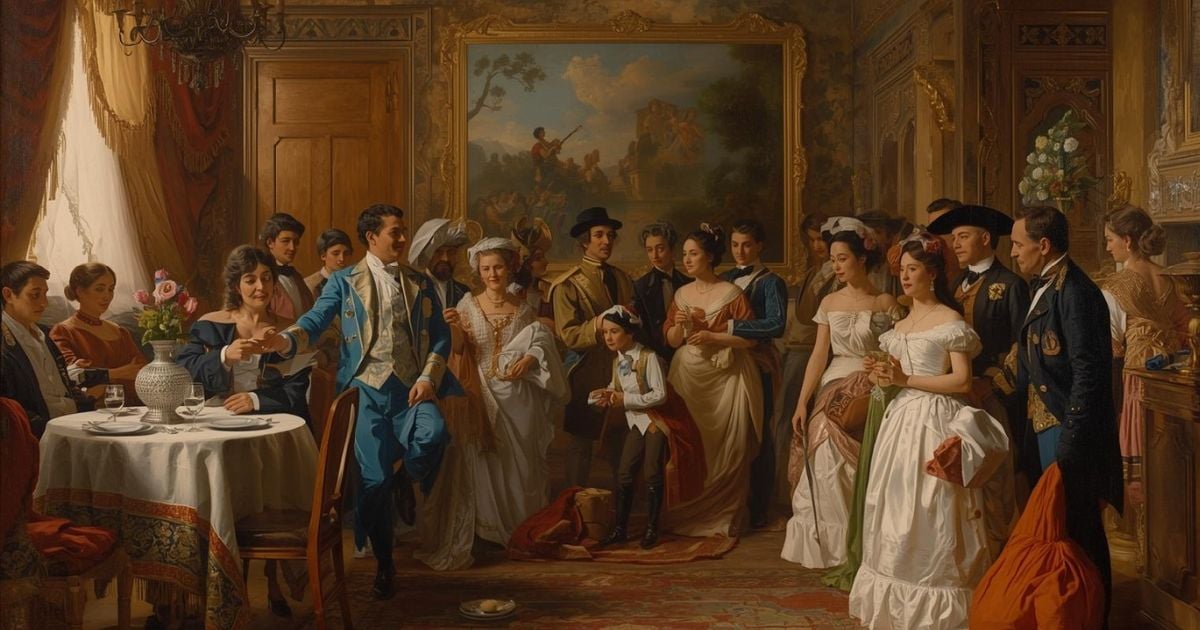
In the Twilight In Capitan Tiago's house also great preparations had been made. We know its owner, whose love of ostentation and whose pride as a Manilan imposed the necessity of humiliating the provincials with his splendor. Another reason, too, made it his duty to eclipse all others: he had his daughter Maria Clara with him, and there was present his future son-in-law, who was attracting universal attention. In fact one of the most serious newspapers in Manila had devoted to Ibarra an article on its front page, entitled, "Imitate him!" heaping him with praise and giving him some advice.…
Public-domain chapter text, formatted for reading.
Master this chapter. Complete your experience
Purchase the complete book to access all chapters and support classic literature
Available in paperback, hardcover, and e-book formats
Now let's explore the literary elements.
Key Quotes & Analysis
"Imitate him!"
Context: Headline praising Ibarra
Media turns a reformer into a brand. Public praise pressures Ibarra to perform model Filipino success.
In Today's Words:
A serious Manila paper urges readers to copy Crisostomo, calling him cultivated capitalist and philanthropist. The same pattern still appears when corrupt institutions punish honesty, reward flattery, and teach people to mistake cruelty for order or tradition. The same pattern still appears when corrupt institutions punish honesty, reward flattery, and teach people to mistake cruelty
"in a lawsuit the winner is left without a camisa."
Context: Arguing against litigation after his chess stalemate
The orator learns that legal victory can leave both sides stripped; he redirects fees toward teachers.
In Today's Words:
Basilio warns neighbors that court wins often cost so much everyone ends up poorer than before. The same pattern still appears when corrupt institutions punish honesty, reward flattery, and teach people to mistake cruelty for order or tradition. The same pattern still appears when corrupt institutions punish honesty, reward flattery, and teach people to mistake
"dropped into it the locket her father had given her."
Context: Maria Clara's act toward the leper
Compassion overrides status: she gives a sacred family jewel to a man society forbids to touch.
In Today's Words:
Maria Clara quietly places her diamond locket in the leper's basket because she has nothing else to offer. The same pattern still appears when corrupt institutions punish honesty, reward flattery, and teach people to mistake cruelty for order or tradition. The same pattern still appears when corrupt institutions punish honesty, reward flattery, and teach people
"Let us pray, let us pray! Today is All Souls' day!"
Context: Clinging to the leper in the plaza
Madness speaks theological truth on a feast night: souls and sons remain unburied while crowds party.
In Today's Words:
Crazy Sisa grabs the outcast and begs prayer for Basilio and Crispin beneath the fiesta lights. The same pattern still appears when corrupt institutions punish honesty, reward flattery, and teach people to mistake cruelty for order or tradition. The same pattern still appears when corrupt institutions punish honesty, reward flattery, and teach people to mistake
Thematic Threads
Class
In This Chapter
The rigid separation between the wealthy displaying prosperity and the outcasts like the leper and Sisa who are forbidden human contact
Development
Evolved from earlier subtle distinctions to stark, visible barriers that literally prevent human touch
In Your Life:
You might notice this when certain people become invisible in your workplace or community based on their economic status.
Identity
In This Chapter
Ibarra's transformation into a public figure with media coverage creates new pressures and expectations for his behavior
Development
Building from his earlier return home, now showing how public recognition changes personal freedom
In Your Life:
You might experience this when a promotion or recognition suddenly makes you feel like you're performing a role rather than being yourself.
Social Expectations
In This Chapter
Capitan Tiago's frantic dinner preparations driven by the need to maintain status and impress his future son-in-law
Development
Intensified from earlier social maneuvering to desperate performance anxiety
In Your Life:
You might recognize this when you're exhausting yourself trying to impress family members or maintain appearances during important events.
Human Relationships
In This Chapter
Maria Clara's spontaneous compassion toward the leper contrasts sharply with the calculated social interactions around her
Development
Emerging as genuine connection that cuts through the social performance established in earlier chapters
In Your Life:
You might see this when you feel most connected to others during unguarded moments rather than planned social interactions.
Personal Growth
In This Chapter
Maria Clara's act of giving her diamond locket reveals character development through moral choice rather than social compliance
Development
Shows her evolution from passive social participant to active moral agent
In Your Life:
You might experience this when you choose kindness over social acceptability, even when it costs you something valuable.
You now have the context. Time to form your own thoughts.
Discussion Questions
This is not a test. Five prompts guide you through the chapter, from how it opens to how it closes, so you notice context and rhythm rather than facts to memorize. Sit with each question in your own words. When you see "One way to read it," treat it as a starting point, not the only answer.
- 1
How does the Manila newspaper article shape Ibarra's public role?
analysis • surfaceOne way to read it
It turns him into a model Filipino Spaniard, creating pressure to perform success for colonial approval.
- 2
Why is Maria Clara's locket gift more significant than Capitan Tiago's European displays?
analysis • mediumOne way to read it
Her act risks status to help an outcast without audience calculation. Authentic mercy contrasts with ostentation.
- 3
What does Sisa's appearance with the leper add to the fiesta scene?
application • mediumOne way to read it
Madness names the sons the town forgot. Prayer interrupts merrymaking and exposes official neglect.
- 4
How does Ibarra's answer about helping Sisa reveal his limits?
application • deepOne way to read it
He cites busyness and Salvi's vague promise while soldiers drag her away. Reform rhetoric has not yet matched action.
- 5
When have you seen someone perform charity for show while ignoring a person in crisis nearby?
reflection • deepOne way to read it
Galas, photo-op donations, or holiday posts often coexist with ignored neighbors. Maria Clara's gift breaks that script.
Critical Thinking Exercise
Map Your Social Performance vs. Authentic Moments
Think about your last week. Draw two columns: 'Performance Mode' and 'Authentic Mode.' List specific moments when you were performing for social approval versus times when you acted from genuine impulse. Look for patterns in when you switch between these modes and what triggers each one.
Consider:
- •Notice how each mode feels different in your body - performance often creates tension
- •Pay attention to who you're with when you shift into performance mode
- •Consider whether your authentic moments align with your actual values
Journaling Prompt
Write about a time when you chose authentic compassion over social expectations. What did it cost you, and what did you gain?
Coming Up Next...
Chapter 28: Letters from the Fiesta
Personal letters reveal hidden tensions and secret communications that threaten to disrupt the carefully maintained social order. What dangerous truths are being shared in private correspondence? The opening of Correspondence will tighten the family's position faster than anyone at Norland expected, and the next scene will test whether good intentions survive polite pressure..